
Science
In Taxicab Geometry, Pi Equals 4 and Circles Aren’t Round


Facing higher premiums and the loss of federal subsidies, 374,000 people with health insurance from the state marketplace known as Covered California canceled their coverage in the first three months of the year, according to government statistics.
The cancellations amount to 19% of those who had renewed their policies on the state marketplace during open enrollment, state officials said. Those cancellations are higher than in the past three years when they ranged from 13% to 15% of those who renewed.
Jessica Altman, executive director of Covered California, attributed the jump in cancellations to the expiration of enhanced federal subsidies that caused the cost of a plan to leap for most middle-class Californians.
“We expect coverage losses to increase through the year,” she said.
Overall, Covered California had 1.8 million enrollees in February, down from 1.94 million the year before — a decline of 7%.
Altman said monthly enrollment numbers are delayed because consumers have a three-month grace period to resume their premium payments before the insurance carriers end their coverage for nonpayment.
This year, many middle-class Californians who depend on the state-run insurance marketplace created under the Affordable Care Act faced annual costs that were hundreds of dollars higher than last year because of the end of enhanced federal subsidies that began during the COVID-19 pandemic.
In 2021, Congress voted to temporarily boost the amount of subsidies Americans could receive for an ACA plan.
The law also expanded the program to families who had more money. Before that 2021 vote, only Americans with incomes below 400% of the federal poverty level — currently $62,600 a year for a single person or $128,600 for a family of four — were eligible for ACA subsidies. The 2021 vote eliminated the income cap and limited the cost of premiums for those higher-earning families to no more than 8.5% of their income.
On top of the loss of the enhanced federal subsidies, the average premium charged by insurers this year for a Covered California plan rose by more than 10% because of fast-rising medical costs.
The decline in ACA plan enrollees, however, has been greater in some other states. California has tried to keep people insured by using state tax money to fill in the gap for lower-income families.
This year, the state budgeted $190 million for premium subsidies for people with incomes of up to 165% of the federal poverty level.
In his budget plan, Gov. Gavin Newsom proposed spending $300 million on those state subsidies in 2027. That would expand the subsidies to enrollees with incomes up to 200% of the federal poverty level, or $31,920 for an individual or $66,000 for a family of four.
“We may actually see a number of Covered California enrollees paying less in 2027” because of the additional state subsidies, Altman said.
In May, Newsom also proposed in his budget that an additional $27 million in state money be used to help enrollees pay for the cost of gender-affirming care. That amount is an increase to the $30 million that he earlier proposed be spent this year and next to defray those costs for Covered California enrollees, according to state officials.
Last year, federal health officials enacted a rule that said the federally subsidized ACA plans could no longer cover gender-affirming care because it was no longer considered an “essential health benefit.”
Newsom’s proposed budget still faces debate in Sacramento and approval by the state Legislature.
The state marketplaces, created by the Affordable Care Act, also known as Obamacare, were meant to help those who don’t have access to an employer’s health insurance plan and have incomes too high to qualify for Medi-Cal, the government-paid insurance for the poor and disabled.
Because of the higher cost this year, more people are choosing the lower-priced Bronze plans. Those plans have higher co-pays and deductibles than the more expensive plans.
“We’re very concerned with the large shift to Bronze,” Altman said. “When you have higher cost-sharing, you’re more likely to defer care.”
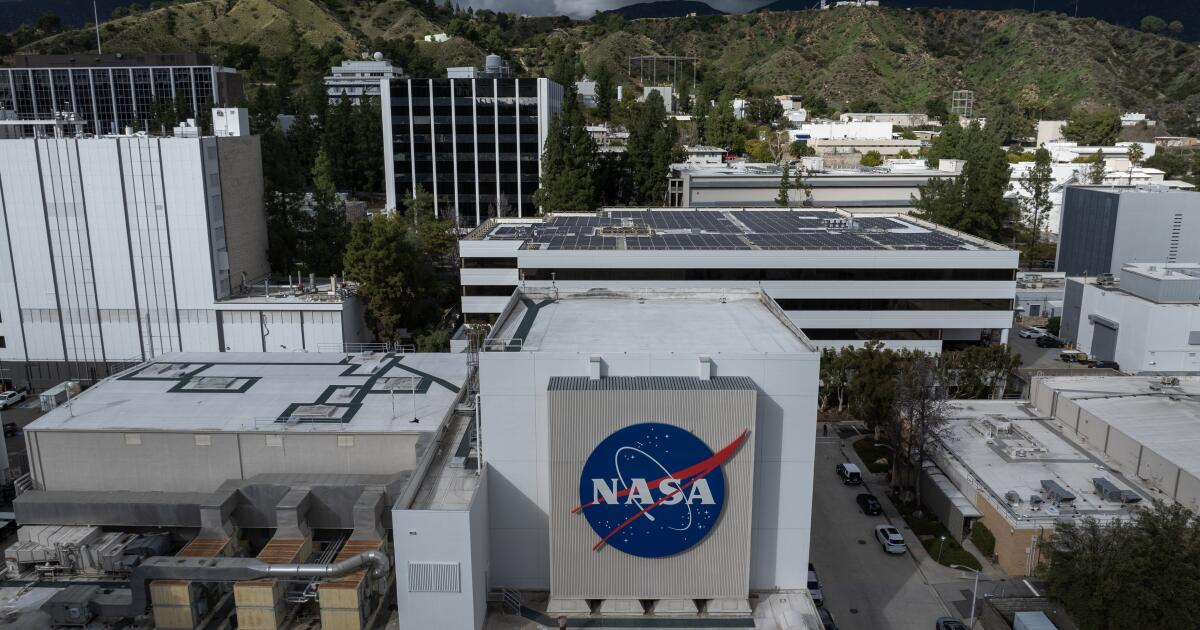
Weeks after Trump administration officials announced that management of NASA’s Jet Propulsion Laboratory would open to competitive bidding for the first time, questions remain as to why Caltech could lose control of the lab its researchers founded in 1936.
On one hand, observers note, high-profile delays and cost overruns on significant recent JPL projects earned sharp criticism from NASA even before the 2024 presidential election.
On the other, the second Trump administration’s record of squeezing scientific funding and attacking institutions in Democrat-led states make it difficult to consider any action separate from the charged political atmosphere, analysts say.
“My first instinct is that this [competition] isn’t necessarily a bad thing. It’s not written in stone that Caltech must run JPL, and it wouldn’t be the worst thing to have some competition for running the place,” said Casey Dreier, chief of space policy at the non-profit Planetary Society.
“That said, that requires this contract evaluation to be fair and unbiased, and this administration has no credibility in such things,” he added. “The responsibility is on NASA to earn the trust and ensure such an evaluation is open and free from political meddling. That’s almost impossible.”
JPL became part of NASA when the space agency was formed in 1958, and Caltech has been awarded the contract to run the institution outright ever since.
Its current 10-year contract with NASA, which is valued at up to $30 billion, runs through Sept. 30, 2028.
NASA Administrator Jared Isaacman announced the competition on May 22 as part of a slate of sweeping organizational changes at the space agency.
“When you step back, it is worth considering how many additional missions we could have undertaken with the resources lost to program cancellations and cost overruns over the years,” Isaacman wrote in a memo to staff. “That is the problem we must fix, so the American taxpayer and space-loving community can receive the highest scientific return on every dollar we spend at NASA.”
Competing the contract for JPL, the lone Federally Funded Research and Development Center (FFRDC) in NASA’s portfolio, was an effort to address cost-efficiency concerns, Isaacman wrote.
“This process will take several years, and I do not anticipate it having any impact on the projects underway or the location of the facilities,” he wrote. “It does, however, provide an opportunity to evaluate management costs, overhead burdens, and ideally find ways to get after the science faster and more affordably.”
In a joint statement, Caltech President Thomas F. Rosenbaum and JPL Director Dave Gallagher said the competition was “no surprise” and that a team was already in place “to ensure we are positioned for success.”
In July, NASA’s Office of Procurement held an informational event for companies and institutions interested in the upcoming FFRDC contract.
The dozens of registered attendees included universities like USC, Texas A&M University and Georgia Tech, aerospace companies such as Boeing and Lockheed Martin and nonprofit corporations like MITRE, which manages several FFRDCs, and Universities Space Research Association, a university consortium founded by the National Academy of Sciences in 1969. (SpaceX, which has been awarded more than $13 billion in NASA contracts in the last decade, was not on the list.)
“Lockheed Martin has more than 50 years of deep space exploration success with JPL, supporting landmark missions to Jupiter, Venus, Saturn, Pluto, including nearly a dozen missions to Mars,” said Bob Behnken, VP of Exploration and Technology Strategy. “We look forward to building on that unmatched partnership in the years ahead. We are closely following NASA’s review and will continue to assess how we can best contribute to the agency’s mission.”
Other attendees contacted by The Times declined to discuss their involvement.
Isaacman indicated that JPL could come under scrutiny even before he took over NASA. The billionaire entrepreneur referenced high costs at the La Cañada Flintridge institution in a memo prepared in advance of his confirmation hearings on his priorities for the space agency.
“Contract structure: Very expensive,” Isaacman wrote of JPL in a table outlining organizational issues at each of NASA’s centers. “Must increase the output and ‘time-to-science’ KPI.”
The institution has recently suffered a number of high-profile management stumbles.
After the JPL-managed Psyche mission to a metal-rich asteroid failed to meet its 2022 launch date, NASA commissioned an independent review that said internal reorganizations and personnel changes created distracted and uninformed managers and burned-out, stretched-thin staffers.
After a 2023 independent review found there was “near zero probability” of the JPL-managed Mars Sample Return mission making its proposed 2028 launch date, and “no credible” way to bring rocks back from the Red Planet within the stated budget, Isaacman’s predecessor Bill Nelson put out a call for proposals to industry and all other NASA centers, forcing JPL to compete for its own project.
After Trump’s election, Nelson announced that the final decision would be in the next administration’s hands.
The White House pushed for massive cuts to NASA’s 2026 budget that Congress overturned, and has lobbied for similarly steep cuts again this year. JPL has instituted painful cost-cutting measures of its own, reducing staffing from roughly 6,500 employees in 2023 to 4,500 last year through layoffs and attrition.
Its struggles come at a point when NASA is enthusiastically embracing private industry. Last month the agency awarded several key contracts for its upcoming lunar missions to Jeff Bezos’s Blue Origin and other private companies.
Trump has also made no secret of his willingness to punish states that haven’t voted for him through job losses. In announcing his decision to move U.S. Space Command from Colorado to Alabama, Trump acknowledged that his loss in Colorado in three presidential elections played a part in the move.
It’s impossible to consider any decision on JPL’s future separate from the administration’s track record of politically-motivated decisions, Dreier said.
“At the heart of this is why? Why now? If this is not just some rank political attack on California, what do they hope to gain from this?” Dreier said. “That deserves explanation, because the administration otherwise has no credibility here.”

The Gulf of Mexico, which the Trump administration calls the Gulf of America, is one of the noisiest bodies of water in the United States. Air gun blasts are the loudest element there, according to research by scientists who monitor underwater acoustics. Shipping traffic is another major contributor.
The noise could affect the ability of Rice’s whales to find food and mates, scientists say. The chronic stress of living in a loud environment could be detrimental to their health.
-

 Los Angeles, Ca4 minutes ago
Police investigate deadly stabbing in Tarzana; suspect in custody
-

 Detroit, MI24 minutes ago
Detroit Tigers sweep Tampa Bay Rays in win as Dillon Dingler stays hot
-

 San Francisco, CA34 minutes ago
Retired San Francisco firefighter dies from lung cancer after Blue Shield denies treatment claims
-

 Dallas, TX39 minutes ago
Trackdown: Dallas 7-Eleven robbery suspect wanted
-

 Miami, FL46 minutes ago
This new Italian restaurant in Brickell only has 10 items on the menu
-

 Boston, MA49 minutes ago
Visiting Boston this summer? Here are 8 navigation tips you need to know.
-

 Denver, CO54 minutes ago
Denver-ish Central Market? RiNo food hall vendors claim they’ve been pushed out
-

 Seattle, WA1 hour ago
New Ben & Jerry’s location opening at Seattle waterfront’s Pier 54

