Health
Ideology May Not Be What You Think but How You’re Wired


So sharp are partisan divisions these days that it can seem as if people are experiencing entirely different realities. Maybe they actually are, according to Leor Zmigrod, a neuroscientist and political psychologist at Cambridge University. In a new book, “The Ideological Brain: The Radical Science of Flexible Thinking,” Dr. Zmigrod explores the emerging evidence that brain physiology and biology help explain not just why people are prone to ideology but how they perceive and share information.
This conversation has been edited for clarity and brevity.
What is ideology?
It’s a narrative about how the world works and how it should work. This potentially could be the social world or the natural world. But it’s not just a story: It has really rigid prescriptions for how we should think, how we should act, how we should interact with other people. An ideology condemns any deviation from its prescribed rules.
You write that rigid thinking can be tempting. Why is that?
Ideologies satisfy the need to try to understand the world, to explain it. And they satisfy our need for connection, for community, for just a sense that we belong to something.
There’s also a resource question. Exploring the world is really cognitively expensive, and just exploiting known patterns and rules can seem to be the most efficient strategy. Also, many people argue — and many ideologies will try to tell you — that adhering to rules is the only good way to live and to live morally.
I actually come at it from a different perspective: Ideologies numb our direct experience of the world. They narrow our capacity to adapt to the world, to understand evidence, to distinguish between credible evidence and not credible evidence. Ideologies are rarely, if ever, good.
Q: In the book, you describe research showing that ideological thinkers can be less reliable narrators. Can you explain?
Remarkably, we can observe this effect in children. In the 1940s, Else Frenkel-Brunswik, a psychologist at the University of California, Berkeley, interviewed hundreds of children and tested their levels of prejudice and authoritarianism, like whether they championed conformity and obedience or play and imagination. When children were told a story about new pupils at a fictional school and asked to recount the story later, there were significant differences in what the most prejudiced children remembered, as opposed to the most liberal children.
Liberal children tended to recall more accurately the ratio of desirable and undesirable traits in the characters of the story; their memories possessed greater fidelity to the story as it was originally told. In contrast, children who scored highly on prejudice strayed from the story; they highlighted or invented undesirable traits for the characters from ethnic minority backgrounds.
So, the memories of the most ideologically-minded children incorporated fictions that confirmed their pre-existing biases. At the same time, there was also a tendency to occasionally parrot single phrases and details, rigidly mimicking the storyteller.
So by “liberal” you mean flexible in thought rather than politically liberal, yes?
Right. The work with children is about prejudice rather than conservatism. Ideologues are strong partisans either to the left or right. Psychological rigidity is linked to ideological extremity regardless of the mission of the ideology.
Are people who are prone to ideology taking in less information? Are they processing it differently?
The people most prone to ideological thinking tend to resist change or nuance of any kind. We can test this with visual and linguistic puzzles. For instance, in one test, we ask them to sort playing cards by various rules, like suit or color. But suddenly they apply the rule and it doesn’t work. That’s because, unbeknownst to them, we changed the rule.
The people who tend to resist ideological thinking are adaptable, and so when there’s evidence the rules have changed, they change their behavior. Ideological thinkers, when they encounter the change, they resist it. They try to apply the old rule even though it doesn’t work anymore.
In one study you conducted, you found that ideologues and nonideologues appear to have fundamental differences in their brains’ reward circuitry. Can you describe your findings?
In my experiments I’ve found that the most rigid thinkers have genetic dispositions related to how dopamine is distributed in their brains.
Rigid thinkers tend to have lower levels of dopamine in their prefrontal cortex and higher levels of dopamine in their striatum, a key midbrain structure in our reward system that controls our rapid instincts. So our psychological vulnerabilities to rigid ideologies may be grounded in biological differences.
In fact, we find that people with different ideologies have differences in the physical structure and function of their brains. This is especially pronounced in brain networks responsible for reward, emotion processing, and monitoring when we make errors.
For instance, the size of our amygdala — the almond-shaped structure that governs the processing of emotions, especially negatively tinged emotions such as fear, anger, disgust, danger and threat — is linked to whether we hold more conservative ideologies that justify traditions and the status quo.
What do you make of this?
Some scientists have interpreted these findings as reflecting a natural affinity between the function of the amygdala and the function of conservative ideologies. Both revolve around vigilant reactions to threats and the fear of being overpowered.
But why is the amygdala larger in conservatives? Do people with a larger amygdala gravitate toward more conservative ideologies because their amygdala is already structured in a way that is more receptive to the negative emotions that conservatism elicits? Or can immersion in a certain ideology alter our emotional biochemistry in a way that leads to structural brain changes?
The ambiguity around these results reflects a chicken-and-egg problem: Do our brains determine our politics, or can ideologies change our brains?
If we’re wired a certain way, can we change?
You have agency to choose how passionately you adopt these ideologies or what you reject or what you don’t.
I think we all can shift in terms of our flexibility. It’s obviously harder for people who have genetic or biological vulnerabilities toward rigid thinking, but that doesn’t mean that it’s predetermined or impossible to change.



NEWYou can now listen to Fox News articles!
A newly identified muscle protein may help explain why people who stay active as they age often remain stronger and healthier for longer, according to new research.
Scientists found that a protein called NOX4 naturally declines with age and inactivity. As levels dropped, researchers observed signs of frailty, muscle loss, insulin resistance and liver disease in mice.
The findings were published in the journal Science Advances.
7 COMMON FITNESS MISTAKES OLDER ADULTS MAKE AND HOW TO AVOID THEM FOR BETTER WORKOUTS
Researchers believe NOX4 helps muscles repair themselves and adapt to the physical demands of exercise.
When NOX4 was removed from the muscles of mice, the animals became weaker, lost muscle mass and developed health problems commonly associated with aging.
Researchers found that declining levels of the muscle protein NOX4 with age and inactivity may contribute to weakness, muscle loss, and other health problems. (iStock)
The researchers also found that exercise helped restore NOX4 levels in older mice.
Josephine Hunt, an educational leader, former group fitness instructor and founder of The Resilience Revolution based in New Jersey, who was not involved in the study, told Fox News Digital that the findings help explain why exercise benefits so many aspects of health.
CLICK HERE FOR MORE HEALTH STORIES
“Movement is medicine,” Hunt said.
“The emerging NOX4 research is exciting because it helps explain something exercise scientists have observed for decades. Physical activity does far more than strengthen muscles.”
Researchers think NOX4 plays an important role in helping muscles recover and adjust to the stresses of exercise. (iStock)
Hunt said many people view exercise as a way to improve appearance or fitness, but its effects reach much deeper.
“Exercise appears to activate biological signaling pathways that help the body adapt, repair and become more resilient over time,” she said.
CLICK HERE TO SIGN UP FOR OUR HEALTH NEWSLETTER
She said one of the study’s biggest takeaways is that physical activity helps the body maintain its ability to recover from challenges.
“Exercise does not simply help us look younger or stay physically fit,” Hunt said. “It appears to help the body maintain its ability to adapt, repair and respond to stress.”
Experts say one of the study’s key findings is that physical activity helps the body preserve its ability to recover from challenges. (iStock)
Hunt added that healthy aging is about more than simply living longer.
“Healthy aging is not just about adding years to life,” she said. “It is about preserving strength, function, independence, cognitive health and overall quality of life.”
TEST YOURSELF WITH OUR LATEST LIFESTYLE QUIZ
Researchers stressed that additional studies are needed, but the findings may help explain why regular physical activity remains one of the most effective tools for maintaining health as people age.
The study was conducted in mice, meaning the findings do not necessarily translate directly to humans.
CLICK HERE TO DOWNLOAD THE FOX NEWS APP
While the team also examined muscle samples from younger and older men and found similar declines in NOX4, additional research is needed to better understand the protein’s role in human aging.

NEWYou can now listen to Fox News articles!
Sticking to a resistance or strength training routine for a certain amount of time may extend your life, according to a new study.
Research published in the British Journal of Sports Medicine analyzed whether workouts involving weightlifting and weight machines are linked to a lower risk of death over time.
The study followed more than 147,000 U.S. adults who participated in three large health studies spanning up to 30 years. More than 35,000 died during the study period.
THIS EXERCISE HABIT MAY SLASH DEMENTIA RISK AND HELP YOU LIVE LONGER, STUDY FINDS
Participants reported their exercise habits, including the number of minutes per week spent on resistance training and on aerobic activity, like walking, biking or swimming.
Resistance training levels were then compared with later death from any cause, as well as from cardiovascular disease, cancer, respiratory disease and neurological disease, according to a press release.
Doing a moderate amount of resistance training was linked with a lower risk of death in a recent study. (iStock)
Doing a moderate amount of resistance training was linked with a lower risk of death, according to study results. This outcome persisted even after researchers adjusted for other factors like age, smoking, diet quality, alcohol intake, family history and aerobic activity.
The clearest benefit was seen at around 90 to 119 minutes per week of resistance training.
EXERCISE PROGRAM REDUCES COMMON CANCER RECURRENCE AND BOOSTS SURVIVAL
People who stuck to this interval of training per week had a 13% lower risk of all-cause death, 19% lower risk of death from heart disease and 27% lower risk of death from neurological disease.
More than 120 minutes of resistance training per week did not appear to add extra benefit to the overall death risk, according to the findings.
The clearest benefit was seen at around 90 to 119 minutes per week of resistance training. (iStock)
A lower risk of cancer death was seen at even small amounts of resistance training — 30 to 59 minutes per week was associated with a 12% decreased risk.
The lowest overall death risk was found in people who did both higher aerobic activity and moderate to high resistance training.
CLICK HERE TO SIGN UP FOR OUR HEALTH NEWSLETTER
The study shows only an association between resistance training and lower death risk, not a direct cause, the researchers noted.
Other limitations were that participants reported their own exercise habits, which may not have been completely accurate, and the study did not measure how intensely they exercised.
30 to 59 minutes per week of strength training was associated with a 12% decreased risk of cancer death.
The authors reflected in the study that engaging in “sufficient aerobic or resistance training alone is linked to lower mortality, with a stronger effect from aerobic activity.”
CLICK HERE FOR MORE HEALTH STORIES
The lowest risk was seen among people who did high levels of both aerobic exercise and resistance training. However, for people already doing a very high amount of aerobic exercise (roughly five to six hours of jogging or 11 hours of brisk walking per week), adding resistance training did not appear to lower the risk any further, they noted.
The lowest overall death risk was found in people who did both higher aerobic activity and moderate to high resistance training. (iStock)
In a previous interview with Fox News Digital, Kenny Santucci, fitness trainer, gym owner and host of the “Strong New York” podcast, shared the importance of pairing general movement with a focus on muscle building.
For a better fitness outcome, Santucci encourages gym-goers to add more strength training to their routines and to lift “a little bit heavier.”
CLICK HERE TO DOWNLOAD THE FOX NEWS APP
“Strength training should be the basis of what you do,” he said. “I don’t have anything against cycling … but if you’re telling me that’s the basis of your training, and your goal is aesthetics, then you are not really helping yourself get to that point any easier.”
“Hard doesn’t necessarily mean it’s a better workout.”
Santucci recommends working at about 60% to 80% of capacity, pushing to a point of fatigue with moderate intensity.
TEST YOURSELF WITH OUR LATEST LIFESTYLE QUIZ
“There’s a science behind muscle growth, and if there’s no external force pushing against the muscle tissue, and you’re not fueling yourself with protein, then you’re probably not going to build muscle,” he said.
“Hard doesn’t necessarily mean it’s a better workout … If you’re training at levels of intensity, then you’re reproducing good outcomes.”
Health
AI-designed ‘universal vaccine’ passes first human clinical trial, could prevent future pandemics

NEWYou can now listen to Fox News articles!
A vaccine created using artificial intelligence that could potentially provide broader protection against multiple coronaviruses and help prepare for future outbreaks has passed its first human clinical trial.
Researchers from the Universities of Cambridge and Southampton developed a “universal vaccine” designed to protect against multiple Sarbeco coronaviruses, which the university explained in a news release is “the large group of viruses that occur in nature, including SARS-CoV-2, which caused the COVID pandemic.”
CLICK HERE FOR MORE LIFESTYLE STORIES
Traditional vaccines must constantly be updated as viruses mutate, and the process is “like a dog chasing its tail,” said University of Southampton professor Saul Faust, the trial’s chief investigator.
“Viruses like Influenza, coronaviruses and the Ebola group are evolving continuously, and by the time vaccines are rolled out, they may be poorly matched — the current ‘reactive’ vaccine system struggles to keep pace,” Faust said.
Researchers have developed a vaccine using AI that has proven to be promising in “future-proofing” people against mutating infections. (iStock)
An antigen is the active ingredient in a vaccine meant to trigger an immune-system response and fight off infection. According to the release, the university scientists logged all the available genetic sequence data for Sarbeco coronaviruses and used AI used to design a “super-antigen” that contains the antigen features “common to this whole group of viruses – including ones that haven’t emerged yet.”
The trial of the vaccine proved safe and triggered an immune response in 39 healthy volunteers, marking “the first time that a vaccine whose active component was designed entirely by computer simulations has been tested in humans,” the release said.
The trial vaccine was administered through a micro-fluid jet that delivers the immunization through the skin using a tiny, high-pressure stream of liquid and does not require a needle. The researchers said this method could make it “faster and easier to carry out in large numbers of people.”
TEST YOURSELF WITH OUR LATEST LIFESTYLE QUIZ
“This new class of universal vaccines are future-proofed,” Faust said. “They not only protect against many variants simultaneously, but potentially against related viruses that haven’t yet emerged and spilt over to humans. If we can develop and clinically advance this new class of vaccines before a virus outbreak begins, millions of lives could be saved, lockdowns avoided and the economy preserved.”
A new vaccine has been proven safe and capable of triggering immune responses against coronavirus in a limited human trial. (iStock)
Some experts have raised broad concerns about using AI in medicine, primarily when it comes to making clinical decisions, not developing vaccines. Certain groups of people may be underrepresented in the data AI relies on, resulting in biased outcomes, some said.
AI also sometimes produces erroneous information, called “hallucinations,” and determining who is liable for medical failings in such situations is a complex matter.
CLICK HERE TO DOWNLOAD THE FOX NEWS APP
Others have expressed concern over patient privacy, as well as the need for human judgment that takes into account the scope of a patient’s health history, rather than a single dataset.
While traditional vaccines are reactive, a new AI-designed vaccine aims to protect against future coronavirus threats. (iStock)
The universal-vaccine researchers said that a larger trial involving “a wider and more diverse population” is needed. They published their findings in Journal of Infection.
-

 Kansas2 minutes ago
MSHP recover missing Kansas person from Table Rock Lake
-
 Illinois3 minutes ago
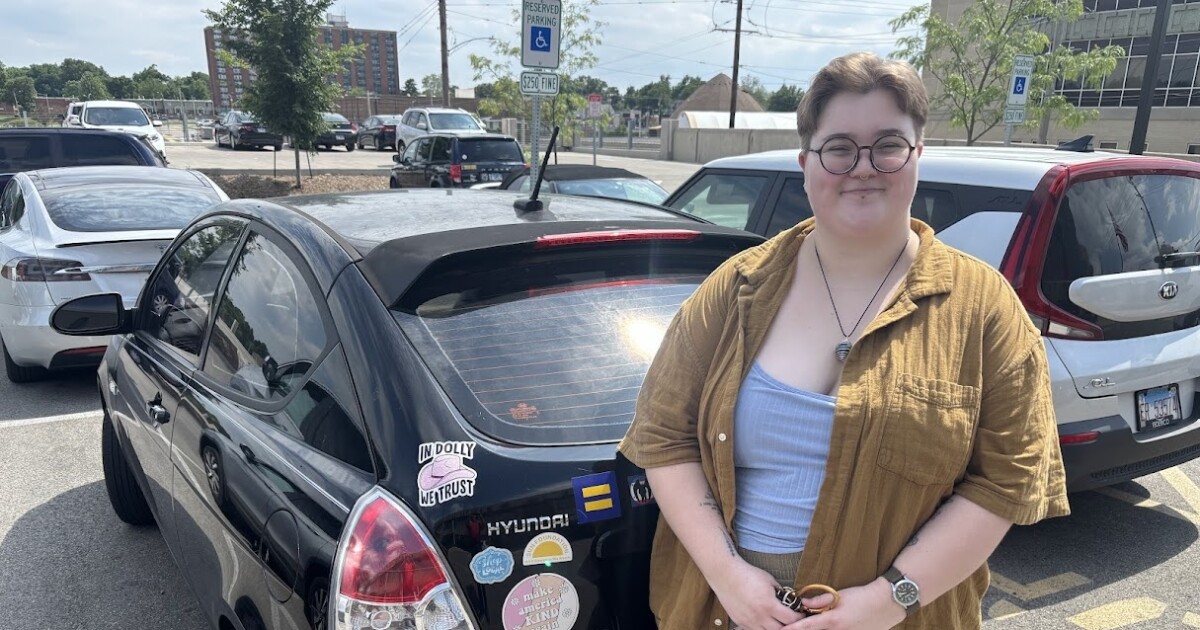
Central Illinois residents face tough compromises as gas prices pinch budgets
-

 Indiana8 minutes ago
21-year-old Indiana man shot, killed near Ford City Mall, Chicago officials say
-

 Iowa15 minutes ago
Staffing new Iowa prisons may be “impossible,” union president warns
-

 Kentucky30 minutes ago
Kentucky Lottery Cash Ball, Pick 3 Evening winning numbers for June 14, 2026
-
Louisiana32 minutes ago
Louisiana Lottery Pick 3, Pick 4 results for June 14, 2026
-
 Maine38 minutes ago
Maine’s Susan Collins-Graham Platner race expected to draw nearly $400M in ads
-

 Maryland45 minutes ago
Maryland Lottery Pick 3, Pick 4 results for June 14, 2026

