Business
Inside the Controversy Surrounding Disney’s ‘Snow White’ Remake


Disney knew that remaking “Snow White and the Seven Dwarfs” as a live-action musical would be treacherous.
But the studio was feeling cocky.
It was 2019, and Disney was minting money at the box office by “reimagining” animated classics like “Aladdin,” “Beauty and the Beast” and “The Jungle Book” as movies with real actors. The remakes also made bedrock characters like Cinderella newly relevant. Heroines defined by ideas from another era — be pretty, and things might work out! — were empowered. Casting emphasized diversity.
Why not tackle Snow White?
Over the decades, Disney had tried to modernize her story — to make her more than a damsel in distress, one prized as “the fairest of them all” because of her “white as snow” skin. Twice, starting in the early 2000s, screenwriters had been unable to crack it, at least not to the satisfaction of an image-conscious Disney.
“Snow White and the Seven Dwarfs,” which premiered in 1937, posed other remake challenges, including how to sensitively handle Happy, Sneezy, Sleepy, Dopey, Bashful, Grumpy and Doc. (One stalled Disney reboot had reimagined the dwarfs as kung fu fighters in China.)
Still, Disney executives were determined to figure it out. They had some new ideas. More important, the remake gravy train needed to keep running.
“It’s going to be amazing, another big win,” Bob Chapek, then Disney’s chief executive, said of a live-action “Snow White and the Seven Dwarfs” at a 2022 fan convention.
Instead, “Snow White,” starring Rachel Zegler, arrives in theaters on Friday as one of the most troubled projects in Disney’s 102-year history. The movie became a cautionary tale about relevance — how trying to strike the right cultural chord at the right cultural moment can turn a seemingly innocuous movie into a proxy battle for special interests. And just about everything that could go wrong did, resulting in a case study of the perils of big-budget moviemaking in a volatile, fast-moving world and the risks of trying to endlessly mine existing intellectual property.
For Disney and Hollywood as a whole, this weekend will be a test: How much does prerelease Sturm und Drang even matter these days? Will family ticket buyers steer clear? Or will they ignore the negative chatter and trust a vaunted entertainment brand to provide a little escapist fun?
This article is based on interviews with more than a dozen people involved with the film. Together, their accounts show how “Snow White” went from promising idea to poisoned apple, and how the entertainment giant and the film’s creative team scrambled to save it.
Some “Snow White” challenges amounted to bad luck. Pandemic Covid cases flared up just as production got underway in London, forcing Disney to adopt stringent safety protocols and adding millions of dollars to the budget. One of the sets, a cottage with a thatched roof, caught fire on a soundstage. The 2023 actors’ strike forced Disney to halt reshoots. Gal Gadot, cast as the Evil Queen, suffered health complications from a pregnancy, delaying reshoots and visual-effects work.
Other problems were self-inflicted. Disney flubbed its response to leaked on-set photos of new characters (a troop of seven woodland inhabitants known as bandits) that appear in the new film alongside the seven dwarfs, but that led fans to worry the dwarfs had been expunged entirely for political correctness. And Ms. Zegler went rogue in interviews and on social media, sparking one controversy after another.
Perhaps the biggest challenge to the movie was the cultural shift that has taken place over the past several years.
In 2021, online trolls attacked Disney for casting Ms. Zegler, a Latina actress, as Snow White. “Snow Woke” briefly trended. But the pushback dissipated, and Disney shrugged it off. Inside the studio, executives were proud of the casting. They had been wowed by Ms. Zegler’s voice and screen presence. They saw her ethnicity as a bonus. The killing of George Floyd a year earlier by a police officer had roiled every sphere of American life, prompting institutions and individuals around the country to confront racism and inequity. In Hollywood in general and Disney in particular, “We must do better” rang in every hallway.
As “Snow White” finally comes to market, however, Disney finds itself in a very different climate. Companies, including Disney, have raced to distance themselves from diversity, equity and inclusion initiatives amid a broader backlash toward D.E.I. policies by President Trump. What had been a positive — a Latina in a role associated with whiteness (it’s in the title) — became a potential liability, with right-wing agitators (many of them adult men unlikely to see the film to begin with) hammering Disney and Ms. Zegler.
Some news outlets followed suit. The New York Post alone has published 20 articles about “Snow White” over the last week. “Grumpy, Dopey and Woke — Disney’s ‘Snow White’ Disaster” was the headline on one.
The tumult around “Snow White” had grown so intense by the movie’s premiere in Los Angeles last weekend that Disney heightened security and curtailed red carpet interviews. The entrance to the theater was hidden from public view by tall hedges on movable platforms. (The eagerness to see “Snow White” fall on its face was such that some online haters began insisting, incorrectly, that the premiere had been canceled.)
After the screening, a few Disney executives and people who worked on the film stood in the lobby searching people’s faces for responses and hoping for a last-minute plot twist — that reviews would be positive and their work to keep “Snow White” on track would pay off with strong ticket sales. Maybe, in the end, the movie would not go down in the Hollywood history books as a cautionary tale. Maybe I.P. really can be reimagined for every generation, just as every studio executive loves to dream.
“Our job is to delight,” Marc Platt, the film’s lead producer, said to The New York Times after the premiere. “I’m hopeful that once audiences actually experience the film, all the noise around it will fade away and people will discover a family entertainment that is joyful, aspirational and delightful.”
A naïve princess no longer
As the first feature-length, fully narrative animated film, “Snow White and the Seven Dwarfs” defined a new art form. It contributed “Heigh-Ho,” “Whistle While You Work” and “Someday My Prince Will Come” to the Great American Songbook.
The movie cost about $1.5 million to make (about $34 million today) and collected $184 million (roughly $4 billion) in the United States and Canada. Walt Disney bought the land for Disney headquarters with part of the profit. To this day, Disney leaders work in a building adorned with monumental statues of the seven dwarfs. Disney Animation offices sit nearby, along Dopey Drive.
Any effort to remake the movie would carry extra weight.
Knowing this, Disney movie executives lined up an A-plus creative team. In the producer’s chair would be Mr. Platt, now a four-time Oscar nominee for “Wicked,” “La La Land,” “Bridge of Spies” and “The Trial of the Chicago 7.” Marc Webb, who had experience with big-budget blockbusters, including two “Spider-Man” movies, came aboard as director. Benj Pasek and Justin Paul, the EGOT-winning songwriting partners (“Dear Evan Hansen,” “The Greatest Showman”), would contribute new tunes.
Ms. Zegler was winning raves for playing Maria in Steven Spielberg’s “West Side Story.” Ms. Gadot was literally “Wonder Woman.”
The production would be colossal, sprawling across 10 soundstages in suburban London. Eight visual-effects companies in three countries would digitally create the dwarfs, the magic mirror and a multitude of cutesy animals (owls, bunnies, birds, turtles, squirrels). For the deer, puppeteers would be employed.
Most important, the screenwriter Erin Cressida Wilson (“The Girl on the Train”) had collaborated with Mr. Pasek and Mr. Paul to modernize the story. Snow White, now named after a wintry storm, was no longer a naïve princess defined by her looks; she was a leader in training, someone the Evil Queen despised because she was beautiful, yes, but also because she prized fairness as a leadership quality. The prince was dropped; that love interest became a Robin Hood-esque scofflaw. And the dwarfs, especially Dopey, were given character arcs of their own — more emotional depth, less bumbling physical comedy.
Greta Gerwig (“Barbie”) and five other writers did polishes. Satisfied by their work, Alan F. Horn, then chairman of Walt Disney Studios, pushed the project forward with a budget of $210 million.
‘I was born to play Dopey’
From the beginning, Disney knew the seven dwarfs could become a public-relations nightmare. Disney fans delight in them. The dwarfism community, however, tends to view the characters as infantilizing, dehumanizing and hurtful.
The studio hired three dwarfs as consultants to help navigate potential pitfalls.
The first real blowback came in January 2022 when the actor Peter Dinklage (“Game of Thrones”) criticized Disney for remaking “Snow White” during an appearance on Marc Maron’s “WTF” podcast. “I was a little taken aback when they were proud to cast a Latina actress as Snow White,” Mr. Dinklage said. “You’re progressive in one way, and you’re still making that backwards story about seven dwarfs living in a cave? Have I done nothing to advance the cause from my soapbox?”
Disney swiftly put out a statement: “To avoid reinforcing stereotypes from the original animated film, we are taking a different approach with these seven characters and have been consulting with members of the dwarfism community.”
Because Disney did not explain its “different approach,” however, damaging theories began to wash across the internet. Had the studio decided to do away with the dwarfs? After all, they had disappeared from the title of the film.
Then an on-set photo leak turned what had been an online brush fire into an inferno. In July 2023, The Daily Mail published images that appeared to show the seven dwarfs being played by actors and actresses of various races and ethnicities; only one of them was a dwarf. The headline was “Snow White and the Seven … Politically-Correct Companions?”
At first, a Disney publicist said the photo was fake. The company then reversed itself. But Disney, worried about spoilers, did not provide a crucial piece of information: Those weren’t the dwarfs. This movie would feature two groups of seven — a troop of bandits (depicted in the photo) and a separate troop of C.G.I. dwarfs, to be added in postproduction.
As the initial March 2024 release date moved back — Disney was underwhelmed by the first cut and ordered reshoots — the studio found itself playing Whac-a-Mole with one dwarf controversy after another. When it finally emerged that Disney had opted to use C.G.I. to render Doc, Sleepy, Bashful and the gang, the company came under attack for the “erasure” of people with dwarfism.
Others criticized Disney for denying them jobs. “I was born to play Dopey,” Matt McCarthy, an actor with dwarfism, told reporters on Monday as he and his wife, an actress with dwarfism, planned a protest outside Disney headquarters in Burbank, Calif. “When you’re a little person, opportunities are few and far between,” he said.
The star goes rogue
On Aug. 9, 2024, Disney’s marketing campaign for “Snow White” kicked into a higher gear with the release of a teaser trailer. It did not go well.
Some people criticized the dwarves. Others mocked Ms. Zegler’s wig, likening her helmet hair look to Lord Farquaad from “Shrek.” Many simply questioned the wisdom of remaking the 1937 original. (As of Wednesday, roughly 102,000 people had clicked “like” on the trailer on YouTube, while 1.5 million had clicked “dislike.”)
But the real headache came a few days later when Ms. Zegler shared the trailer on X and added, “And always remember, free Palestine.” In an instant, “Snow White” became part of a highly divisive global political conversation — the opposite of what Disney wanted. Ms. Zegler’s comment also caused a severe rift with Ms. Gadot, who is Israeli. (Both actresses declined to comment for this article.)
Hollywood’s studio system days are long gone. Stars are free to express themselves as they wish. All studios can do is beg: Please, pretty please, stay on message. (Ms. Zegler had already angered fans of the original movie. “People are making these jokes about ours being the PC Snow White,” she said in 2022. “Yeah, it is — because it needed that.”)
The best containment strategy, Disney decided, was silence. Asking Ms. Zegler to take her post down could generate more attention — especially if she told her followers that she had been pressured to do so. But Mr. Platt flew to New York from Los Angeles to have a heart-to-heart with Ms. Zegler. He explained how much was at stake, both for Disney and for her career, and asked her to post heedfully.
She seemed to understand.
In November, however, Ms. Zegler took to Instagram to sound off about the presidential election. In a post salted with expletives, she harshly criticized Mr. Trump and those who had voted for him.
It had only been a short time since Disney had tried to turn a corner with MAGA followers by ending a spat with the governor of Florida, Ron DeSantis, over Disney World. A new skirmish could threaten the détente.
Within seconds of Ms. Zegler’s Instagram post, screenshots of the screed pinged between phones at Disney headquarters. How could the studio possibly trust her to participate in the coming “Snow White” publicity tour?
This time, members of Ms. Zegler’s management team, including agents at Creative Artists Agency, sprang into action. Her post was quickly replaced with an apology. “I let my emotions get the best of me,” she said. “I’m sorry I contributed to the negative discourse.”
But it was too late. Ms. Zegler, “Snow White” and Disney had already been in the cross hairs of right-wing pundits. Now, it was open season.
Megyn Kelly called for Ms. Zegler’s replacement in the film. An anti-D.E.I. agitator, Robbie Starbuck, went on the attack. Elon Musk weighed in with a post that skewered Disney for race-swapping iconic characters.
Ms. Zegler’s fans rallied around her. “So overjoyed knowing that little Latinas will be able to see themselves as such an iconic Disney princess,” one commented on Ms. Zegler’s Instagram page.
Disney hoped that prominent voices on the left would step up to deliver a pushback to the pushback. But it didn’t happen.
“Really never, but especially right now, no studio wants its movie branded as a D.E.I. lesson,” said Martin Kaplan, who runs the Norman Lear Center for entertainment, media and society at the University of Southern California.
Disney largely managed to avoid this critique as recently as 2023, when it remade “The Little Mermaid” with a Black actress in the title role; defenders were plentiful. But last month, when Disney released “Captain America: Brave New World,” with a Black actor in the title role for the first time, the company had a harder time.
It’s not an entirely new phenomenon: Think of the male-Internet uproar over the all-female “Ghostbusters” from 2016, or the ongoing fan vitriol around Disney’s efforts to bring diversity to the “Star Wars” franchise. But the “anti-woke right” has grown more powerful, Mr. Kaplan noted, while defenders on the left have grown quieter, either because they feel cowed or frustrated or because even they have come to see Hollywood’s aggressive diversity efforts as clumsy.
“I’m not sure anyone could have predicted that a reactionary force could so quickly and dramatically reverse the cultural winds, but that is certainly what has happened,” Mr. Kaplan said. “What once were uncontroversial or proud decisions are suddenly somehow un-American.”
Digital wig fixes
As “Snow White” bounced from one controversy to the next, the Hollywood gossip mill kicked into high gear: Surely, Disney would cut its losses and send this beast straight to streaming.
But sweeping “Snow White” under the rug (as the company had done with other problem movies, including the critically reviled “Artemis Fowl” in 2020) was never something that Disney considered. The budget for “Snow White” had risen to $270 million, not including marketing. Disney+ would need to absorb that cost (minus tax incentives) if it took the film. And that would undercut one of Disney’s key promises to Wall Street: greater streaming profitability.
Disney also knew something the outside world did not: After the reshoots (“additional photography” in studio parlance) and extensive visual-effects work, the movie was starting to jell.
A second-act song called “Hidden in My Heart,” a tear-jerker sung by one of the dwarfs, had been cut to speed the story along. A new scene near the finale involving the Evil Queen and magic mirror had added spectacle. That troublesome wig had undergone digital fixes.
Was it possible that “Snow White” was becoming … a decent movie? At least one that would entertain the Disney faithful?
In October, executives from across the company had been scheduled to fly to Disney World in Florida for a corporate retreat. When the summit was called off at the last minute because of Hurricane Milton, the studio team used the time to focus on “Snow White.” Disney’s new live-action film chief, David Greenbaum, who had inherited the troubled project, gathered a dozen studio leaders in a screening room on the Disney lot and spent two days scrutinizing the movie — stopping it, starting it — to see what could be improved, according to three people with direct knowledge of the session, who spoke on the condition of anonymity to discuss a private process.
The C.G.I. dwarfs looked “waxy,” Mr. Greenbaum worried. They could also be better integrated with live-action woodland footage shot on location. What trims could be made? The bandit story line, it seemed, could be tightened by a lot.
Mr. Webb, the director, kept tinkering with sound and color until February.
A fairy tale ending?
On Tuesday, Mr. Webb was in an upbeat mood. Reactions from people invited to the premiere had been positive. He positioned his “Snow White” as a throwback to a simpler time.
“Now that people are seeing the movie, I think they’re surprised and warmed by how nostalgic it is,” he said in a phone interview. “This movie is nostalgic not just in its aesthetic but in its worldview. It’s wholesome and kind, and that’s what I’ve held sort of dear through this whole process.”
Reviews arrived on Wednesday. Critics praised Ms. Zegler’s performance, but were underwhelmed by the film as a whole. “It’s just, well, fair,” Nell Minow wrote on RogerEbert.com.
Based on ticket presales and surveys of moviegoer interest, “Snow White” is expected to collect $45 million to $50 million at domestic theaters over the weekend, according to box-office analysts. That start would be slow for a Disney live-action remake: In the 15 years that the company has been producing them, none of the big-budget entries have exclusively arrived in theaters to less than $58 million, after adjusting for inflation. (That was “Dumbo” in 2019.)
David A. Gross, a box office analyst, noted that some of the thrill of seeing an animated classic reimagined as a live-action spectacle has worn off in the years since “Snow White” went into production. The film’s ultimate box office tally will probably come down to what he called “the babysitter effect.”
“Never underestimate the need for a 6-year-old to be entertained,” Mr. Gross said.



Business
Billionaire exodus? California drew 10 times more venture capital than any other state this year
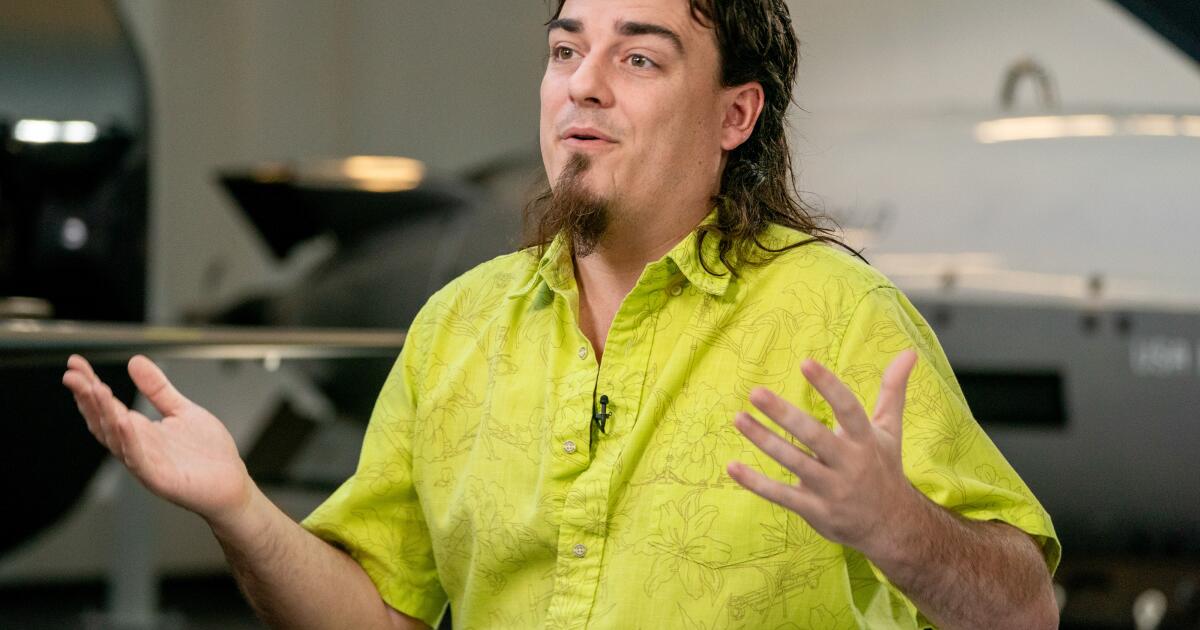
Despite concerns that California’s costs and regulations are bad for business, the state has attracted an unprecedented pile of capital this year, and no other state is even close.
The Golden State’s deep pool of talent, rich investors and other tech infrastructure have made it ground zero for the artificial intelligence explosion. That has helped it attract more than $335 billion in venture capital funding this year, according to PitchBook’s private market funding data released Thursday.
Its next biggest competitor, New York, raised less than a tenth of California’s total. Texas raised 1/40th of the amount.
“California has far and away the most [deals], obviously, a huge amount of that sits in the [San Francisco] Bay Area,” said Kyle Stanford, director of U.S. venture capital research at PitchBook. “Los Angeles, San Diego has a really strong tech market that I think benefits a lot from capital moving easily between San Francisco and L.A.”
Although a campaign for a new tax on billionaires has convinced some ultra-rich residents to shift to other states and businesses often complain that high property and energy costs and an anti-business regulatory regime make it too tough to make money in the state, the inability of the top talent, companies and investors in AI to set up elsewhere shows California’s enduring attraction.
The state’s economy grew 5% last year to a record $4.25 trillion, making it larger than every country other than the U.S., China and Germany. It is home to nearly 400 billion-dollar startups — more than any other state, according to CB Insights.
Southern California has emerged as a go-to address for fast-growing space and defense tech companies.
“California’s workers, entrepreneurs, and innovators continue to prove that investing in California delivers real results,” Gov. Gavin Newsom said in a statement last week in response to strong productivity numbers for the state. “As one of the largest economies in the world, the Golden State demonstrates that a strong workforce, economic growth, innovation, and performance go hand in hand.”
In the three months that ended in June, 1,087 California companies raised $108.8 billion in venture capital. Just three companies — Anthropic, Jeff Bezos’ Project Prometheus and Anduril Industries — absorbed 75% of that total. Anthropic alone raised $65 billion, which valued it at nearly $1 trillion.
Among metropolitan regions, Los Angeles ranked behind only Silicon Valley and New York, which attracted $98 billion and $11.5 billion in venture investment, respectively.
“Capital is flowing back into American innovation with real force,” said Bobby Franklin, president of the National Venture Capital Assn., an industry group that put out the report with PitchBook. “Investment activity is picking up, fundraising is improving, and there are early signs the IPO market is beginning to reopen.”
Investors poured in nearly $8 billion across 207 deals in the Los Angeles, Long Beach, and Santa Ana metro areas, up 28% from a year earlier, according to PitchBook.
The top deals in the region were led by aerospace and defense companies Anduril Industries, which raised $5 billion, and Impulse Space, which attracted $500 million.
Companies in industrial parts, software, consulting and life sciences were the other sectors in the Southland that attracted venture investments. El Segundo-based industrial supplies company Advanced Manufacturing Company of America and Huntington Beach-based aerospace company Mach Industries each raised $300 million.
To be sure, the surge in the size and number of monster deals could be overshadowing other money-raising efforts from smaller companies and investment by smaller funds, industry experts said.
Nearly 90% of invested dollars went to AI firms, up from last year, when around 65% of new funds were allocated to AI.
“If you’re a tech company and you’re not an AI company, you have a very, very difficult opportunity ahead of you to raise capital,” Stanford said.
This concentration of capital in AI leaves smaller, middle-of-the-road venture funds without large AI holdings struggling to return capital to their investors.
Only the largest funds, such as Andreessen Horowitz and Sequoia Capital — which possess the war chest to back OpenAI, Anthropic, and SpaceX — stand to gain from their initial public offerings of stock.
“It’s going to concentrate the fundraising over the next few years as well into these already very large names,” Stanford said.
Beyond the two potential blockbuster listings — Anthropic and OpenAI, each valued around $1 trillion — the IPO pipeline is thin.
“We don’t really have a strong IPO market,” Stanford said. “Obviously, SpaceX’s IPO is great. OpenAI and Anthropic, if they go out this year, will be very large drivers of distribution. But a vast majority of investors do not have exposure to them, and so that money will not make it back to them.”
Whether California’s venture-investing boom can continue at this record-breaking pace now hinges on how the IPOs of Anthropic and OpenAI perform.
“If Anthropic and OpenAI have really strong financials, that’s a big push of support for the rest of the market,” Stanford said.
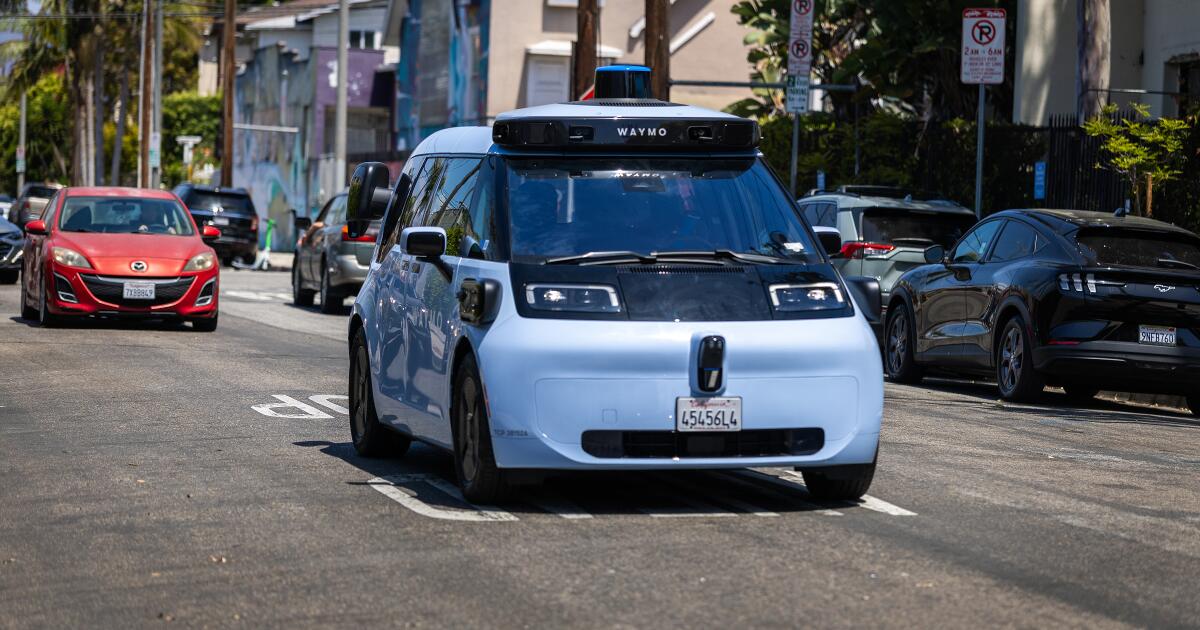
Waymo, the driverless taxi company that operates in more than 10 cities, will soon serve customers in San Diego.
The company has been testing its autonomous vehicles in San Diego with a safety driver behind the wheel since earlier this year. Rides without a human driver became available to employees Thursday and will open to members of the public later this year.
Waymo, which announced the expansion Wednesday, will also bring its taxis to Tampa, Las Vegas and Denver.
“If you’re in one of these four new cities, download the app to be notified when it’s time to ride,” the company said in a blog post.
Waymo has offered fully autonomous rides in San Francisco since 2022 and in Los Angeles since 2024.
It also serves customers in Nashville, Phoenix, Miami and other cities.
In May, Waymo launched a cheaper robotaxi dubbed the Ojai, which is better equipped for difficult driving conditions such as snowy roads.
The Ojai will supplement Waymo’s fleet of Jaguar I-Paces, the company said. In San Diego, services will be provided with the Ojai.
Waymo also announced Wednesday it’s beginning autonomous driving with a safety driver in its newest retrofitted vehicle, the Hyundai IONIQ 5.
“This phase allows us to validate our technology for fully autonomous operations as we work to bring riders even more ways to enjoy Waymo in the future,” the company said.
The company plans to eventually have tens of thousands of driverless taxis made per year, starting with the Ojai, then scaling using the IONIQ 5s.
The move into San Diego and three other cities widens the gap between Waymo and its competitors in the robotaxi race.
Elon Musk’s Tesla robotaxis and Amazon-owned Zoox are shuttling customers autonomously, but are nowhere near the scale at which Waymo operates.
Other companies are working on autonomous trucks and freight trains.
Waymo’s San Diego service area will include Pacific Beach, Normal Heights, La Playa and Southcrest, among other neighborhoods, the company said.
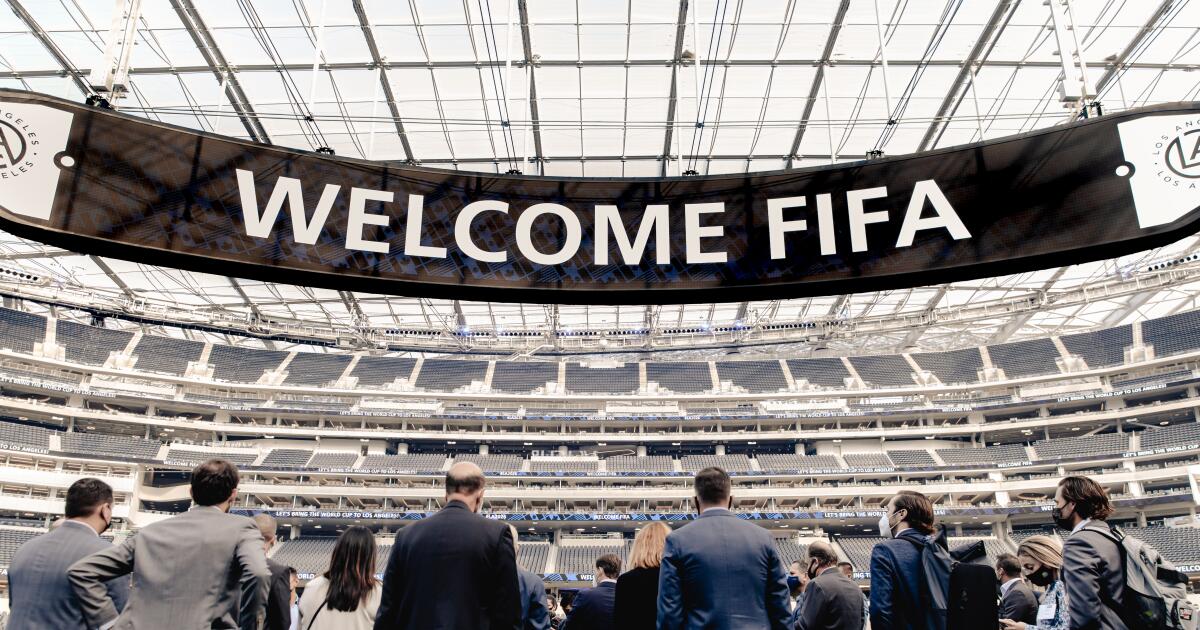
StubHub is getting a red card from some World Cup fans
Two World Cup customers are suing the New York-based ticket-selling company, alleging “false and misleading” advertising that left them without tickets or a refund for the World Cup games they paid to attend.
In federal court in New York last week, two Californians — Julia Reeker Moghal and Reuben Renteria — sued StubHub seeking monetary damages and a ban on the company selling World Cup tickets. The lawsuit aims to become a class action and comes after weeks of fierce criticism and complaints from customers regarding the company’s practices.
Throughout the World Cup, videos have emerged on Instagram and TikTok of StubHub customers describing their nightmare experiences with the ticket-selling platform.
Some said they had purchased tickets to World Cup games as early as November of last year, booked flights and hotels and arranged travel plans, then StubHub notified them days to weeks before the match of a refund for their tickets, which they never requested.
There were similar complaints about last-minute cancellations from people who bought Coachella tickets on StubHub.
In the lawsuit, Moghal said she had purchased three tickets for nearly $2,000 for the June 18 match between Switzerland and Bosnia-Herzegovina at SoFi Stadium in Inglewood, which were then canceled by StubHub. Moghal said she was contacted by StubHub and told her tickets would remain canceled, then was later told the tickets would be available one hour before the game.
When the match began, Moghal said she was at SoFi Stadium, but the tickets never came.
Renteria said he paid around $2,300 for the June 18 Mexico versus South Korea match in Guadalajara, Mexico, but they were canceled
“Devoted soccer fans have traveled from around the world to attend World Cup matches — and they reasonably relied on StubHub to provide the tickets they paid for as well as on StubHub’s warranty,” Blake Hunter Yagman, the attorney representing the two, said in a statement. “Instead of rewarding their business, StubHub sold them World Cup tickets that they either could not provide or on speculation, only to be stranded, in many cases, at the stadium gates without any recourse.”
According to StubHub’s website, its Fan Protect Guarantee states the platform will deliver valid tickets or refund in the event of a ticket issue, and that it will “go out of our way to find replacement tickets” of a comparable value. The lawsuit alleges the replacement tickets many fans were given by StubHub were worse than their original tickets.
FIFA, the World Cup organizer, states in its terms and conditions that the FIFA Marketplace, its own ticket-selling platform, is the only authorized platform for World Cup tickets, and that only tickets purchased through it are guaranteed by FIFA to be valid.
Despite the risk of purchasing through a third-party platform such as StubHub, many fans opted to do so to avoid the 30% FIFA resale tax, believing that the Fan Protect Guarantee would safeguard their order.
Since World Cup tickets began selling on FIFA Marketplace last September, fans have expressed disappointment in the expensive price tag. FIFA utilized a dynamic pricing system for the sale, and as sales phases progressed leading up to the games, the cost of tickets increased tremendously. In March, the extreme cost of tickets prompted 69 members of Congress to write a letter to FIFA urging them to lower their prices.
Tickets for the upcoming Friday match between Spain and Belgium in Los Angeles are selling on StubHub for over $1,300.
StubHub said in various statements to the news and in legal proceedings that ticket cancellations were a result of transfer problems and issues with FIFA’s ticketing infrastructure.
StubHub did not respond to requests for comment.
A FIFA spokesperson responded to this accusation in a statement, saying, “FIFA has no visibility over, or control of, secondary market ticket transactions carried out on third-party platforms. The transactions facilitated on these platforms occur entirely independently of FIFA’s official ticketing platform. With reference to the reliability of the services available to fans on FIFA’s official ticket platform, FIFA rejects any suggestion that the functional issues being experienced by users of third-party platforms with respect to FIFA World Cup 2026 tickets are the result of FIFA’s ticketing infrastructure.”
-

 Detroit, MI17 minutes ago
Detroit Evening Report: Waymo cars blocking first responders – WDET 101.9 FM
-

 San Francisco, CA25 minutes ago
San Francisco Mayor Daniel Lurie Blocks Vacant Grocery Store Tax Proposal | KQED
-

 Miami, FL30 minutes ago
Oregon Battling Miami, Mario Cristobal for Four-Star EDGE Recruit
-

 Dallas, TX32 minutes ago
FC Dallas Forward Logan Farrington Inks Contract Extension
-

 Boston, MA40 minutes ago
Red Sox face lengthy travel issues ahead of series vs. Mets
-

 Denver, CO47 minutes ago
What’s going on with the Nuggets? Unpacking an NBA offseason on hold
-

 Seattle, WA50 minutes ago
Seattle Kraken Sign Goaltender Victor Östman and Defenseman Ville Ottavainen to One-Year Deals | Seattle Kraken
-

 San Diego, CA55 minutes ago
An executive shuffle at San Diego’s Sempra

