Lifestyle
Showing Courage in Ukraine With Handfuls of Clay


This article is part of our Design special section about the reverence for handmade objects.
In late August 2020, eight humanoid statues appeared in a quiet corner of the Saint-Sophia of Kyiv conservation area, a 12-acre museum complex that is centered on the thousand-year-old Saint-Sophia Cathedral. Called “Shadows,” the clay-and-copper sculptures — each faceless and ghostly, with a torsolike form planted on a cylindrical base — had been made by Yuriy Myrko, a co-founder of GORN Ceramics in Kyiv for the annual Bouquet Kyiv Stage Festival.
“The people who keep the cathedral decided they liked the sculptures and proposed to keep them there.” said Bogdan Kryvosheya, 30, who founded GORN with Mr. Myrko, 41, and is the studio’s creative director. “The exhibition was only for a week or so, but the sculptures stayed there for almost three years.”
“Shadows” marked a turning point for GORN, which until then had mostly produced utilitarian items like vases and bowls. The figures reflected ideas about human relationships, death and spirituality. Since they appeared, GORN has continued to produce emotional art pieces alongside its more practical offerings. Intensified by the war with Russia and the unpredictability of the future, the studio’s output is a testament to creative freedom and resilience in the face of unimaginable hardship.
Mr. Kryvosheya and Mr. Myrko met in 2017, and with a third partner, Sasha Mychak, established GORN the following year to produce ceramic tableware that they and other artists designed.
Two years after the company started, the Covid-19 pandemic hit; then, two years after that Russian troops invaded Ukraine. Despite the challenges resulting from the invasion — limited access to resources, an unstable electricity supply, impediments to shipping and travel and the looming risk of conscription — GORN is thriving. This is thanks in part to its low-energy means of production — human hands shaping local clay, which is baked in wood-fired kilns — and in part to an international market.
It is also helped by its collective operation. Working with Mr. Kryvosheya and Mr. Myrko (Mr. Mychak is no longer with the studio), three artists make pieces under the GORN label while also practicing independently: Yaroslav Honchar created GORN’s East Wind group — minimal, juglike vessels in olive-green hues.
Yuriy Sulikovsky contributed to the Flame vases, which are wood-fired at hyper-scalding temperatures for so many hours that smoke and ash interact with the clay, producing streaks and dapples. Dmytro Yakub works as Mr. Myrko’s apprentice, assisting in daily operations and contributing to several different collections.
“Nothing is impossible in ceramics thanks to GORN’s skill and technical capabilities,” said Sana Moreau, an art dealer who sells the studio’s pieces in her Ukrainian-themed design shop in Paris. (Prices range from $45 for a bowl to $12,000 for sculptures.)
Ms. Moreau, who emigrated from Ukraine to France in 2021, said she works with more than two dozen Ukrainian designers and studios. GORN, she said, “can implement even the most complex and unusual ideas for modern interiors. One of their strengths is ceramic sculptures that touch on complex philosophical topics.”
Like many producers of household goods globally, Mr. Kryvosheya said that the pandemic was a boon to his company. People who were stuck indoors throughout government-mandated lockdowns became eager to improve their homes.
Perhaps less predictable was that the months after Russia attacked were also profitable. In addition to Ms. Moreau, GORN was represented by several international galleries and design retailers before the world’s eyes turned sympathetically to Ukraine.
“When the full-scale invasion happened, that was one of the triggers for them to get our pieces,” Mr. Kryvosheya said, adding that GORN had a 30 percent increase in sales in the year following the invasion.
Nor has the spotlight on Ukrainian design dimmed. Ms. Moreau estimated that Ukrainian design exports have grown at least threefold for most of her clients since February 2022.
“Things were not purchased out of pity, but simply because they are more visible,” she said. Designers who refused to let fear impede their lives were pouring their hearts into their art. “For the first time we really had something to offer the European and American markets.”
An outgrowth of dire conditions is that GORN is looking beyond its own commercial interests to nurture a local arts community. “Our goals have deepened, moving beyond a general desire to create unique pieces to a broader mission of fostering creative and cultural growth,” Mr. Kryvosheya said.
Last year, it opened a school that teaches every aspect of ceramics, including how clay can serve as an expressive medium, or as an escape from daily life in wartime.
About 40 students have enrolled in the workshops. Many are “older people” with successful careers in technology and business, Mr. Kryvosheya said. “They finally want to do something for their soul.”
He is optimistic about what he described as life challenges. “You have nothing if you just keep sitting at home and crying all the time,” he said. “The chances of us dying are higher than before, but what can we do? Nothing, but just move forward.”



Lifestyle
Day 1,578 of WW3: The UN Security Council will meet on Monday to address Russia's latest strikes on cultural and religious sites, including the attack on Kyiv-Pechersk Lavra. ANGH, of course. This is your Saturday Ukraine discussion
Day 1,578 of WW3: The UN Security Council will meet on Monday to address Russia's latest strikes on cultural and religious sites, including the attack on Kyiv-Pechersk Lavra. ANGH, of course. This is your Saturday Ukraine discussion

NEW YORK, NEW YORK – APRIL 21: Laverne Cox attends the “Animal Farm” New York Premiere at Regal Theater on April 21, 2026 in New York City.
Jamie McCarthy/Getty Images
hide caption
toggle caption
Jamie McCarthy/Getty Images
In 2013, when the Netflix series Orange Is the New Black came out, the world met the character Sophia Burset — a Black trans woman serving as the resident hairstylist in prison.
For much of the audience, it was also the first time they met actress Laverne Cox — who landed the role of Sophia at the age 40, just when she was thinking of quitting acting altogether.
In her new memoir Transcendent, Cox talks about the challenges she faced long before Netflix came knocking: a mother who withheld love, a father who was never around and the brutal denigration she encountered growing up Black and trans in the deep South.
To unlock this and other bonus content — and listen to every episode sponsor-free — sign up for NPR+ at plus.npr.org. Regular episodes haven’t changed and remain available every weekday.
Email us at considerthis@npr.org.

Scott Simon talks with author Judy Blume at the Santa Fe International Literary Festival in May.
Tira Howard Photography./Courtesy Santa Fe International Literary Festival
hide caption
toggle caption
Tira Howard Photography./Courtesy Santa Fe International Literary Festival
Judy Blume is the legendary writer of books for young adults including Are You There God It’s Me Margaret, Deenie, Tiger Eyes, Tales of a Fourth Grade Nothing and Blubber.
Her last book, 2015’s In The Unlikely Event, was published more than a decade ago. Blume now spends her time reading children’s books behind the counter at her bookstore in Key West, Florida. Though she says she is done writing, her books remain beloved; her readers numerous and devoted.
Judy Blume spoke with NPR’s Scott Simon at the Santa Fe International Literary Festival in May. Here are excerpts from that conversation, edited in parts for clarity and length.
Scott Simon: How did you begin to write? What do you think made you a writer?
Judy Blume: I was a reader. And, you know, I meet so many kids and they say, “I want to be a writer when I grow up, but I don’t like to read.” And I say, “You know what? Forget being a writer.” Because I think every writer — that I know anyway — grew up a reader. And certainly that was true for me.
Simon: What was the spark that set it in motion from reading to writing, do you think?
Blume: I was married young. I had two kids young. And I was desperate for a creative outlet. I loved taking care of babies, but I needed something else and it could have been anything.
Simon: I have read that at one point in your life you made felt art pieces?

Scott Simon with Judy Blume in Santa Fe in May.
Tira Howard Photography/Courtesy Santa Fe International Literary Festival
hide caption
toggle caption
Tira Howard Photography/Courtesy Santa Fe International Literary Festival
Blume: Oh God, my first career. You know, I stopped because the Elmer’s glue — I’m an allergic person — started to give me funny things on the tips of my fingers. I made $300 selling those. And I bought myself a small electric typewriter. And the rest is history.
But I always had stories inside my head — when I was 9 years old. I bounced a rubber ball against the side of my house for hours. But really what was going on were stories. Fabulous stories, very melodramatic. I never told anybody. I never asked a friend, “Hey, do you have stories inside your head all the time?” Because I thought they’d think I was weird, which I might have been. So the stories were always there.
Simon: When you were writing, what was the process like for you?
Blume: Well, I kept a notebook for each book and I scribbled everything in it. Everything, everything, everything for a long time. For months.
And then on the day that I feel ready to start, well, that’s either the scariest part of writing or the best. Because, you know, when you have a good day — I mean, I had kids, and I would sit down at the dinner table and I would say, like, “You will never believe what Tony did today.” Because they’re real. They’re real to you. And you’re living with them for months, sometimes years. And you’re locked up in a little room all day with them. That’s why 50 years is enough. I was ready to come out into the world.
But I have found another career that I love dearly. I have a bookstore and I love that.

Tira Howard Photography/Courtesy Santa Fe International Literary Festival
Simon: I get the idea that you, at least for the moment, don’t miss writing right now.
Blume: I don’t miss writing but I’m very glad that I wrote. I mean, writing changed my life. But it was time to let it go. Could I have come up with more ideas and written more books? Yes. But I’m really happy that I found something else that I love to do.
Simon: Do characters ever come calling on you?
Blume: No. They know better. They’re quiet.
You know how many letters I get? “We need Judy to write a book — Margaret In Menopause.”
Margaret is always going to be 12. She’s not knocking, saying, “Let me out. I’m in menopause!”
They are what they are. They stay in the book. They stay in the book. They live for me in the book. And then I have to let them go.
-
 Entertainment3 minutes ago
A fake mountain and real magic transform Paris’ oldest bridge
-
Lifestyle5 minutes ago
Day 1,578 of WW3: The UN Security Council will meet on Monday to address Russia's latest strikes on cultural and religious sites, including the attack on Kyiv-Pechersk Lavra. ANGH, of course. This is your Saturday Ukraine discussion
-
 Politics11 minutes ago
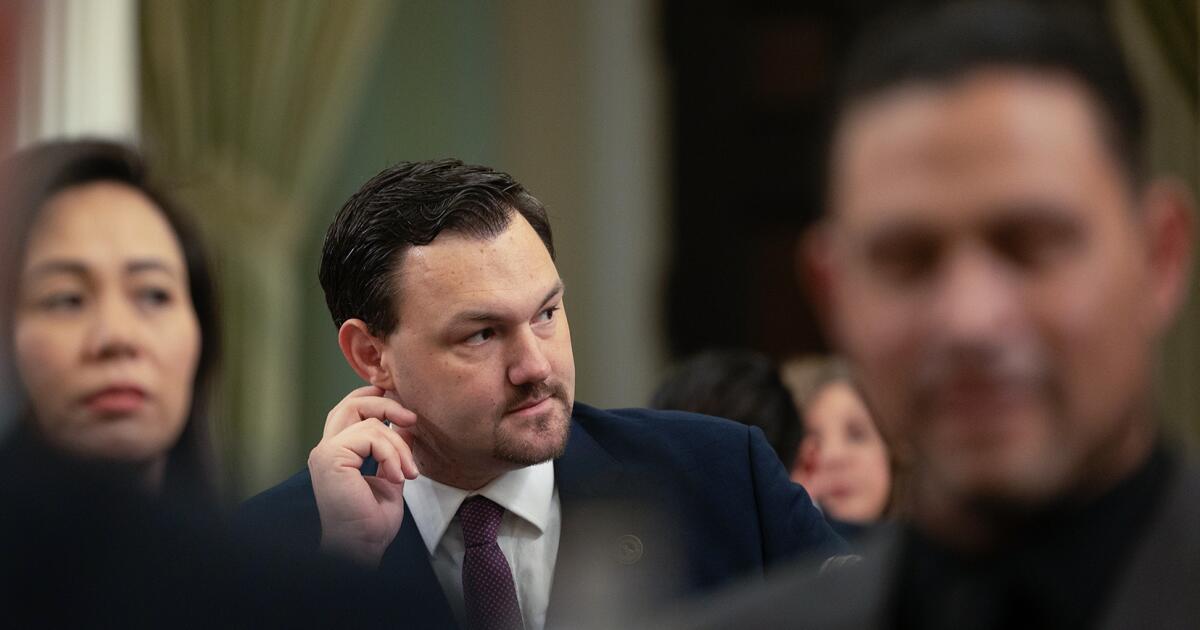
Can a new commission remedy California’s public defender crisis?
-
Sports21 minutes ago
2026 World Cup guide: Full TV schedule, game previews, results and standings
-

 World33 minutes ago
Poland and Ukraine’s ‘honours war’ intensifies
-

 News56 minutes ago
Newsom declares State of Emergency for Boyle Heights warehouse fire
-

 Los Angeles, Ca2 hours ago
Kids, teens can enjoy free lunch at over 90 parks across Los Angeles
-

 Detroit, MI3 hours ago
Metro Detroit church hosts community event to support youth: “We’re here for you”


