Science
Scientists Detect Shape-Shifting Along Earth’s Solid Inner Core


The inner core at the center of the Earth, a ball of iron and nickel about 1,500 miles wide, may not be perfectly solid.
A new study finds evidence that the inner core’s outer boundary has noticeably changed shape over the past few decades.
“The most likely thing is the outer core is kind of tugging on the inner core and making it move a little bit,” said John Vidale, a professor of earth sciences at the University of Southern California.
Dr. Vidale and his colleagues reported their findings on Monday in the journal Nature Geoscience.
That adds to the mysteries about the planet’s center. Geophysicists have previously reported that the inner core does not spin at exactly the same rate as the rest of Earth. They also showed that the pace of rotation changes — the inner core appeared to be spinning slightly faster than the outer layers a couple of decades ago, and now it is spinning slightly slower.
The inner core is the deepest of Earth’s geological layers. The crust — the layer that we live on — is just a few miles thick. Below that, filling up 84 percent of the planet, is the 1,800-mile-thick mantle, which is soft enough in places to flow up and down and generate the forces that push the continents around. Between the mantle and the inner core is the liquid outer core.
Scientists of course cannot cut into Earth and directly observe its insides. Instead, their knowledge is inferred from the vibrations generated by earthquakes that pass through the planet. The speed and the direction of the seismic vibrations change depending on the density and the elasticity of the rocks.
For this study, Dr. Vidale and his colleagues looked at earthquakes in the South Sandwich Islands, a volcanic chain in the South Atlantic Ocean.
So many earthquakes happen there that sometimes a new event is almost identical in magnitude and location to one that occurred years earlier.
The scientists identified more than 100 such “earthquake pairs,” analyzing readings from 1991 to 2004 at two arrays of seismometers more than 8,000 miles away from the islands, one near Fairbanks, Alaska, the other in Yellowknife, Canada.
The analysis originally aimed to improve on earlier work that suggested a slowing of the inner core’s spin. But the scientists did not understand aspects of the signals at the Yellowknife array.
“Basically, the wiggles are different,” Dr. Vidale said.
By coincidence, for some of the pairs, the inner core was in the same orientation during both quakes.
Identical earthquake vibrations passing through the identical part of the Earth should have produced identical seismic signals at Fairbanks and Yellowknife. At Fairbanks, that was true, but at Yellowknife the signals were different.
Because Yellowknife is somewhat closer to the South Sandwich Islands than Fairbanks is, the seismic waves from the islands’ earthquakes did not travel as deeply into the inner core as those reaching Fairbanks. That suggested something had changed near the outer boundary of the inner core.
Turbulent flow in the outer core or gravitational pull from denser parts of the mantle could have deformed the inner core boundary, which might account for the change in the seismic signals, Dr. Vidale said.
“We expect it’s soft because it’s near melting point,” he said. “So it’s no surprise if it deforms.”
The new findings will not be the last on the subject. “The offered interpretation is sound,” said Hrvoje Tkalcic, a professor of geophysics at the Australian National University who was not involved with the research, “although it is not the only possible explanation, as the authors acknowledge.”
In recent years, geophysicists have argued over whether differences in the seismic signals are caused by a change in the rotation rate or by a change in the shape of the inner core. “This study thus reconciles the last debate by proposing a combination of both causes,” Dr. Tkalcic said.
Lianxing Wen, a professor of geosciences at Stony Brook University in New York who in 2006 reported possible changes of shape at the inner-core boundary, remains unconvinced that the inner core spins at a rate different from that of the rest of Earth.
Dr. Wen said the Yellowknife data was inconsistent with that hypothesis. “Ordinarily, such inconsistencies should lead to an abandonment of the original inconsistent interpretation,” he said.
A change in shape, without any change in the rotation rate, was enough to explain the seismic data, Dr. Wen said.
Even Dr. Vidale is not completely convinced he is correct. “We’re pretty sure we were right, but this isn’t a bulletproof paper,” he said. “How sure? I sort of put it at 90 percent.”
Dr. Tkalcic said more data was needed to resolve the question, which “can be achieved by building seismological infrastructure in remote areas of the planet, including the ocean floor.”
Xiaodong Song, a professor at Peking University in China who in the mid-1990s was one of the first to propose that the inner core was spinning at a different speed from that of the Earth’s surface, agreed.
“This new study,” Dr. Song said, “should motivate a new round of exploration into strange behaviors at the heart of the planet.”



Facing higher premiums and the loss of federal subsidies, 374,000 people with health insurance from the state marketplace known as Covered California canceled their coverage in the first three months of the year, according to government statistics.
The cancellations amount to 19% of those who had renewed their policies on the state marketplace during open enrollment, state officials said. Those cancellations are higher than in the past three years when they ranged from 13% to 15% of those who renewed.
Jessica Altman, executive director of Covered California, attributed the jump in cancellations to the expiration of enhanced federal subsidies that caused the cost of a plan to leap for most middle-class Californians.
“We expect coverage losses to increase through the year,” she said.
Overall, Covered California had 1.8 million enrollees in February, down from 1.94 million the year before — a decline of 7%.
Altman said monthly enrollment numbers are delayed because consumers have a three-month grace period to resume their premium payments before the insurance carriers end their coverage for nonpayment.
This year, many middle-class Californians who depend on the state-run insurance marketplace created under the Affordable Care Act faced annual costs that were hundreds of dollars higher than last year because of the end of enhanced federal subsidies that began during the COVID-19 pandemic.
In 2021, Congress voted to temporarily boost the amount of subsidies Americans could receive for an ACA plan.
The law also expanded the program to families who had more money. Before that 2021 vote, only Americans with incomes below 400% of the federal poverty level — currently $62,600 a year for a single person or $128,600 for a family of four — were eligible for ACA subsidies. The 2021 vote eliminated the income cap and limited the cost of premiums for those higher-earning families to no more than 8.5% of their income.
On top of the loss of the enhanced federal subsidies, the average premium charged by insurers this year for a Covered California plan rose by more than 10% because of fast-rising medical costs.
The decline in ACA plan enrollees, however, has been greater in some other states. California has tried to keep people insured by using state tax money to fill in the gap for lower-income families.
This year, the state budgeted $190 million for premium subsidies for people with incomes of up to 165% of the federal poverty level.
In his budget plan, Gov. Gavin Newsom proposed spending $300 million on those state subsidies in 2027. That would expand the subsidies to enrollees with incomes up to 200% of the federal poverty level, or $31,920 for an individual or $66,000 for a family of four.
“We may actually see a number of Covered California enrollees paying less in 2027” because of the additional state subsidies, Altman said.
In May, Newsom also proposed in his budget that an additional $27 million in state money be used to help enrollees pay for the cost of gender-affirming care. That amount is an increase to the $30 million that he earlier proposed be spent this year and next to defray those costs for Covered California enrollees, according to state officials.
Last year, federal health officials enacted a rule that said the federally subsidized ACA plans could no longer cover gender-affirming care because it was no longer considered an “essential health benefit.”
Newsom’s proposed budget still faces debate in Sacramento and approval by the state Legislature.
The state marketplaces, created by the Affordable Care Act, also known as Obamacare, were meant to help those who don’t have access to an employer’s health insurance plan and have incomes too high to qualify for Medi-Cal, the government-paid insurance for the poor and disabled.
Because of the higher cost this year, more people are choosing the lower-priced Bronze plans. Those plans have higher co-pays and deductibles than the more expensive plans.
“We’re very concerned with the large shift to Bronze,” Altman said. “When you have higher cost-sharing, you’re more likely to defer care.”
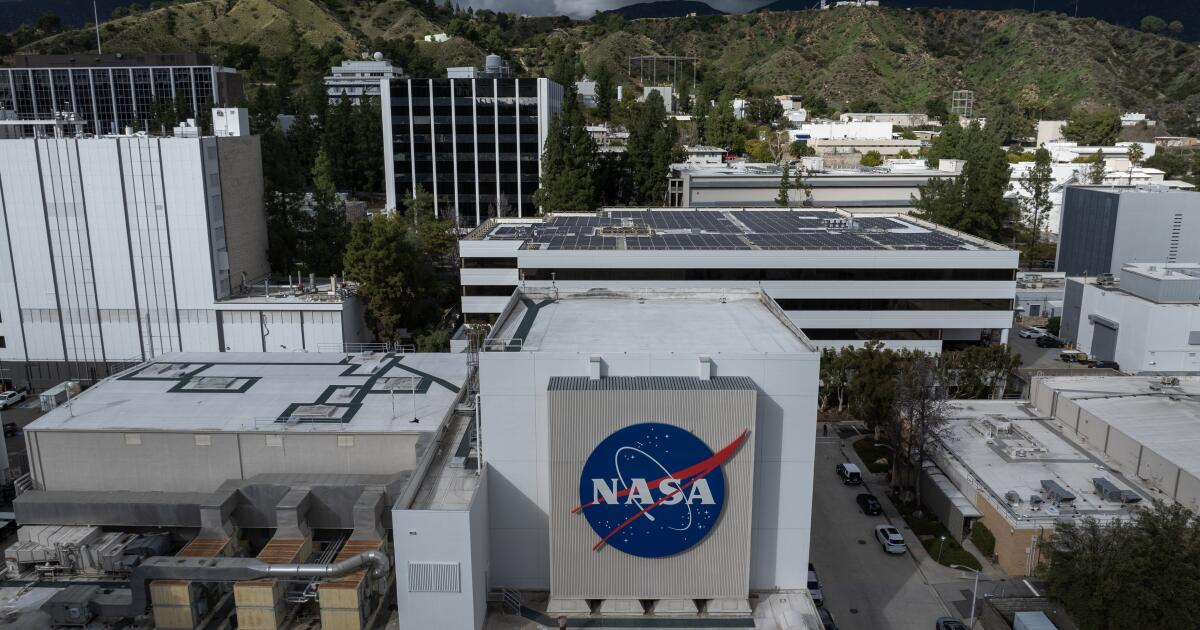
Weeks after Trump administration officials announced that management of NASA’s Jet Propulsion Laboratory would open to competitive bidding for the first time, questions remain as to why Caltech could lose control of the lab its researchers founded in 1936.
On one hand, observers note, high-profile delays and cost overruns on significant recent JPL projects earned sharp criticism from NASA even before the 2024 presidential election.
On the other, the second Trump administration’s record of squeezing scientific funding and attacking institutions in Democrat-led states make it difficult to consider any action separate from the charged political atmosphere, analysts say.
“My first instinct is that this [competition] isn’t necessarily a bad thing. It’s not written in stone that Caltech must run JPL, and it wouldn’t be the worst thing to have some competition for running the place,” said Casey Dreier, chief of space policy at the non-profit Planetary Society.
“That said, that requires this contract evaluation to be fair and unbiased, and this administration has no credibility in such things,” he added. “The responsibility is on NASA to earn the trust and ensure such an evaluation is open and free from political meddling. That’s almost impossible.”
JPL became part of NASA when the space agency was formed in 1958, and Caltech has been awarded the contract to run the institution outright ever since.
Its current 10-year contract with NASA, which is valued at up to $30 billion, runs through Sept. 30, 2028.
NASA Administrator Jared Isaacman announced the competition on May 22 as part of a slate of sweeping organizational changes at the space agency.
“When you step back, it is worth considering how many additional missions we could have undertaken with the resources lost to program cancellations and cost overruns over the years,” Isaacman wrote in a memo to staff. “That is the problem we must fix, so the American taxpayer and space-loving community can receive the highest scientific return on every dollar we spend at NASA.”
Competing the contract for JPL, the lone Federally Funded Research and Development Center (FFRDC) in NASA’s portfolio, was an effort to address cost-efficiency concerns, Isaacman wrote.
“This process will take several years, and I do not anticipate it having any impact on the projects underway or the location of the facilities,” he wrote. “It does, however, provide an opportunity to evaluate management costs, overhead burdens, and ideally find ways to get after the science faster and more affordably.”
In a joint statement, Caltech President Thomas F. Rosenbaum and JPL Director Dave Gallagher said the competition was “no surprise” and that a team was already in place “to ensure we are positioned for success.”
In July, NASA’s Office of Procurement held an informational event for companies and institutions interested in the upcoming FFRDC contract.
The dozens of registered attendees included universities like USC, Texas A&M University and Georgia Tech, aerospace companies such as Boeing and Lockheed Martin and nonprofit corporations like MITRE, which manages several FFRDCs, and Universities Space Research Association, a university consortium founded by the National Academy of Sciences in 1969. (SpaceX, which has been awarded more than $13 billion in NASA contracts in the last decade, was not on the list.)
“Lockheed Martin has more than 50 years of deep space exploration success with JPL, supporting landmark missions to Jupiter, Venus, Saturn, Pluto, including nearly a dozen missions to Mars,” said Bob Behnken, VP of Exploration and Technology Strategy. “We look forward to building on that unmatched partnership in the years ahead. We are closely following NASA’s review and will continue to assess how we can best contribute to the agency’s mission.”
Other attendees contacted by The Times declined to discuss their involvement.
Isaacman indicated that JPL could come under scrutiny even before he took over NASA. The billionaire entrepreneur referenced high costs at the La Cañada Flintridge institution in a memo prepared in advance of his confirmation hearings on his priorities for the space agency.
“Contract structure: Very expensive,” Isaacman wrote of JPL in a table outlining organizational issues at each of NASA’s centers. “Must increase the output and ‘time-to-science’ KPI.”
The institution has recently suffered a number of high-profile management stumbles.
After the JPL-managed Psyche mission to a metal-rich asteroid failed to meet its 2022 launch date, NASA commissioned an independent review that said internal reorganizations and personnel changes created distracted and uninformed managers and burned-out, stretched-thin staffers.
After a 2023 independent review found there was “near zero probability” of the JPL-managed Mars Sample Return mission making its proposed 2028 launch date, and “no credible” way to bring rocks back from the Red Planet within the stated budget, Isaacman’s predecessor Bill Nelson put out a call for proposals to industry and all other NASA centers, forcing JPL to compete for its own project.
After Trump’s election, Nelson announced that the final decision would be in the next administration’s hands.
The White House pushed for massive cuts to NASA’s 2026 budget that Congress overturned, and has lobbied for similarly steep cuts again this year. JPL has instituted painful cost-cutting measures of its own, reducing staffing from roughly 6,500 employees in 2023 to 4,500 last year through layoffs and attrition.
Its struggles come at a point when NASA is enthusiastically embracing private industry. Last month the agency awarded several key contracts for its upcoming lunar missions to Jeff Bezos’s Blue Origin and other private companies.
Trump has also made no secret of his willingness to punish states that haven’t voted for him through job losses. In announcing his decision to move U.S. Space Command from Colorado to Alabama, Trump acknowledged that his loss in Colorado in three presidential elections played a part in the move.
It’s impossible to consider any decision on JPL’s future separate from the administration’s track record of politically-motivated decisions, Dreier said.
“At the heart of this is why? Why now? If this is not just some rank political attack on California, what do they hope to gain from this?” Dreier said. “That deserves explanation, because the administration otherwise has no credibility here.”

The Gulf of Mexico, which the Trump administration calls the Gulf of America, is one of the noisiest bodies of water in the United States. Air gun blasts are the loudest element there, according to research by scientists who monitor underwater acoustics. Shipping traffic is another major contributor.
The noise could affect the ability of Rice’s whales to find food and mates, scientists say. The chronic stress of living in a loud environment could be detrimental to their health.
-

 North Dakota5 minutes ago
And he’s off
-

 Ohio12 minutes ago
The purge? Ohio moves to downgrade non-domiciled CDLs
-

 Oklahoma15 minutes ago
What Oklahoma Does Better Than Texas and Why It Matters
-

 Oregon20 minutes ago
Amid warnings of future cuts, University of Oregon trustees approve next year’s budget
-

 Pennsylvania27 minutes ago
State Awards Contract To Resurface Major Doylestown Borough Street
-

 Rhode Island30 minutes ago
Shifting Sands in Rhode Island – Rhode Island Monthly
-

 South-Carolina35 minutes ago
WATCH: Gov. McMaster signs bill protecting SC police animals
-

 South Dakota42 minutes ago
South Dakota primary results leave Legislature seats in limbo

