Fitness
I was doing a popular exercise for a bigger butt when I fractured my hip — don’t make my mistake


A personal trainer has warned of the dangers of “ego lifting” after she claims smashing a personal best in the gym left her hospitalized — when she snapped her right hip bone.
Kristina Schmidt, 24, started incorporating barbell hip thrusts into her gym routine in an attempt to grow her glutes after seeing her favorite fitness influencers raving about the exercise.
But after quickly working her way up to a personal best of 310 lbs. in March 2023, she developed agonizing pain in her right hip that “felt like someone was tearing her leg off.”
At one point the pain became so bad that Kristina was left “crying with every single step” and was eventually unable to walk.
Kristina visited her doctor and had an MRI scan before being referred to hospital.
Footage shows her performing the high-impact thrusts that, over time, caused a stress fracture that’s believed to have been caused by lifting too heavy a weight with incorrect form.
After being struck down with blood poisoning when her fractured hip became infected, Kristina underwent surgery to clean the wound and needed a three-month course of antibiotics.
Now, Kristina wants to warn prevent others going through the same ordeal.
“I wanted to look cool in front of my powerlifting gym friends,” Kristina, from Malibu, California said.
“The most I could lift was 310 pounds for eight repetitions and I would usually do two sets of that, but that was with horrible form and not properly engaging my glutes.
“If I’d been able to lift it up properly then it would have been impressive but I was just swinging it up.
“In January I was only lifting 245-265 lbs. and then by March it was already up to 310 lbs., which in hindsight was probably way too fast. It was too much.”
In March Kristina, who was studying Japanese language, politics and economics at Hokkaido University in Hokkaido, Japan, went on a day out with pals and started struggling to walk due to the pain in her hip.
“I remember going on a car trip with my friends and I couldn’t walk,” she said.
“I was crying with every single step, my hip felt like someone was trying to tear my leg off. It was a horrible pain, I couldn’t stop crying and my friend had to carry me into the house.
“Doctors said I had a stress fracture with small cracks in multiple places around the neck of my femur and hip joint. They said this was likely caused by repeatedly overloading my hip over time with too many heavy weights and incorrect form.
“The space between my hip bone and femur shrank so much that my bones were grinding on each other.
“I then got a bacterial infection that settled in my hip — the weakest and most compromised part of my body at the time — caused the synovial fluid in my hip joint to turn orange, and resulted in septic arthritis and borderline blood poisoning.
“I needed surgery to clean out the joint and after that I was on crutches and still couldn’t walk for weeks.
“I was put on antibiotics for months, which destroyed my gut microbiome, weakened my immune system, and triggered a domino effect of other health issues.”
Kristina started working out at the gym in 2021 and implemented the booty-building move into her routine around 18 months later after being inspired by social media influencers.
Since her accident Kristina, who used to work as an English teacher, started her personal training and nutrition qualifications and is due to be fully qualified in May 2025.
“I just saw people doing the hip thrust online. I never saw people talking about what to do if you’re more quad dominant, like I am,” she said.
“It was more of a one-size-fits-all approach, like, ‘If you want big glutes then you should do this.’ But not everybody has the same muscular genetics.
“I think the muscular imbalance was a big thing that caused me to ruin my form on the hip thrust because when the weights got too heavy for what I could handle with good form, the more developed muscles — in my case, the quads and hamstrings — would take over to complete the lift.
“But that imbalance and overcompensation by the quads and hamstrings ended up putting immense pressure on my hip area, causing the stress fractures over time.”
Instead of focusing on proper form and technique, Kristina was stacking on weights quickly in an attempt to impress her gym friends.
She quickly added 30kg onto her weights, working her way up from a 245 lbs. to 310 lbs. hip thrust in just a matter of months.
“Ego lifting has always been a meme online,” she said. “You see pec muscles disconnecting when someone benches too heavy, or someone’s back breaking when they’re deadlifting — these are all instant injuries.
“Nobody talks about the slow burn of injuries like a stress fracture — which, unlike an actual fracture, can often go unnoticed — and how it leads to a domino effect of other health issues.”
After injuring herself Kristina admits that she was “scared” to return to hip thrusting, but has since slashed the weight she lifts in half.
“The accident definitely inspired me to become a personal trainer,” she said. “I focus more on doing slower reps for greater time under tension and sometimes even adding half reps and holding the hip thrust at the top and going until failure.
“I now do my hip thrusts almost exclusively on the smith machine because I don’t have to worry about balance and can focus on (perfecting) form and time under tension.
“I really focus on control. I’m now hip thrusting 152 lbs, quite literally taking the 310 lbs. and cutting it in half.
“There are some days where my form might be a little off and I can tell that it’s off because my quads or my hamstrings will start taking over.
“That’s how I know that it’s not right and I know that I need to lower the weight or adjust the distance that the bench is from the bar (on the smith machine) and try again. I really try and check in with myself after every set.”
Now, Kristina wants to warn others about the dangers of lifting too heavily to impress others and getting her information on how to lift solely from social media.
“I do regret having social media as one of my main sources of information back then,” she said.
“With some of these influencers, you don’t even know if their glutes are real or not and were actually built in the gym or not, or whether they’re certified as instructors and actually understand the mechanics behind what it takes to grow muscle correctly and safely.
“You have to be quite careful about what you see online now. Just because it works for one person, doesn’t mean it works for everyone.
“Having guidance from someone who is certified and who knows what they’re doing is really important.
“The hip thrust itself is not a bad exercise and I don’t want to scaremonger, or to discourage people from trying it, by all means try it but the whole point is to do so responsibly.”
After sharing a video with the details of her injury on Instagram the clip went viral, racking up more than 19,170,000 views, likes and comments.
“Just to be safe: this happened because u used too much weight not because the exercise is bad, right? Lmao,” one user wrote.
“Everyday on this app I unlock a new fear,” another commented, while a third added: “The first rule before going to gym is…leave your ego at home.”
“I had a similar thing, my quads were way stronger than my hamstrings and glutes, and one day I stood up at a park and tore and sprained all my ligaments and tendons in my hip flexor… work out ur bum guys,” said yet another.



We’ve long known that aerobic exercise might help us live longer, and now strength training is being credited with the same effect. People who do up to two hours of strength training each week, over several decades, may reduce their risk of dying earlier from several serious conditions, including heart disease and neurological diseases, according to a Harvard-led study published June 12, 2026, in the British Journal of Sports Medicine.
Researchers analyzed three major studies involving 147,374 adults (79% women) who were middle-aged or older at the study’s start and tracked for up to 30 years. Participants reported how frequently and vigorously they exercised, including resistance training (which can include weight lifting and body-weight movements) and aerobic activity (such as brisk walking, cycling, and running). Deaths from all causes were also recorded.
Participants who logged between 90 and 119 minutes of resistance training each week were 13% less likely to die during the study period from any cause compared with those who did no strength training. They also had a 19% lower risk of dying from cardiovascular disease and a 27% lower risk of dying from neurological diseases such as dementia. Aerobic exercise remained a strong, independent predictor of living longer, but the greatest benefit was observed when resistance training was combined with it. Participants who regularly did both had up to a 45% lower risk of dying during the study period than those who did little aerobic activity and no resistance training.
If you don’t already engage in strength training, it may be wise to start. Begin with body-weight exercises such as squats, push-ups, or step-ups on a low stair. Add resistance bands or light dumbbells to increase the benefits. Consider enlisting the guidance of a physical therapist or personal trainer, and aim for consistency over time.
Image: © The Good Brigade/Getty Images
Fitness
‘This works’: Fitness icon Suzy Jalowsky, 60, shares the simple exercise formula she swears by

It’s easy to overcomplicate your fitness routine, especially when you’re being bombarded by information on social media about how to optimise every aspect of your workouts. But improving your fitness and building strength doesn’t have to be complicated – as a new reel from fitness icon Suzi Jalowsky shows.
The 60-year-old shared how just 30 minutes of walking daily paired with three simple strength workouts can help women over 40 ‘look better, feel better and stay strong’ as they age.
‘This works,’ she wrote in the caption. ‘Consistency with the basics will take you where you want to be. We often look for complicated solutions, but the basics are what truly change your body.’
Suzi Jalowsky’s strength routine
To add to the simplicity of the workout, Jalowsky uses just two 12lb (roughly 5kg) dumbbells throughout – so you don’t need to spend hundreds of pounds on expensive equipment to get started.
The workout
How to do the moves
- Stand with your feet hip-width apart and a slight bend in your knees.
- Hinge at your hips until your chest is almost parallel to the floor, keeping your back flat and your shoulders down.
- Hold a dumbbell in each hand with your palms facing each other and your arms hanging below your shoulders.
- With a slight bend in your elbows, raise the weights out to shoulder height, squeezing your upper back and shoulder blades together.
- Lower the dumbbells back to the starting position with control.

- Stand with your feet shoulder-width apart, holding a dumbbell in each hand.
- Bend over while bracing your core and keeping your back straight and chin tucked.
- Draw the dumbbells towards your waist, keeping the elbow tucked into your side.
- To complete the rep, extend the arms back to the starting position.
- Stand with your feet hip-width apart, hands on your hips.
- Take a big step back with your right leg, crossing it behind your left. Bend your knees and lower your hips until your left thigh is nearly parallel to the floor. Keep your torso upright and your hips and shoulders as square as possible to the wall in front of you.
- Return to start. Then repeat on the other side.
- Start with a dumbbell in each hand, arms down and palms facing your body.
- Rotate each hand so your palms face forwards. Keeping a slight bend in the knees, activate your glutes.
- Engaging your core to avoid any sway in the hips, bend your arms, lifting one of weights to chest height in a slow, controlled movement.
- Keep your shoulders relaxed and down, and keep your head, neck and spine neutral. Don’t arch your back.
- In another slow, controlled movement, lower the weight back down to your thighs by straightening your arms while raising the other one to your chest. Repeat.
- Stand with your knees bent and lean forward slightly, with a dumbbell in each hand.
- Keeping your back straight, bend your dumbell-holding arm 90 degrees at the elbow so your triceps are aligned with your back and your biceps are perpendicular to the floor.
- Engage your core and your triceps and hinge at the elbow, lifting the dumbbell up and back as you try and straighten your arm. Your triceps should stay still; only your elbow moves.
- Guide the weight upward until your arm is straight, pause, then lower back down slightly to begin your pulses.
- Stand with your feet slightly wider than shoulder width apart, evenly distribute your weight, and turn your toes out to 10 and 2 o’clock. Hold a dumbbell in each hand.
- Keep your core tight and chest tall as you inhale, bend your knees, and sink your hips down until your thighs are parallel to the floor.
- Exhale as you drive through your feet back to an upright standing position.
Upright row
- Stand with your feet shoulder-width apart, holding the dumbbells with straight arms in front of your legs. Your palms should face your body.
- Engage your abs. Keep your chest up and eyes forward.
- Lift the dumbbells up to mid-chest height or just below your chin. Keep your dumbbells close to your body by raising your elbows up and out to the sides.
- Pause at the top, then lower with control to the beginning.
Serve the platter
- Stand with your feet hip-width apart, holding a dumbbell in each hand.
- Bend your elbows to 90 degrees, tucking them tightly against your waist with your palms facing upwards.
- Slowly extend your arms out in front, raising them to shoulder height.
- Pull your elbows pack to the starting position.
- Start with your feet together, holding a dumbbell in both hands at your sides. Shift your weight to your left leg, with your knee slightly bent.
- Hinge at your hips to bring your chest down while raising your right leg behind you until your body is in a line from your head to your right foot.
- Reverse back to the starting position and repeat, then switch sides.
Star jump with squat
- Start by standing with your feet shoulder-width apart and a single dumbbell held with both your hands in front of your chest.
- In one movement, jump your feet out to the side and press the dumbbell over your head.
- Jump your feet back in, bring the dumbbell back to your chest and lower into a squat. Continue by jumping your feet out to the side again and repeating the movement.
One of our most frequently asked questions here at Women’s Health? How to build muscle and burn fat at the same time. So, we asked superstar trainer Oyinda Okunowo exactly how to do it. In this 4-week plan – created exclusively for Women’s Health COLLECTIVE members – you’ll get the workouts and nutrition guidance needed to help you on your way to better body composition. Tap the link below to unlock 14 days of free access to Oyinda’s plan and start training today.
Get the plan

Lauren Geall is deputy site editor for Women’s Health UK and Men’s Health UK. She graduated from Exeter University with a BA in English Literature before studying an MA in Magazine Journalism at City, University London. She’s been writing about health, fitness and wellbeing for over five years, with a total of seven years in digital journalism. Prior to her current role, she worked at Stylist as the acting health and fitness editor. As well as being a keen runner, Lauren is passionate about women’s sport and can often be found cheering on Arsenal Women at the Emirates or keeping tabs on the Red Roses’ latest win.
Fitness
Sue Barker, 70, keeps fit with cardio, strength training and NEAT exercise – her lifelong fitness formula

Sue Barker may have stepped away from professional tennis in 1985 at the age of 29, but she’s continued to prioritise fitness and movement.
‘During the winter, I try to exercise at least three times a week at the gym, and in the summer I like to get outdoors. I love jogging, cycling and walking my dogs,’ the 1976 French Open champion and former world No. 3 told Express.
She shares her varied routine – which includes cardio, strength training and plenty of everyday movement (also known as non-exercise activity thermogenesis, or NEAT) – with her husband.
‘As a rule, Lance and I do a lot of exercise – we have two dogs to walk [twice a day], we cycle a lot and have a personal trainer we see a couple of times a week,’ the former long-time Wimbledon presenter told Sheerluxe.
‘So, I do keep fit. Lance plays golf and I’m thinking of taking it up, but I’ve been saying that for quite a few years…’
Despite retiring from both tennis and broadcasting, she remains drawn back to the court.
‘Going back to Wimbledon [in 2023] reignited my love for the game, so I’m going to play there on the grass,’ she added.
Sue Barker uses exercise to stay fit for life
Movement plays a central role in her approach to healthy ageing and maintaining her independence.
‘It’s vitally important to me that, even later in life, I stay fit and focused,’ she told Express. ‘For me, it’s a question of self-preservation. While I can’t fight time, I can help myself stay fit and focused through good nutrition and a healthy lifestyle.’
She also remains keen to embrace new experiences and make the most of the years ahead.
‘I can’t wait to see where my life is going to go from now on. Age is but a number,’ she told Riverstone Living. ‘I want to go out and do all sorts of things – I want to travel, I want to keep living life to the absolute full.’
How Sue Barker first fell in love with sport
Her love of staying active started at home.
‘My father was very sporty and played a lot of tennis,’ she told Sheerluxe. ‘He was also a very good golfer and, as a family, we did a lot of active things together like rowing and swimming. My siblings did all sorts of sports too and I learned to play tennis mainly with my sister.’
Playing tennis in an era before modern recovery methods and training techniques helped forge her into a resilient athlete.
‘We didn’t have the facilities and the training and the technique that goes with it now – the stretching, the ice baths,’ the former champion recalled.
‘We wore Green Flash tennis shoes that didn’t have any sponge in them at all, and we were using wooden rackets. Every part of your body ached.’
One of our most frequently asked questions here at Women’s Health? How to build muscle and burn fat at the same time. So, we asked superstar trainer Oyinda Okunowo exactly how to do it. In this 4-week plan – created exclusively for Women’s Health COLLECTIVE members – you’ll get the workouts and nutrition guidance needed to help you on your way to better body composition. Tap the link below to unlock 14 days of free access to Oyinda’s plan and start training today.
Get the plan
-

 Los Angeles, Ca8 minutes ago
LADWP begins long-term repairs after West Hollywood water main rupture
-

 Detroit, MI32 minutes ago
Livestream: Mayor Sheffield, Detroit health chief to address wildfire smoke threat
-
 San Francisco, CA44 minutes ago
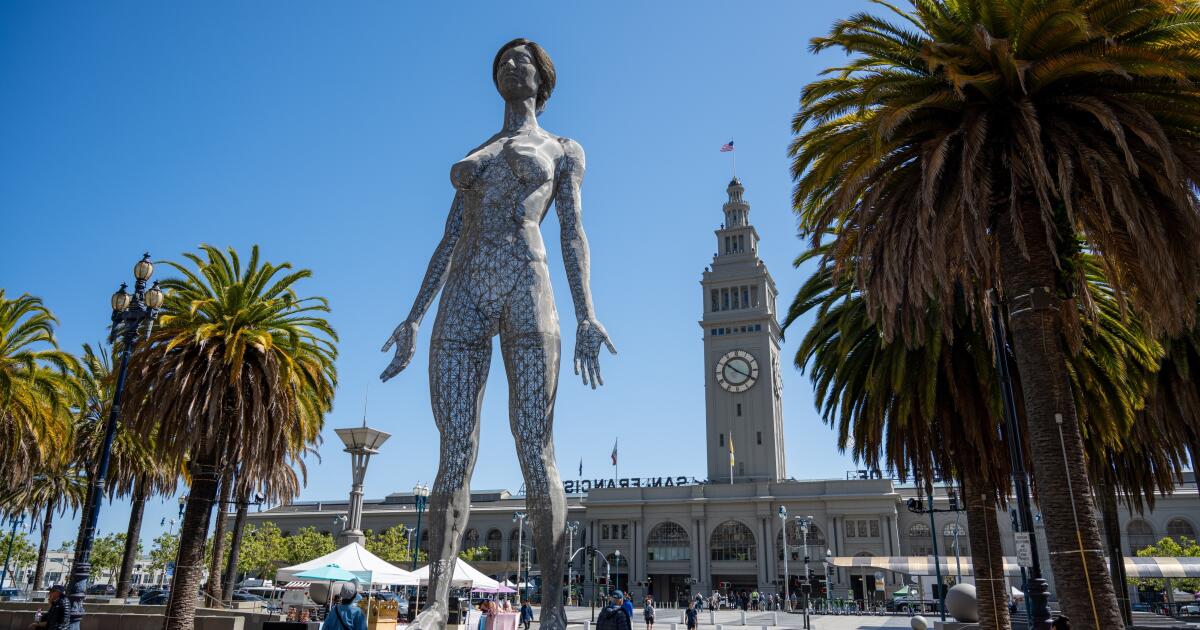
A sculpture of a giant naked woman goes on sale in San Francisco. Bring a crane
-

 Dallas, TX50 minutes ago
No ‘straight answer’: Why Pioneer Cemetery is the latest battleground at City Hall
-

 Miami, FL56 minutes ago
TSA hosts news conference ahead of World Cup third place match at Miami Stadium
-

 Boston, MA1 hour ago
ICE Boston arrests Barbados national during targeted operations in Attleboro
-

 Denver, CO1 hour ago
Denver Broncos training camp is 2 weeks away
-

 San Diego, CA1 hour ago
Daily Business Report: July 17, 2026, San Diego Metro Magazine

