Southwest
Why blue state policies are causing even more homelessness in America

NEWYou can now listen to Fox News articles!
In a pre-holiday news release, the Department of Housing and Urban Development (HUD) revealed that homelessness in the United States has hit a record high.
This troubling milestone is another addition to the lackluster legacies of the Biden administration, California Gov. Gavin Newsom and sanctuary cities, with progressive blue states experiencing the largest surges and costing Americans millions every year, adding to the already out-of-control debt ceiling.
We know nobody chooses to be homeless, and we know that nobody in America deserves to live without a roof over their head, but are these progressive blue states creating an out-of-control spiral because of incredibly poor policies?
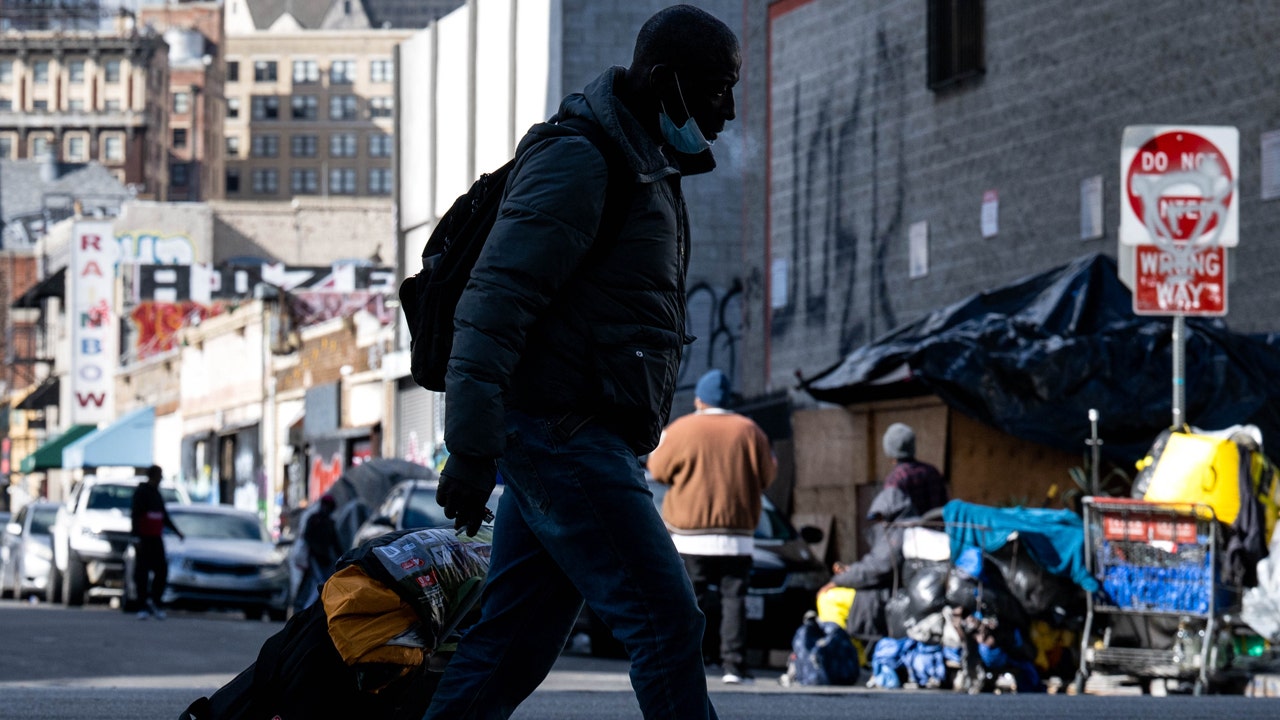
A homeless man walks through Los Angeles’ skid row on Dec. 12, 2022. (Sarah Reingewirtz/MediaNews Group/Los Angeles Daily News via Getty Images)
According to HUD’s annual point-in-time survey, homelessness rose by 18% in 2023 and has increased 36% since 2019. More than 770,000 individuals in our country have been experiencing homelessness in shelters, public spaces or other government-supported housing over the past year. However, the report sidesteps any direct accountability of federal or state policies, instead attributing the crisis to broader social and economic factors.
US HOMELESSNESS UP DOUBLE DIGITS, RISING NUMBERS OF ASYLUM SEEKERS, AFFORDABILITY CRISIS AMONG CAUSES
Growth in Homelessness
A comparison of homelessness growth between top red and blue states highlights the stark differences in how these states have handled the crisis.
Between 2019 and 2024, California’s homeless population increased by almost 36,000 individuals, up 23.6%. New York grew by almost 66,000 (71.5%), and Illinois by more than 15,000 (153%). By contrast, Texas’ homeless population grew by a little over 2,000 (8.2%) and Florida about 3,000 (10.7%).
Progressive states like California and New York show dramatically higher increases in homelessness, whereas red states such as Texas and Florida have managed to limit their growth despite facing similar economic and migratory pressures. Why?
Shifting Blame
HUD’s report identifies several contributing factors, including a national affordable housing crisis, rising inflation, and stagnating wages for middle- and lower-income households. Does it mention at all how cities like San Francisco completely skyrocketed the homeless population while tech companies got rich in “the City.” There literally was an app developed called SnapCrap for San Francisco because of so much public feces on the street. This city is the cornerstone of progressive policies and loves the concept of socialism.
NEIGHBORHOOD ROCKED BY HOMELESS CAMP TRIPLE MURDER AS FORMER POLICE OFFICER CALLS FOR GOVERNMENT TO INTERVENE
HUD also cites systemic racism, public health crises and natural disasters as underlying drivers of homelessness. Well, could there have been a state with more natural disasters than Florida?
What’s interesting is that Texas and Florida are both states that have no state income tax. On the opposite end of the spectrum, New York, California and Illinois are three of the states with the highest state income taxes. Blue states will point to the expiration of pandemic-era welfare programs such as expanded child tax credits and the eviction moratorium for their problems. What they won’t point to is their poor tax and spend policies that have dramatically increased the cost of living and driven out of their states employers who then do business in other states.
Cost of Caring for One Homeless Person
Another striking factor is the cost of government programs aimed at addressing homelessness. Blue states tend to spend significantly more per homeless person compared to red states, often with less effective outcomes. In California, they spend almost four times as much per homeless person versus Texas – $45,000 vs. %12,000. New York spends $38,000 and Florida $14,500.
THE LEFT’S HOMELESS PLANS WRECKED OUR CITIES. NOW HELP MAY COME FROM AN UNEXPECTED SOURCE
Despite spending far more, blue states have seen homelessness rise sharply, proving the inefficiencies in how resources are allocated and the consequences of poor policy decisions. Florida and Texas, by comparison, invest in more targeted programs like addiction treatment and transitional housing, which yield better long-term results in my view.
Migration and Mismanagement
Blue states will largely blame the rise in homelessness on a heavy influx of large-scale migration. They will say this happened because Red states transported migrants to their areas. These cities never admit that they declared themselves sanctuary cities or acknowledge the policies that have kept them from accommodating these populations more effectively and led to this mismanagement of wide-scale homelessness.
What are one of the reasons? Housing starts. Higher housing costs, more stringent zoning and environmental regulations in progressive states have led to directly restricting housing supply and driven up prices. Over the last year, Texas issued more than 230,000 housing start permits and Florida issued more than 190,000. California, New York and Illinois issued, respectively, 117,760, 48,807 and 16,863.
Blue state leadership will say they need more affordable housing (or housing period), but the housing starts suggest otherwise.
CLICK HERE FOR MORE FOX NEWS OPINION
Ignoring the Root Causes
The “housing first” approach championed by blue states has failed to deliver meaningful results. HUD allocates $72 billion annually – primarily for affordable housing – and states like California spend billions more on similar initiatives. Over the past five years, California alone has spent $24 billion to combat homelessness, yet the crisis has worsened. Even with federal waivers allowing California to use Medicaid funds for housing, the state has seen drug rehabilitation centers close due to insufficient government reimbursements.
A More Pragmatic Approach
Red states like Florida and Texas have adopted more effective strategies. These states use legal measures such as prosecuting drug possession and public disorder to encourage addicts and individuals with mental illnesses to seek treatment as an alternative to incarceration. This approach is both practical and compassionate, ensuring that vulnerable populations receive help while keeping public spaces safe.
Progressive policies, by contrast, often prioritize expanding housing subsidies without addressing behavioral health challenges. This preference ultimately leaves many homeless individuals to fend for themselves on the streets – a stark contrast to the more structured interventions in states like Florida and Texas.
What Way Do We Move Forward?
America’s homelessness crisis underscores the failures of progressive governance in addressing complex social issues. Nobody in this country should be homeless. Nobody. Adopting more balanced approaches like those in Florida and Texas, blue state leadership could better address the root causes of homelessness and provide lasting solutions for their most vulnerable residents.
Let’s get a roof over everyone’s head. It all starts with leadership!
CLICK HERE TO READ MORE BY TED JENKIN
Read the full article from Here


A woman was struck and killed by a driver while crossing the street on Pacific Coast Highway in Long Beach.
On June 3, the female pedestrian was using the crosswalk at Pacific Coast Highway and Pacific Avenue around 4:50 a.m.
She had walked against a red light and was hit by a 19-year-old driver in a Chevy sedan, Long Beach police said.
Despite lifesaving efforts, the woman was pronounced dead at the scene. The driver remained at the scene and is cooperating with the investigation.
“At this time, impaired driving, distracted driving and excessive speed are not believed to be a factor in this collision,” police said.
The woman’s name is being withheld pending identification by the Los Angeles County Medical Examiner.
Anyone who witnessed the crash or has information on the incident is asked to call Detective Joseph Johnson at 562-570-7355.
Anonymous tips can be provided to L.A. Regional Crime Stoppers at 1-800-222-8477 or online at lacrimestoppers.org.

A man wanted for a deadly road rage shooting in Los Angeles was arrested and extradited from Mexico after fleeing the U.S. in 2024.
The suspect was identified as Christian Rojas, 21, of Bellflower, according to the California Highway Patrol.
Authorities had been searching for him since the deadly incident on October 10, 2024.
Rojas and a second suspect, Joshua Rojas Sr., 47, of Downey, were driving on the northbound 5 Freeway in Boyle Heights around 4 p.m. when they became involved in an altercation with another driver that escalated into a shooting.
-

Video obtained exclusively by KTLA shows the terrifying moment a road rage suspect opened fire the driver of another car on the 5 Freeway in Los Angeles, fatally wounding him and seriously injuring a passenger, on Oct. 10, 2024. (Credit: @hugoboss01) -
Video obtained exclusively by KTLA shows the terrifying moment a road rage suspect opened fire the driver of another car on the 5 Freeway in Los Angeles, fatally wounding him and seriously injuring a passenger, on Oct. 10, 2024. (Credit: @hugoboss01) -
Video obtained exclusively by KTLA shows the terrifying moment a road rage suspect opened fire the driver of another car on the 5 Freeway in Los Angeles, fatally wounding him and seriously injuring a passenger, on Oct. 10, 2024. The alleged gunman is circled. (Credit: @hugoboss01) -
Video obtained exclusively by KTLA shows the terrifying moment a road rage suspect opened fire the driver of another car on the 5 Freeway in Los Angeles, fatally wounding him and seriously injuring a passenger, on Oct. 10, 2024. (Credit: @hugoboss01) -
Video obtained exclusively by KTLA shows the terrifying moment a road rage suspect opened fire the driver of another car on the 5 Freeway in Los Angeles, fatally wounding him and seriously injuring a passenger, on Oct. 10, 2024. (Credit: @hugoboss01) -
Christian Rojas, 21, of Bellflower, was arrested and extradited to the U.S. from Mexico on June 2, 2026, in connection with a deadly road rage shooting in Los Angeles. (California Highway Patrol)


Video of the tense confrontation showed the suspects, who were driving a Dodge Durango SUV, opening fire on two men in a Cadillac sedan.
The shooting forced the victim to pull over abruptly. That’s when a suspect ran up to the Cadillac, opened the passenger-side door and fired several shots at close range.
In a panic, the Cadillac driver tried to escape by making a sudden U-turn and driving against oncoming traffic. He eventually crashed head-on into several vehicles.
The suspects ditched their SUV and fled toward a freeway exit on foot. The Cadillac driver was left with serious injuries and his passenger was killed. Their identities were not released.
The incident caused a miles-long backup that left thousands of motorists stranded on the freeway for hours and authorities worked to clear the scene.
Following an extensive investigation, detectives identified the two men as the suspects involved.
Joshua Rojas Sr. was arrested in San Bernardino on October 22, 2024, on a murder charge. He remains in custody awaiting trial.
Meanwhile, Christian Rojas had fled the U.S. and was hiding in Mexico, detectives said. A $4.3 million bail warrant was issued for his arrest.
“Through a coordinated international effort, investigators determined that Rojas was living in Palomo de Arriba, Mexico,” CHP officials said. “The U.S. Marshals Service worked with Mexican state police to locate and arrest him on the outstanding warrant.”
On June 2, 2026, Christian was arrested and extradited to the U.S. to face a murder charge.
“This arrest demonstrates that time and distance will not shield violent offenders from justice,” said CHP Southern Division Chief Chris Margaris. “For nearly two years, our detectives remained relentless in their pursuit of those responsible for this senseless act of violence. Through exceptional collaboration with the United States Marshals Service and our law enforcement partners in Mexico, we located and apprehended this suspect and brought him back to face the charges. We remain committed to protecting the public, supporting victims and their families, and holding violent criminals accountable wherever they may try to hide.”

The northbound 405 Freeway will remain closed for several hours near Los Angeles International Airport after a police pursuit ended with officers opening fire Friday morning. Unconfirmed reports indicated the incident began with a robbery at a 7-Eleven store, which ended with Los Angeles Police Department officers pursuing the suspect in a Kia. The chase […]
-

 Lifestyle20 minutes ago
Taylor Swift and Travis Kelce’s Wedding: Try Our Fantasy Wedding Planner
-

 Technology30 minutes ago
Meta made its own AI-generated clickbait news feed
-

 World35 minutes ago
Jeff Bartos says UN reform is no longer an ‘oxymoron’ after $570M in cuts
-

 Politics42 minutes ago
Top House Democrat says there’s ‘no way’ Platner didn’t know tattoo’s Nazi origins
-

 Health45 minutes ago
Can alkaline water actually improve your health? Experts separate fact from fiction
-

 Sports50 minutes ago
Maxx Crosby plans to attend America 250 UFC fight, talks White House, Fernando Mendoza, Tom Brady and Olympics
-

 Technology57 minutes ago
A wheeled robot may beat humanoids into your home
-
 Business60 minutes ago
California falls behind Texas in Fortune 500 ranking

