Business
Despite Blocked US Steel Bid, Japan Won’t Stop Seeking American Deals


As signs emerged that President Biden was gearing up to stop the Japanese steel maker Nippon Steel from acquiring Pittsburgh-based U.S. Steel, top Japanese officials repeatedly warned that quashing the merger would hinder economic ties between the allies.
Japan’s biggest business lobby, Keidanren, said in September that America’s investability would be tarnished if Nippon Steel’s $15 billion bid was blocked. Prime Minister Shigeru Ishiba of Japan reached out to Mr. Biden asking him to approve the deal during what he called a critical juncture.
In the United States, during a heated presidential campaign, both Mr. Biden and his opponent, Donald J. Trump, came out against the Japanese acquisition of U.S. Steel, an iconic American company in a key electoral state. Mr. Biden on Friday stopped the merger from going forward, arguing that foreign control of U.S. Steel would jeopardize America’s national security.
Nippon Steel and U.S. Steel assailed Mr. Biden’s decision, calling the deal’s review “deeply corrupted by politics” and its rejection “shocking.” The companies said on Friday they would consider taking legal action to try to revive the deal.
But while Mr. Biden’s decision sends a worrying sign to Japanese leaders about the perils of American politics, it is not expected to stop other companies from seeking to do deals in the United States.
Japanese businesses have had little choice but to move significantly toward the United States in recent years, as they have had a harder time investing in China. Now, in anticipation of a second Trump administration, executives are even more busily lining up fresh investments in America.
For decades, Japanese companies have sought growth opportunities outside the country, where the population is aging and declining, and currency fluctuations have imperiled export activities. Much of that expansion has been aimed at the United States and China, which have long vied to be Japan’s biggest trade partner.
But it has gotten more difficult for Japanese firms to operate in China because of less-friendly regulations and competition from state-backed rivals. China’s share of Japanese foreign direct investment has declined steadily over the past half-decade, while it has climbed in the United States. Japan became the top investor in America in 2019 — a position it has maintained each year since.
While the volume of Japanese-led deals in the United States stalled slightly last year, trade experts expect investments to pick up again when President-elect Trump takes office. That is because the risk of increased tariffs gives Japanese and other foreign companies a greater incentive to invest and produce in the United States over other countries, especially China.
Japanese power companies are eyeing a number of potential investments in natural gas and other energy projects promoted by Mr. Trump. At a Trump news conference last month, Masayoshi Son, the chief executive of the Japanese technology company SoftBank, pledged to invest $100 billion in the United States over the next four years.
“Business leaders will not look at a unique case like Nippon Steel and make decisions to withhold investment in the United States,” said Masahiko Hosokawa, a professor at Meisei University and former senior official at Japan’s trade ministry. “This is not a case that will cause damage, especially in the mid- to long term.”
Japan’s biggest business publication, Nikkei, wrote on Saturday that Nippon Steel’s crushed bid was a result of a mistaken calculation that “economic rationality” would prevail even in a presidential election year.
In December 2023, when Nippon Steel announced its plans to acquire U.S. Steel, executives at the company thought the deal would proceed quickly. As the Committee on Foreign Investment in the United States reviewed the deal, Nippon Steel doubled down on its bet on the United States, withdrawing from a longstanding joint venture in China that might have elicited suspicion from regulators.
Nippon Steel’s bid instead drew intense backlash from some politicians and union leaders, who said the purchase of a storied American manufacturer by a foreign entity would undermine national security and local industry. Early on, both President Biden and President-elect Trump said they were against the deal.
As part of its bid, Nippon Steel offered a large premium on U.S. Steel shares and promised to invest billions in the American company’s plants. Takahiro Mori, the Nippon Steel executive in charge of the deal, traveled repeatedly to the United States to hold meetings with over 1,000 employees, local officials and others with a stake in the deal.
Late last month, the review committee, known as CFIUS, sent a letter to the White House saying it was unable to decide whether Nippon Steel should be allowed to buy U.S. Steel. That paved the way for President Biden to terminate the transaction.
China, at the same time, has been trying to bolster relations with Japan. Some speculate the moves were made in anticipation of a trade war between the United States and China that is expected to worsen when Mr. Trump takes office.
In November, Beijing restarted a policy allowing Japanese nationals to make short-term visits without visas. Japan has been working to ease visa requirements for Chinese visitors. In September, China said it would gradually resume Japanese imports of seafood after banning them in response to Japan’s release of treated radioactive water into the ocean.
William Chou, the deputy director of the Japan policy center at the Hudson Institute, a Washington think tank, said he viewed the Nippon Steel case as a “one-off.”
“The U.S. has a long history of being a stable environment, and China is not an attractive place to increase investments at the moment,” Mr. Chou said. “But that’s not to say Japan won’t feel the inclination to hedge its bets.”
In July, as signs emerged that Nippon Steel’s acquisition might not be approved, one of its distributors, Marubeni-Itochu Steel, said it would purchase a stake in a Spanish steel company.
A person with knowledge of the purchase said Nippon Steel was eager for Marubeni-Itochu Steel to expand its presence in Europe, an increasingly important market since hopes were fading that Nippon Steel would gain a bigger toehold in the United States.



Ford Motor Co. is suing a prominent Los Angeles lemon law firm for allegedly inflating their fees by as much as 7,000%, the company’s latest attempt to crack down on California attorneys who it says are exploiting the state’s unique law to protect consumers from defective cars.
Quill & Arrow, a personal injury firm that represents drivers suing over so-called “lemons” — vehicles with significant, unfixable manufacturing flaws — has long been a thorn in the side of Ford. Since 2021, Ford said its has paid them more than $100 million, roughly half in attorney fees.
That profit, Ford alleges in a federal lawsuit filed Thursday, came from billing records that were “utter fabrications.”
Quill & Arrow used an overseas “army” of low-paid, non-lawyers to help file thousands of lemon lawsuits and then pretended the work was done by California attorneys, who billed as much as $950 per hour, Ford alleged in its complaint.
Ford claims that the bulk of the work was actually done by non-lawyers in countries such as Mexico and the Philippines, who got paid as little as $13 per hour.
Quill & Arrow was founded in 2019 by attorneys Kevin Jacobson and Jonathan Shirian, according to the firm’s website, which touts recovering $500 million in lemon law payouts. The partners called Ford’s lawsuit “nothing more than an attempt to silence firms who would dare to hold them responsible and seek justice for consumers.”
“It grossly mischaracterizes the facts and the claim that Quill & Arrow created fabricated attorney billing records is absurd,” the firm said in a statement.
California’s lemon law, considered one of the strongest consumer protections in the nation, allows drivers to get a refund or replacement of a broken car if the manufacturer can’t fix it. If the driver is not satisfied, they can sue.
If the driver wins, the law allows attorneys to collect their fees from the car maker — rather than take a percentage of the client’s winnings, as is common in personal injury cases. This fee structure, Ford argues, has turned the law into a bonanza for plaintiff attorneys. The longer the case drags on, the company argues, the more the law firm can reap in profit.
Ford alleges the firm intentionally slowed down its clients’ cases to drive up their billable hours, instructing drivers not to communicate with Ford and pushing them toward filing a lawsuit.
“California’s Lemon Laws are in need of reform and the courts need to exercise more oversight, given the fraud we continue to expose,” said Doug Lampe, counsel at Ford, in a statement. The law is “being blatantly abused by the lemon law plaintiffs lawyers, the bar is not policing its own and the courts need to monitor fee awards with far more skepticism and scrutiny.”
The cases, he said, “have become about the lawyers for the lawyers.”
Lemon law cases have exploded in California in the last decade from about 4,500 cases in 2015 to roughly 30,000 in 2024, according to an analysis from the Assembly Judiciary. These cases, officials warned, “are poised to cripple the entirety of California’s civil justice system.”
In 2024, the legislature tightened the state’s lemon law, requiring additional steps before a driver could sue. The bill seems to have put little dent in the caseload: Lemon lawsuits surged to record levels the following year.
Ford’s lawsuit marks the second attempt by one of America’s largest car manufacturers to go on the offense against lemon law attorneys in Southern California.
Ford sued a cohort of local lemon law firms in May 2025, accusing attorneys of collecting at least $100 million in “phantom legal fees” by billing for hours they never worked. The case, which was brought under the Racketeer Influenced and Corrupt Organizations Act, or RICO, alleged lawyers worked together to file a flurry of fraudulent cases with billable hours that defied logic.
A partner at Knight Law Group, an L.A.-based lemon law firm, once billed an “ostensibly heroic but physically impossible” 57.5-hour workday, Ford alleged.
Knight Law Group denied inflating their billing, calling the suit a “thinly veiled attempt to silence firms who would dare to hold them responsible and seek justice for consumers.”
A judge threw out the suit in March on the grounds that lawyers were protected under the 1st Amendment from being sued for the content of their lawsuits unless the case was proved fraudulent. Ford says it plans to appeal.
After Quill found about the Knight Law Group case, Ford alleged, Quill dedicated a team to “scrubbing” their own timesheets of “impossible time entries.”

Ranch dressing is having a moment thanks to the World Cup and Kraft is ready to meet it.
The company said Thursday that it is working on a “TSA Compliant Ranch” for those looking to travel with the quintessentially American condiment. The announcement follows the influx of social media videos showing international soccer fans sampling the dressing for the first time.
“Some visitors leave with souvenirs. Others leave with America’s favorite dressing,” Kraft wrote in a caption accompanying an AI image of a TSA-approved clear bag packed with ranch dressing packets posted to social media. The image showed the bag — complete with a luggage tag resembling a ranch dressing bottle — placed in an airport security screening bin along with other travel essentials.
Additional details will be announced later, the company said.
TSA has also leaned into ranch’s apparent newfound popularity among international travelers, providing some helpful tips (and warnings) on social media.
“If you’re visiting for a very large sporting event & you happen to discover RANCH while you’re here… pls pack it in your CHECKED BAG on your way home,” the agency posted on Instagram Tuesday. It also asked travelers to “avoid chugging your ranch outside security” lines.
“Who knew dip-lomacy could be achieved through addressing the obvious: ranch is the king of condiments,” TSA wrote in the caption accompanying its carousel of humorous ranch-related quips. “If you’re traveling within the U.S., make sure to keep your carry-on sauces to 3.4 oz or less and place any larger containers in your checked bags.”
“Some heroes wear capes. Others bring ranch,” it added.
According to 1987 Times reports, ranch dressing was invented by Steve Henson, who opened the Hidden Valley Guest Ranch in Santa Barbara in the mid-1950s with his wife, Gayle. The unnamed condiment originally mixed herbs and spices with buttermilk and mayonnaise and its popularity with guests led to it being jarred so they could take some home. The more travel-friendly powdered form followed.

A landmarked downtown Los Angeles apartment building designed by famed Los Angeles architect John Parkinson is on the market as its owners face foreclosure.
Residences in the Metropolitan, a 10-story tower built in 1913, are nearly filled with tenants but its ground floor retail spaces on Broadway and 5th Street are unoccupied, as are other street-level stores in downtown’s Historic Core.
The historic building was once considered one of the best in the city and is owned by the Fallas family, which operated a chain of value-priced clothing stores based in Gardena including one called Fallas Paredes in the Metropolitan.
Fallas-Paredes at 449 S. Broadway, Los Angeles, CA 90013.
(Google Maps)
Around 2011, Michael Fallas, who once worked in family’s downtown store as a stock boy, converted the upstairs floors from offices to apartments while continuing to operate Fallas Paredes. The store closed more than five years ago in the wake of a 2018 filing by its parent company for Chapter 11 bankruptcy protection.
Earlier this month in state Superior Court, a special servicer representing Fallas’ lender asked for a judicial foreclosure of the property, alleging that Fallas had stopped making payments on a $32 million loan dating to 2017. After leasing the property for years, Fallas bought the building in the 1990s.
Fallas didn’t respond to requests for comment.
The location of the Metropolitan where the buildings stands was hailed in a Times story in 1912, saying “it is regarded by many realty men as the most valuable piece of real estate in Los Angeles.”
The building today is recognized as a city historic-cultural monument because “Broadway became the commercial center of the Southland, a title it retained until well after World War II,” with its development, the city said. One of the architects who designed the Metropolitan in the Beaux-Arts style was John Parkinson, who is credited with designing such well-known local structures as City Hall, the Los Angeles Memorial Coliseum and Union Station.
Notable tenants in the Metropolitan have included the Los Angeles Public Library, Owl Drug Co., variety store J.J. Newberry and real estate company Janns Investment Co., which sold the land where UCLA is built and developed Westwood Village, among other Los Angeles neighborhoods.
In recent years, the buildings around the Metropolitan have struggled to keep retail tenants after a spurt of residential conversions of historic buildings starting in the early 2000s brought commerce to the neighborhood. Many downtown businesses have struggled since the pandemic reduced occupancy in offices downtown and reduced the flow of visitors.
“The lack of bodies on the street is generally hurting downtown, and that’s one of the reasons that has building has problems,” said downtown real estate broker Hal Bastian, who lives in the Historic Core.
There are close to 1,000 residential units in historic buildings at the intersection of Broadway and 5th Street, Bastian said, but all the ground floor stores are closed. Drug stores there suffered substantial losses from shoplifting he said, and now, “our challenge on Broadway is leasing.”
The 88 apartments in the Metropolitan are 91% rented, according to a listing for the property by the Zacuto Group, which also touts its roof deck with pool, fitness center and barbecue grills. No sale price is set.
-
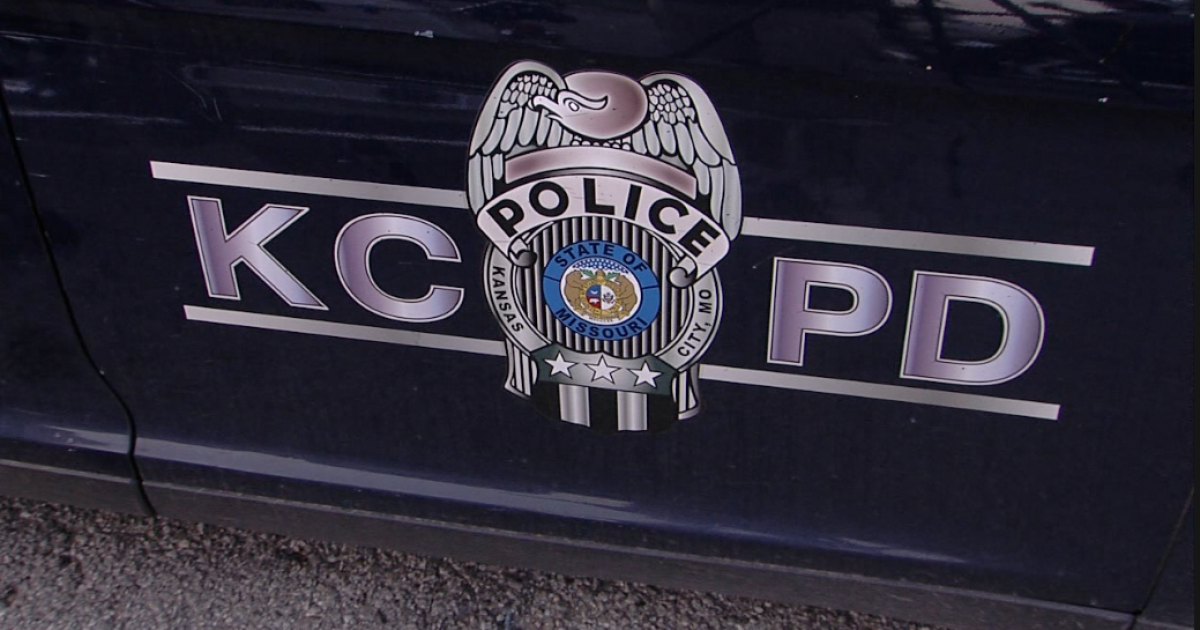 Kansas3 minutes ago
1 man dies after being shot June 9 in Kansas City, Missouri; police working to identify person of interest
-

 Kentucky10 minutes ago
Tornado ripped through Florence area during storms, NWS confirms
-

 Louisiana12 minutes ago
How Louisiana nitrogen gas executions could be affected by court ruling on Alabama
-

 Maine18 minutes ago
Two charged with assault after boater dies overboard in Hurricane Sound
-

 Maryland25 minutes ago
Two Injured In Waldorf Shooting, One Flown To Trauma Center – The BayNet
-

 Michigan27 minutes ago
Michigan QB Bryce Underwood on Year 1’s challenges and what’s next
-

 Massachusetts33 minutes ago
Mass. man charged with posing as teen, exposing himself to 12-, 13-year-old girls
-

 Minnesota40 minutes ago
Minnesota man arrested in WI for ‘numerous’ criminal sexual conduct charges against a child

