


The Colorado Rockies (28-47) had the day off Thursday after an uneven road trip that took them from Las Vegas to Wrigley Field. They dropped two of three to the Athletics, with the lone win coming in a wild 23-9 game, then went to Chicago and again lost two of three.
Pittsburg, PA
Penguins Report Card: Good Performances, But Wrong Strategy?


DETROIT — Sometimes, you lose.
Patrick Kane did what Patrick Kane does and whistled a wrist shot past Penguins goalie Alex Nedeljkovic for the first Detroit power-play goal (and second goal overall). Goalie Alex Nedeljkovic said he picked the wrong side of net-front traffic, and J.T. Compher poked a rebound past Nedeljkovic for the second Detroit power-play goal (and third goal overall), which was the game-winner late in the third period.
It was one of those hockey games in which both teams could claim they deserved to win. Except for the opening minutes, the Penguins were as good if not better than Detroit but were plagued by a bit of bad luck and one exceptional save by Detroit defenseman Mortiz Seider.
Later in the second period, Detroit goalie Alex Lyon slid away from the net, leaving a yawning cage for Anthony Beauvillier, whose turning wrist shot from about 10 feet should have been the tying goal. However, Detroit defenseman Moritz Seider slid into the crease, his leg extended for a textbook pad save.
It was that type of game for the Penguins. They were so close, so many times, including Bryan Rust, who swooped past his hometown defensemen and Lyon for easy wraparound stuff-ins. However, each one hit the post or legs in front and avoided bouncing across the line.
The other big positive for the Penguins was Drew O’Connor, who was his very best version. O’Connor fought for every puck and scored two goals–his first tallies since Oct. 18.
He wasn’t in a smiling mood after the game, but he admitted the pressure was finally off and that he could build on the game.
“You try to ignore it. Hockey is such a game of confidence. You know, hopefully, I can build off of this,” O’Connor told PHN.
There’s no reason to belabor the loss on a holiday night. The Penguins locker room was sour, but not in the depressed way that dominated their October and November losses. No, the Penguins were an angry sort of sour.
Penguins Xs and Os
“Barring the first ten minutes, I thought we played really hard. I thought it was a really good game–It was one of the faster-paced games that we played in the last little while,” Sullivan said.
“I thought we competed hard. Our intentions were in the right place. You know, give Detroit credit. They defended hard tonight, and they played a good game, too. I mean, the difference in the game is a power-play goal, but we also had some opportunities.”
We’ll debate whether a speedy game against Detroit is in the Penguins’ best interest. Note the low shot total for both teams—each had 25. The Penguins got back into the defensive zone and stayed between the puck and the net.
For my taste, the Penguins enjoyed the fast game too much. Their forecheck got a bit sloppy, and the team wasn’t as structured, which allowed Detroit too many zone entries with speed.
Sullivan didn’t seem to have a problem with it, but I would have expected more neutral zone traffic—make the young Red Wings work for the neutral zone and see what mistakes happen.
Also, Detroit got a cherry-picking goal–the worst cherry-pick I’ve seen in a long time. Jonatan Berggren hid in the neutral zone in front of the bench, then took off when Detroit was able to get possession. No one saw him lurking in the neutral zone after the line change.
Looking over the Red Wings goal, that’s some hard-core cherry picking.
Anthony Beauvillier is driving to the net but Berggren didn’t budge from hiding at the bench.
When Holl cut off Beauvillier, the breakaway was on. pic.twitter.com/OCMCPV6tAz— Dan Kingerski (@TheDanKingerski) January 1, 2025
Detroit should have made the coaching move over the summer when general manager Steve Yzerman officially put Derek Lalonde on the hot seat. In my opinion, they’d be in a playoff spot if they had.
Penguins Report Card
Team: B
They didn’t play poorly, they didn’t have a ton of sloppy mistakes, and they got after it. It wasn’t their night. Any of a dozen pucks could have gone in for them in those net-front scrums.
RUST
Drew O’Connor: A+
Atta boy.
O’Connor admitted to PHN that it’s been a little tough to keep his head up, but hockey is a game of confidence. He tried to ignore the slump as best he could. It was clear in the last few games that he added a bit of angry aggression to his game—when he does that, he’s a pretty darned good player, but it’s not his natural state.
Penguins Defense: C+
They’re a makeshift unit, and it would be unfair to criticize them harshly. P.O Joseph is playing on his offside (where he doesn’t have much experience) with Marcus Pettersson on the left. Pettersson wasn’t at his best Tuesday after a few weeks off due to a lower-body injury. Erik Karlsson had some shaky moments with the puck–enjoying that high-paced game. Ryan Graves also had a couple of adventures of his own making.
Alex Nedeljkovic: B+
He made plenty of timely saves. Here’s an interesting note on Patrick Kane’s power-play goal (Detroit’s second). Nedeljkovic said the puck flipped onto its side just before Kane shot it–Nedeljkovic couldn’t read the puck, and it knuckled in a different direction past him.
A flat puck vs. a knuckle puck that went against the Penguins. The smallest things can make the biggest difference.

Pittsburg, PA
Analysis: Most Pittsburgh‑area communities are losing residents — here’s why that might be OK
Pittsburg, PA
Colorado Rockies vs. Pittsburgh Pirates game discussion: Bubba Chandler vs. Kyle Freeland

That leaves the Rockies at 6-9 in June with a -7 run differential. Even that number is softened by the 23-run outburst against the Athletics. Colorado has been pesky and more competitive, which is an improvement from last month, but the results are still the results: they enter tonight with the worst record in baseball — if only by a game.
Cole Carrigg has brought energy since arriving, and Sterlin Thompson is coming off a two-homer game at Wrigley. There are plenty of reasons to keep watching. The problem is that the old bad-team tropes are still there: blown leads, rocked starters, missed chances, defensive mistakes, and poor execution. The Rockies have been in more games, but they are still too often finding ways to let winnable games get away.
Now they get the Pirates at home.
The Pittsburgh Pirates (38-37) arrive at Coors Field in fourth place in the competitive NL Central — and only 1.5 games out of a wild card spot. Pittsburgh gets plenty of attention for its hyped rotation, led by Paul Skenes, but the offense has been much improved. The Pirates rank third in MLB in batting average, third in on-base percentage, fourth in OPS, fifth in runs scored, and sixth in stolen bases.
Kyle Freeland takes the mound to open the homestand for the Rox. The left-hander enters at 1-7 with a 7.98 ERA, 49 strikeouts, and a 1.70 WHIP over 58.2 innings.
The fastball has been the biggest issue. Freeland is leaving too many four-seamers over the middle of the plate, and hitters have punished it. Opponents are slugging .794 against the pitch, which is especially damaging because he still throws it roughly 27-29% of the time.
That continued in his last start, when Freeland allowed six runs on 10 hits over 5.2 innings. He gave up 12 hard-hit balls, with both the cutter and four-seamer taking damage. The cutter was his most-used pitch in that outing, but it did not solve the contact problem. His sweeper has been his best pitch, holding hitters to a .171 batting average and .371 slugging percentage with a 32.8% whiff rate.
The Rockies do not need Freeland to be perfect tonight, but they need him to avoid the middle-middle mistakes that have turned innings quickly this season.
Pittsburgh will counter with Bubba Chandler, a 23-year-old right-hander who enters at 2-7 with a 4.76 ERA, 68 strikeouts, and a 1.38 WHIP over 68.0 innings.
The record is not pretty, but the stuff is real. Chandler averages 98.5 mph with his four-seam fastball and topped out over 101 mph in his last start. He has used the fastball nearly half the time this season, pairing it most often with a changeup and slider.
The slider has been his best bat-missing pitch, generating a 37.9% whiff rate on the season. The changeup has also been effective, holding hitters to a .186 batting average and .288 slugging percentage. Chandler has walked 43 batters, so the Rockies’ best chance may be making him work instead of chasing their way out of innings.
Kyle Karros has been swinging it well lately, hitting .370/.442/.565 over his last 15 games and raising his season wRC+ to 90. Willi Castro has two home runs, nine RBI, and a .680 slugging percentage over his last seven games, while T.J. Rumfield is hitting .321 with a .750 slugging percentage and two home runs in his last seven games.
For Pittsburgh, Bryan Reynolds has been especially hot, hitting .414/.469/.828 with three home runs over his last seven games. Brandon Lowe leads the team with 18 home runs and 49 RBI while slugging .511, and Endy Rodríguez has played well from behind the plate while posting a 149 wRC+ in 76 plate appearances since returning to the lineup in mid-May.
For Colorado, the task is straightforward: get a steadier start from Freeland, make Chandler throw strikes, and turn the recent flashes from the lineup into enough sustained pressure to win a winnable game.
First Pitch: 6:40 p.m. MDT
Radio: KOA 850 AM/94.1 FM; KNRV 1150
Pirates SB Nation Site: Bucs Dugout
- Fewer ads
- Create community posts
- Comment on articles, community posts
- Rec comments, community posts
- New, improved notifications system!
Please keep in mind our Purple Row Community Guidelines when you’re commenting. Thanks!

The decision to trade catcher Joey Bart to the Braves gives the Pirates a solution to a problem that soon needed to be made.
Bart had been on a rehab assignment with Triple-A Indianapolis, working his way back from a left foot infection that kept him out of action for over a month.
With Bart nearing a return, the Pirates were going to have to figure out what to do at catcher with Henry Davis and Endy Rodríguez splitting time behind the plate in his absence.
Given how Rodríguez has been swinging the bat since he was recalled from Indianapolis to replace Bart on the active roster, there was no way the Pirates could’ve sent him down. In 23 games, the 26-year-old has a .267/.413/.467 batting line with three doubles, three home runs, eight RBI, two steals and a robust 19.7% walk rate.
Davis, meanwhile, has struggled to an anemic .138/.242/.285 batting line with four doubles, five home runs and 17 RBI in 47 games. While he hasn’t offered much with the bat, he’s been responsible for two defensive runs saved and leads MLB with a 55% caught stealing rate.
Now that Bart has been traded, Rodríguez and Davis will remain the catching tandem at the big-league level with Rafael Flores Jr. as the top backup option with Indianapolis. Flores is considered Pittsburgh’s eighth-best prospect on MLB Pipeline.
For the first time in the big leagues, Rodríguez is realizing the potential that once made him one of the top 100 prospects in baseball. Because of that, he should get the majority of the playing time with Davis continuing to catch Paul Skenes’ starts and filling in when needed.
As for the return, the Pirates known what to expect from Hunter Stratton, who spent nine seasons in the organization and made 47 appearances with the team from 2023-25.
The bullpen has been an obvious weak spot for the team this season, and while it was somewhat surprising to see the Pirates assign Stratton to Indianapolis, he improves the pitching depth and will almost surely be called upon at some point this year.
In 60 career big-league appearances between the Pirates and Braves, Stratton is 3-2 with a 3.75 ERA and two saves. The right-hander spent most of the 2026 season with Triple-A Gwinnett and went 2-4 with a 4.38 ERA and 24 strikeouts in 24.2 innings across 21 appearances.
One more important note about the trade is that the Pirates saved some money in the deal, which could be used later in additional trades to add to an already record-setting payroll. Stratton is a pre-arbitration player, while Bart is making $2.53 million this season.
More about:Pirates
-
 Kansas3 minutes ago
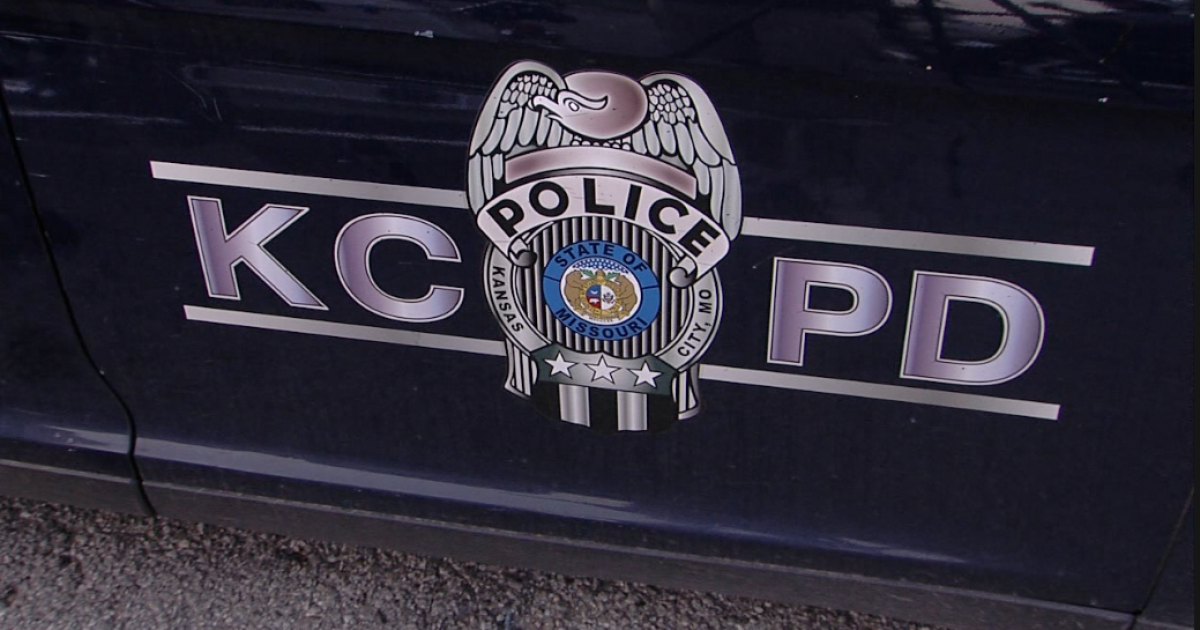
1 man dies after being shot June 9 in Kansas City, Missouri; police working to identify person of interest
-

 Kentucky10 minutes ago
Tornado ripped through Florence area during storms, NWS confirms
-

 Louisiana13 minutes ago
How Louisiana nitrogen gas executions could be affected by court ruling on Alabama
-

 Maine18 minutes ago
Two charged with assault after boater dies overboard in Hurricane Sound
-

 Maryland25 minutes ago
Two Injured In Waldorf Shooting, One Flown To Trauma Center – The BayNet
-

 Michigan28 minutes ago
Michigan QB Bryce Underwood on Year 1’s challenges and what’s next
-

 Massachusetts33 minutes ago
Mass. man charged with posing as teen, exposing himself to 12-, 13-year-old girls
-

 Minnesota40 minutes ago
Minnesota man arrested in WI for ‘numerous’ criminal sexual conduct charges against a child

