Crypto
Bitcoin soars to $107,000: Will the upward trend sustain? Experts weigh in | Stock Market News


Bitcoin surged to a record-breaking high of $107,000, reflecting a nearly 6 per cent increase over the past week. This unprecedented rally was fueled by President-elect Donald Trump’s proposal to establish a Strategic Bitcoin Reserve, modeled after the U.S. Strategic Petroleum Reserve. The announcement has sparked optimism within the cryptocurrency market, signalling a potential shift toward a more favourable regulatory environment under Trump’s administration.
Trump’s pro-crypto stance has been widely welcomed, with his vision of integrating Bitcoin into the national strategic reserves marking a historic milestone in the recognition of digital assets at a government level. Analysts suggest this policy could enhance Bitcoin’s legitimacy.
Adding to the momentum are expectations of another U.S. Federal Reserve interest rate cut, as lower rates typically favour risk assets like Bitcoin. The rally also received a boost from the inclusion of MicroStrategy in the Nasdaq 100 index—a landmark event highlighting the growing institutional acceptance of Bitcoin.
As per CoinSwitch Markets Desk, this move integrates Bitcoin into one of the world’s largest ETFs, boasting over $300 billion in assets under management (AUM).
“BTC touched an all-time high again after 10 days of consolidation. It seems to have marked its support over 2 trillion dollar market cap – making it the 7th largest asset in the world by market cap with Amazon and Google being less than 15% away,” it said.
Bitcoin among 10 most-valued assets
Bitcoin’s leap beyond the $107,000 mark follows a steady seven-week winning streak, underscoring the cryptocurrency’s robust fundamentals.
Rahul Pagidipati, CEO of ZebPay, noted that Bitcoin’s milestone reflects its evolution into a legitimate asset class. “Bitcoin is now effectively one of the top 10 most valued assets globally, ranking above most commodities and corporations,” Pagidipati said. He also highlighted that the total crypto market capitalisation has crossed $3.5 trillion, underscoring the scale of adoption.
Similarly, Tanvi Kanchan, Head of Strategy at Anand Rathi Shares and Stock Brokers, highlighting the broader implications of these developments said, “The proposed Strategic Bitcoin Reserve and increasing corporate treasury integration signify a shift toward mainstream adoption.”
Global Crypto Outlook
As the crypto market matures, innovations in decentralised finance (DeFi), blockchain interoperability, and tokenised assets are expected to redefine financial systems.
Sathvik Vishwanath, Co-Founder & CEO of Unocoin, described Bitcoin’s surge as transformative, saying, the market focus now shifts to the $110,000 level as momentum remains strong despite earlier bearish predictions.
“The proposed reserve cemented Bitcoin’s status as a critical financial asset and fueled renewed confidence in its potential. Bitcoin is now up more than 50 per cent since the US election, reflecting its growing influence and appeal as a hedge against traditional market uncertainty,” Vishwanath said.
Thangapandi Durai, CEO of Koinpark, said Bitcoin’s sustained momentum alongside broader adoption and innovative use cases, signals a promising future for the crypto token. While analysts predict potential short-term pullbacks, Bitcoin’s seven-week winning streak exemplifies its strong market fundamentals, he added.
Pankaj Balani, CEO & Co-Founder of Delta Exchange, said Bitcoin ETFs now hold 1% of all U.S. ETF assets, signalling further potential for growth.
“This followed by pro-crypto statements from President-elect Donald Trump, the selection of an SEC chair who is believed to be pro-crypto and increased institutional participation in the last few months have boosted the sentiment and excitement amongst traders. Market participants remain long with current OI hovering around record OI levels and expect further move up here,” he added.
Vishal Sacheendran, Head of Regional Markets at Binance also believes the outlook for crypto appears increasingly promising. However, he cautioned that as crypto momentum builds, investors must remain vigilant—prioritising research, diversifying portfolios and staying informed about industry trends to navigate this transformative era successfully.
Disclaimer: The views and recommendations made above are those of individual analysts or broking companies, and not of Mint. We advise investors to check with certified experts before taking any investment decisions.
Catch all the Business News , Market News , Breaking News Events and Latest News Updates on Live Mint. Download The Mint News App to get Daily Market Updates.
MoreLess



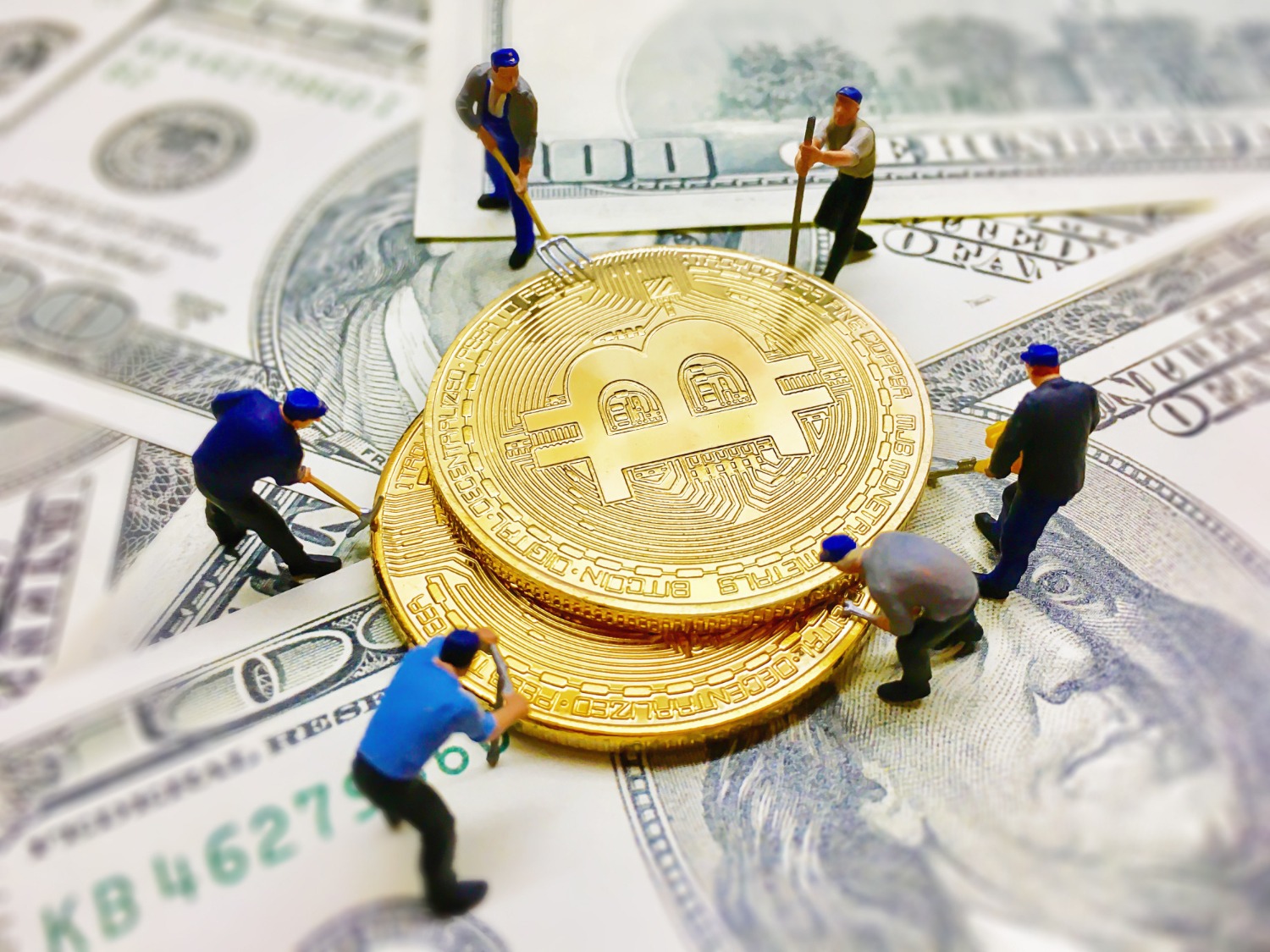
Pig butchering scams do not start with crypto. They start with a conversation. Someone reaches out through a dating app, a text, or social media, and over weeks or months they build what feels like a genuine connection. They ask about your life and your goals.
At some point they mention a crypto platform that has been generating strong returns. They help you set up an account, walk you through the first deposit, and show you a dashboard with what looks like real profit. You put in more. The numbers climb. Then the platform locks you out or disappears, and the money is gone.
If this has happened to you, the most important thing is to move quickly. A crypto fraud lawyer can help you figure out what to do next and which legal options may still be available.
Immediate Steps After Discovering the Scam
Scammers count on the shock to buy them time. Most victims spend the first few days trying to understand what happened instead of acting, and that delay allows evidence to disappear and funds to move further out of reach.
The First 72 Hours
The first three days matter more than most people realize. Scammers do not sit still after taking money. They rotate wallet addresses, shut down platforms, and often keep pressuring the victim to send more under the guise of fees or tax payments needed to release returns that never existed.
Getting a lawyer involved early can cut through the confusion. They identify which wallets and platforms were involved, send notices to banks and exchanges, and start building a timeline while everything is still fresh. The window for certain recovery options is narrow, and even a week of delay can close off paths that were open on day one.
Securing Accounts and Devices
While the legal side gets underway, lock down every account you have access to. Change your passwords, enable two-factor authentication, and scan your devices for remote access software that scammers sometimes install during the setup process. Check your email for forwarding rules you did not set up, and review your exchange accounts for linked addresses or withdrawal settings that were changed without your knowledge.
Do this before making any further transfers.
Building the Record
Crypto transactions leave a trail, but the window for capturing it closes quickly. Exchanges update their interfaces, chat platforms delete messages, and fake investment sites go offline without notice.
Preserving Transaction Evidence
Everything from this point forward depends on what you can document. Wallet addresses, transaction IDs, exchange account statements, screenshots of every conversation with the scammer (including the early ones), wire transfer receipts, credit card statements, deposit instructions, and dashboard screenshots from the fake platform (if you can still access it).
Get it together as early as you can. Messages will disappear. Platforms will go offline. Access will be revoked without warning. The picture you can put together on day three is going to be much more complete than anything you will be able to reconstruct a month from now.
Store copies in two separate places. A secure cloud folder and a local drive is a simple setup that works. Put together a log that records dates, times, amounts, and whatever names or identifiers were displayed on each platform. Organized records make everything easier for lawyers, investigators, and financial institutions.
Coordinating With Financial Platforms
Banks, credit card companies, and crypto exchanges may be able to freeze funds, flag suspicious wallet addresses, or open internal investigations. These processes tend to work better when the request comes in early, includes specific transaction details, and is submitted in writing. Vague complaints filed weeks later are much easier for them to dismiss.
Save the name of whoever you speak to, the reference number, and a summary of what was said. Keep copies of all emails and chat logs. This creates an audit trail that becomes important if a dispute escalates.
Recognizing Follow-Up Scams
This is the part that catches people off guard. After the initial loss, a second wave often follows.
Someone contacts you claiming to be a recovery specialist, a government agent, or a tax official who can help get your money back. But first they need a fee, or your private keys, or a small crypto payment for verification purposes.
None of it is real. Scammers know that victims at this stage are desperate, and they use that against them. Some resort to threats. Others try to isolate the victim from family or friends who might step in and encourage reporting.
Treat any unsolicited contact about recovering your funds as a potential threat until it has been independently verified. Any request for upfront payment is a warning sign, without exception.
Legal Paths Forward
Most victims expect law enforcement to handle recovery. Criminal investigations into crypto fraud tend to move slowly and rarely focus on individual cases. Civil options often provide more direct paths, but they come with deadlines that can expire faster than people expect.
Deadlines and Leverage
Legal remedies in crypto fraud cases are not open-ended. Payment dispute windows have fixed deadlines. Statutes of limitations run on a set schedule. Certain contractual claims expire within weeks, not months. The longer someone waits, the fewer options remain.
An early legal review can identify which of these deadlines apply and which ones are coming up fast. Credit card chargebacks, for example, have to be filed within a defined window. Certain claims against exchanges operate under similar constraints.
Timing also affects leverage. A demand letter backed by organized records and documented losses will be taken more seriously than a vague complaint filed months later. When the other side can see the case is well-prepared, negotiations tend to move forward more quickly.
Civil Options
Filing a police report is a good idea. It creates an official record and supports the timeline of events. But criminal investigations into crypto fraud are often slow and focused on larger networks. Direct results for any single victim can take a long time to secure, if they come at all.
Civil claims work on a separate track.

Bitcoin Tumbles Amid U.S.-Iran Clashes
Bitcoin tumbled to the $62,000 range Monday as a weekend exchange of gunfire between U.S. and Iranian forces threatened to spark another energy crisis. Market data showed the top cryptocurrency plunged from a 24-hour peak of $64,385 late Sunday to $62,037 by 10:15 a.m. EST Monday.
While the cryptocurrency attempted to reclaim the $63,000 resistance level, another sell-off saw it retreat to $62,200, reversing earlier gains and leaving it down nearly 3%. The decline dragged its market capitalization down from $1.28 trillion to approximately $1.25 trillion as of 12:40 p.m. EST. The slide, in turn, helped trim the crypto economy’s aggregate market capitalization to $2.24 trillion.
Meanwhile, the slide triggered the liquidation of $83 million in long leveraged positions and $12 million in shorts. Overall, liquidations across the crypto economy topped $322 million, with liquidated long bets accounting for $267 million of the total.
Following earlier strikes in the week, the U.S. military upped the ante Sunday, striking more than 100 targets across Iran. The U.S. maintains the strikes were in response to Iranian attacks on shipping vessels transiting the Strait of Hormuz. In addition to the strikes, some media reports suggested the U.S. military was contemplating a blockade on Iranian ports.
Iran, which rejects the allegations, launched retaliatory strikes targeting U.S. bases and installations across five Gulf countries, including Qatar and Tehran’s ally Oman. Iran insists Washington is violating a memorandum of understanding (MoU).
The apparent return to full combat operations came days after U.S. President Donald Trump declared the ceasefire between the two sides over. The U.S. leader also accused Tehran of violating the terms of the MoU, which requires Iran to reopen the Strait of Hormuz.
Following the latest escalation, oil prices jumped 4.5%, with the global benchmark Brent crude breaching the $80-per-barrel mark. According to analysts, market concern is expanding beyond crude oil prices, with investors increasingly focused on disruptions to global refining capacity and fuel supply chains. Ongoing conflicts have affected refinery operations across the Middle East and, recently, key global shipping routes in the Russia-Ukraine region.
“Even if crude oil prices stabilize, gasoline and diesel prices could remain elevated due to limited refined fuel availability. This creates a risk that energy inflation may prove more persistent than markets currently anticipate,” a Bitunix analyst asserted in a recent report.
For global markets, including crypto, the central question for this week extends beyond whether U.S. inflation rises again. The bigger issue is whether global capital costs continue moving higher.
With AI investment absorbing significant funding, energy supply chains facing uncertainty, and Federal Reserve policy remaining unsettled, risk assets are likely to remain driven by the interaction among interest rates, liquidity conditions and corporate financing costs.
“For bitcoin, reclaiming and holding above $64,000 could improve short-term momentum. However, continued pressure from higher capital costs may keep BTC trapped within a broader consolidation range,” the analyst said.
Crypto
The Tech Billionaire Takeover review – a surprisingly fun look at the crypto bros threatening democracy

Matt Shea’s documentary is bookended by two stark facts. One is that the wealth of the world’s 12 richest people is equal to that of the poorest 50% of humanity (you can argue about whether 12 is exactly right, but it’s certainly a horrifyingly small number). The other is that in recent US election cycles, the fossil fuel industry has been replaced as the biggest political donor by a new force: cryptocurrency.
In an hour that manages to be more entertaining than terrifying despite sailing into very murky waters, Shea explores how a fresh breed of tech billionaires are looking to make a bold new move. He shows that in a traditional western democracy, the principle that citizens all have an equal vote and are all equally beholden to the law is heavily compromised by a tiny minority of rich citizens. These people influence what the electorate votes for, by bankrolling politicians and owning media companies, as well as using their wealth to ensure rules do not properly apply to them. But plutocrats still find this system frustrating, thanks to those pesky elections and that annoying rule of law. What’s next?
Shea meets people who have made silly amounts of wonga from cryptocurrency – a sector that claims to be dedicated to freedom and transparency, but is notoriously resistant to proper accountability. First, he observes as Justin Sun, a Chinese tech entrepreneur with personal wealth of around $8.5bn, gets his crypto trading network Tron listed on Nasdaq without going through the standard process of listing the company, via a “reverse merger” with a failing company. That is to say, he buys the business – which is already listed – and changes its name to Tron Inc.
That’s all perfectly legal and not too remarkable, but soon we’re off to a muddy peninsula in the Danube between Croatia and Serbia. This has been claimed by crypto bros as Liberland, a “micronation” that will supposedly become a hi-tech utopia where no tax is paid and regulatory red tape is eliminated. At the moment, though, it’s a few tents that are regularly raided by Croatian police, who disagree about the land having no pre-existing owner.
Shea meets the president, a man named Vit Jedlicka who tries and fails to control what his acolytes talk to the film-maker about. One of them escapes for a one-on-one with Shea, where he stumbles as he attempts to counter the argument that Liberland’s electoral system, under which the purchase of more crypto “merits” gives you more voting power, means its version of liberty is available to relatively few people. The elected prime minister of Liberland? Justin Sun.
At this point Shea is jousting for fun with weirdos, as he is when he talks to the writer Curtis Yarvin, who believes democratic governments are inferior to rule via corporate boards headed up by CEO “monarchs”. The programme gets wackier still when Shea arrives in Singapore for Token 2049, a conference for people who believe crypto is the future and governments can’t be trusted. A man with bitcoin logos all over his suit babbles something about a “new world order” imminently implementing a satanic global dominion.
There’s more fun and games as Shea tours the crypto-themed stands, but one of the main sponsors of the event is Tron, and the keynote speaker is Donald Trump Jr. He’s there on behalf of World Liberty Financial, the crypto company co-founded by the Trump family, who are estimated to have made more than $2bn from their various cryptocurrency ventures. Several investors in World Liberty – among them Justin Sun, before he spectacularly fell out with the Trumps – have subsequently benefited from favourable legal or regulatory decisions by the US government. Trump has denied any link between investments in his family companies and government decisions affecting the investors. His representative calls it: “the same, tired narrative that Democrats have pushed … for a decade. … There are no conflicts of interest.” When Shea raises the issue with Sun, a PR adviser heckles from behind the camera and shuts the question down.
Here is where Shea’s thesis falters slightly. Replacing governments with digital hegemonies might make sense to crypto billionaires, who don’t have to worry about things a functional society offers such as reliable physical infrastructure or a healthy workforce, because they just want machines to turn their money into more money. But taking over countries, or setting up new ones, is unnecessary for now thanks to the Trump regime. There’s no need to form your own government if the current US administration already offers frictionless routes to even greater wealth.
Either way, though, none of this is good and all of it is to be monitored, albeit probably from a position of helpless impotence. The rich keep getting richer and the powerful keep finding ways to help them do it.
-
World12 minutes ago
Euronews explains: can Hungary's PM Magyar really remove president Sulyok from office?
-

 News42 minutes ago
Mexico files criminal complaints in US over migrant deaths in custody
-

 Videos2 hours ago
New explosions near Iranian port cities, says state media | BBC News
-

 Los Angeles, Ca2 hours ago
Big rig crash spills cinder blocks on 101 Freeway; lanes blocked in Tarzana
-
 Detroit, MI3 hours ago
How to watch ‘The Odyssey’ in IMAX, 70mm and more in metro Detroit
-

 San Francisco, CA3 hours ago
Sold-Out SF Marathon 2026: The Races, Routes and Road Closures (Plus How to Watch It All) | KQED
-

 Dallas, TX3 hours ago
Top 10 Dallas Cowboys of 2026: Rashan Gary is Complete EDGE Dallas Needed
-

 Miami, FL3 hours ago
Girl, 12, shot while sitting in parked car in northwest Miami-Dade, deputies say

