World
36 MEPs want to deny Knesset member entry to European Parliament


A letter accuses Israeli lawmaker Amit Halevi of “dehumanising statements” towards Palestinians and urges EU Parliament President Roberta Metsola to bar him from participating in an upcoming conference.
Thirty-six members of the European Parliament have opposed hosting an Israeli colleague.
Amit Halevi from Likud, the same party as Israeli Prime Minister Benjamin Netanyahu, was invited by Dutch MEP Bert-Jan Ruissen of the European Conservatives and Reformists (ECR) group to participate in a conference on the Iranian regime.
The event, organised by the Israel Alliance Foundation in cooperation with the ECR group, is set to be held in the European Parliament in Brussels at 13.30 local time on Wednesday.
However, a letter signed by 36 MEPs, obtained by Euronews, urges European Parliament President Roberta Metsola to bar Halevi from attending.
The letter was initiated by Dutch Greens/EFA MEP Tineke Strik, in collaboration with Slovenian Socialist MEP Matjaž Nemec and Irish Renew Europe MEP Barry Andrews. The signatories include members from the Socialists and Democrats, Greens/EFA, Renew Europe, and The Left groups.
Proponents argue that Amit Halevi’s participation in an event at the European Parliament would violate key principles, including disinterest, integrity, openness, diligence, honesty, accountability, and respect for the institution’s dignity and reputation.
The objection stems from “extremely concerning, dehumanizing, and even genocidal statements” that Halevi has made in recent months. The letter highlights several of his controversial remarks from the past year.
In an interview, Halevi claimed, “In the Al-Shifa Hospital, they caught 150 terrorists and killed them. At the same time, 300 terrorists were born in the maternity ward,” implying that children born in Al-Shifa would inevitably become terrorists.
In the same interview, he defended that “There is nothing called Palestinian people, never was, and will never be.” and that “From the river to the sea, the national rights are only for one people, the nation of Israel”.
In a Facebook post, reported by local newspaper Arutz Sheva, he claimed that all the Palestinian people belong to two categories. “There are Palestinians who support Hamas’s Nazi education and Palestinians who serve as human shields for them. We can and must bomb both.”
The letter also reminds that Halevi has introduced legislative proposals in the Israeli Knesset to annex and resettle Gaza, while expelling its civilian population. “If each country takes in 5,000-6,000 families, most of the problem is solved”, he said according to Israeli Radio103.
The signatories of the letter have urged President Metsola to “protect the dignity and reputation of this house” by preventing Halevi from joining the panel discussion.
“The president can always limit access to individuals from entering the Parliament by denying that person accreditation”, MEP Nemec told Euronews.
“We also reached out to the organiser but received no concrete reaction as to the possible change of the participants of the event”.
However, MEP Bert-Jan Ruissen, the conference organiser, defends Halevi’s participation and said he is “looking forward to meeting him in the conference tomorrow, with other guests”, in a written reply to Euronews.
 ADVERTISEMENT
Ruissen’s office further claims that one of the quotes attributed to Halevi in the letter was misreported and that he has never endorsed killing children.
EP President Roberta Metsola has not commented on the letter yet.



Gas imports from Russia into the European Union increased during the first months of 2026, a new report has revealed, even as the bloc formally begins a historic withdrawal from Russian natural gas.
ADVERTISEMENT
ADVERTISEMENT
The EU banned Russian liquefied natural gas (LNG) from entering the bloc by the beginning of 2027 and mid-2027, albeit with exceptions for Hungary and Slovakia, which were allowed to tap Moscow’s gas in case of supply disruption given their landlocked position.
Yet according to the report from the EU’s agency of energy regulators (ACER), which was published on Wednesday, Russian gas imports have increased rather than declined during the reporting period, with pipeline imports rising 7 percent year-on-year compared to 2025 and LNG imports growing by 11 percent.
LNG imports accelerated further after the ban took effect in March, rising 17 percent against the same period in 2025.
The new release is ACER’s first monitoring report since the law was adopted in March. The agency attributed a rise in imports to companies accelerating deliveries under existing contracts before stricter prohibitions take effect, rather than to a reversal of EU rules.
“LNG authorised contracts for deliveries into the EU account for 20 to 32 billion cubic metres (bcm), entering the EU at the external borders of four member states: Spain, France, Belgium and the Netherlands. In turn, long-term contracts for Russian pipeline gas remain authorised in Hungary, Slovakia and Greece,” reads the report.
New Russian gas contracts have effectively been prohibited since March 2026, while older long-term agreements are being allowed to expire gradually through 2027 to avoid market disruption.
For now, authorised contracts still represent between 45 and 55 bcm of annual supply capacity, ACER said, down from the 150-157 bcm that Moscow used to export to the EU prior to the war in Ukraine.
Not a sanctions failure
ACER argues that this trend does not indicate a growing dependence on Russia, and nor does it mean that the bloc’s sanctions against Russia are failing.
Instead, importers appear to be maximising deliveries before future restrictions and responding to global supply uncertainty after disruptions caused by the war between Israel, the US and Iran affected Middle Eastern LNG trade.
The ban on transhipments of Russian LNG via the EU to other destinations also seems to have contributed, the energy regulators argue, as some of the Russian LNG that had previously been transshipped at selected EU ports until March 2025 may have remained within the EU market.
Ronald Pinto, an LNG analyst at the market intelligence firm Kpler, endorsed ACER’s assessment, noting that Russian LNG imports into the EU reached record highs in both April and May.
“Faced with disruptions to global LNG supply, European market participants relied on other available sources of LNG, likely making full use of the flexibility available within their existing contractual volumes,” Pinto told Euronews.
However, Pinto also pointed out a slight year-on-year decline in Russian pipeline imports into the EU following maintenance in early June, suggesting a commercial reaction to the 17 June deadline banning imports of Russian pipeline gas under short-term contracts.
“This could indicate that market participants are beginning to reduce their exposure in light of the phase-out regulation,” the analyst said.
Remaining dependencies
While Russian gas now accounts for roughly 12 percent of EU gas demand, ACER says that dependence is no longer evenly spread across Europe.
Most EU countries have sharply reduced purchases since Russia’s invasion of Ukraine, except for Hungary, Slovakia and Greece.
These countries, particularly Hungary and Slovakia, continue to receive Russian pipeline gas primarily through the TurkStream corridor and face the greatest challenge in replacing supplies before the 2027 deadline.
“In 2024, Hungary and Slovakia are estimated to source approximately 70–80 percent of their gas from Russia, while Russian gas is deemed representing approximately 50-55 percent of Greek gas imports,” reads the report.
The principal remaining challenge is not overall gas availability, ACEA said, but ensuring sufficient infrastructure to deliver alternative supplies into landlocked Central European markets.
“The remaining dependence on Russian gas remains unevenly distributed across member states; while most countries have significantly reduced their exposure, a small number of countries continue,” reads ACER’s report.
Diversification and new challenges
ACER concludes that Europe is significantly better prepared than during the 2022 energy crisis due to profound diversification in the gas market.
However, such diversification comes at a new cost, as the bloc has developed new dependencies, particularly with the US, Algeria, and Qatar, the latter having suffered a loss in production due to the war against Iran.
These countries are currently pressuring the EU to scrap its methane rules, which would require oil and gas producers to pay for the pollution linked to their production, with the US suggesting that the EU could lose imports.
“If things (methane rules) stay as they are today, they’re almost certain to reduce the energy flows from the United States to Europe,” US Energy Secretary Chris Wright said at a press briefing on 25 June. “I think this leads to very significant problems in the EU, which already suffers from much higher than global average energy prices.”
The EU is also counting on more gas from planned Romanian Black Sea production and increasing imports through Azerbaijan’s Southern Gas Corridor.
Overall, ACER concludes that the real economic consequences of ditching Russian gas have yet to arrive, pointing instead to the complete ban on LNG imports from January 2027 and the end of pipeline imports in September 2027 as the real tests.

Note: Map shows the area with a shake intensity of 3 or greater, which U.S.G.S. defines as “weak,” though the earthquake may be felt outside the areas shown. The New York Times
A strong, 6.0-magnitude earthquake struck in the Gulf of California on Tuesday, according to the United States Geological Survey.
The temblor happened at 1:45 p.m. Mountain time about 47 miles southwest of El Progreso, Mexico, data from the agency shows.
As seismologists review available data, they may revise the earthquake’s reported magnitude. Additional information collected about the earthquake may also prompt U.S.G.S. scientists to update the shake-severity map.
Subsequent quakes have been reported in the same area. Such temblors are typically aftershocks caused by minor adjustments along the portion of a fault that slipped at the time of the initial earthquake.
Aftershocks detected
Quakes and aftershocks within 100 miles
Aftershocks can occur days, weeks or even years after the first earthquake. These events can be of equal or larger magnitude to the initial earthquake, and they can continue to affect already damaged locations.
The New York Times
When quakes and aftershocks occurred
Sources: United States Geological Survey (epicenter, aftershocks, shake intensity); LandScan via Oak Ridge National Laboratory (population density) | Notes: Shaking categories are based on the Modified Mercalli Intensity scale. When aftershock data is available, the corresponding maps and charts include earthquakes within 100 miles and seven days of the initial quake. All times above are Mountain time. Shake data is as of Tuesday, June 30 at 2:02 p.m. Mountain time. Aftershocks data is as of Tuesday, June 30 at 6:01 p.m. Mountain time.

NEWYou can now listen to Fox News articles!
Emergency workers in Venezuela on Tuesday rescued a 2-year-old boy who had been trapped beneath the rubble for six days, marking the only reported rescue of a survivor on the sixth day of operations following last week’s devastating earthquakes.
Venezuela’s acting President Delcy Rodríguez said in a Telegram post that Jordanian emergency workers pulled the child from a collapsed building in La Guaira, an area hit the hardest by last week’s earthquakes.
The child, identified by authorities as Klieber Moran, was rescued after spending six days trapped beneath the rubble, Rodríguez said.
Moran was taken to a hospital for treatment, she added.
TRUMP ADMINISTRATION PLEDGES $150M IN AID, DEPLOYS NAVY WARSHIPS AFTER DEADLY VENEZUELA EARTHQUAKES
A Jordanian team works to rescue a child trapped under rubble following earthquakes in Venezuela, in a location given as Caracas, Venezuela. (Jordan Public Security/Handout via REUTERS)
National Assembly President Jorge Rodríguez said in a televised address Tuesday that officials remain hopeful more survivors will be found.
“We must hold onto the hope of continuing to find people alive beneath the rubble,” Jorge said. “Early this morning, a 2-year-old boy was rescued and is currently receiving care at a health center in Caracas.”
Rescue efforts have continued since magnitude 7.2 and 7.5 earthquakes struck Venezuela’s northern coast last Wednesday.
DEATH TOLL FROM VENEZUELA EARTHQUAKES RISES TO AT LEAST 235, WITH THOUSANDS REPORTED MISSING
Emergency workers rescued a 2-year-old boy after he spent six days trapped beneath the rubble following last week’s earthquakes in Venezuela. (Jordan Public Security/Handout via REUTERS)
The death toll from the twin earthquakes rose to 1,943 on Tuesday, with more than 10,500 people injured, according to Venezuelan officials. On Monday, the death toll stood at 1,719.
Tuesday’s rescue marked another glimmer of hope amid the disaster that has devastated the South American country.
On Saturday, the U.S. State Department shared video showing American search-and-rescue teams pulling an infant alive from beneath the rubble in Venezuela.
EX-MLB PLAYER SAYS WIFE DIED IN DEVASTATING VENEZUELA EARTHQUAKES
A child receives emergency medical attention after being rescued by a Jordanian team from under rubble following earthquakes in Venezuela. (Jordan Public Security/Handout via REUTERS)
The infant, who is 9 months old, was rescued along with her mother, the State Department told Fox News Digital. Both suffered only minor injuries, according to the rescue team.
“Against impossible odds, hope endures,” the State Department posted on X.
On Tuesday, a shipment from the United Nations Children’s Fund (UNICEF) containing 47 metric tons of humanitarian supplies arrived in Venezuela.
FORMER METS PITCHER NARROWLY ESCAPES DEATH IN VENEZUELA EARTHQUAKES THANKS TO ELEVATOR MALFUNCTION
Emergency workers rescued 2-year-old Klieber Moran from beneath the rubble of a collapsed building in Venezuela six days after the country’s devastating earthquakes, according to Venezuelan officials. (Jordan Public Security/Handout via REUTERS)
The shipment includes emergency health kits for urgent medical care, including supplies for safe births, newborn care, disease prevention and treatment, according to the United Nations.
Urban Search and Rescue (USAR) teams from Virginia, California and Florida were dispatched to Venezuela on Friday to help search collapsed buildings.
CLICK HERE TO DOWNLOAD THE FOX NEWS APP
According to the State Department, the three USAR teams include 312 personnel and 18 canine teams, made up of firefighters, physicians, structural engineers and canine search specialists, and deployed with more than 200,000 pounds of specialized rescue equipment.
Reuters contributed to this report.
-

 Health38 seconds ago
American vaccines that transformed public health over 250 years: ‘Outweighs harm’
-

 Sports8 minutes ago
Ex-NFL reporter Dianna Russini interaction with police officer to dodge traffic ticket comes to light
-
 Business16 minutes ago
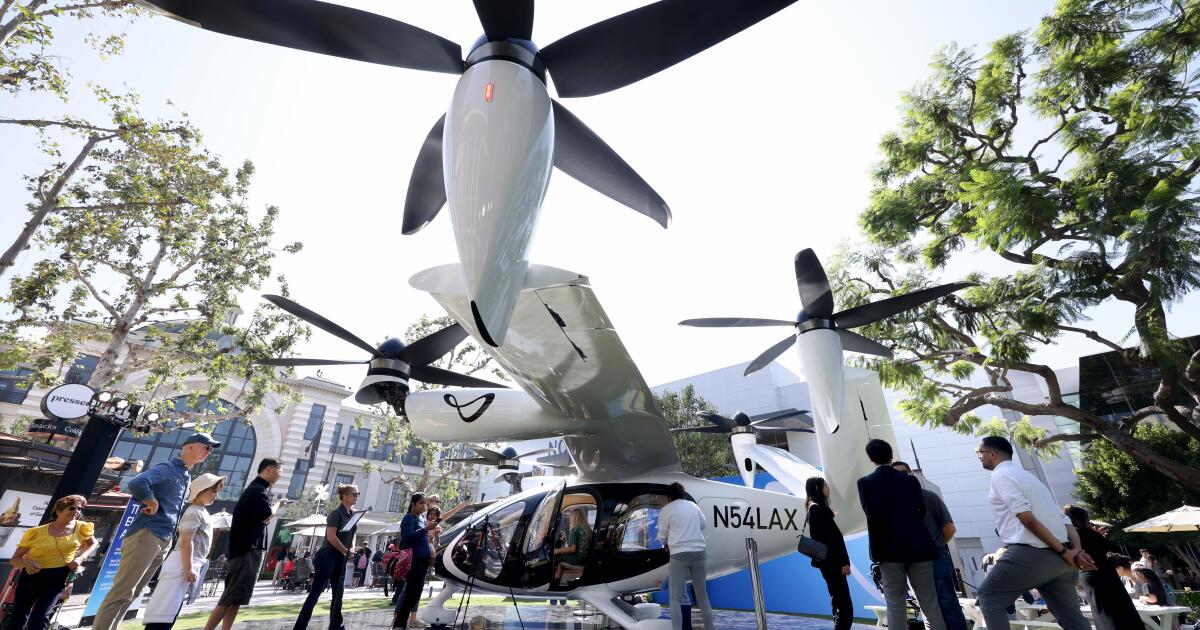
Joby Aviation creates a joint venture with Toyota to build air taxis
-
 Entertainment23 minutes ago
Inside Eddie Huang’s sadboi era and turning a new page with his novel
-
 Lifestyle25 minutes ago
Wait, it’s a candle? Her beeswax fruit and veggie ones look so real, you’ll want to take a bite
-
 Politics31 minutes ago
Commentary: The sad inevitability of Justice Alito’s birthright citizenship dissent
-
Sports41 minutes ago
2026 World Cup knockout round TV schedule, game previews and results
-

 World53 minutes ago
Russian gas imports rise despite EU phase-out


