Connect with us

News

Trump picks hardline ‘deep state’ critic Kash Patel as new FBI head

Published

on

Trump picks hardline ‘deep state’ critic Kash Patel as new FBI head

Unlock the White House Watch newsletter for free

President-elect Donald Trump has said he will appoint Kash Patel, a loyalist and hardline critic of the “deep state”, to lead the FBI, signalling he will seek to remove Christopher Wray as head of the agency. 

Patel, who advised the secretary of defence under Trump’s previous administration, has suggested carving out the FBI’s intelligence-gathering function and purging its ranks of employees who do not support Trump. He has also mused about retribution against Trump’s critics.

“I am proud to announce that Kashyap ‘Kash’ Patel will serve as the next Director of the Federal Bureau of Investigation,” Trump wrote on his social media website, Truth Social, on Saturday night.

Advertisement

“Kash is a brilliant lawyer, investigator, and ‘America First’ fighter who has spent his career exposing corruption, defending Justice, and protecting the American People.”

“This FBI will end the growing crime epidemic in America, dismantle the migrant criminal gangs, and stop the evil scourge of human and drug trafficking across the Border,” Trump added. 

A longtime Trump loyalist, Patel has also worked as a federal prosecutor and public defender, but does not have as broad a law enforcement experience as many FBI directors. 

He has railed against an alleged “two tier system of justice” he has claimed is “the deep state’s weapon of choice”. The federal criminal case that accused Trump of mishandling classified documents was “the best definition” of such a system, Patel told rightwing podcaster Shawn Ryan earlier this year.

The DoJ is seeking to drop the case, which was dismissed by a federal judge, due to an internal policy that bars prosecution of a sitting president.

Advertisement

In a podcast hosted by Trump ally Stephen Bannon late last year, Patel vowed to investigate and “come after” journalists who “lied” and “helped Joe Biden rig presidential elections.”

“Whether it’s criminally or civilly, we’ll figure that out,” Patel told Bannon. 

In his book Government Gangsters, Patel outlined a list of “top reforms to defeat the deep state” — the supposed permanent government of left-leaning bureaucrats that Trump and his allies believe worked against his first administration.

“The FBI’s footprint has gotten so freaking big, and the biggest problem the FBI has had has come out of its intel shops,” Patel told Ryan. “I’d break that component out of it”.

Patel also vowed to “shut down” the FBI’s historic headquarters in Washington “on day one and reopen it the next day as a museum of the ‘deep state’”.

Advertisement

He would also “take the 7000 employees that work in that building and send them across America to chase down criminals,” Patel said. “Go be cops, you’re cops”.

Before joining the administration during Trump’s first term, Patel worked as a staff member for the House Permanent Select Committee on Intelligence under Republican congressman Devin Nunes, helping run the committee’s investigation into Russia’s interference in the 2016 campaign.

Trump’s effort to place Patel at the head of the US’s premier law enforcement agency will require Senate confirmation.

Trump appointed sitting FBI director Christoper Wray in 2017, and his term does not expire until 2027. Trump has been openly critical of Wray, particularly after law enforcement officials searched his residence in search of classified documents.

A spokesperson for the FBI said that Wray’s “focus remains on the men and women of the FBI, the people we do the work with, and the people we do the work for.”

Advertisement

“Every day, the men and women of the FBI continue to work to protect Americans from a growing array of threats,” the spokesperson added.

News

Graham Platner makes it official in Maine, submitting paperwork to leave Senate race

Published

on

Graham Platner makes it official in Maine, submitting paperwork to leave Senate race

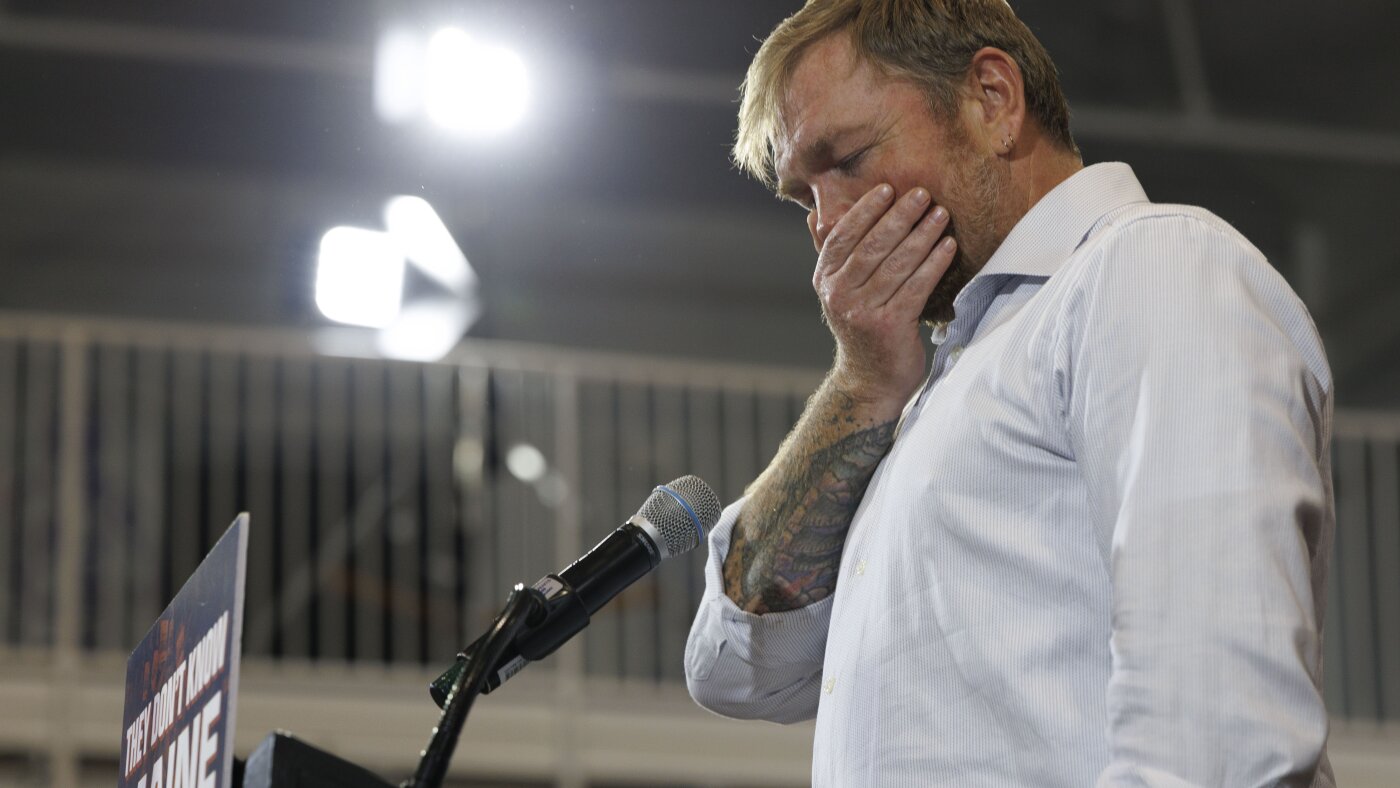
Now-former Democratic Senate candidate Graham Platner speaks at his primary election night event on June 9 in Blue Hill, Maine. Platner officially dropped out of the race July 10 following rape allegations from a former romantic partner that he denies.

CJ Gunther/Getty Images


hide caption


toggle caption

Advertisement

CJ Gunther/Getty Images

Graham Platner, Maine’s Democratic nominee for Senate, is officially out of the race.

The Maine Secretary of State said Platner filed the necessary paperwork to withdraw his candidacy two days after he announced he planned to do so following an accusation of rape by a former romantic partner. Platner denies the allegation.

The Maine Democratic Party has until July 27 to pick Platner’s replacement.

Advertisement

In his withdrawal notice, Platner said “people are desperate for change” and that’s why they voted “for a new kind of politics” by making him the Democratic nominee. He expressed gratitude for those who supported his campaign and said that he will continue to fight for “the movement we have built together and the future we believe in.”

He ended his notice with a strong statement aligned with the progressive platform.

“F*ck ICE. Free Palestine. Up the Hearts.”

Platner announced his plan to withdraw from the race in an 11-minute video he posted to social media on July 8. He said he had no choice but to suspend his campaign, citing it was no longer viable financially.

Advertisement

“We are going to lose our ability to fundraise. We are going to lose our ability to access voter data. We are going to lose all of the things that any campaign needs on the basic level simply to function,” he said.

Platner added that dropping out was not an admission of guilt. Rather, the decision, he said, is to keep the progressive movement in Maine alive to defeat Republican Sen. Susan Collins in November. Platner blamed the “political establishment” for his downfall and argued the goal was to force him out of the race.

“We built a campaign. We engaged in electoral politics. We motivated people. We banded together. We did it the way that we were told we are supposed to make change and we won. And now they are not going to let us have it. Not if it’s me,” he said.

Continue Reading

News

Waymo called the cops on teen riders, raising privacy concerns

Published

on

Waymo called the cops on teen riders, raising privacy concerns

A Waymo robotaxi drives in San Francisco’s North Beach neighborhood this week.

Heather Diehl/Getty Images


hide caption


toggle caption

Advertisement

Heather Diehl/Getty Images

Police in San Mateo, Calif., posted Monday on social media that they had apprehended a pair of teenagers from a Waymo driverless robotaxi after the company alerted authorities to suspected criminal activity. It’s the latest incident involving video surveillance of passengers and others by autonomous vehicles — raising questions about the limits of privacy in such vehicles.

The Facebook post by the San Mateo County Police said: “Parents do you know where your teens are? @waymo does!”

The 15-year-olds were allegedly drinking alcohol and shooting toy guns from the car, according to the police. They said Waymo’s systems detected behavior that then triggered a safety response, after which the company disabled the vehicle and contacted police.

Advertisement

Waymo’s cars, equipped with an array of cameras, microphones and other sensors to monitor passengers and other nearby vehicles, are becoming more common in cities across the United States. Experts say the detention of the two teens in San Mateo highlights a potential — but not inevitable — trade-off between privacy and convenience. It also questions the extent to which companies similar to Waymo are required to hand over private data, including audio and video of passengers, in situations where a crime is suspected.

NPR reached out to Waymo, which is owned by Alphabet, the parent company of Google, for comment on the details of the San Mateo incident and how the company responded, but did not hear back. But on its website, the company says that as many as 29 cameras in its autonomous cars provide an all-around view and “are designed with high dynamic range and thermal stability, to see in both daylight and low-light conditions, and tackle more complex environments.”

“There already exist laws that govern duty to report or even duty to protect” for carriers such as Waymo, according to Alessandro Acquisti, a professor of information technology at the MIT Sloan School of Management. “The privacy problems arise when and if driverless carrier companies used such laws or ethical obligations as a pretext for blanket, indiscriminate accumulation of identifiable data for unspecified future purposes.”

That includes not just monitoring people inside the cars, but outside too. Take, for example, a hit-and-run investigation last year in Los Angeles. Media reported that the police inquiry was aided by video captured by a Waymo taxi that had a clear view of the crime. Critics suggested at the time that authorities were using the company’s vehicles as a mobile surveillance platform. And during 2025 protests in Los Angeles against Immigration and Customs Enforcement crackdowns, demonstrators vandalized Waymos, apparently angry that video recorded by the vehicles could be used by police, although there is no evidence that happened.

Continue Reading

News

Trump fires last members of election commission, inciting fears of midterm ‘chaos’

Published

on

Trump fires last members of election commission, inciting fears of midterm ‘chaos’

Donald Trump has terminated the remaining members of the independent, federal commission that assists election administration officials nationwide just a few months before the midterm elections, multiple outlets reported Thursday.

The remaining three commissioners of the four-member bipartisan commission ⁠were forced out on Thursday in different ways. The one Republican appointee resigned and the other ⁠two, Democratic appointees were notified of their terminations via email from ​the White House presidential personnel office.

“On ‌behalf of President ‌Donald J Trump, I am writing to inform you that your position ‌as Commissioner of the Election Assistance Commission is terminated, effective immediately. Thank you for your service,” the email, seen by Reuters, said.

The White House did not immediately respond to a request for comment.

The Election Assistance Commission serves as a “national clearinghouse of information on election ‌administration”, accredits testing laboratories and certifies voting systems, and maintains the national mail-voter registration form developed by the National ​Voter Registration Act of 1993, according to the commission’s website. The terminations follow Trump and top administration officials’ advocacy to change vote-by-mail requirements and investigations into the 2020 election outcome, which Trump lost to Democrat Joe Biden.

Advertisement

“It is ⁠irresponsible and dangerous that this Administration remains dead set on ​causing chaos for ​our election officials across this ​country,” Arizona secretary of state Adrian Fontes said in a ​Thursday statement. “This ‌move undermines the integrity ​of nonpartisan ​election administration.”

The 2002 law that established the commission, the Help America Vote Act, states the president can appoint replacements to the commission.

It is unclear how Trump will move ahead with the commission.

Reuters contributed reporting

Advertisement
Continue Reading
Advertisement

Trending