Politics
A Pennsylvania County and the Political Tensions in America


The politics of the area have also shifted.
For two decades its voters reliably leaned Democratic, but Donald Trump won the county in 2016 and again four years later, both times by solid margins.
But Democrats hoped they could move the county back in their direction and made an intensive effort to do so.
County officials were vigilant leading up to Election Day. Luzerne County became a hotbed of election denialism in 2020, and Pennsylvania is an open-carry state. Some people feared voters might bring guns to the polls. Election workers were told they could bring their own guns.
The night before the election, a group of campaign volunteers organized by Jennifer Ziemba, the wife of the Luzerne County Republican Party chairman, gathered at Ziemba’s home in Harveys Lake, a prosperous community outside Wilkes-Barre.
They were calling Republican voters whose mail-in ballots had flaws like a missing date to tell them they had to cast provisional ballots in person.
“We’re not really MAGA-looking,” one of the women said. But they were staunch Trump supporters.
Philip Montgomery for The New York Times
“The women voting solely on abortion make me crazy,” Ziemba said. “I’d gladly give up my abortion rights and my daughter’s for my son not to have to go to war. We’ll have peace with Trump.”
On Election Day, most of the state’s counties shifted further to the right, tilting Pennsylvania and its 19 Electoral College votes to Trump by about 130,000 voters.
She was sitting in the front parlor of her Wilkes-Barre home, built by her great-great grandfather.
Wynn’s ancestors escaped slavery by fleeing to Pennsylvania before the Civil War.

The morning after the election, some of the Bikers for Trump gathered to celebrate at D’s Diner, in the Wilkes-Barre suburb of Plains Township.
A man they did not know, a retired financial planner named Kim Pace, approached their table. He began by saying that his wife did not think it was a good idea to talk to them. He had voted for Harris.
“Congratulations, guys,” he said. “I hope it all works out.” His tone suggested that he was doubtful.
Philip Montgomery for The New York Times
Dave Ragan, a U.S. Army veteran who had arrived on his motorcycle, stood up to respond. “We changed the world!” he said. “I don’t have to worry about my stepdaughter having a boy in the locker room.”
“Let me tell you something,” Pace said. “That stuff is overblown.” He wished them well and left.
Away from the table, he said, “If Harris had won, there was going to be trouble.”
In the days after the election, political tensions lingered in the community.
On Thursday evening, John McDermott, a retired lieutenant colonel in the Army Reserve, sat at home with his wife, Lee Ann, drinking a vodka and tonic after a round of golf. McDermott voted for Hillary Clinton in 2016 and Trump in 2020.
This year, he voted for Harris. “I couldn’t bring myself to vote for him,” he said. “He’s a convicted felon. He believes in conspiracy theories.”
Lee Ann, a county council member, saw matters differently: She was one of the women making calls at Jennifer Ziemba’s house on the eve of the election. Now she was on her way to meet some of them at a restaurant to toast Trump’s win.
The mood was festive when McDermott arrived. “We’re getting Trumpy!” one of the women exclaimed, as they raised their cosmopolitans and glasses of wine.
Philip Montgomery for The New York Times
Among the revelers was Shelley Meuser, the wife of Representative Dan Meuser, whose district includes a part of Luzerne County.
“We got our country back!” shouted Terry Eckert, who is a real estate agent.
Philip Montgomery for The New York Times
Thirty miles down the road from Wilkes-Barre is Luzerne County’s other city, Hazleton. Its population of 30,000 is 63 percent Latino, an estimated 90 percent of whom are from the Dominican Republic.
There are at least six Catholic churches and many Pentecostal congregations in the community. One of them is the Iglesia Cristiana Agua de Vida Hazleton, where Elizabeth Torrez is the pastor.
Philip Montgomery for The New York Times
Philip Montgomery is a photographer whose work examines the fractured state of America. Michael Sokolove, a contributing writer for the magazine since 2002, has written extensively on Pennsylvania and its politics.
Videos by Tre Cassetta.



SACRAMENTO — Gov. Gavin Newsom vetoed legislation to require proposed data centers to provide estimates of their water usage last year, saying he was “reluctant to impose rigid reporting requirements” without understanding the impact on businesses and consumers.
Opposition to the mammoth tech hubs and their massive thirst of water, power and land has only escalated throughout the state and nation ever since. In just a matter of months, Newsom again could find himself in the political crosshairs.
Several bills to regulate the facilities and increase public transparency on their impacts are progressing in the California Legislature, which could create a conundrum for a governor who has long aligned with the tech industry but also paints himself as an environmental and social justice advocate.
“I think the governor is in a fragile position,” said Megan Mullin, a public policy professor at UCLA. “Tech has been a long backer of his, but at the same time there is this growing national outcry against data centers.”
Data centers have existed for decades but are rapidly expanding due to the worldwide boom in artificial intelligence. The newer centers built to power AI are far larger than their original counterparts and require immense amounts of water and energy.
The facilities also contribute to fossil fuel emissions, with Cornell University researchers estimating last year that AI growth could add 24 to 44 million metric tons of carbon dioxide to the atmosphere annually by 2030. Fossil fuel emissions are drivers of climate change and linked to a range of health conditions, including asthma, various cancers and birth defects.
Environmental Protection Agency Administrator Lee Zeldin announced last week that the Trump administration will not set national environmental requirements or recommendations for the data center industry, leaving it to state lawmakers to determine best policies.
Thad Kousser, a political science professor at UC San Diego, said the nation will likely look to the Golden State for guidance.
“California’s laws will create a national model,” he said. “We’re the home of Silicon Valley and we’re just a massive state — the way we regulate data centers will set the tone.”
The political landscape around data centers has since changed since Newsom’s veto in October, said Dan Schnur, a political science professor who teaches at UC Berkeley and USC.
“No one should assume he will automatically act in the same way,” Schnur said. “Newsom is an incredibly savvy politician so he is clearly aware that voters are a lot more upset or concerned about data centers than they were a year ago.”
A Gallup poll released last month found 7 out of 10 Americans oppose data centers being built in their area.
The facilities can create thousands of jobs for construction workers and generate significant revenue for local governments due to sales and property taxes. The artificial intelligence they power is also — at least temporarily — boosting the stock market, leading to more tax dollars for California.
But residents who live near hyperscale centers have expressed outrage over a range of issues, including health impacts, spiking utility bills, constant noise, dropping water pressure and concerns about potentially losing their land through eminent domain. Meanwhile, community meetings about data centers are growing contentious, with police arresting a farmer in Oklahoma, three women in Wisconsin and a man in California.
Earlier this month, residents of Monterey Park voted overwhelmingly to ban data centers, making the San Gabriel Valley city the first in the nation to do so by public vote.
“Six months ago, politicians of both parties were falling all over each other to bring data centers into their states,” Schnur said. “Now that the public backlash has erupted, they are working just as hard to distance themselves from these projects.”
With Newsom eyeing a presidential bid in 2028, he might be reluctant to brand himself as a defender of an increasingly unpopular industry.
But Schnur said the governor likely also has concerns about angering one of his biggest backers.
“The tech community is a critical part of Newsom’s donor base, so he has to keep fundraising in mind when he makes these decisions,” Schnur said.
A spokesperson for the governor’s office declined to comment on data centers or pending legislation.
Newsom, during an interview at a Center for American Progress conference in May, said the concern that data centers may drive up electricity costs for Californians is a “legit issue,” but not the main one.
“The tech genie is not going to go back in the bottle,” Newsom said. “Just saying that you should not or cannot build a data center is not going to slow this technology down. What can be, will be. Nature of technology. And so we just have to steer it and not make the mistakes we made with social media.”
Among the measures in the Legislature are two bills from Sen. Steve Padilla (D-San Diego). SB 886 would create a corporate tariff to cover the cost of data center-related grid upgrades. SB 887 would ban data centers from receiving ministerial exemptions from the California Environmental Quality Act, known as CEQA.
Neither bill picked up support from Republicans, but both cleared the Senate and were recently referred to the Assembly Utilities and Energy Committee.
Padilla represents Imperial County, a farming community near the border of Mexico where plans for a 950,000–square–foot data center face fierce opposition from residents. The county exempted the proposal from CEQA, which requires projects to undergo an extensive state environmental review before breaking ground.
The city of Imperial sued the county earlier this year, arguing the project should not have received an exemption. The San Diego Chapter of the Sierra Club joined the lawsuit last month. The county board of supervisors last week approved a 45-day moratorium on all new data centers to allow the county to evaluate proposed data center development.
Two other data center-related bills recently passed the Assembly, each picking up support from a few Republicans. They now await action from the Senate.
AB 2619 from Assemblymember Diane Papan (D-San Mateo) would require data center owners to provide an estimate under penalty of perjury about expected water usage and sources before applying for a business license. AB 1577 from Assemblymember Rebecca Bauer-Kahan (D-Orinda) would require data center owners to submit monthly information to a state commission about water and fuel consumption.
Ben Green, an assistant public policy professor at the University of Michigan who is researching how data centers impact communities, said reporting requirements are a “bare minimum” type of regulation, making it especially noteworthy that Newsom vetoed a similar measure last year.
For comparison, several states are weighing more restrictive bills — New York recently sent legislation to the governor’s desk that would enact a one-year moratorium.
“It seems that there was a ton of lobbying pressure that he was getting,” Green said. “The tech industry doesn’t want to have any restrictions.”
Green said data centers could be a hot topic in upcoming elections, as Americans on both sides of the aisle are expressing valid concerns.
“There’s not an easy fix for getting the public on board with data centers because their critiques are grounded in reality,” he said. “This is not just some sort of reactionary NIMBY-ism or pearl clutching.”
Politics
Obama Center visitors say project symbolic of ‘Black excellence,’ claim scandal-free legacy while Trump ripped

NEWYou can now listen to Fox News articles!
CHICAGO — Opening weekend visitors at the Barack Obama Presidential Center called the 44th president’s legacy an example of unifying, scandal-free “Black excellence,” while they lamented what they view as a dark turn for the U.S. under President Donald Trump.
“The community is great, we’re just kind of glad it’s here,” Lauren Tillman, who lives about 40 minutes outside of Chicago, told Fox News Digital. “We needed something like this. Chicago looks like a certain place to certain people who are not from the area… so I just think this brought everybody together, like, ‘oh there’s something for the community,’ for Black people, and on Juneteenth, so I thought that was great, too.”
The presidential center’s opening weekend began with a star-studded private ceremony and concert on Thursday night, and the 19.3-acre campus opened to the public on Friday during the Juneteenth holiday, which celebrates the day Black slaves were declared free in 1865.
TOM HANKS, OPRAH, STEVEN SPIELBERG TURN OBAMA’S PRESIDENTIAL CENTER OPENING INTO HOLLYWOOD’S HOTTEST TICKET
The Obama Presidential Center building is shown with its glass facade and surrounding trees. (Peter D’Abrosca/Fox News Digital)
“Just knowing that Chicago doesn’t always get the best rep, to know that we’ve had a Black president come from this place, and then to memorialize his legacy is just great,” said Ashley Woods, who joined Tillman at the opening.
“To know that [Obama] was going to try to do at least something for his people, that meant a lot to me and being here means a lot,” added Tillman.
“And I think, to piggyback off that, I think the legacy is Black excellence,” continued Woods. “Again, growing up in a place like Chicago, you don’t really think you can do much besides being a rapper or, you know, going into sports, but so see that somebody actually made it to the top per se, they were able to run the nation, there was very little scandal around him and his family, like it just shows you that we can be more than what America tells us we can be.”
OBAMA’S LEGACY PROJECT OFFERS LITTLE HOPE FOR CHICAGO’S SOUTH SIDE RESIDENTS
Lauren Tillman and Ashley Woods speak with Fox News Digital at the Barack Obama Presidential Center in Chicago on Friday. (Peter D’Abrosca/Fox News Digital)
Sheryl Rogers and Peggy Neely-Harris made the trip from St. Louis for the weekend’s festivities.
“What it means for African Americans [is] a coming together, a reckoning, a remembrance of the excellence that is within each one of us, particularly in African Americans and particularly at this time when our very existence is under attack,” Rogers told Fox News Digital.
Neely-Harris agreed, and said that the brand new presidential center is a symbol of hope and renewal, and that the center is a “light in this present darkness.”
OBAMA PRESIDENTIAL CENTER SLAMMED FOR PROMOTING ‘FAR-LEFT’ AGENDA ON PUBLIC LAND
Sheryl Rogers and Peggy Neely Harris speak with Fox News Digital on the opening weekend of the Barack Obama Presidential Center in Chicago, Friday. (Peter D’Abrosca/Fox News Digital)
“[Obama] has left an excellent example of how you should live, what type of character you should have and the love of family and community,” Rogers continued. “You can see love just exudes from them, and I love to see love in action.”
“No scandal,” she added.
However, Obama did face some major scandals and controversies during his two terms in the White House.
Obama’s DOJ infamously seized records of Fox News’ phone lines, including a phone number that belonged to the parents of a reporter.
The seizure was approved after a warrant was granted by a judge, and in an affidavit seeking the warrant, an FBI agent called reporter James Rosen a likely criminal “co-conspirator” in a violation of the Espionage Act.
Obama also faced government weaponization claims when his IRS allegedly slow-rolled the tax-exempt nonprofit approval of grassroots conservative organizations that set out to oppose his agenda.
Groups with words such as “Tea Party” or “Patriot” in their names were allegedly hindered from forming for months and years.
OBAMA CENTER SUBCONTRACTOR FILES $40M DISCRIMINATION LAWSUIT AGAINST ENGINEERING FIRM FOR OVERRUNS
Barack Obama speaks during the dedication of the Barack Obama Presidential Center, Thursday, in Chicago. (Kent NISHIMURA / AFP via Getty Images)
Operation Fast and Furious was another chart-topping Obama scandal.
ATF agents intentionally allowed illegal straw purchases of weapons near the U.S. southern border with Mexico, in hopes that tracking the firearms would lead them directly to high-level cartel kingpins. But the Obama-era agency failed to monitor at least 2,000 of the weapons, which did in fact make their way into the hands of dangerous characters.
One of the weapons in the ill-fated sting was used to kill Border Patrol Agent Brian Terry in 2010.
When, in 2012, then-Attorney General Eric Holder was subpoenaed during a House Oversight Committee investigation into the matter, he refused to comply, disallowing the committee from seeing thousands of pages of records pertaining to the operation. He later became the first U.S. cabinet official to be held in contempt of Congress, but the Obama DOJ failed to prosecute him.
Obama ordered the extrajudicial drone strike killings of four terror-tied Americans in Yemen without due process.
TRUMP OFFERS TO HELP OBAMA WITH PRESIDENTIAL LIBRARY’S ‘DISASTER’
Valerie Reynolds speaks to Fox News Digital during the opening weekend of the Barack Obama Presidential Center in Chicago, Friday. (Peter D’Abrosca/Fox News Digital)
Twenty-six-year-old Chicago resident Valerie Reynolds told Fox News Digital she thinks the center will improve the image of the city’s South Side, which often finds itself in news headlines for violence and poverty.
“I think Barack Obama’s legacy is and will continue to be the inspiration of togetherness, of the power of what can be done and what can be created when we all come together,” she said. “It’s absolutely something that we are missing today. I’ve seen divisions in this country in ways that I’ve never seen before, and I was reminded of just how vast those divisions are being out here today, because it’s the first time I’ve felt this closeness since he ran for office in 2008.”
An emotional Kia Ware, a woman from Virginia, said the grand opening of the center was a sad reminder of the direction of the U.S. since Obama left office.
OBAMA REMAINS DEM HEADLINER WHILE PRESIDENT WITH MOST VOTES EVER FADES INTO BACKGROUND: ‘IT WAS ALL A DREAM’
Kia Ware speaks with Fox News Digital during the opening weekend of the Barack Obama Presidential Center in Chicago on Friday. (Peter D’Abrosca/Fox News Digital)
“It makes me sad because I was so proud of everything that was accomplished during that legacy in terms of, you know, fighting for vulnerable people and vulnerable lands and protection of so many things that are now being erased forever, and I feel like it’s setting us back,” she said.
CLICK HERE TO DOWNLOAD THE FOX NEWS APP
Ware added that Obama is still a “powerhouse” in the Democratic Party, and said that people who believe in his legacy want him to “step back in.”
“I guess it just means, like for me, I just am feeling very thankful that we have those eight years of history for putting women forward, putting minorities forward,” she said. “I felt like that unification, just seeing all people of different backgrounds and ages and generations here, I get that same feeling.”
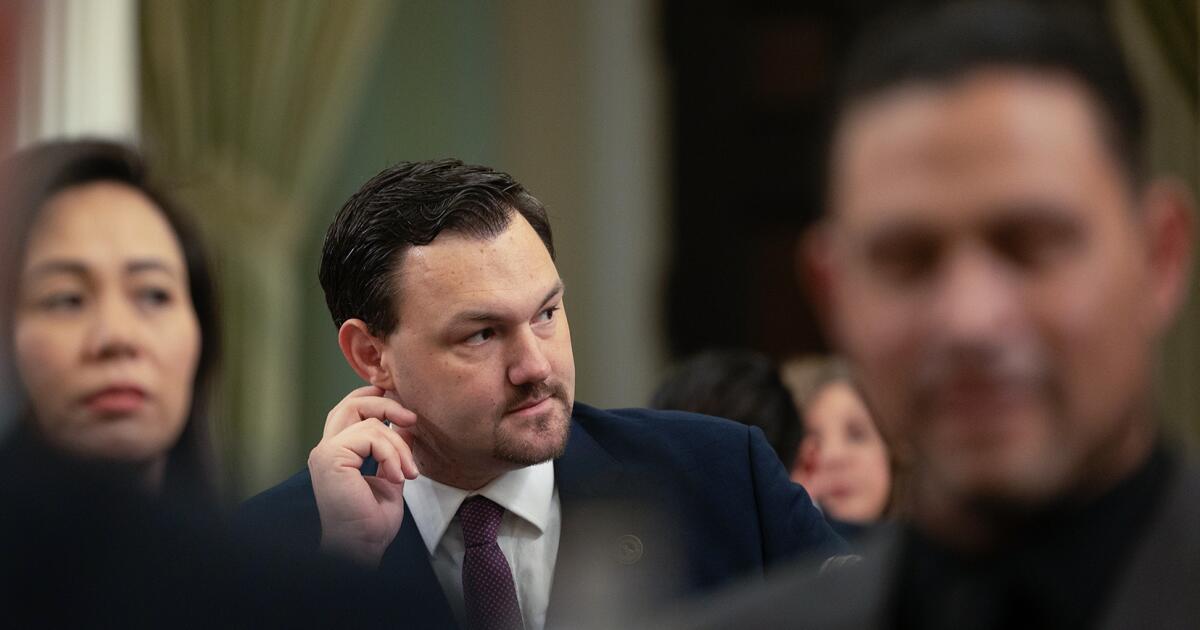
A new commission made up of legislators, public defenders, academics and advocates seeks to push California — one of just two states that don’t pay for basic public defense — to begin providing resources and enforcing minimum standards for county public defender systems.
The California Independent Commission on Public Defense includes three assemblymembers and two senators — among them Jesse Arreguín and Nick Schultz, chairs of the Senate and Assembly Public Safety Committees — as well as chief public defenders from several counties, retired judges, the directors of criminal justice nonprofits, and the heads of organizations representing thousands of defense attorneys in the state.
“We have discussed the problem of our public defense system for years,” said Schultz, a Democrat from Burbank and former prosecutor who has sponsored legislation to improve public defense.
The goal is to “move past discussion and study, and come up with an actionable road map of what we need to do to really build out the robust public defense infrastructure that Californians are rightfully entitled to,” he said.
The commissioners plan to develop a five-year plan to phase in state funding, along with enforceable standards like caseload limits and access to defense investigators.
A CalMatters investigation last year found that criminal defendants across the state are routinely convicted without anyone investigating the charges against them, significantly increasing the likelihood of wrongful convictions. Many California counties do not employ a single defense investigator who can interview witnesses, review police reports, visit crime scenes and retrieve video surveillance footage. CalMatters also found that lawyers in some rural counties are handling caseloads that far exceed even the most permissive standards, making them less likely than other defense attorneys to challenge the prosecution’s evidence in legal motions and take their cases to trial.
But the state has resisted stepping in. After a proposed bill that would have created an official state commission to address the issue was abandoned, two advocacy groups, the Wren Collective and UC Berkeley’s Criminal Law and Justice Center, decided to form an independent commission and began assembling participants who could develop and act on reforms. These types of commissions, which have facilitated significant improvements in other states’ public defender systems, are usually established by the governor.
“It became clear that this was an issue that was not a high priority for Sacramento, especially during a budget crisis,” said Chesa Boudin, the Berkeley center’s founding director and a former San Francisco district attorney. It also became clear, Boudin said, that “there was a tremendous gap between what experts understood to be the crisis and the public perception of California government as a kind of progressive leader in the country.”
In the decades since the U.S. Supreme Court established the right to an attorney in state court criminal proceedings, California has saddled its counties with the responsibility of providing lawyers to poor people accused of crimes. Many of those counties have opted for the cheapest path: paying private lawyers and firms a flat fee to represent indigent defendants, regardless of how many cases they handle or how much time they spend on each case.
“You’ve got some offices that have an incredibly high caliber of representation that they can provide, and you have other offices that are doing these flat-fee contracts where the quality has been documented to be pretty bad,” said Eve Brensike Primus, a law professor at the University of Michigan.
Primus is the only member of the new commission from outside of California. She was asked to join because of her extensive research and writing about the structure of indigent defense.
An indigent defense commission in Michigan, which was formed by the legislature in 2013, has led to significant reforms and a substantial influx in state funding.
The California commission’s work, Primus said, can serve “as a catalyst for political actors to do the right thing and start to fund and improve indigent defense delivery, or as fodder for lawsuits that then can try to get the judiciary to push the political actors to do what is necessary to provide for effective representation.”
The commission is scheduled to hold its first in-person meeting, which will be open to the public, in Berkeley in October, with additional meetings planned for Los Angeles, the Central Valley and Northern California over the next 12 months. Commissioners say they will work in subcommittees in between these quarterly sessions to develop a concrete fiscal plan for the state, draft legislative language, and establish minimum standards for how counties should structure their public defender offices, compensate their attorneys, provide access to experts, and report on their work.
Anat Rubin writes for CalMatters.
-
 Entertainment5 minutes ago
‘Toy Story 5’ goes to infinity and beyond at the box office
-

 Lifestyle7 minutes ago
Exclusive | Paul Kueker ID’d as beloved dad of 2 who tragically plunged to death at Madison Square Garden concert
-
Politics13 minutes ago
Newsom’s stance on controversial data centers about to be tested. Again.
-
 Sports23 minutes ago
Lakers likely to select a big man or wing in first round of NBA draft
-

 World35 minutes ago
Mourners gather to remember Lebanese conservationist killed by Israel
-
 News58 minutes ago
Trump claims vandals damaged D.C. Reflecting Pool, and says it will be drained again
-

 Los Angeles, Ca2 hours ago
31st annual Rodeo Drive Concours d’Elegance provides perfect Father’s Day activity
-

 Detroit, MI3 hours ago
3 Isaiah Stewart Trade Packages That Would Make Sense for Detroit Pistons

