Idaho
David Brooks gives North Idaho Distinguished Lecture


COEUR d’ALENE — A bright light shined on the humanities Thursday evening as David Brooks addressed the largest crowd to ever attend the Idaho Humanities Council’s North Idaho Distinguished Lecture and Dinner at The Coeur d’Alene Resort.
Brooks, a best-selling author and journalist, carried the more than 800 audience members on a poignant and sometimes humorous journey of introspection, reflection and thoughtful communication as he discussed how to inject some humanity into a society riddled with bitter divisiveness.
He shared some of his personal experiences of opening up to others and to life in general.
“The sad thing is, as I was taking a little step toward being more human, the broader American culture has become more dehumanized,” Brooks said.
He spoke of increasing mental health problems, rising suicide and depression rates and how so many Americans feel sad, lonely and isolated.
“When you get sadder, you get meaner, because when you’re not seen or you’re invisible and neglected, you feel under threat and you feel it’s an insult on your dignity, which it is,” Brooks said.
He said some hospitals struggle to keep staff because patients have become so abusive. He touched on the increase in hate crimes and gun violence and other statistics, including how 20 years ago, two-thirds of Americans gave to charity while now fewer than 50% of Americans do.
This dehumanization is happening across society, he said, and people are seeking unity in politics. This seems to give people a sense of community, but it’s not a true community.
“You’re just hating the same people,” he said. “Politics seems to give you the illusion you’re taking moral action on behalf of the country, but you’re not sitting with a widow or serving the poor. You’re just being indignant on Twitter. Politics takes loneliness and turns it into culture wars.”
He said Ryan Streeter of the American Enterprise Institute conducted a study that found that those who say they are lonely are seven times more likely to be involved in politics than other people.
“That makes a lot of sense when you realize our politics is dominated by people who are lonely and angry at the world,” Brooks said.
Several attributable factors include technology, social media, the reduction in community involvement, economics and more.
Above all are basic social skills — how to be good listeners, how to gracefully end conversations, how to appropriately reveal vulnerability, how to break up with someone without crushing their heart, how to host a dinner party where everyone feels included, he said.
“For a couple generations, we have neglected to teach each other how to be considerate to each other in the complex circumstances of life,” Brooks said.
The one skill that tops the rest is the ability to make others feel understood and respected.
Brooks said there are “diminishers” and “illuminators.” Diminishers never ask questions. While pleasant, they’re just not curious and may tend to stereotype others. He said they do what is called “stacking.”
“They learn one fact about you and make a whole series of assumptions about who you must be: ‘You voted for Trump, therefore you must blah, blah, blah,’” he said. “I met a woman at a Trump rally years ago who was a lesbian biker who converted to Sufi Islam after surviving a plane crash. What stereotype does she fit into?”
Illuminators, on the other hand, are curious about others and pay close attention.
How do you become a better illuminator?
“The first thing you do is be deeply involved in the humanities,” Brooks said. “The humanities, these kinds of cultural products, they furnish your mind with emotional knowledge and wisdom. They help you take a richer and more meaningful view of your own experiences. They help you understand, at least a little bit, the depths of another human being. They help you answer the deepest question, which is, ‘How should I live my life?’”
Another step can be found in the gaze of another’s eyes.
“We think as we go through life we’re being measured by how confident we are,” Brooks said, “but mostly we’re being measured by how warm we are.”
Accompaniment — helping others shine — is an important illumination piece; as a pianist gives his attention to a performer, the audience’s attention is also pulled in that direction.
The art of conversation is another critical piece of helping others feel understood.
“Treat attention as an on-off switch, not a dimmer,” Brooks said. “Make it 100% or 0%, don’t 60% it.”
Be a loud listener, he said.
“I’ve got a buddy, when you talk to him, it’s like talking to a Pentecostal charismatic church, he’s like, ‘Yes, yes, yes! Amen, preach that, preach that,’” Brooks said as audience members laughed. “Love talking to that guy.”
Don’t fear the pause, Brooks advised, and don’t be a “topper” who one-ups others.
Finally, he said, to keep the “gem statement” in the center. When conversations become difficult, there is usually something deep down upon which both parties can agree.
 David Brooks addresses the largest crowd to ever attend the Idaho Humanities Council’s annual North Idaho Distinguished Lecture and Dinner at The Coeur d’Alene Resort as he speaks Thursday night on the importance of basic social skills and other aspects of restoring humanity to a dehumanized society.


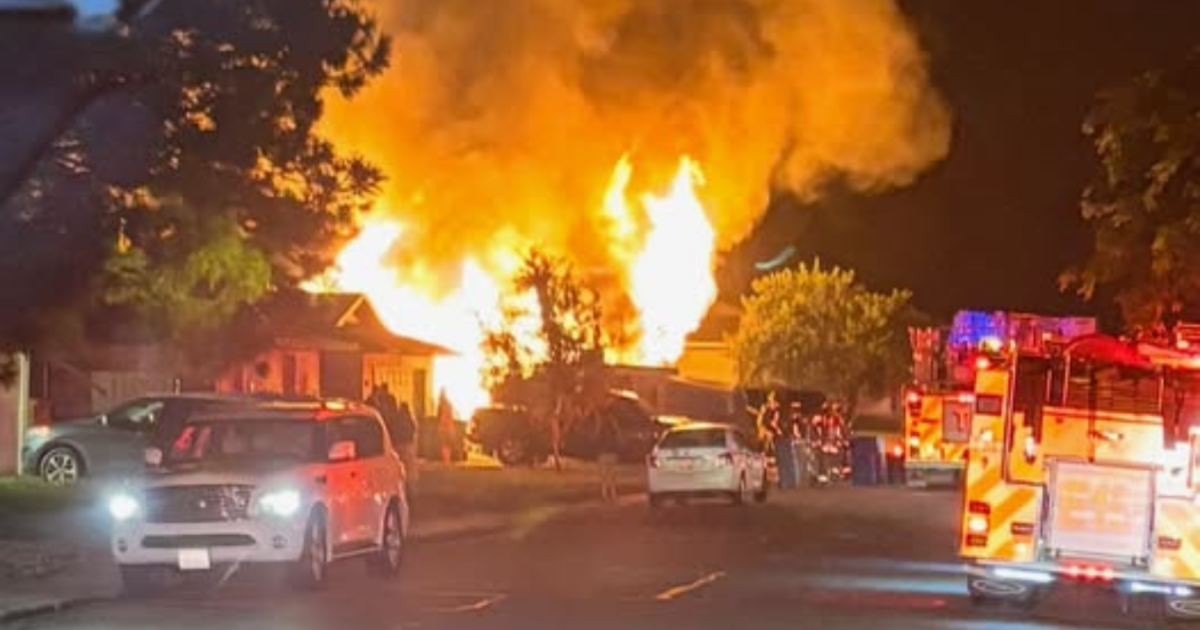


CALDWELL, Idaho (CBS2) — More than 2,000 Idaho Power customers in Canyon County are without electricity Wednesday evening as crews respond to an outage affecting Caldwell and Middleton.
Idaho Power reported the outage at 8 p.m. July 8, listing 2,163 customers impacted in the 83605, 83644 and 83687 ZIP codes.
The outage is expected to be resolved by 10 p.m. July 8; Idaho Power said a crew was dispatched and en route. The cause of the outage is not immediately known.

(KRON) — An Idaho man is recovering after a life-threatening rattlesnake bite during a family visit to Oroville, Northern California. Chris Howarth spent nearly two weeks in intensive care following the incident in his mother’s garden.
During his 12-day stay in intensive care, Howarth received 54 vials of anti-venom and multiple blood transfusions, split between six days at Oroville Hospital and six days after being flown to Stanford.
Six weeks after the incident, he is approximately 80% recovered.
Howarth initially believed the bites were a prick from a thorn or a “star thistle or one of those goat heads.” He described the sensation as feeling “like getting your blood drawn.”
“I think I got bit twice. I said ‘ow’ again and ‘ow’ again. It almost felt like getting your blood drawn,” said Howarth. Howarth also noted he “didn’t hear it at all” when his father went to inspect the area and observed the snake shaking its tail without making noise.
As his wife drove him to the hospital, his condition worsened.
“On the way there, he was started kind of feeling some numbness and tingling in his mouth and his tongue so I knew we needed to get to the closest hospital,” said Jenny Howarth.
Howarth is still experiencing lingering effects from the bite, including swelling, soreness and fatigue.
“My leg is still kind of sore and tender, my ankle still swells, I barely got able to tie a shoe just a few days ago and also still having lingering effects of fatigue,” Howarth said.
California’s Poison Control system has received 77 rattlesnake-related calls this year, with experts reporting encounters are occurring earlier and more frequently. Dr. Rafa Lima, an emergency physician at Kaiser Permanente in San Leandro, explained that rattlesnake venom “destroys local tissue and causes a lot of pain and swelling.”
Dr. Lima advised immediate medical attention for suspected venomous snake bites. “If you are bitten by a snake with a rattle or you suspect is venomous, you should really get care immediately,” Dr. Lima said.
He also dispelled common myths, stating, “There’s a common myth that you should just tourniquet up the wound and bind it and mobilize it, or even try to suck the venom out but all that does is delays the time to get treatment and the longer the venom is in the tissue, the worst prognosis.”
Howarth mentioned that the weather conditions were unexpected for a rattlesnake encounter.
“That day and even the day before, it kind of been cooler and it had been raining so we weren’t expecting to see a rattlesnake,” she said.
Howarth hopes his experience highlights that rattlesnakes pose a risk in garden areas, not just hiking trails, even during cooler weather. Howarth hopes to return to work next week.
Those who want to donate to a GoFundMe set up for Howarth can do so here.
All facts in this report were gathered by journalists employed by KRON4. Artificial intelligence tools were used to reformat information into a news article for our website. This report was edited and fact-checked by KRON4 staff before being published.
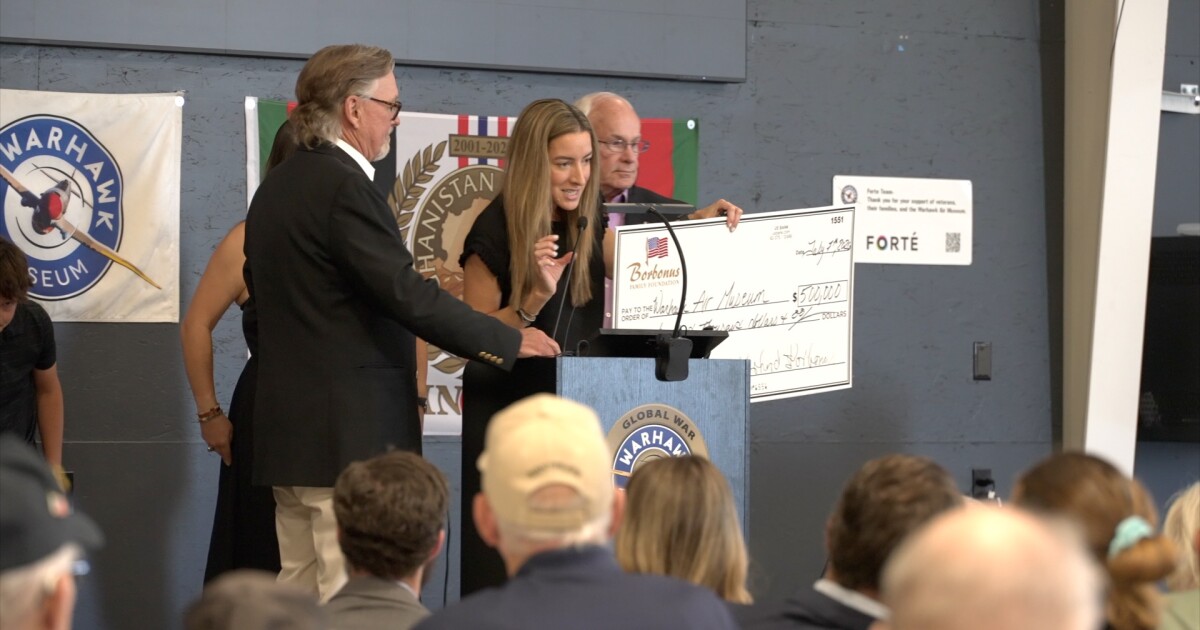
NAMPA, Idaho — Nearly 20 years after Idaho soldier John Borbonus was killed in Iraq, his legacy is continuing to serve fellow veterans.
The Borbonus Family Foundation, created in his honor, announced a $500,000 grant Tuesday to the Warhawk Air Museum in Nampa.
WATCH: One Idaho soldier’s legacy continues to serve fellow veterans
Warhawk Air Museum receives $500K grant honoring Idaho soldier John Borbonus
The museum says the unrestricted gift is its largest ever and will help cover operating costs as it continues to grow.
Executive Director Carson Spear says grants of this size often come with requirements to fund a specific project, but the Borbonus Family Foundation instead asked to use the funds where they are most needed.
Warhawk leaders say the funding will help preserve veterans’ stories and continue programs like the Kilroy Coffee Klatch, which brings together veterans from different generations each month.
RELATED | Kilroy Coffee Klatch brings veterans together at the Warhawk Air Museum
Vietnam veteran Emil Berry says the museum is more than a place to display history.
“It brings back memories, and also it helps the veteran, helps the military personnel. It’s just a special, very special establishment,” Berry said.
Borbonus’ sister, Alexa Borbonus, says Warhawk already preserves part of her brother’s story through a display dedicated to his service.
“The Warhawk Museum, they have a special place in our hearts,” Alexa Borbonus said. “They have John’s case on display now, and they provide a safe space for all our veterans in Idaho.”
RELATED | Skydivers honor fallen Boise soldier John Borbonus at annual memorial golf tournament
Sen. Jim Risch, who attended Tuesday’s announcement, said museums like Warhawk remind people that “freedom isn’t free” and help future generations appreciate the sacrifices made by those who served.
Following the announcement, the Borbonus family also donated John Borbonus’ challenge coin and the KIA bracelet worn by his family to Warhawk’s bar display, adding another piece of his legacy to the museum.
For Canyon County happenings, news, and more— join our Facebook Group: 2C Neighborhood News – Nampa, Caldwell, Middleton
This story was initially reported by a journalist and has been, in part, converted to this platform with the assistance of AI. Our editorial team verifies all reporting on all platforms for fairness and accuracy.
Send tips to Nampa neighborhood reporter Keith Burrell
Have a story idea from Nampa? Share it with Keith below —
-
 News2 minutes ago
Former Olympian pleads not guilty in reflecting pool vandalism charges
-

 Los Angeles, Ca1 hour ago
Heat advisory, beach hazards in effect as Southern California sizzles
-

 Detroit, MI2 hours ago
Teen on moped hit by car after cruising through stop sign in Detroit
-

 San Francisco, CA2 hours ago
Flight of fancy: San Francisco moves to build private luxury airport terminal
-

 Dallas, TX2 hours ago
Dallas’ digital creator economy is booming. Burnout is too.
-
Miami, FL2 hours ago
I went to 2 famous Miami restaurants, a flashy steakhouse and a Cuban hot spot. Here’s how they compared.
-

 Boston, MA2 hours ago
Pedestrian struck and killed in Roxbury – Boston News, Weather, Sports | WHDH 7News
-

 Denver, CO2 hours ago
Santa Fe Drive in Denver closed this weekend for pedestrian bridge construction


