The Milwaukee Brewers are headed to Cincinnati to take on the Reds in what is the first of five out of six series to be played against NL Central foes heading into the All-Star break. While any series could technically “make or break” a season, this stretch of 21 games (18 of them against the division) over the next 21 days just feels more important.
Milwaukee, WI
Why Black Women in Milwaukee See Hope in Kamala Harris – Milwaukee Courier Weekly Newspaper


Black women across generations in Milwaukee are galvanizing for Kamala Harris for a variety of reasons.
By Princess Safiya Byers
Clara Lebron
and Chesnie Wardell
This story was originally published by Milwaukee Neighborhood News Service, where you can find other stories reporting on fifteen city neighborhoods in Milwaukee. Visit milwaukeenns.org.
Nationally, Black women are mobilizing to support Vice President Kamala Harris’ run for president of the United States in the upcoming election.
Many say they support Harris because they perceive the Democratic nominee as a candidate who understands them and will advocate for racial and gender equality for women of color.
Such support became evident in July when 44,000 Black women joined one Zoom call to support Harris’ newly launched presidential campaign, raising more than $1.5 million for the campaign, according to published reports.
Harris is expected to campaign in Milwaukee on Thursday.
Here is what Black women mobilizing for Harris looks like in Milwaukee.
A renewed interest
For some, Harris entering the presidential race was a turning point.

Dana Kelley has been reinvigorated by Kamala Harris’ run for the presidency. (Photo provided by Dana Kelley)
Dana Kelley, who formerly worked for Citizen Action of Wisconsin and ran for the Milwaukee Public school board, said politics had drained her, so when it came to the presidential election, she was uninterested.
“After being so invested in politics, I had no investment in this race,” Kelley said. “But seeing a Black woman running in this moment feels necessary, like a cultural reset or the country.”
Organizing for Harris

Ald. Sharlen Moore sees this as a historic election. (Photo provided by Sharlen Moore)
Some women, like Ald. Sharlen Moore, are using their community organizing experience and personal networks to reach voters.
Moore has been getting the vote out by having intentional conversations with community members, particularly about early voting.

Mia Moore, a University of Wisconsin-Milwaukee political science student, believes that the voices of young voters matter. (Photo provided by Matthew Moore)
Mia Moore, 18, a political science student at the University of Wisconsin-Milwaukee, has been using social media platforms to share and repost content about voter registration.
Her goal is to reach the younger generation, so individuals like her friends can register for the first time.
She said this election is important to her because she believes racial justice, having basic health care for lower socioeconomic classes and basic rights are at stake.

Teresa Thomas-Boyd, pastor of Matters of the Heart Christian Ministries, plans to encourage early voting for the upcoming election. (Photo provided by Kalida Williams
Teresa Thomas-Boyd, pastor of Matters of the Heart Christian Ministries and a consultant for faith and community organizations, has been organizing community rallies and faith-based events to bring together advocates, leaders and elected officials for conversations.
Thomas- Boyd, 67, also does tabling events to tell residents about the importance of voting. Tabling is a common practice to provide information and answer questions at community events.
She said she believes people’s everyday lives are at stake as a result of issues like the elimination of education funding, lack of employment opportunities and a woman’s right to choose what to do with her body without government interference.
“Harris brings light and hope to a country that has been in disarray,” said Thomas-Boyd, who passed out voting information at the annual Harvest Day hosted by Walnut Way Conservation Corp. in September.

Cree Howard, a senior at Marquette University, has been sharing information on voting. (Photo by Clara Lebron)
Cree Howard, 21, a senior at Marquette University, studying criminology and sociology, has been tabling for voting organizations. Howard provides assistance to potential voters who might be unsure of who to vote for or even if they are voting.
“I have all the information from all the candidates and I give it to people to make sure they are informed,” she said.
Howard is also a member of Harris’ sorority – Alpha Kappa Alpha Inc., the nation’s oldest Black sorority. Harris has been a member of the organization since the 1980s, joining the international group’s original chapter at her alma mater, Howard University.
Cultural and historic resonance
For some Black women in Milwaukee, Harris’ rise will help bring attention to Black women’s ongoing struggle for racial and gender equality, especially when it comes to closing the pay equity gap.
They also believe Harris’ position, as the potential first Black woman and woman of color to be elected president, offers an opportunity for Black women to envision themselves in spaces of leadership and power that traditionally were off limits to them.
“To have the first Black woman is historical because she is a woman that is more qualified to hold the position of our highest office,” Sharlen Moore said.
Mia Moore appreciates that she can see someone representing her.
“I think seeing a Black woman that looks like me in this position is powerful and inspiring because it’s usually white men holding power,” she said.
Howard understands that feeling.
“I’m watching a Black woman on the screen running for president,” she said. “ If that ([Harris getting elected) happens, I’d have a woman in office that is a part of the same communities and groups as me. There are certain things that only AKAs do and knowing she has gone through those same processes truly makes me feel like everything will be better.”
A sense of hope
Some Black women think Harris becoming president brings them an overall sense of calm.
Kelley said Harris’ run for the presidency is a sigh of relief.
“Everything about her race is rejuvenating and graceful,” Kelley said. “Even if she doesn’t win, having the platform she has and displaying the integrity she has means something.”

Milwaukee, WI
Milwaukee Mayor Johnson says he’s not aware of FBI interviewing city election officials

Milwaukee Mayor Cavalier Johnson says he is unaware of any city election officials, current or former, who have sat for an interview with FBI agents seeking to discuss the 2020 election.
“I know there’s been outside counsel that has been engaged on this as well, which I’m grateful for, the partnership we’re having with some of the outside counsel there,” Johnson said on WISN 12’s “UpFront,” which is produced in partnership with WisPolitics. “But my understanding as of this moment is no.”
Agents are said to be specifically asking questions related to Milwaukee’s nearly 180,000 absentee ballots and the processing of those ballots at the city’s central count location.
The ballots have yet to be destroyed. The county’s corporation counsel has cited an ongoing lawsuit as the reason for preserving the ballots.
Johnson said he doesn’t know all the details about why the ballots are still there, but he wants the privacy of Milwaukee voters to be protected.
“If there was or is an opportunity to destroy that, to secure the sanctity of the vote for the people in Milwaukee, so that they know that their vote is private and the federal government can’t figure out who folks voted for, I think we should do that,” Johnson said.
Meantime, Don Millis, the Republican chair of the bipartisan Wisconsin Elections Commission, is urging Wisconsin Attorney General Josh Kaul to intervene and destroy Milwaukee’s 2020 absentee ballots.
Millis told “UpFront” he had a “very constructive conversation” with Milwaukee County Clerk George Christenson and learned there were 265,000 absentee ballots from which it could be determined who voters cast their ballots for, not just for the presidency, but other offices as well.
“No one’s entitled to see those,” Millis said. “Our constitution was built on the idea of a secret ballot, and I’m just frustrated that this hasn’t happened. I just wish the decision makers who are in charge of this would see that and move more quickly.”
Millis added, “Best case scenario would be tomorrow. But I just don’t think that’s going to happen. I think it’s going to probably be weeks or months before that happens.”
Millis said the law permits the ballots to be destroyed.
“No one has a right to see them, and so if there is quote unquote litigation, those are documents that should not be sought to a litigation hold,” Millis said. “And it would seem to me incumbent upon the court to see it that way and give permission for Mr. Christenson to do what he’s authorized and required to do.”
Millis said there has been staff-level discussion with the attorney general’s office.
“I’d be satisfied if he chose to intervene, to take the steps that need to be taken,” Millis said.
Milwaukeean Tyanna Buie is one of 30 artists selected to have work featured in the Obama Presidential Center, which officially opened Friday.
“It still hasn’t set in yet,” Buie told “UpFront.” “It still feels like a dream. I remember when I was first contacted, they never said what the project was.”
Buie recalled that conversation, when she was told “You’re good to go.”
“I said, ‘Who is they? What are we talking about?’ And that’s when they said, ‘Oh, we didn’t tell you. It’s the Obama Presidential Center,’ and I was like, ‘Oh, my goodness.”
Buie said her piece is in a room themed “fired up for change.”
“And it was also a space where people can sit, lounge and just take it all in,” she said. “Just the scale of the magnitude of everybody’s work is phenomenal, so I’m grateful to be included, but also super excited for people to see it.”
See more from the show.

Milwaukee is fresh off a disappointing series loss in Atlanta, as the Brewers lost the first two games by one run each before the offense exploded for nine runs in a win on Sunday. On the other side, the Reds are coming off a 4-2 week in which they took two of three from both New York teams — they outscored the Mets 26-12 at home to begin the week before outscoring the Yankees 14-8 in the Bronx over the weekend. Cincinnati sits in last place in the division, 9.5 games behind the first place Crew.
The Brewers are currently without pitchers Brandon Woodruff (expected to return for the series opener — more on him below), Logan Henderson (early July return), Jared Koenig (late June/early July), Coleman Crow (July), DL Hall (late July), Rob Zastryzny (late June/early July), Brian Fitzpatrick (TBD), Carlos Rodriguez (TBD), Angel Zerpa (out for season), and Quinn Priester (out for season). Outfielder Brandon Lockridge is the lone position player on the IL, and he’s reportedly close to a rehab assignment after a setback in the last few weeks.
The Reds are without position players Elly De La Cruz (expected to return either Monday or Tuesday) and Ke’Bryan Hayes (TBD), as well as pitchers Pierce Johnson (expected to return on Monday), Brandon Williamson (second half), Emilio Pagán (late June/July), Hunter Greene (July), and Graham Ashcraft (second half).
Jake Bauers leads the Brewer offense with 13 homers this year, with Brice Turang (11 homers) and Jackson Chourio (10 homers) right behind him. Chourio, Andrew Vaughn, and William Contreras lead the regulars in batting average, as Chourio is hitting .301, Vaughn is hitting .352, and Contreras is hitting .299 after a 4-for-5 day on Sunday. Gary Sánchez, Garrett Mitchell, Christian Yelich, Sal Frelick, Cooper Pratt, and David Hamilton also play key roles offensively, with Joey Ortiz and Blake Perkins rounding things out. As a team, the Brewers are hitting .256/.340/.394 (.734 OPS ranks ninth), with 68 homers (tied for 27th), 397 runs (third), and 75 steals (fourth).
Rookie Sal Stewart leads the Cincy offense with 14 homers this season, with JJ Bleday (13 homers), De La Cruz (12 homers), and Spencer Steer (12 homers) not far behind him. Speaking of De La Cruz, his return will be big for a Reds’ offense that has scuffled over the last month or so, as he’s hitting .280/.346/.509 and is always a threat to steal bags. Nathaniel Lowe, Matt McLain, Eugenio Suárez, Tyler Stephenson, and Dane Myers are the other regulars for the Reds, with Noelvi Marte, Blake Dunn, Will Benson, Edwin Arroyo, and Jose Trevino serving as depth. As a team, the Reds are hitting .229/.311/.395 (.706 OPS ranks 21st), with 96 homers (11th), 325 runs (22nd), and 59 steals (11th).
The Brewer bullpen is led by Aaron Ashby, who just took his first loss after 10 wins on Saturday evening. Grant Anderson, Abner Uribe, and Trevor Megill have also been effective, with Chad Patrick serving in a long-relief role. Joel Kuhnel, Drew Rom, and Craig Yoho serve as Milwaukee’s “B” bullpen as it stands. As a staff, the Brewers have a 3.45 team ERA (third), including a 3.37 starter ERA (fourth) and a 3.55 bullpen ERA (seventh). They’ve struck out 736 batters (first) over 670 2/3 innings.
Brock Burke and Sam Moll lead the Reds bullpen, as Burke has a 3.00 ERA and 31 strikeouts over 36 innings and Moll has a 3.19 ERA and 34 strikeouts over 31 innings. Tony Santillan has struggled to a 5.10 ERA, but Tejay Antone (2.75 ERA) and Caleb Ferguson (1.50 ERA) have both been effective. Zach Maxwell (9.90 ERA), Chris Paddack (6.04 ERA), and Chase Petty (4.41 ERA) have also struggled, and with Johnson expected to return, one of them seems like the most likely odd man out. As a staff, the Reds have a 4.58 team ERA (24th), including a 4.43 starter ERA (24th) and a 4.81 bullpen ERA (16th). They’ve struck out 597 batters (26th) over 678 innings.
Monday, June 22 @ 6:10 p.m.: RHP Brandon Woodruff (2-1, 3.60 ERA, 3.97 FIP) vs. RHP Brady Singer (3-6, 5.32 ERA, 6.15 FIP)
Woodruff is slated to make his return in the series opener, as he’s missed nearly two months after a shoulder injury that became blatantly clear in his last start due to diminished velocity. For the season, he’s made six starts, totaling 30 innings with a 3.60 ERA, 3.97 FIP, and 25 strikeouts. In a pair of rehab appearances with the ACL Brewers and High-A Wisconsin Timber Rattlers, Big Woo totaled nine innings, allowing six runs on 10 hits and three walks while striking out 11. In 15 career appearances (13 starts) against the Reds, Woodruff is 7-4 with a 3.48 ERA and 106 strikeouts over 75 innings.
Singer, 29, has had a rough second season in Cincinnati after being acquired in the Jonathan India trade last offseason. After putting up a 14-12 record with a 4.03 ERA in 2025, he’s 3-6 with a 5.32 ERA and 6.15 FIP over 66 innings this season. He’s looked a bit better in his last two outings, though, allowing three runs on nine hits and four walks with 10 strikeouts over 11 innings in a win over the Mets and a no-decision against the Padres. Singer has made four career starts against Milwaukee — including three last season — with a 2-2 record, a 4.82 ERA, and 20 strikeouts across 18 2/3 innings.
Tuesday, June 23 @ 6:10 p.m.: RHP Brandon Sproat (1-4, 5.94 ERA, 5.52 FIP) vs. LHP Nick Lodolo (2-2, 6.12 ERA, 5.80 FIP)
Sproat has a 5.94 ERA and 5.52 FIP with 63 strikeouts across 63 2/3 innings this season, and he’s been about as inconsistent as those numbers indicate — he’s shown flashes of top-of-the-rotation stuff, but he’s also struggled with homers and walks. His last start was a microcosm of his season, as he went three perfect innings before allowing a pair of walks and a pair of hits — including a grand slam — in the fourth inning against the Guardians. He struck out six but exited after just 63 pitches in that fourth, as he dealt with cramps (something that seems to be a larger issue among Milwaukee’s young pitching staff). Sproat’s only appearance against the Reds came last year in his MLB debut while with the Mets. He took the loss in that one, allowing three runs on three hits and four walks with seven strikeouts over six frames.
Lodolo, who had the numbers of a top-of-the-rotation guy last season with a 3.33 ERA, 3.81 FIP, and 156 strikeouts, has struggled mightily in eight starts thus far this year, with a 6.12 ERA, 5.80 FIP, and 32 strikeouts over 42 2/3 innings. The 28-year-old lefty got roughed up big time against the Mets in his last appearance, allowing seven runs on 11 hits and two walks while striking out just two over 4 2/3 innings. Lodolo has made six career appearances (five starts) against Milwaukee, with a 1-1 record, 2.84 ERA, and 29 strikeouts over 31 2/3 innings.
Wednesday, June 24 @ 6:10 p.m.: LHP Shane Drohan (3-2, 3.40 ERA, 3.17 FIP) vs. RHP Rhett Lowder (3-4, 4.82 ERA, 4.46 FIP)
Drohan has turned into a reliable five-inning guy for the Brewers over the last month, as he has a 3.40 ERA, 3.17 FIP, and 47 strikeouts over 47 2/3 innings this season. He took a no-decision in his last outing against the Guardians, going five frames with one run allowed on three hits and three walks, striking out three on 91 pitches. This marks Drohan’s first career start against Cincinnati.
Lowder, 24, is a former No. 7 overall pick who debuted at just 22 in 2024, pitching to a 1.17 ERA with 22 strikeouts over 30 2/3 innings that year. After missing all of 2025 due to injuries, he hasn’t looked quite the same in 2026 through 11 starts. He has a 4.82 ERA, 4.46 FIP, and 42 strikeouts over 52 1/3 innings. He took the loss in his last appearance against the Yankees, allowing four runs on six hits and three walks with five strikeouts over 5 1/3 innings. Lowder made his lone career start against Milwaukee back in August 2024. He took the loss, allowing one run on two hits and four walks with six strikeouts across four innings.
Monday, June 22: Brewers TV; listen via radio on the Brewers Radio Network (620 WTMJ in Milwaukee)
Tuesday, June 23: Brewers TV; listen via radio on the Brewers Radio Network (620 WTMJ in Milwaukee)
Wednesday, June 24: Brewers TV; listen via radio on the Brewers Radio Network (620 WTMJ in Milwaukee)
The Brewers hit a tough rut in Atlanta over the weekend, but this Reds team has been struggling after jumping out to a hot start. I’ll take the Crew to win two of three to wrap up the road trip.

MILWAUKEE – One person was killed in a two-vehicle crash in Milwaukee in the early morning hours of Sunday, June 21.
The driver of the other vehicle was arrested at the scene.
Crash and arrest
What we know:
According to the Milwaukee Police Department, the crash happened at about 1:15 a.m. near 11th and Greenfield.
A vehicle crossed the roadway then struck another vehicle, killing the driver. The victim, a 47-year-old, was being treated for life-threatening injuries but died from those injuries at the scene.
FREE DOWNLOAD: Get breaking news alerts in the FOX LOCAL Mobile app for iOS or Android
It is suspected that the driver of the striking vehicle was impaired. The 24-year-old suspect was arrested on scene in connection with the accident, and charges will be referred to the Milwaukee County District Attorney’s Office for review.
The Source: The Milwaukee Police Department sent FOX6 the information.
-
Business4 minutes ago
Music mogul Clive Davis, producer and label executive who signed musicians like Janis Joplin, Bruce Springsteen and Whitney Houston, has died
-
Entertainment7 minutes ago
Netflix expands library of kid-centric programs
-
 Lifestyle12 minutes ago
Contributor: ‘The Fast and the Furious’ took the Asians out of an Asian American story
-
 Politics19 minutes ago
Supreme Court says ex-LAPD officer may be sued for excessive force in street shooting
-
 Sports27 minutes ago
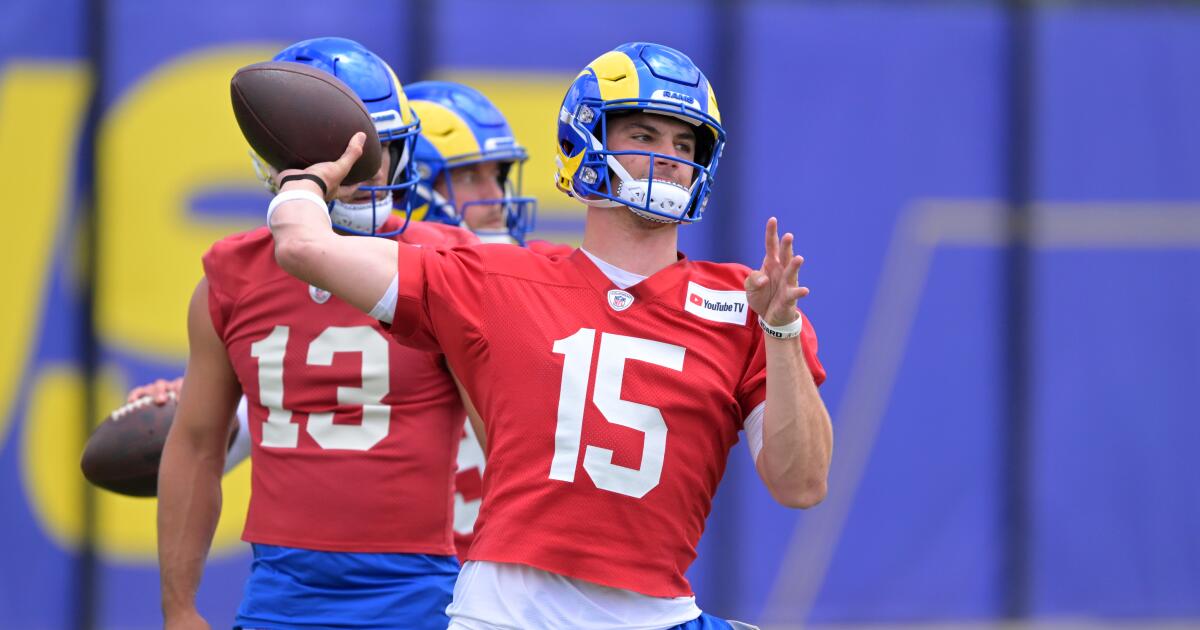
Rams QB Ty Simpson embracing an unusual bedtime routine to spur his development
-

 World37 minutes ago
Lebanon Latest: Israeli attacks surge despite ceasefire efforts
-
 News1 hour ago
Supreme Court allows a ruling that ends a tool to protect minority voters in 7 states
-

 New York2 hours ago
How a Security Guard Lives on $46,000 a Year in the East Bronx