The number of migrant deaths in New Mexico near the U.S.-Mexico border has surged tenfold over the past two years compared with five years ago, alarming new figures have revealed.
According to the experts who handled the data, smuggling gangs are increasingly leading vulnerable migrants into perilous terrain including desert regions, canyons, and mountains west of El Paso, Texas, where surviving the tough conditions is impossible for many.
Recent data reveals that in the first eight months of 2024, 108 presumed migrants, predominantly from Mexico and Central America, were discovered dead near the border in New Mexico, often within just 10 miles of El Paso.
In contrast, only nine bodies were found in 2020 and ten in 2019, while 113 were recorded in 2023.
Advertisement
Border Patrol vehicles survey a steel fence at the Southwest border with Mexico at Sunland Park, New Mexico, Aug. 22, 2024. Ten times as many migrants died in New Mexico near the U.S.-Mexico border in… Border Patrol vehicles survey a steel fence at the Southwest border with Mexico at Sunland Park, New Mexico, Aug. 22, 2024. Ten times as many migrants died in New Mexico near the U.S.-Mexico border in each of the last two years compared with just five years ago, new figures reveal.
Morgan Lee/AP, file
Nearly half this year’s deceased migrants found in New Mexico were women, with the largest segment being females aged 20 to 29.
The reasons behind this spike in fatalities remain unclear, but experts attribute it to harsher treatment by smugglers and the selection of more dangerous routes amid extreme summer temperatures.
Heather Edgar, a forensic anthropologist with the University of New Mexico’s Office of the Medical Investigator, said “Our reaction was sadness, horror, and surprise because it had been consistently low for as long as anyone can remember.”
According to Edgar, his office has been overwhelmed by the upsurge in migrants deaths, having been forced to recruit additional deputy medical investigators to handle the increase in numbers, which came on top of the usual workload of 2,500 forensic cases annually.
Forensic anthropologist Heather Edgar with the Office of the Medical Investigator poses for a portrait outside her office in Albuquerque, New Mexico, Oct. 3, 2024. She said the Office’s reaction to the rise of migrant… Forensic anthropologist Heather Edgar with the Office of the Medical Investigator poses for a portrait outside her office in Albuquerque, New Mexico, Oct. 3, 2024. She said the Office’s reaction to the rise of migrant deaths was sadness, horror and surprise.
Susan Montoya Bryan/AP
As immigration and border security loom large in voters’ minds ahead of the Nov. 5 presidential election, candidates have focused primarily on preventing migrant entry and deporting those already in the U.S.
Advertisement
However, the increase in deaths has raised urgent humanitarian concerns since smugglers began leading migrants through gaps in the fencing at Sunland Park and over low barriers near the Santa Teresa Port of Entry.
Adam Isacson, an analyst for the Washington Office on Latin America said “People are dying close to urban areas, in some cases just 1,000 feet from roads.”
He has called for more water stations, improved telecommunications, and enhanced rescue efforts.
In response to the surge, New Mexico officials are ramping up their crackdown on human smuggling networks, recently arresting 16 individuals and rescuing 91 trafficked people.
U.S. Customs and Border Protection has also deployed a surveillance blimp to monitor the migration corridor and set up movable radar towers for better detection.
Advertisement
Officials have introduced 30 new push-button beacons along remote border stretches in New Mexico and Texas to summon emergency medical help, in addition to installing over 500 placards with location coordinates directing migrants to call 911.
This summer, Border Patrol, responsible for securing nearly 6,000 miles of land borders, expanded its search and rescue operations, dispatching more patrols equipped with medical specialists. They have relocated beacons closer to areas where migrants are frequently found in distress.
Border Patrol reported nearly 1,000 rescues of migrants in New Mexico and Texas over the past year, a sharp increase from about 600 rescues the previous year.
Even while overall migration declines following the Biden administration’s major asylum restrictions, the number of deaths in New Mexico now rivals those in Arizona’s Sonoran Desert, where 114 presumed border crossers were found dead during the same period this year, according to a mapping project by the nonprofit Humane Borders.
This article contains additional reporting from The Associated Press
New Mexico leaders are backing a bipartisan bill after 12 confirmed U.S. screwworm cases, including one case in a Lea County dog.
SANTA FE, N.M. – New Mexico leaders are backing a bipartisan bill after 12 confirmed U.S. screwworm cases, including one case in a Lea County dog.
New Mexico State Veterinarian Dr. Samantha Holeck said the parasite has spread to New Mexico, though officials say they have not found any human cases.
“This is also not a political issue this is a nationwide issue that we all need to address because it affects all warm blooded animals including humans,” Holeck said.
Advertisement
U.S. Reps. Gabe Vasquez and Teresa Leger Fernandez support the Protect America’s Herds Act.
The bill would create a grant program to train people to identify, treat, prevent and report screwworm. It would also support more livestock inspections and education for ranchers.
Rep. Teresa Leger Fernandez said she heard concerns from tribal leaders about the cost of protecting cattle herds.
“I spoke with one of our tribal leaders today and they have cattle operation and they’re worried, and they’re talking about how much more money they’re having to pay to go make sure they check on their herds and there are extra costs,” Leger Fernandez said.
Funding would prioritize states and tribal communities most at risk for screwworm outbreaks.
Advertisement
State health officials said screwworm is not a food safety issue. They also said ranchers should stay alert but not alarmed.
New Mexico isn’t done with Meta yet. After the second phase of a landmark trial, the state is asking a judge to make the company pay almost $1 billion to address harm done to young people in New Mexico, SourceNM reports. In a court filing, attorneys with the New Mexico Department of Justice argue that Meta’s addictive design features and recommendation algorithms “substantially contributed to the increase and severity” of problems including depression and eating disorders. The state wants a judge to order Meta to pay $953 million into a fund for public education and behavioral health programs, reports Fox News.
After the first phase of the trial in March, a jury found the company endangered children and misled the public about its platforms’ safety. Meta was ordered to pay $375 million in damages, $5,000 for each violation.
New Mexico Attorney General Raúl Torrez has argued Meta executives prioritized profit over minors’ safety, ignored internal warnings, and misrepresented what they knew about harms to young users. In the second phase, First Judicial District Court Chief Judge Bryan Biedscheid heard arguments on whether the company’s actions created a public nuisance, the Santa Fe New Mexican reports. Final filings in that phase of the trial were submitted Friday. Beyond potential financial penalties, Biedscheid will also rule on the state’s request for Meta to make changes including stricter age controls and “safer algorithms” that “do not prioritize engagement over well being.”
Meta says New Mexico is overreaching, warning that the proposed mandates are “impractical and ill-considered” and “would risk leaving teens less safe, infringe on parental rights, and stifle free expression.” Meta argues that New Mexico hasn’t proven that its platforms affect mental health outcomes. In court filings, Meta has claimed that the state is seeking $3.7 billion, not $953 million, but Chief Deputy Attorney General James Grayson says the higher figure is an expert’s estimate of the cost to fund all child mental health interventions in the state. “We’re not trying to hold Meta responsible for mental health harms in general in New Mexico, only for what social media has cost,” Grayson tells the New Mexican.
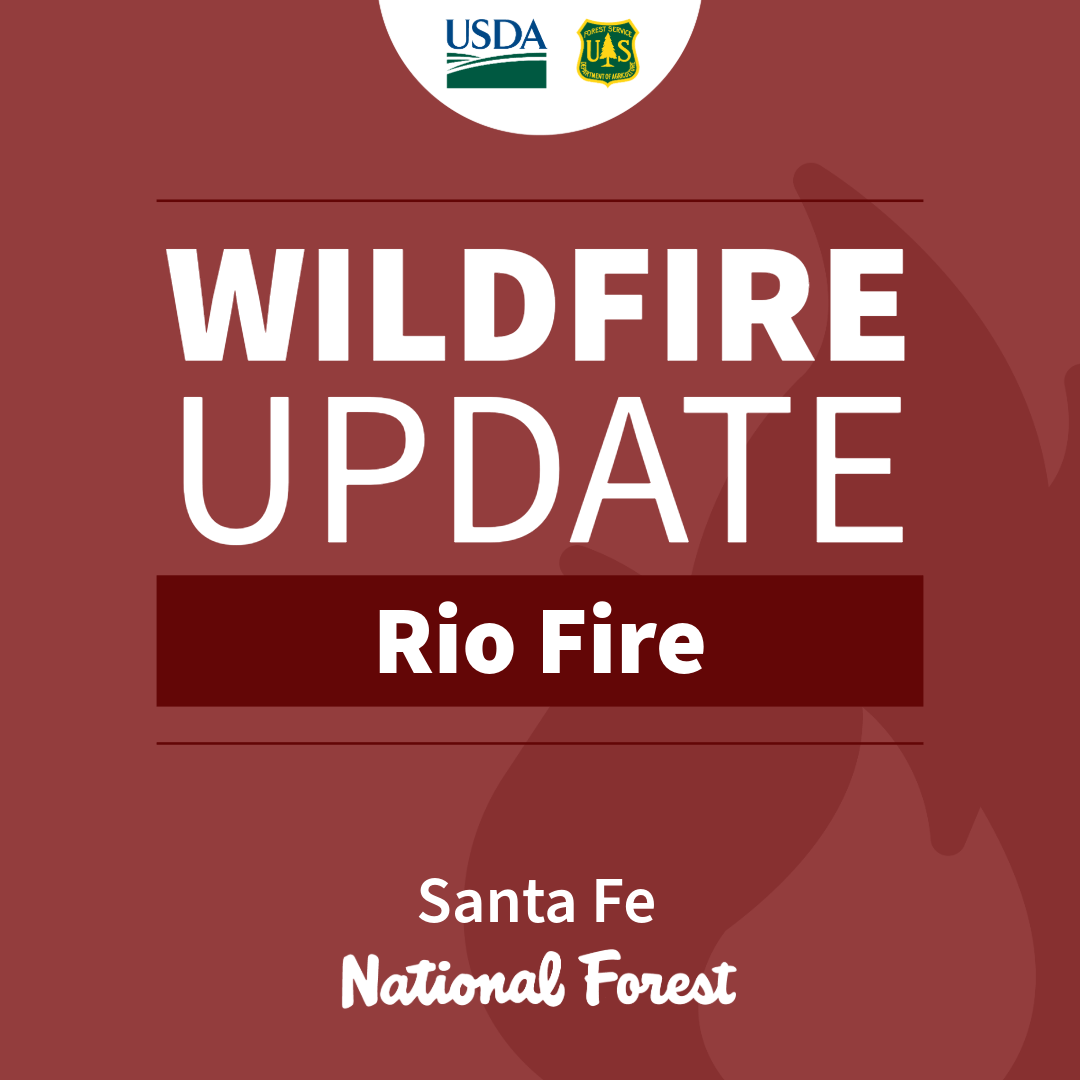
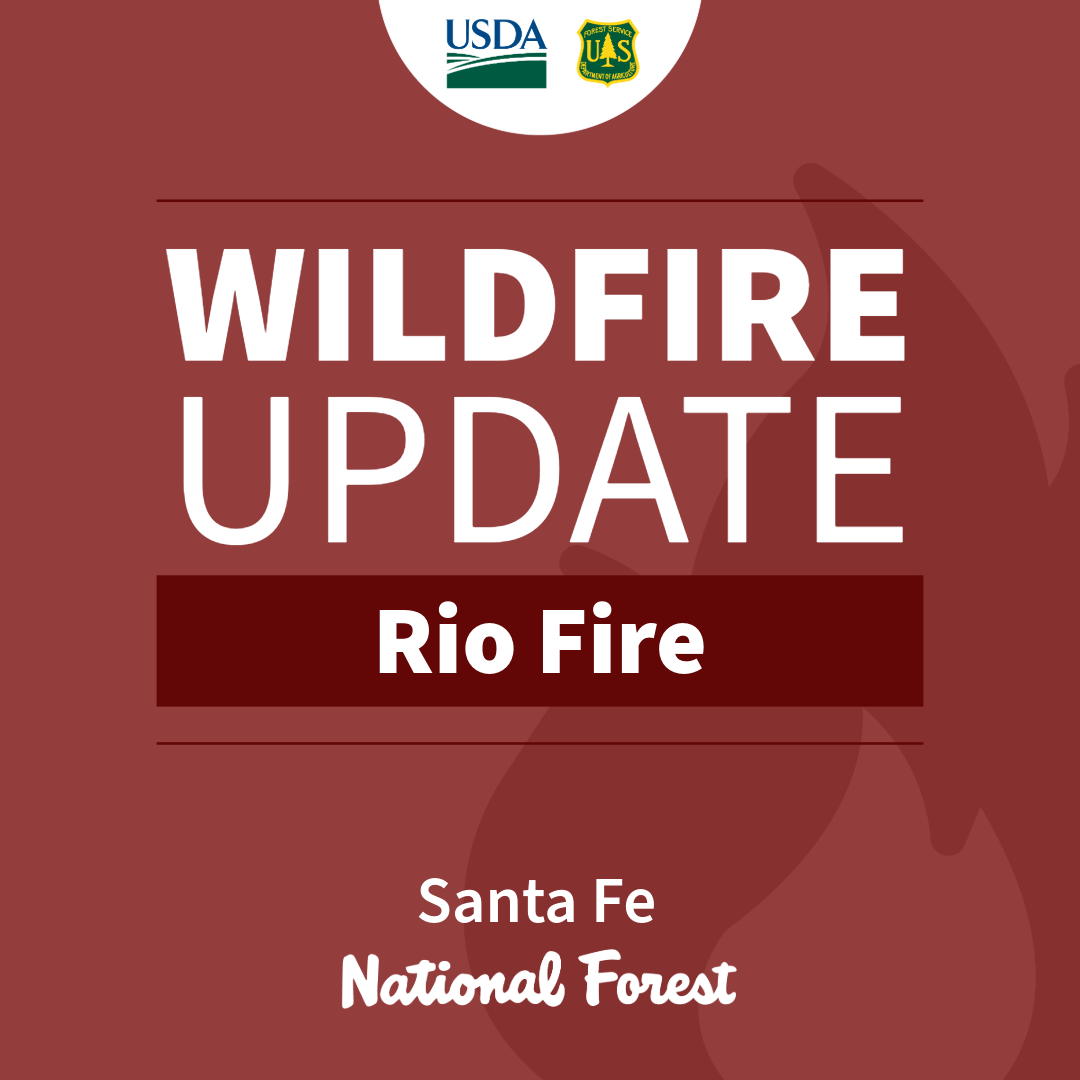
Santa Fe, NM, June 17, 2026—The Rio Fire located in the Espanola Ranger District on Mesa De La Gallina three miles northeast of Chicoma Mountain has grown to 128 acres. Red flag conditions, heavy dead-and-down fuels and limited safe access to the fire contributed to the fire’s growth. Today, crews focused on building safe access to suppress the fire. Additional personnel have been ordered including a Type 1 Interagency Handcrew (hotshot crew), Rapid Extraction Module, and a short haul capable helicopter. Aerial resources such as the Type 1 helicopter and air tankers have been working all day on the fire dropping water and retardant to reduce fire growth. Two large air tankers have been ordered to the fire in addition to scooper planes. Values at risk include private property inholdings north of the fire. Smoke from the Rio Fire may be visible from Santa Fe, Los Alamos, Espanola and the surrounding communities.
Due to the complexity of the fire the Northern New Mexico Type 3 Incident Management Team has been ordered to take command of the fire. The team will in brief with the Santa Fe National Forest at 10:00 am tomorrow.
Fire information is available on the Santa Fe National Forest website, Inciweb, NM Fire Information, and social media pages (Facebook and X).
Advertisement
About the Forest Service: The Forest Service has brought people and communities together to answer the call of conservation for more than 100 years. Grounded in world-class science and technology — and rooted in communities — the Forest Service connects people to nature and recreation opportunities. The agency manages 193 million acres of public land, supports the nation’s forest industry and energy needs, and operates the largest and most respected wildland fire and forestry research organizations in the world. By providing assistance to state and private landowners and working with tribes and other partners, the Forest Service also helps steward an additional 900 million forested acres within the U.S.