World
‘It gets hold of you’: Crystal meth from Myanmar floods Australia streets


Melbourne, Australia – Myanmar’s remote jungle hills may be a world away from sun-soaked Australia, but the two countries share an insidious bond – crystalline methamphetamine.
Otherwise known as “ice” or “crystal meth”, crystalline methamphetamine is a highly addictive substance which has permeated Australia’s suburbs.
The Australian Federal Police estimates about 70 percent of the drug comes from northeastern Myanmar, near the Golden Triangle, where the country borders Thailand and Laos, and is transported through Southeast Asia before arriving in Australia by boat.
A recent National Drug Strategy survey showed that one out of every 100 Australians over the age of 14 had used ice in the last 12 months, mostly in the country’s major cities.
The same survey also indicated that about 7.5 percent of Australia’s population had tried methamphetamine during their lifetime.
Charlie Samson, who lives in Australia’s second-biggest city, Melbourne, first smoked ice when he was just 18. He soon found himself addicted.
“We’d go out for drinks, and someone knew a bloke who had some ice. And so we all tried it,” he told Al Jazeera.
“The next week, we did the same thing, and then it snowballed from there. Fast forward three or four months, I was secretly buying it on a Monday, because I’d been up all weekend.”
At the peak of his addiction, he was spending 2,500 Australian dollars ($1,690) a week on the drug. Despite his habit, Samson managed to maintain his well-paid construction job with the vast majority of his salary going on the drug.
“Before I rolled out of bed, I used to have to smoke about a gramme just to be able to function,” he said.
‘Smelled like tea’
Australia’s official health campaigns often declare ice users to be “psychotic” and “violent”, underscoring the prevailing stereotype of the homeless “meth addict”.
However, Samson told Al Jazeera that ice addiction could affect anyone and that people could remain apparently functioning members of society even when addicted.
He said he had seen lawyers and businesspeople all fall prey to the drug.
“I’ve met a few people who I thought, ‘He’s got a family, he’s paying a mortgage. And now he’s got nothing.’ Because at some point, it gets a hold of you, even if it’s not financially, it’ll get you mentally,” he said.
Samson, who is now 29, managed to hold down his job for six years before the addiction completely overran his life, and it was only after a short stint in prison that he managed to get clean.
While Samson told Al Jazeera he never knew the source of the ice he bought, he did recall batches that “smelled like tea”, indicative of methamphetamine originating from Myanmar, which is often smuggled in tea boxes.
The production of methamphetamine and heroin has increased in Myanmar since the 2021 military coup plunged the country into crisis and civil war, with the United Nations Office on Drugs and Crime (UNODC) saying that seizures of methamphetamine hit a record 190 tonnes in 2023 across East and Southeast Asia.
The UNODC says that Myanmar has also emerged as the world’s leading source of opium.
Most of the drug production is centred in the northern hills of Shan and Wa states, regions which have long been notorious for opium production and trade.
But the civil war has seen a spike in the drug trade, including heroin, methamphetamine and what is known as yaba – small pills containing a mix of methamphetamine and caffeine – with the proceeds used to finance the conflict.
The Australian Federal Police, which maintains ongoing operations in the region as part of efforts to stem the flow of drugs to Australia, told Al Jazeera that “transnational crime is not only a result of, but a driver of the current conflict, as it is financing various actors in the conflict and, therefore, reducing the incentive to pursue a durable peace.”
“Like heroin historically, methamphetamine production remains a significant source of income to transnational crime groups in Myanmar,” a spokesperson said. “Ongoing offshore seizures of drugs from Myanmar show this region remains a major source to the lucrative Australian market.”

Between 2012 and 2022, almost 10 tonnes of ‘tea packet’ methamphetamine was seized by the Australian Federal Police. In 2022 alone, this included more than 2.1 tonnes with a street value of more than 1 billion Australian dollars ($671.6 million).
‘Tea packet’ methamphetamine refers to methamphetamine manufactured in Southeast Asia and commonly packaged in branded tea packets for concealment and marketing purposes; different colours indicate purity, with green being the highest.
While the likely origin is Myanmar, the police told Al Jazeera it was “difficult to put a percentage on the amount of methamphetamine originating from Myanmar, as it is transhipped through multiple countries, concealing the true source of the illicit drugs”.
Increasingly potent
Samson has remained clean since leaving prison in June 2023.
But many other Australians are unable to break ice addiction and struggle even to take the first step of seeking help.
Turning Point is a Melbourne-based clinic whose services include assistance for those seeking help for methamphetamine use, including counselling and detox.
Clinical Director Shalini Arunogiri echoes Samson’s observations that methamphetamine addiction affects a variety of Australians.
“We see people who may fit that homeless stereotype,” she told Al Jazeera. “But we absolutely do see people who are working full time. We see parents. We see people who are in high functioning jobs who might be using daily.”
She added that the stigma of methamphetamine addiction is often a barrier to those seeking help.
“I think there is that real stereotype that has been portrayed in media, advertising and in public health campaigns. Those public health campaigns aren’t effective. In fact, they marginalise people who use that drug even more.”
Arunogiri says the purity of methamphetamine coming from high-volume trade regions such as Myanmar has increased over the last two decades.
“The drug that we have available in Australia for the last decade is quite potent – we’ve got very high potency crystalline methamphetamine. Here, it’s virtually impossible to get non-crystalline methamphetamine.”
She told Al Jazeera that the effects of the drug can be seen across a range of physical, mental and criminological indicators.
“One in three people who use at least every week are likely to experience psychotic symptoms – seeing things, hearing things. We know that a significant proportion go on to develop things like schizophrenia and long-term psychological illnesses. Using methamphetamine also often comes with criminal aspects as well.”
The Australian Institute of Health and Wellbeing recently reported that at least 46 percent of those entering prison had used methamphetamine in the previous 12 months.
John Coyne, Head of Strategic Policing and Law Enforcement at the Australian Strategic Policy Institute, told Al Jazeera that methamphetamine use in Australia “fuels a cycle of criminal activity that often leads to incarceration”.
He says this includes theft and robbery to fund addiction, as well as violent behaviour, which can be triggered by the drug.
“Additionally, the illegal nature of meth means that possession and trafficking come with harsh penalties, further contributing to incarceration rates,” he said.
Coyne says the ongoing conflict in Myanmar, along with endemic corruption and human rights abuses by the military regime, creates serious challenges for Australian police in tackling the export of drugs from the region.
“While disrupting illicit drug routes is essential for regional security, engaging with a regime known for its oppressive tactics raises ethical and legal concerns,” he said.
According to the United Nations, the Myanmar military has killed more than 5,000 civilians since the coup and has reinstated the death penalty for political activity, executing pro-democracy activists.
That the regime is also allegedly directly involved in the drug trade presents a myriad of operational and ethical challenges for Australian law enforcement.
“The Australian Federal Police must navigate these complexities carefully, ensuring that intelligence-sharing is strictly focused on disrupting drug networks without inadvertently supporting a corrupt regime,” Coyne told Al Jazeera.
“This delicate balance is crucial to uphold international norms and prevent complicity in the junta’s ongoing human rights violations.”



As Israel’s war on Lebanon rages, hundreds gather in Rmeileh by Sidon Gate to watch the 2026 World Cup. Organised by influencer Bilal Haddad, the fan zone offers food trucks, shisha and family activities, giving people a rare chance to relax. Al Jazeera’s Justin Salhani went to check it out.
Published On 20 Jun 2026

WASHINGTON (AP) — Mark Schiefelbein has been based in Washington, D.C., with AP for about three years, and before that spent a decade in Beijing at AP’s China bureau.
Here’s what he had to say about this extraordinary photo.
Why this photo?
This was an event that had never happened before in the 250-year history of the United States and may never happen again: a night of mixed martial-arts cage match brawls on the South Lawn of the White House, with bloodied competitors battling it out in front of the president, vice president, and other leaders of the country. AP had other photographers ringside at the event focusing more on the fights themselves. So I felt my role was to capture the context of the evening — the location, the people in attendance, the environment.
How I made this photo
A small group of other photographers and I, the White House press pool, had been allowed to photograph part of the evening from a position in the stands directly opposite the White House. I was carrying four cameras with a variety of lenses from 12 mm to 300 mm. This let me capture everything from ultra-wide views of the “claw” structure built for the fights, to close-ups of leaders and celebrities in attendance. I had been following Diego Lopes with my longest lens as he moved around the ring celebrating his win over Steve Garcia. When I saw him start to climb onto the cage, I immediately realized there might be a possibility of a picture like this and zoomed out to capture more of the scene.
An octagon on the White House lawn for Trump’s 80th birthday and the nation’s 250th, in photos
Why this photo works
The White House is surely one of the most recognizable buildings in the world. The columns of the South Portico, the fighter standing with arms and legs spread wide in celebration, and the octagon padding of the UFC ring tell an entire story as your eyes move from top to bottom of the frame. With Lopes standing with his back to the camera, facing the White House, it becomes less a photo of him and more about the evening, the event, and the spectacle. It was fortunate that it was after nightfall, so things that might have been distracting, like the Marine Band and spectators seated behind the ring, are mostly in the dark. Only the key elements – the White House, Lopes, and the ring are lit up.
—
For more extraordinary AP photography, click here.
World
British Prime Minister Keir Starmer faces potential leadership challenge from newly-elected Andy Burnham

NEWYou can now listen to Fox News articles!
Andy Burnham has officially won his special election and regained a seat in Parliament, setting him up to challenge the deeply unpopular Keir Starmer as the leader of the Labour party and as prime minister.
Burnham, currently the mayor of Greater Manchester in northwest England, won a seat in Makerfield and came away with 55% of the vote in a field of more than a dozen candidates, according to The Associated Press. The runner-up was Rob Kenyon of Reform UK, a right-wing populist party, who received more than 9,000 fewer votes than Burnham.
Burnham last served as a member of Parliament in 2017 but strongly implied in his victory speech that he is returning with the intention to lead the United Kingdom.
“Everyone knows that politics isn’t working. Everyone can feel that the country isn’t where it should be. Tonight could, just could, be the turning point,” he said, according to the AP. “This result will bring about a country that works fairly for everywhere and for everybody.”
TRUMP ALLY NIGEL FARAGE DEALS MAJOR BLOW TO STARMER IN LOCAL UK ELECTIONS AS RESIGNATION CALLS MOUNT
Britain’s Labour party candidate Andy Burnham speaks to supporters after the Makerfield by-election in Ashton in Makerfield, England, on Friday, June 19, 2026. (Jon Super/AP)
This special election, called by-elections in Britain, was unusually significant because the area’s Labour MP, Josh Simons, intentionally resigned to allow Burnham to win the seat and pursue leadership.
The potentially outsized impact of this election was juxtaposed with the strange scene that unfolded when all the candidates gathered on Friday morning to hear the results. Burnham stood in between an independent candidate dressed in a fox costume and another candidate known as “Count Binface”.
As his name suggests, “Count Binface,” whose real name is Jonathan David Harvey, was wearing a trash can on his head and regularly runs in U.K. elections to advocate for increased voter turnout.
Starmer congratulated Burnham in a social media post on X, saying voters “chose Labour’s campaign of hope and optimism over division and hate.”
When asked about Burnham’s intentions to oust him as leader, Starmer said he will fight to remain prime minister, a position he has held for nearly two years.
“I’ve said repeatedly I’m not going to walk away from that,” Starmer told reporters.
Labour party candidate Andy Burnham, center, stands with other candidates on the podium at the Edge Wigan, awaiting the Makerfield by-election result announcement in Wigan, England, on Friday, June 19, 2026. (Jon Super/AP)
AS EPSTEIN-LINKED APPOINTMENT SPARKS BACKLASH, UK PM STARMER FACES PARTY REVOLT AMID RESIGNATION CALLS
Starmer led the Labour party to a landslide victory in July 2024 and ever since, his popularity has been eroding thanks to a persistently high cost of living, an anemic economy and a scandal over his willingness to accept gifts from wealthy donors.
Last September, Starmer was slammed for appointing Peter Mandelson as the British ambassador to the United States, when it was known as early as 2019 that Mandelson had a friendship with convicted child sex offender Jeffrey Epstein. Following an enormous public backlash, Mandelson was quickly dismissed from his post.
With Starmer as leader, Labour is increasingly losing liberal-minded voters to the Green Party, while also facing stronger challenges by Reform UK, a Nigel Farage-led party that advocates against mass migration and in favor of tighter border controls. Farage, an ally of U.S. President Donald Trump, said he was disappointed by Burnham’s victory.
Burnham is expected to head to London to be sworn in as soon as Monday. Under the British parliamentary system, the governing party can hold leadership elections in the middle of the term. The winner of such a contest can become prime minister without there having to be a national election.
British Prime Minister Keir Starmer awaits Switzerland’s Federal President Guy Parmelin on the sidelines of the G7 summit, in Evian-les-Bains, France, on Tuesday, June 16, 2026 (Isabel Infantes/Pool Reuters via AP)
CLICK HERE TO DOWNLOAD THE FOX NEWS APP
Under Labour rules, a lawmaker can challenge the leader if they win the backing of a fifth of their party’s members in the House of Commons. Burnham has enough lawmakers on board to trigger a leadership contest, according to a report from The New Statesman.
According to the AP, Culture Secretary Lisa Nandy said Burnham and Starmer will “have a conversation about what comes next” in the next few days.
The Associated Press contributed to this report.
-

 Sports1 minute ago
World Cup Red Cards: 2026 Has More Red Cards Than Each Of Last 2 World Cups
-

 Technology4 minutes ago
China’s brain chip breakthrough raises big questions
-
 Business9 minutes ago
Ranch lovers can soon travel with a TSA-friendly kit of the popular American dressing
-
 Entertainment16 minutes ago
At the Fonda, Jane Remover’s violent yearning heralds a new kind of stardom
-
 Lifestyle19 minutes ago
Beer, with a twist? SoCal dads find solidarity through an unexpected activity
-
 Politics24 minutes ago
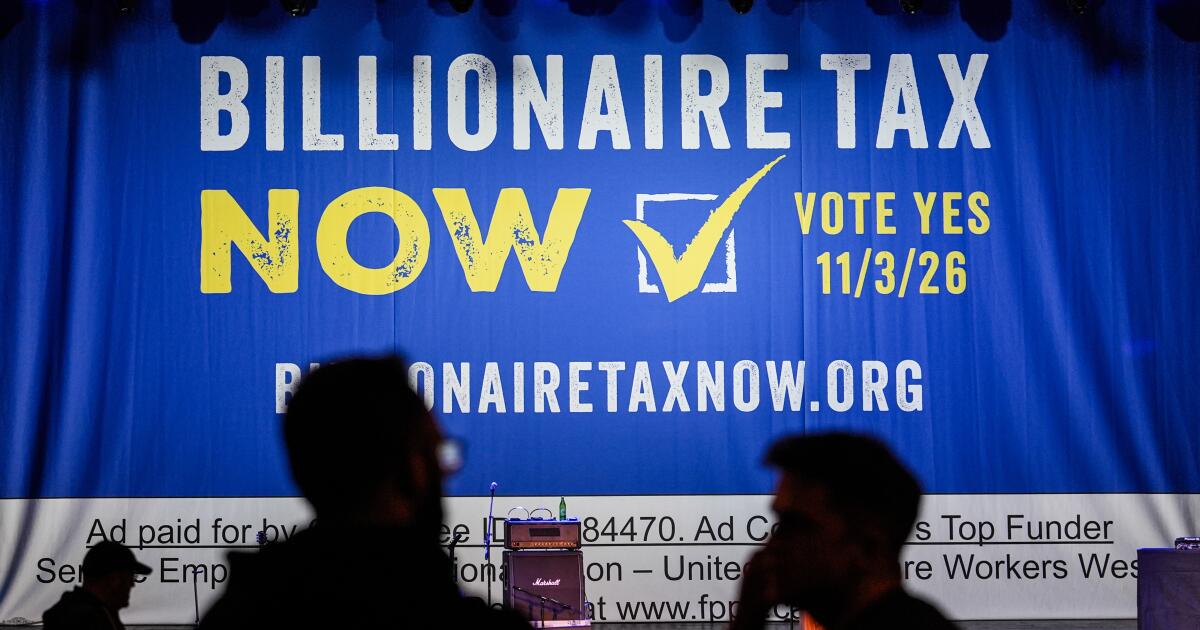
Billionaire tax proposal faces hurdles as it moves closer to November ballot
-
 Science31 minutes ago
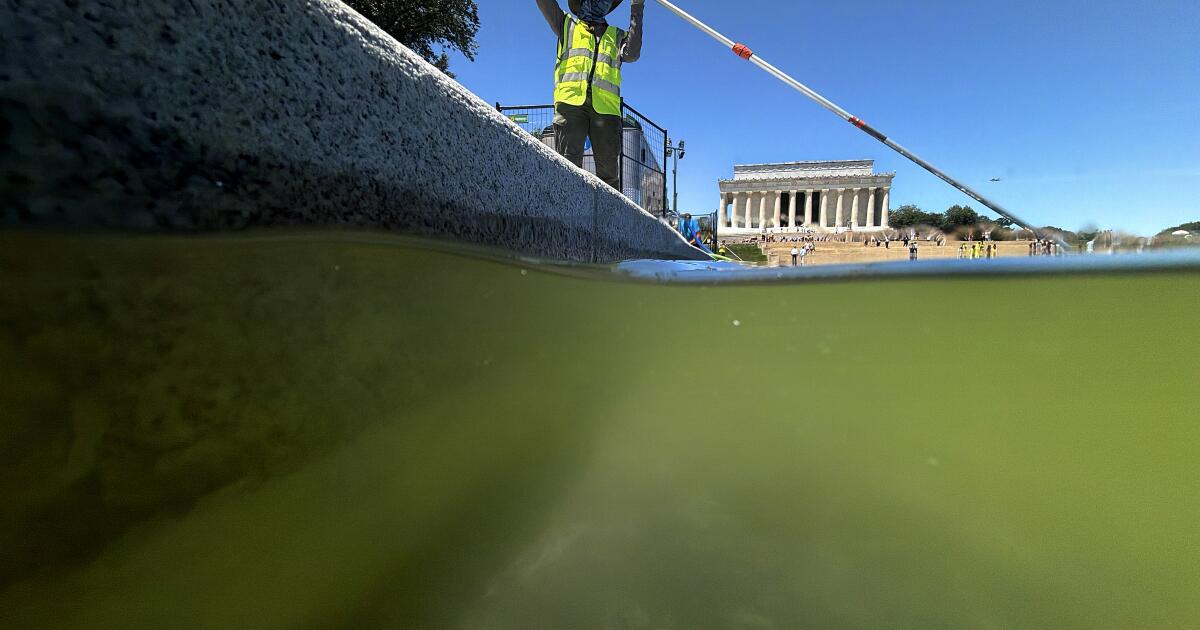
Here’s why the Lincoln Memorial Reflecting Pool went green so fast
-
 Sports34 minutes ago
Shohei Ohtani out of Dodgers’ lineup vs. Orioles for birth of his second child

