Texas
‘We Weren’t Loud Enough!’ Texas A&M Proves That ‘Talking Down’ Kyle Field is Personal


COLLEGE STATION, Tx. — Standing along the back end zone as the Missouri Tigers attempted offense at Kyle Field, Texas A&M Aggies yell leader Kyler Fife kept it simple.
“Oh hell yeah,” he said when asked if the crowd at Texas A&M took Missouri’s challenge personally. “Oh hell yeah. I thought we weren’t loud enough!”
His arms outstretched for the latter statement, it was clear that Fife was among the crowd who did take it personally. And the aforementioned challenge?
Kyle Field was not as loud as the Tigers’ practice sessions.
“At some point it can only get so loud,” Missouri quarterback Brady Cook said during the week. “In my opinion, the noise at practice is actually louder. They put these big speakers pretty much two feet right behind me. You can’t hear anything.”
Evidently, The 12th Man made sure such was the case for Cook and company throughout the contest. By the end of the game, the Tigers were forced into a delay of game penalty, two false starts — back to back, no less — and a snap that came too early on a fourth-and-long they certainly needed.
Interestingly enough, the fans didn’t need much help getting pumped up, but they got some anyway. On a critical possession that would have given Missouri some momentum to chip away at the early 17-point lead the Aggies crafted, all it took for the student section to make a difference was a Sheck Wes song.
“Mo Bamba” rang through the speakers three times in a row on three straight plays. And the result was exactly what Texas A&M hoped for. Another failed offensive possession.
“It was kind of like playing the NCAA game,” Aggies edge rusher Nic Scourton said. “Going out there, having fun. Kyle Field’s rocking. We got them backed up. It’s something you dream of as a kid. Like, it’s crazy. It’s just this place is so special to play.”
With how special it’s seen, it made sense that the Maroon & White didn’t take kindly to any outsiders talking down on it, as Scourton explained. Especially not the noise factor.
“It has been interesting that we’ve had people call out Kyle Field a little bit,” Aggies coach Mike Elko said on The Aggie Football Hour. “I heard their quarterback say today that it’s louder in practice than it is at Kyle Field. To me, that’s a challenge to the 12th Man.”
“They kind of lit a fire on us,” Aggies edge rusher Nic Scourton added. “Coming into our place … talking down on Kyle Field. I think guys were really motivated to go out there and be dominant.”
That’s what happened. Texas A&M out-gained Missouri through the air, on the ground, in time of possession and everything else in-between. In the books, the win goes down as a complete domination. To the fans, it was a lesson taught to the Tigers.
And to the players? It was a personal statement.
One they felt good about making.
“What I took personally (was) them saying that their practice would be louder than our stadium,” Aggies leading rusher Le’Veon Moss said. “I took that personal because our 12th Man supports us to the end, no matter what happens.”



hosting the Athletics in the club’s home opener on Thursday, April 1. The complete 2027 schedule was announced today
by Major League Baseball.
The Rangers’ season opener on March 25

In an incident that was horrific beyond words, late last month, a stunned family watched in horror as a car plowed into the Katy, Texas home of a 76-year-old mother and grandmother, killing her. The driver has been charged with manslaughter.
In the aftermath of the crash, it emerged that the car in question was a Tesla, and that the driver was making use of full self-driving mode (FSD) around the time the crash occurred. The victim’s family has named Tesla and the driver as defendants in a lawsuit. But per Electrek, Tesla was able to view crash data very quickly after the incident, and the head of AI at the company, Ashok Elluswamy, said the driver “manually overrode self-driving by pressing the accelerator all the way to 100% of the accel pedal in this residential area.”
In the days after the crash, Tesla fans took issue with coverage that characterized the car as in FSD when the crash occurred. CEO Elon Musk seemed to agree, replying to a post, “Yes, this makes no sense. FSD drives slowly through neighborhood streets and this was a high speed crash!”
But Musk seems to be assuming bad faith, as if coverage implied FSD had suddenly shifted into, perhaps, some kind of previously unannounced homicidal maniac mode and attacked a house. If anyone was saying this is what happened, they should apologize. It’s clearly not what happened.
And on Wednesday, the National Transportation Safety Board (NTSB) largely confirmed Tesla’s version of events. Their report reads, in part:
“Electronic data recovered from the vehicle indicated that before the crash, the driver manually overrode FSD (Supervised) by pressing the accelerator pedal to 100%, and the vehicle’s speed was greater than 70 mph when the crash occurred.”
But cooler heads had noted weeks earlier that, like with good old fashioned cruise control, accelerating doesn’t boot you from FSD. The car takes the input, and stays in FSD. The question isn’t one of mechanics and technology, but one of philosophy: if FSD is meant to be “driving” when someone jams on the accelerator in a residential area, FSD may not be the “driver” in one important sense, but the car was still in FSD mode.
Because as much as Tesla would probably like FSD to be a total non-factor in the incident, that may not be the case either.
ABC News noted that, according to court documents, the driver claimed he “passed out” with the car in FSD on the highway, and that’s the last thing he remembers before the crash. He says he wasn’t sick, and medical records show no seizures, cardiac episodes, drugs, or alcohol.
A local Fox affiliate says records show the car was making deliveries for DoorDash while in FSD in the “hours and minutes leading up to the crash.” While in a neighborhood, it apparently signaled it was going to turn left onto one street, but instead the pedal went to the metal. This took the Tesla onto the victim’s cul-de-sac instead, and put it on its fateful collision course with her house.
To make matters weirder, other court records now show, per Electrek, that the driver had Googled the terms, “Tesla fsd not aggressive enough 2026,” “FSD is not aggressive enough for city driving,” and “Tesla fsd too timid.” That’s the kind of thing you Google when you’re looking for a Reddit post from someone sharing your consumer gripe.
In any case, the odds aren’t good that the driver wanted this to happen, nor that Tesla programmed its cars with evil intent. But FSD was being used around the time of this unusual fatal incident, and the public deserves to know more. Fortunately, a lot more will come out as the lawsuit progresses.

AUSTIN – Texas Attorney General Ken Paxton said Wednesday he has secured a settlement of bankruptcy claims against genetic testing company 23andMe stemming from a 2023 data breach that exposed personal information, including some genetic ancestry data, of 6.9 million customers worldwide.
Paxton’s office said the settlement includes $150 million for a multistate coalition of 42 states. But because of limited funds in 23andMe’s bankruptcy estate and competing claims, the states’ recovery will be $18 million paid immediately, with Texas receiving $1,266,860.
23andMe disclosed in October 2023 that attackers had accessed accounts affecting 6.9 million consumers. Some of the information was later posted for sale on the dark web, according to Paxton’s office, which said the company learned of the breach months after the data became publicly available. The office said 23andMe initially denied a breach and later blamed consumers’ account settings and password practices.
Paxton joined a multistate investigation that concluded 23andMe used unreasonable security practices and failed to implement adequate safeguards against hacking, the office said.
23andMe filed for bankruptcy protection in March 2025. Paxton’s office said the settlement incorporates privacy and cybersecurity requirements, including enhanced security standards, comprehensive risk assessments and creation of an independent advisory board, along with enforcement of state privacy laws and continued consumer data deletion rights.
“Companies that collect and profit from Texans’ most personal information have a legal duty to protect it,” Paxton said in a statement.
The company also agreed to a $46.75 million class-action settlement in the bankruptcy case for affected U.S. consumers who submitted claims by Feb. 17, 2026, Paxton’s office said.
Copyright 2026 by KPRC Click2Houston – All rights reserved.
-

 Wyoming2 minutes ago
NWSR issues Flood Watch advisory for portions of Central, Northwest Wyoming
-

 Crypto8 minutes ago
DeFi’s Newest Threat: How Malicious Liquidity Pools Are Trick-Quoting Ethereum and Polygon Users
-

 Finance14 minutes ago
Gold Purchases Accelerate as Dollar Confidence Wanes
-

 Fitness20 minutes ago
Strength training over decades linked to longer life – Harvard Health
-

 Movie Reviews32 minutes ago
Movie Review: “The Odyssey” by Nolan
-
World44 minutes ago
US strikes bridges and collapses a tower at a key port as its Iran campaign expands
-
 Lifestyle2 hours ago
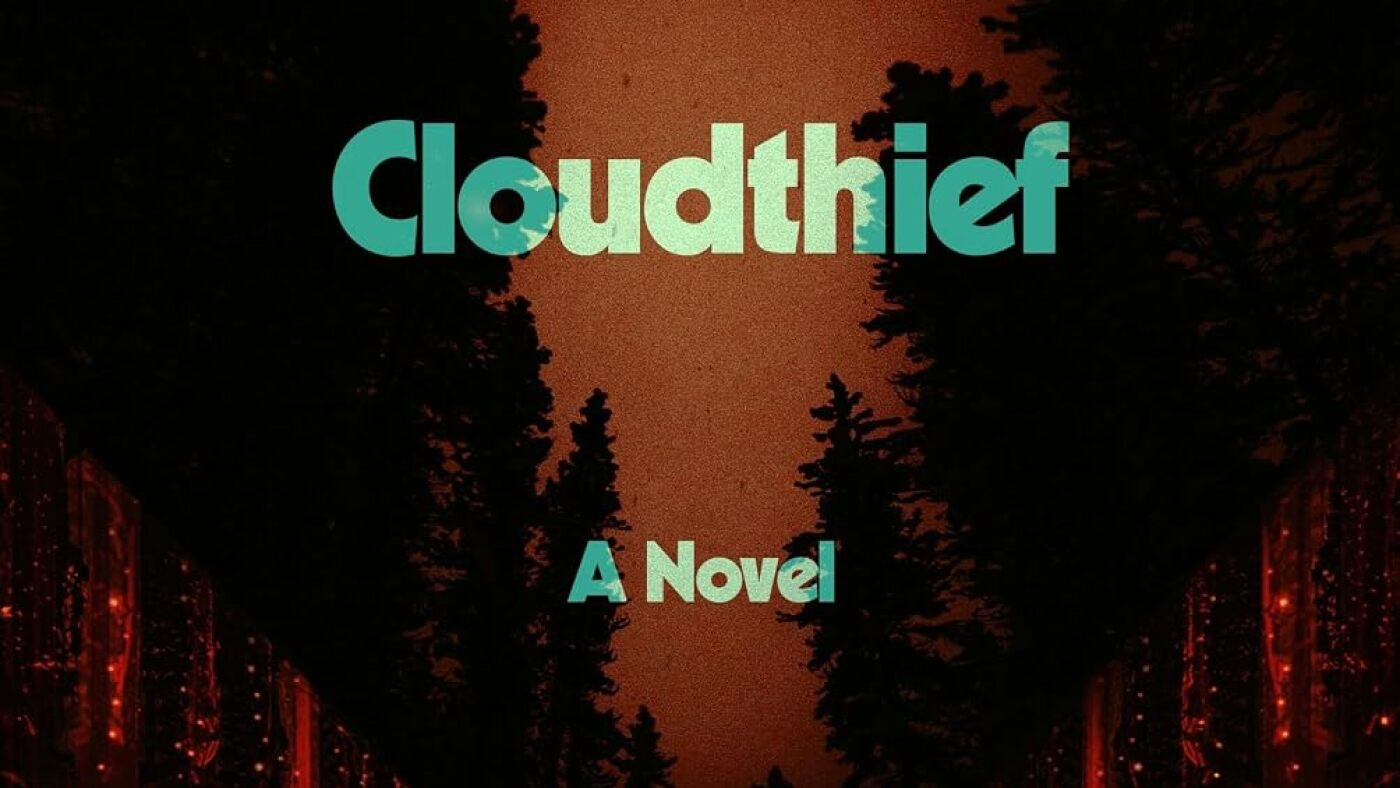
An eco-journalist takes on a Big Tech in this modern twist on the heist novel
-

 Technology2 hours ago
Fortnite is getting a bunch of AI-powered ‘personas’

