Midwest
Chicago school board approves measure to do away with ‘ranking' schools after 'longstanding structural racism'

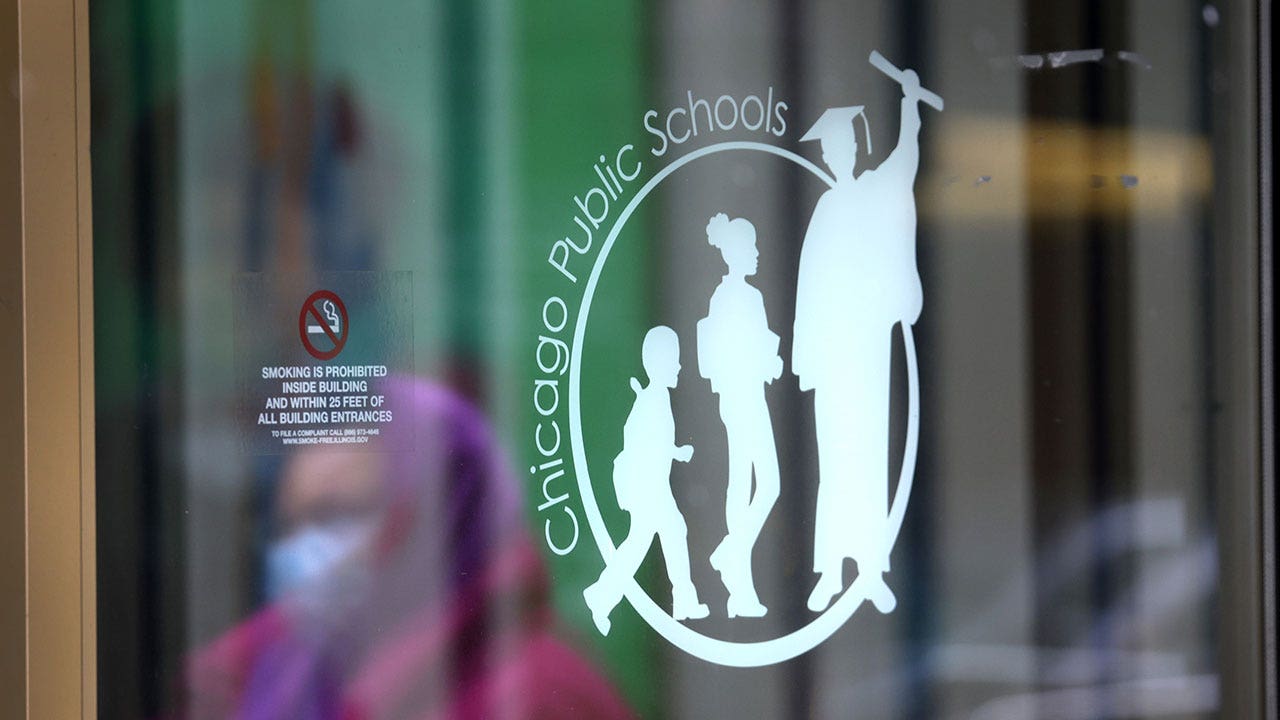
Chicago Public Schools on Wednesday voted unanimously to pass a 5-year strategic plan that vows a “renewed focus on equity” and moves away from ranking schools based on student outcomes.
“Everything is done through an equity lens,” CPS Chief Executive Officer Pedro Martinez said at the Special Board Meeting on Wednesday before the vote.
Martinez went on to say, “Our new approach does away with school rankings and labels and just like our shift in defining student success, we’re not just going to look at a narrow set of outcome data…” He continued, “we’re going to be tracking and focusing the inputs on practices, conditions, resources, supports, and putting the onus back on the district to ensure that each school has the components to drive student success.”
CHICAGO’S FIRST-EVER SCHOOL BOARD RACE SEES PRO-SCHOOL CHOICE GROUPS AMASSING MILLIONS IN DONATIONS: REPORT
Chicago Public Schools on Wednesday voted unanimously to pass a five-year strategic plan that vows a “renewed focus on equity” and moves away from ranking schools based on student outcomes. (Photo by Kerem Yucel/Anadolu Agency via Getty Images) (Kerem Yucel)
The board vice president, Elizabeth-Todds Breland, cited Chicago’s past “longstanding structural racism and socio-economic inequality.”
“Despite many education reforms over the course of many CPS strategic plans, opportunity gaps for our students have persisted,” Breland said.
The 5-year strategic plan, titled “Together We Rise,” faces funding challenges as COVID-relief funds are drying up. According to the Illinois Policy Institute (IPI), a think tank that tracks policy decisions within the state, CPS currently faces a projected $500 million deficit for the next school year.
The plan consists of a 47-page document that outlines the district’s priorities and investments starting in 2025-29.
During the board meeting on Wednesday morning, Martinez explained further that student success was defined by a narrow set of metrics that “relied heavily on test scores.”
“Our new approach is to define student success more holistically,” Martinez said.
“Measuring not just academic progress because that is still important, but student well-being and connection to the extent that they’re an empowered decision maker. Whether or not they’re prepared and making sure they’re prepared for post-secondary success,” he added.
CPS launched a new approach to an accountability system that moves away from ranking schools merely by outcome metrics.
Martinez said that the former accountability system only encouraged “families to select schools with the highest rating and pitted schools against each other.”
“And then combine that with the student-based budgeting. That’s where all of our resources were going,” Martinez said.
Another component of the 5-year strategic plan seeks to close the “equity gap” by changing the budgeting model to ensure funds are added to the schools that need them the most. The district “ends the practice of allocating funds based mainly on enrollment and instead allocates funding based on each school’s unique needs,” Martinez said.
“Everything is done through an equity lens,” CPS Chief Executive Officer Pedro Martinez said at the Special Board Meeting on Wednesday. (Scott Olson/Getty Images)
“We all know all that success is not felt equally across the district. We know that the student experience varies widely based on where you live in the city and what school you attend,” Martinez said.
CPS presides over several types of academic institutions, such as neighborhood schools, charter schools, selective enrollment schools, sustainable community schools, and magnet schools.
“It is also a dynamic plan that will continue to require public input from the public to make sure we are meeting the mark,” Martinez said.
Chief Education Officer Bogdana Chkoumbova outlined the plan’s “targeted priorities,” including a new “Black student success plan,” which seeks to improve the daily experience for Black students and offers “pathways to Multilingualism.”
Breland previously clarified to the media that there was “there was never any intent” to dismantle selective schools, the Chicago Tribune reported.
There were past concerns about the impact on selective schools that stemmed from the board’s approval of a new equity funding formula. The new equity funding formula reportedly affected one of Chicago’s highly ranked schools, LaSalle Language Academy.
According to the Chicago Sun Times, local school council members at LaSalle fretted over such language courses being impacted due to budget cuts next fall.
According to Chicago Public Schools (CPS) Board of Education President Jianan Shi in a press release, CPS last year passed a resolution that aimed to shift “away from a model that emphasizes school choice to one that elevates our neighborhood schools to ensure each and every student has access to a high-quality educational experience.” The board conducted its first survey earlier this year, a series of roundtable discussions called “Black Student Success Community Roundtables” to gather public opinion about their plan to bolster neighborhood schools.
CHICAGO’S SELECTIVE SCHOOLS GRAPPLE WITH BUDGETS WOES DUE TO NEW EQUITY POLICY: REPORT
Chicago Public Schools preside over several types of academic institutions, such as neighborhood schools, charter schools, selective enrollment schools, sustainable community schools, and magnet schools. (Kurt “CyberGuy” Knutsson)
Local outlet ABC 7 in Chicago reported that Alderpeople were briefed on the five year plan before it was launched. 15th Ward Ald. Ray Lopez slammed the measure.
“We are seeing this touchy-feely policy where everyone is going to get a participation medal for being in school applied to CPS and I think it’s going to have very dangerous effects on the next generation,” Lopez said.
IPI told Fox News Digital that the “board’s move to redefine ‘student success’ displays CPS’ unwillingness to acknowledge that rapidly increasing funding has failed to improve student outcomes.”
“While it’s encouraging to see the CPS board articulate the district’s real problem with chronic absenteeism and low test-scores, the new five-year plan has little teeth to meaningfully improve student achievement. The plan emphasizes equity for the school system with no details on how that might be achieved,” said Paul Vallas, policy adviser for IPI.
Vallas went on to say, “In the plan, CPS claims to support all models of schools including charters and selective schools, but they want special attention for neighborhood schools and focus away from ranking schools or student outcomes.”
A CPS official pushed back on IPI’s claims that the plan lacks details on how it would achieve equitable support for all students. They cited to Fox News Digital their effort to “expand pre-school programming, provide interventions like high-dosage tutoring, academic coaches for teachers, school interventionists to help struggling students.”
They also vowed to add “more art and extracurricular activities to support a well-rounded and joyful education.”
The Chicago Public Schools spokesperson also told Fox News Digital in response to IPI’s other claims: “In many cases, the plan highlights ongoing work and strategies, including and importantly how we have more equitably funded our schools through our Fiscal Year 2025 budget.”
The statement added, “Over the past three years, the District has shifted away from school budgets based primarily on student enrollment and the FY25 budget completes that shift while also providing foundational staff for all schools. All schools were provided the foundational positions allocated under the FY25 budget and our current teacher vacancy rate District wide is under four percent. The foundational positions include core and holistic teachers, administrative and operational positions, professional development funding, baseline discretionary funding, and out-of-school time activities.”
It went on: “The FY25 budget also calls for the continued intervention strategies and practices that have helped the District continue its upward trajectory on many metrics. CPS posted a record-breaking four-year graduation rate of 84 percent in 2023, a number that has been increasing annually for the past two decades. In a national post-pandemic education scorecard, CPS ranked #1 in reading growth and #3 in combined reading and math growth from 2022 to 2023 out of the 40 large urban districts reporting to the Council of the Great City Schools. Preliminary 2024 state assessment data showed students continued their upward academic performance.”
Read the full article from Here


MEDORA, N.D. — Thousands of people from across North Dakota and around the country gathered in Medora on Wednesday, July 1, for President Donald Trump’s visit celebrating America’s upcoming 250th anniversary and the dedication of the Theodore Roosevelt Presidential Library.
Under hot summer skies, the normally quiet western North Dakota town transformed into a tightly-secured venue filled with patriotic displays, music and enthusiastic crowds. Attendees lined the route waving American flags and holding signs reading “We Love USA” and “We Love Trump” as Trump arrived aboard the BNSF Freedom 250 train, a ceremonial tribute to the state’s railroad heritage and the Freedom 250 celebration.
Dorvall Bedford / The Dickinson Press
Many in the crowd wore red, white and blue clothing, “Make America Great Again” hats and other patriotic attire. Security was highly visible throughout the event, with law enforcement officers, emergency responders and medical personnel stationed across the venue. Snipers were positioned on nearby buttes and along the rail corridor while ambulances and emergency crews, including Billings County Ambulance and Ringdahl EMS, remained on standby.
Trump was accompanied by his sons, Eric Trump and Donald Trump Jr.; Donald Trump Jr.’s partner, Bettina Anderson; and White House press secretary Karoline Leavitt. Following his arrival, he was escorted by a mounted Rough Rider reenactment group as he made his way from the train to the Theodore Roosevelt Presidential Library.
Inside the packed Burning Hills Amphitheater, Interior Secretary Doug Burgum introduced the president before Trump walked onto the stage to Lee Greenwood’s “God Bless the U.S.A.”

Dorvall Bedford / The Dickinson Press
During remarks lasting more than an hour, Trump spoke about Theodore Roosevelt’s legacy, American values, law enforcement, the Panama Canal and challenges facing the nation. He also announced $750,000 in support for the presidential library and joked with the audience after technical issues with the teleprompters prompted him to speak without prepared remarks.
Trump concluded his speech by thanking North Dakotans, describing the state as beautiful and ending with his signature dance to “YMCA.”
For many attendees, however, the day was about more than the speech itself. They described the event as a once-in-a-lifetime opportunity to witness a presidential visit to one of North Dakota’s most recognizable destinations.
Eli Waddington, one of the Rough Rider reenactors who led the mounted presidential procession, said participating in the event was among the greatest honors of his life.
“It’s a great honor, one of the greatest honors we’ve ever been presented with,” Waddington said. “We’re representing the men that have fought and died for this country over the years to make America what it is, and we’re bringing our president and his people to the top of the hill to dedicate the library to one of the best presidents that ever lived, Teddy Roosevelt.”

Dorvall Bedford / The Dickinson Press
Fellow Rough Rider reenactor Jayson Wayne Jones said months of planning, practices and security screenings preceded the event. Only 20 mounted riders were selected to escort the president.
“This is probably the largest honor I’ve ever been involved in,” Jones said. “There was a lot of back and forth, a lot of figuring out. We’ve gone through multiple practices and screenings.”
Among those attending were Dickinson High School seniors Ava Hauck, founder and CEO of the artificial intelligence biotechnology startup Clinivue, and Callie Bowden, the company’s marketing specialist. The pair documented the day’s events while taking in the historic occasion.
Bowden said the scale of the security and road closures was unlike anything she had previously experienced in Medora.

Dorvall Bedford / The Dickinson Press
“We’ve never had Medora blocked off before, so it’s really different,” she said.
Hauck said the visit brought rare national attention to western North Dakota.
“It’s just exciting because we don’t really get a lot of attention in North Dakota,” Hauck said. “It’s really good to see all the excitement brought to Medora.”
For Daniel Gannarelli, chief revenue officer of the Medora Foundation, the event represented a milestone not only for the Theodore Roosevelt Presidential Library but also for the town itself.
“The last time a president was in Medora was when Teddy Roosevelt was here,” Gannarelli said. “To have a sitting president choose us during the Fourth of July week and the 250th anniversary of the country, when he could literally be anywhere in the world, is quite impressive.”

Dorvall Bedford / The Dickinson Press
Gannarelli said he hopes future presidents from both political parties will continue to visit Medora, emphasizing the community’s desire to welcome people regardless of political affiliation.
“Where the American experiment is actually happening — left and right, all divides of the spectrum, all politically different people can come here to enjoy this,” he said. “I hope we have Obama. I hope we have Bush. Medora is for everyone.”

“The pen is mightier than the sword.”
As a professional writer with more than 10 years of experience, Kelly lives by these words. With a bachelor’s degree in communication, majoring in broadcasting and journalism, and a fiery passion for writing that began in childhood, she uses the power of words to make an impact in the community — informing, educating, and entertaining a wide range of audiences.
As a journalist, what Kelly loves most about her job is the ability to bring unique stories to the public and give people a voice that can be heard around the world. Whether through print or digital platforms, her goal is to share stories people enjoy reading while spreading valuable information that supports the welfare of southwest North Dakota and its people.

Ohio is shaping up to be a top battleground state this year, and MS NOW’s election team now characterizes its Senate race as a Toss Up.
We are updating the race based primarily on multiple high-quality polls showing a very tight contest, as well as the candidates running and the broader political environment.
The contest is technically a special election to fill out the remainder of Vice President JD Vance’s term. Republican Jon Husted, who was appointed to the seat after Vance took office in 2025, is running to defend it for the first time.
The candidates and structural forces
While Ohio is still often thought of as a bellwether state, it has voted reliably Republican in recent presidential elections. The state has shifted to the right during President Donald Trump’s political rise, backing him in all three of his presidential campaigns.
Ohio’s last few Senate races, however, have been more competitive. Vance won by six points in 2022, while Republican Bernie Moreno beat Democrat Sherrod Brown by less than four points in 2024, narrowly ousting Brown from office after he served three terms in the Senate.
Brown’s showing two years ago is more impressive than it might seem at first blush. A relatively well-liked senator with working-class appeal, he was likely dragged down by his party’s brand. He came close to hanging onto his seat in an unfavorable environment for Democrats. That four-point loss meant he ran ahead of Kamala Harris, who lost to Trump by 11 points.
And 2026 looks to be a much better environment for Democrats.
Trump’s approval rating and the GOP’s favorability ratings are underwater amid an unpopular war and widespread economic dissatisfaction. Brown is running again, and polls indicate he has a real shot at flipping the seat.
The polls
No single poll should be viewed as definitive, but a clear pattern has emerged in recent weeks. A Fox News poll made waves four weeks ago, showing Brown with a lead outside the poll’s margin of sampling error. Since then, two more high-quality polls have shown a very competitive race: one commissioned by AARP and fielded by a bipartisan team of pollsters, and the other released this week by the New York Times and Siena College. Both show a three-point race, which is well within the margin of error, and they differ on which candidate is ahead. This is what polling in a true toss-up race looks like.

BADLANDS, S.D (KELO)– Cars and campers full of visitors are visiting Badlands National Park today. Tourists are traveling from other states to be in South Dakota for America’s 250th.
“I mean, it’s the kind of thing that you build a road trip for,” said William Retherford, who traveled from Indiana with his family.
For the out-of-state travelers, the beauty of the Badlands can be surprising.
“You picture South Dakota, you think flatland and grass,” said Michael Balafas, who traveled to SD from Idaho. “There are some pockets of South Dakota that are absolutely stunning.”
“It’s hard to even believe that it exists,” said Retherford.
Both families are also enjoying other sites during their trips to western South Dakota.
“What my mom says a lot of the time is, it’s not about the destination but the journey,” said Aralyn Balafas.
Retherford and his family had hoped to be at Mount Rushmore for Friday’s fireworks show.
“We entered eight different ways but didn’t get any tickets,” said Retherford.
Despite not being at the landmark for the show, the trip is well worth it for the country’s 250th.
“It’s a once-in-a-lifetime opportunity. I mean, we’ll never get to do that again,” said Michael.
“This is the kind of trip that you wait a lifetime for,” said Retherford.
-

 New Hampshire4 minutes ago
Driver dead, Mass. woman and several children sent to hospital, in 3-vehicle crash in Nashua, N.H. – The Boston Globe
-

 New Jersey11 minutes ago
Empire State Building daredevil couple are New Jersey residents
-

 New Mexico14 minutes ago
Law limiting license plate reader data being shared goes into effect in New Mexico
-

 North Carolina19 minutes ago
Western NC activists push for statewide ban on new data center construction
-

 North Dakota26 minutes ago
Festive atmosphere, heightened security mark Trump’s visit to Medora
-

 Ohio29 minutes ago
Why MS NOW rates Ohio’s Senate race a Toss Up
-

 Oklahoma34 minutes ago
Marissa Murrow Act takes effect, requiring specialized training for event venue bartenders
-

 Oregon41 minutes ago
Former Oregon corrections officer receives lifetime hunting ban, fined over $114K

