South
Nebraska man who posed as high schooler and committed sex crimes is described as 'predator of the worst kind'

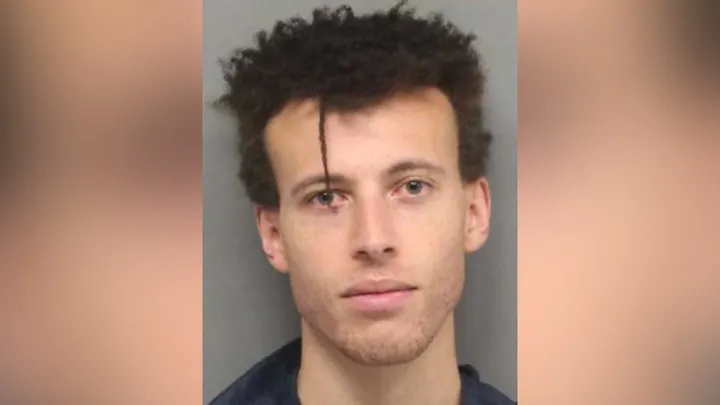
A Nebraska man who committed sex crimes while posing as a student at two Lincoln high schools has now been sentenced to 85 to 120 years in prison as a prosecutor labeled him a “predator of the worst kind.”
Zachary Scheich, a 27-year-old who posed as a 17-year-old student named Zak Hess, won’t be eligible for parole for more than 40 years and is also required to register as a sex offender as part of his punishment, according to KOLN. He was arrested in July 2023 after attending around 54 days of classes at Northwest High School and Southeast High School, officials said at the time.
Scheich pleaded no contest to multiple counts of sexual assault and other charges, with Deputy County Attorney Amber Scholte saying this week at a sentencing hearing that his behavior made him a “predator of the worst kind, the kind that preys on children.”
“He targeted, groomed and lured them via social media,” Scholte said. “He did so under the guise of being their peer, their friend, and in some cases, their boyfriend. And he did so for his own sexual purpose and gratification.”
NEBRASKA SUSPECT, 26, CHARGED WITH SEXUAL ASSAULT AFTER POSING AS HIGH SCHOOLER, POLICE SAY
Lincoln resident Zachary Scheich was arrested in July 2023. (Lincoln Police Department)
The crimes Scheich was charged with happened off school grounds, but prosecutors say he sexually assaulted multiple children and cost the school district over $6,000 after creating fake documents and a lengthy backstory to disguise himself as a high school student, KOLN reports.
“They knew not to speak with an adult male on social media. They knew not to meet an adult male by themselves, they knew how to defend themselves against that kind of danger,” Judge Ideus told Scheich during his sentencing Wednesday. “They did not know how to protect themselves against you. Because again, they thought you were their peer. Their friend. And because you gained their trust.”
The Lincoln Police Department previously said their investigation began in June 2023 when Lincoln Public Schools discovered that someone was impersonating a student named Zak Hess.
“Hess reported to be 17 years old and initially enrolled at Northwest High School during the first semester and transferred to Southeast High School during the second semester, all during the 2022-2023 school year,” police said at the time. “It was later determined that he had graduated from Lincoln Public Schools in 2015.”
NEBRASKA 5-YEAR-OLD DIES IN HOT SUV AFTER BEING LEFT ALONE FOR ‘EXTENDED PERIOD OF TIME’: POLICE
Lincoln authorities discovered that Scheich claimed to be a student named Zak Hess. (Lincoln Police Department)
An investigation revealed that the suspect was actually 26 years old. At 5’4″ and 120 pounds, police said he blended in with the teenage students.
“Continuing investigation led to the discovery of multiple contacts with juvenile students by Scheich under the false name of Hess,” the Lincoln Police Department added. “This generated information sufficient for an arrest warrant.”
Angela Navarro, 23, also was arrested and accused of posing as a “Danielle Hess,” the mother of Zak, to help Scheich get enrolled in Lincoln Public Schools, KOLN reports.
Scheich reportedly transferred to Southeast High School while disguised as a student. (Google Maps)
CLICK HERE TO GET THE FOX NEWS APP
She has pleaded not guilty to a criminal impersonation charge.
Fox News’ Andrea Vacchiano contributed to this report.



Oklahoma
10,000 texts per hour: How campaigns are reaching Oklahoma voters whether they like it or not

Your cell phone buzzes as you’re driving down the highway, cooking dinner or trying to fall asleep. Maybe it’s a friend wanting to catch up or a family member with big news. It could even be work-related and require prompt attention.
Or, perhaps the best bet, if an election is approaching, is yet another unsolicited text message from a political group trying to influence your vote.
Oklahoma voters were flooded with a record number of political text messages in the weeks leading up to the June 16 primary election. The messages ranged from mild annoyance to constant distraction for voters who rely on text messaging to communicate with family, friends and colleagues.
“I felt like it was really violating, and honestly a turn off for me,” said Sarah Frye, a registered Republican from Ada who received several dozen texts from candidate campaigns and dark money groups ahead of the June 16 primary election.
The content of the messages varied. Some candidates sought to strike a personal tone, beginning their messages with an introduction and summarizing their experience and policy goals. Others, mostly from dark-money groups, immediately went negative on an opposing candidate.
Diann Patrick, a registered Republican voter in Sapulpa, said she started receiving as many as 10 political text messages per day in early June. One message, shared in a screenshot with Oklahoma Watch, arrived at 10:30 p.m. the night before the primary election.
Patrick said she keeps her digital data secure and does not give her contact information to political campaigns, but was unable to stem the onslaught of messages.
“I’m sure the candidates already know this, but it would be nice for them to realize that it’s not appreciated by many people,” Patrick said.
Precise data on the number of texts sent, and by whom, is not readily available. But campaign finance reports filed with the Oklahoma Ethics Commission show record-high spending.
From early April to mid-June, candidate campaigns and outside groups reported spending $773,808 on text messaging and related services. That’s a stark increase from the last gubernatorial election cycle in 2022, when candidates reported spending less than $60,000 on texting throughout the entire election cycle.
Voters wanting to limit or eliminate the communications have limited options. Federal law generally allows unsolicited political text messages, provided the messages are not automatically generated and the sender complies with requests to stop communications. Political campaigns are exempt from the National Do Not Call Registry.
Why campaigns text
A mix of technological advancements and court rulings, including a 2021 U.S. Supreme Court decision that narrowed federal regulation of automated telephone dialing systems, have made it easier than ever for political groups to reach voters.
Unlike some states, the Oklahoma State Election Board does not collect voters’ phone numbers. However, campaigns can use data brokers to match phone numbers with voter registration information. DataZapp, a Florida-based marketing company, advertises voter data lists with phone numbers available for purchase for as little as 4 cents per person.
Specialized software allows campaign staff or volunteers to fire off messages in rapid succession. RumbleUp, a texting platform that campaigns often use, boasts that a single campaign volunteer or staff member can send up to 10,000 text messages per hour with its program.
Melissa Michelson, a professor at Menlo College and expert in political communications, said campaigns often turn to text messaging when other advertising methods become expensive.
Instead of spending hundreds of thousands of dollars on television ads, campaigns can send texts for as little as 2 cents per message. That’s a fraction of the cost of sending out direct mail, for which postage alone can cost more than 30 cents per piece.
Text messaging also increases the likelihood that someone will at least glance at the advertisement. Political text messaging services advertise open rates as high as 98%.
“The return on investment is very favorable to campaigns,” Michelson said. “The reason folks are getting more and more messages is because they work.”
As for the texts at odd hours, Michelson said campaigns have data on when the most likely time for engagement is. They can even fine-tune the send time based on demographic information such as age and gender.
“Late at night when folks are tired, maybe they’re just watching TV, that could be the time when people are most likely to press the button,” she said.
Scarce regulation
At first glance, Oklahoma’s Telephone Solicitation Act appears to offer solid protection against constant unsolicited communications.
The law, enacted in 2022, forbids marketing calls and texts from 8 p.m. to 8 a.m. and sets a limit of three contacts per 24-hour period. Violators are subject to a $500 penalty per offense.
Political messaging and polling, however, are specifically exempt from the law. Federal courts have consistently ruled that political campaigns have a First Amendment right to share their message, and regulation must be narrowly tailored to address a specific issue.
Michelson said the court of public opinion will likely have to suffice for voters tired of the messages.
“If we can all collectively agree to stop clicking on the messages, they’ll stop,” she said. “But as long as they work, those messages are going to keep coming. It would be extremely difficult to get the courts to agree to regulations to limit them.”
Many states, including Oklahoma, require a disclaimer about who paid for the text message. In 2023, California passed a law requiring data brokers to delete a person’s personal information upon request, which could make it more difficult for political campaigns to build targeted advertising profiles.
A refresher of phone settings could offer some relief from persistent notifications. In September 2025, Apple rolled out an update allowing iPhone users to filter messages from unknown numbers, directing those texts to a separate folder without sending a notification. Android offers a similar option for its users.
Frye said she would like to see more official scrutiny of political text messages. In the meantime, she said, she will express her sentiment at the ballot box.
“When I kept seeing the same names pop up over and over again, I was like, ‘no way, I’m not voting for you,’” Frye said. “You’ve gone too far.”
Oklahoma Watch, at oklahomawatch.org, is a nonprofit, nonpartisan news organization that covers public-policy issues facing the state.

LANCASTER COUNTY, S.C. (WPDE) — Police said two people were hurt in a plane crash on Thursday morning, according to reporting from WSOC.
They said it happened near a scrap yard near West Brooklyn Avenue and Springdale Road.
Online flight records show a Beechcraft airplane owned by Pressley Aviation LLC was last seen flying near the crash site at 1 a.m.
Furthermore, the records show the plane had been flying from Laredo, Texas before heading towards the Carolinas.
WSOC reported seeing wreckage of the plane among trees near the scrap yard.
The two involved both reportedly survived the crash but were sent to hospital for burns, according to WSOC’s reporting.

NASHVILLE, Tenn. (WSMV) – A First Alert Weather Day remains in effect through Sunday.
FIRST ALERT WEATHER DAY – THROUGH SUNDAY
The Extreme Heat Warning is still in effect for most of Middle Tennessee, all of southern Kentucky, and all of West Tennessee until 8 p.m. Friday because the dangerous levels of heat and humidity continue.
A Heat Advisory is in effect for the Cumberland Plateau until Friday at 8 p.m.
High temperatures today will be in the mid to upper 90s, with a heat index between 105°-110° across most of the area. High elevations in the Plateau could keep that heat index around 100°.
Keep an eye on the sky for a pop-up shower or thunderstorm during the heat of the day. Not everyone will see rain, but any storm could produce heavy rain and perhaps a brief strong wind gust as well.
Dangerous heat and humidity will continue Friday and this weekend. High temperatures will be closer to the mid 90s with a heat index still over 100° each afternoon.
Spotty showers and thunderstorms will develop during the afternoon and evening on Friday, Saturday and Sunday. The main focus around storms will continue to be bursts of heavy rainfall, but there’s a slight risk we’ll have sudden strong gusts of wind with any of the storms.
Remain weather aware. If a storm comes your way and you’re outdoors, get inside quickly. Remember – when thunder roars, go indoors.
NEXT WEEK
The worst of the heat and humidity will back off Monday-Wednesday, but temperatures will still stay in the low to mid 90s with a heat index in the upper 90s to near 100.
More chances for daytime heating showers and storms through the first half of next week.
-

 North Dakota8 seconds ago
North Dakota offers wellness grants to rural hosptials
-

 Ohio3 minutes ago
Assistant Ohio AG punched on Cincinnati street by man seeking money, police say
-
Oklahoma8 minutes ago
10,000 texts per hour: How campaigns are reaching Oklahoma voters whether they like it or not
-
Oregon15 minutes ago
Oregon Says Racism Is a Health Crisis, Now It Has a To-Do List
-

 Pennsylvania18 minutes ago
Why are flags at half-staff today? Why they’ll stay lowered in PA
-

 Rhode Island23 minutes ago
Exclusive | Not everyone’s happy about Taylor Swift’s MSG wedding, as Rhode Island residents are left at altarÂ
-

 South-Carolina30 minutes ago
2 injured in South Carolina plane crash
-

 South Dakota33 minutes ago
South Dakota State Museum reopens three renovated rooms for America 250

