West
Political handicapper shifts Montana Senate to ‘leans Republican’ as Tester falls behind


A top political handicapper has changed its prediction for the November Senate election in Montana to show an advantage for Republicans as Democratic Sen. Jon Tester has begun to slip in polling.
The battle between Tester and Republican Senate candidate Tim Sheehy, a former Navy SEAL, was shifted from a “toss up” to “leans Republican” by Sabato’s Crystal Ball at the University of Virginia’s Center for Politics on Friday, with less than nine weeks until the election.
The rating change followed the Thursday release of a new AARP poll showing Sheehy with a six-point 51%-45% advantage over Tester in a two-way race. In an expanded field, Sheehy still defeated Tester 49%-41%.
SENATE GOP BRACING FOR LAST-MINUTE LEADER BIDS — POTENTIALLY BY KEY TRUMP ALLY
Sheehy is now favored to win the Montana Senate race against incumbent Tester. (Reuters)
“Beyond the polling, history and recent trends are just not on Tester’s side, as we have mentioned previously,” wrote managing editor Kyle Kondik. “He is one of a relatively small number of partisan outliers in either chamber of Congress, holding a Senate seat that the other party won by 16 points in the most recent presidential election.”
“Perhaps ticket-splitting returns in force this year — if it did, Tester could still survive. But the longer-term trend is clearly toward less ticket-splitting,” he said.
SENATE GOP CAMPAIGN CHAIR ‘CONCERNED’ OVER FUNDRAISING DISPARITY BUT PREDICTS WHO WILL WIN MAJORITY
Tester is seeking re-election for the third time. (Samuel Corum)
Campaigns for Tester and Sheehy did not immediately provide comment to Fox News Digital.
Montanans first elected Tester to the Senate in 2006, and he’s won re-election twice, despite the state traditionally voting Republican.
The Democratic senator’s re-election bid in 2018 did not coincide with a presidential election, freeing him from concerns that the Democrat presidential nominee would influence his race. But now, Vice President Kamala Harris will be at the top of the Democratic ticket, while former President Trump, who won Montana twice in 2016 and 2020, will lead the Republican ticket in the state.
LINDSEY GRAHAM PUTS AMAZON ‘ON NOTICE’ OVER ALEXA’S POTENTIAL ELECTION INTERFERENCE
Tester was involved in recruiting Harris to run for senate. (Reuters)
Tester has held off endorsing Harris and did not attend the Democratic National Convention last month. Despite appearing to distance himself from Harris and his party, the strategy’s effectiveness is unclear, particularly as reports have indicated that Tester, who was leading the Democratic Senatorial Campaign Committee (DSCC) at the time, was personally responsible for recruiting Harris for the Senate in 2015.
DEMS LOSE GROUND TO GOP CONTENDERS IN PIVOTAL SENATE RACES AS VOTERS LOCK IN: POLL
Sheehy is beating Tester in the latest poll. (Reuter/Mike Segar)
In addition, the Montana Democrat offered a ringing endorsement of fellow senator Harris when she was chosen as President Biden’s running mate in 2020. He wrote on X, “My friend @KamalaHarris is a proven fighter and an excellent pick for Vice President. As VP, I’m confident she will continue to fight for working families across this country. Looking forward to supporting her and @JoeBiden in November.”
More recently, Tester claimed, “I’m not going to endorse for the presidential – and I will tell you why.”
“Two reasons: No. 1, I’m focused on my race. And No. 2, folks have wanted to nationalize this race, and this isn’t about national politics. This is about Montana,” he said, justifying his decision not to offer his seal of approval to Harris.
Fox News Digital’s Aubrie Spady contributed to this report.
Get the latest updates from the 2024 campaign trail, exclusive interviews and more at our Fox News Digital election hub.
Read the full article from Here


Coffee, croissants and classical music brought office workers, residents and visitors together at One Sansome as the free monthly Baroque & Brew series transformed a weekday morning into a community gathering in downtown San Francisco.
The event, held inside the Conservatory at One Sansome, featured live performances by Philharmonia Baroque and invited attendees to enjoy music in the landmark building’s 8,100-square-foot atrium.
Guests were free to sit or stand while listening, with many nearby office workers stopping in during an early lunch break.
The monthly series is scheduled to return in August and September and aims to bring together downtown workers and neighbors through music and shared public space.
“It’s a beautiful opportunity to have coffee, to be in community, and do what our city is known for—the art, the culture—and to share it with each other,” attendee Roger Joyner said. “It’s a beautiful summertime moment.”
Joyner said events like Baroque & Brew reflect the character of the city.
“I think that’s what San Francisco is meant to be…a city that offers culture and the beauty of art to the world. And we that live here get to enjoy it,” he said.
Organizers said the performances are intended to make live classical music more accessible while contributing to ongoing efforts to revitalize downtown San Francisco.
“It’s just a really nice way for us to get the music out of the concert hall to the people downtown, trying to reactivate Downtown San Francisco and show what a welcoming place we can be as a city,” said Isaac Bunch, general manager of Philharmonia Baroque Orchestra and Chorale.
For Joyner, the event also offered a chance to pause amid the pace of daily life.
“We get to take a break. We are hustle and bustle, doing what we do to make the city work, and then we get refreshed by it,” he said. “I think it’s great — it brings it right into the middle of our hub.”
The gathering highlighted how music, conversation and public spaces can bring people together as downtown San Francisco continues its recovery.
Denver, CO
One tree at a time: Denver nonprofit works to close shade gap as heat dome threatens neighborhoods

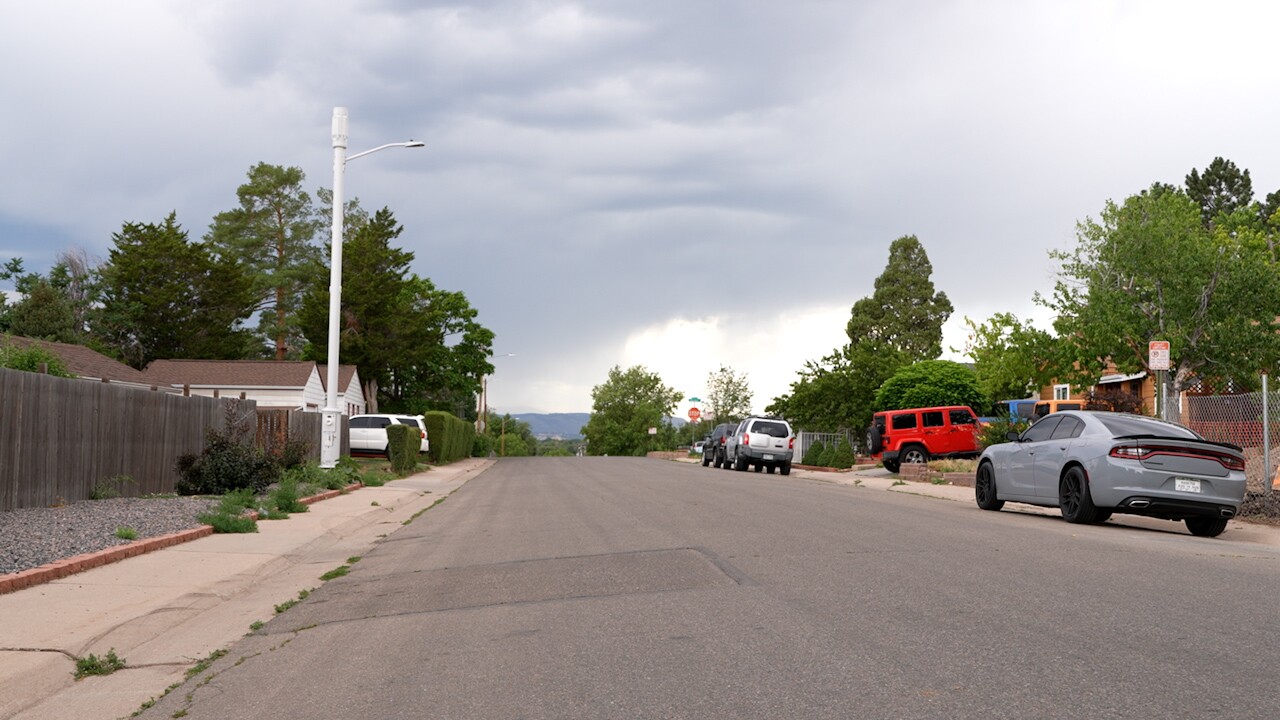
DENVER — Some Denver neighborhoods are far more vulnerable to this weekend’s incoming heat dome than others — and the difference comes down to trees.
The Valverde neighborhood on the city’s west side has about 9% canopy cover, leaving residents with little shade as temperatures climb toward triple digits.
▶️ WATCH: Denver7’s Claire Lavezzorio learns more about The Park People and how it is helping neighborhoods in Denver.
One tree at a time: Denver nonprofit works to close shade gap as heat dome threatens neighborhoods
Kim Yuan-Farrell, executive director of The Park People, a nonprofit that plants trees in underserved neighborhoods, said the disparity across Denver is stark.
“We have some neighborhoods that have wonderful canopy cover, like 20 to 30% of those neighborhoods are forested. Then a number of our neighborhoods have really low canopy cover, between four or 8% where it’s just significantly less,” Yuan-Farrell said.
Denver7
The Park People identified 28 neighborhoods in need of more tree cover, including Westwood, Globeville and Northeast Park Hill.
Trees can cool an area by 15 to 20 degrees, making a significant difference.
The National Weather Service (NWS) warned the heat dome could last through next weekend.
“The exceptional thing about this is how long it will last,” said NWS meteorologist Russell Danielson. “If you do have trees to take shelter under, it does actually cool down the temperature a decent amount.”
Yuan-Farrell said trees are more than a comfort — they are a critical piece of urban infrastructure.
Denver7
“We really consider it a really essential element of green infrastructure, a real nature-based solution to a lot of these really serious local environmental problems,” Yuan-Farrell said.
In the map below, explore Denver’s libraries and rec centers that welcome the public in from the heat during business hours.
When asked whether Denver has a long road ahead, she did not hesitate.
“We have a lot of work ahead of us,” Yuan-Farrell said. “And we really need our whole community to get involved in that.”
The Park People plant anywhere from 1,200 to 2,000 trees a year. You can apply for one in your yard. Planting is set to begin in September.

Denver7 | Your Voice: Get in touch with Claire Lavezzorio
Denver7’s Claire Lavezzorio covers topics that have an impact across Colorado. If you’d like to get in touch with Claire, fill out the form below to send her an email.

(QUICK LINKS: Music lineups … vendor list … food and drink … Kids Zone info)
6:04 PM: At West Seattle Summer Fest, the crowd has grown steadily, especially now that the workday is over. Main-stage music continues – here’s the second band of the day, Chico Detour:
That’s their song “Crying at My Party.” As main-stage music continues, The Big Dark Corner is just getting going at California/Alaska by KeyBank, a new space this year – programmed by West Seattle’s The Big Dark Records. And you have a wide variety of choices for dinner and drinks – The Porch in the lot behind KeyBank, stands on that side of SW Alaska, some vendors on newly pedestrian-only SW Oregon, the beverage garden by the main stage ..

… and of course all the year-round local venues, many with outdoor cafés. Coordinators say it’s gone smoothly so far. Updates to come!
6:25 PM: That’s Leonard Jarvey and The Sock Monkeys, opening the night at The Big Dark Corner. Still to come there tonight – Sad Dad Autumn at 7, Across 35th at 7:30. Meantime, over in the Kids Zone, the foam party’s back this year:
7:39 PM: A bit of Zookraught and their dance-punk sound on the main stage:
And Across 35th has a throng at The Big Dark Corner – video:
8:20 PM: Vendors are wrapping up for the day, since the festival’s official end time – not counting music – was 8 pm. Here at the Info Booth, most everything’s rolled up too, except our table, and we’re packing up shortly (after one more band – added, here’s that video of Blackie:)
The night wraps up with Alien Crime Syndicate at 10 pm.
ADDED 11:45 PM: Thanks to WSB contributor Jason Grotelueschen for clips from the night’s last two main-stage bands – Caitlin & Brent with the Passenger String Quartet:
And Alien Crime Syndicate:
P.S. Thanks to the many kind people who stopped by our table to say hi – we’ll be back tomorrow, starting at 10 am.
-
 Politics8 seconds ago
Trump administration clears path for controversial Mojave Desert water pipeline
-
 Sports8 minutes ago
World Cup fans flock to In-N-Out, Erewhon and Trader Joe’s for a taste of California
-

 World18 minutes ago
Hundreds of thousands evacuated as Typhoon Bavi barrels towards China
-
 News45 minutes ago
With the white nationalist group Patriot Front, what you see is not what you get
-

 New York2 hours ago
How ‘The Wire’ Star Jamie Hector Spends a Hot Day in Brooklyn
-

 Los Angeles, Ca2 hours ago
Burglars ransack Sherman Oaks condo building during fumigation
-

 Detroit, MI2 hours ago
Metro Detroit weather forecast, July 10, 2026 — 11 p.m. Update
-

 San Francisco, CA3 hours ago
Classical music series helps reconnect downtown San Francisco community

