Science
Earthquake risks and rising costs: The price of operating California's last nuclear plant

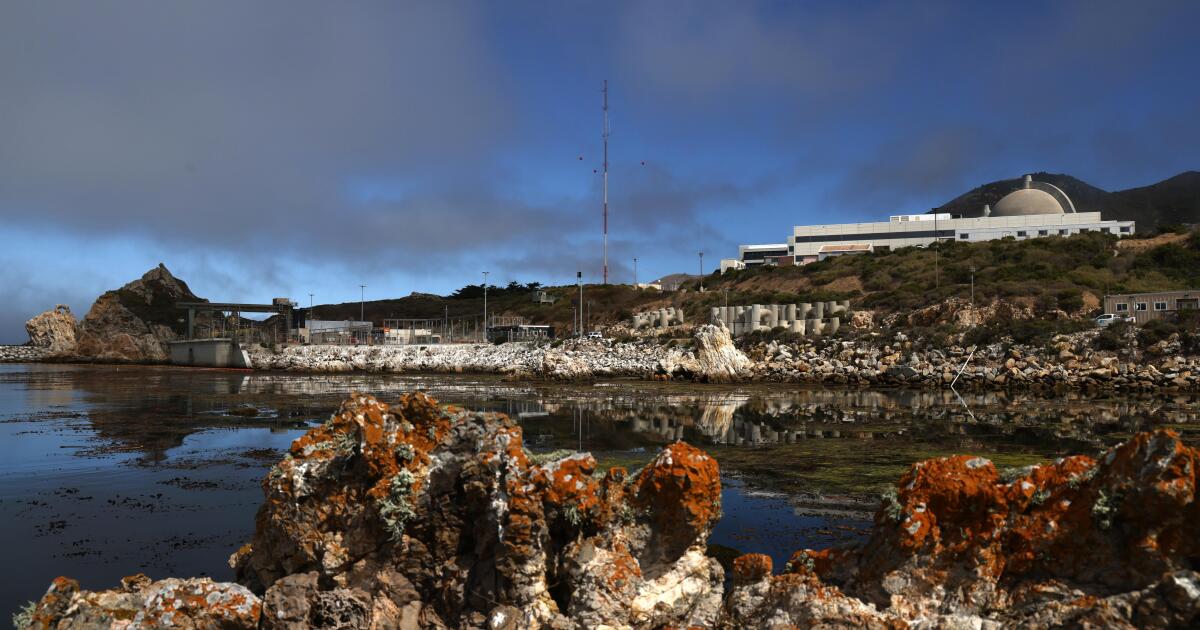
Under two gargantuan domes of thick concrete and steel that rise along California’s rugged Central Coast, subatomic particles slam into uranium, triggering one of the most energetic reactions on Earth.
Amid coastal bluffs speckled with brush and buckwheat, Diablo Canyon Nuclear Power Plant uses this energy to spin two massive copper coils at a blistering 30 revolutions per second. In 2022, these generators — about the size of school buses — produced 6% of Californians’ power and 11% of their non-fossil energy.
Yet it comes at almost double the cost of other low-carbon energy sources and, according to the federal agency that oversees the plant, carries a roughly 1 in 25,000 chance of suffering a Chernobyl-style nuclear meltdown before its scheduled decommissioning in just five years — due primarily to nearby fault lines.
Aggressive and impactful reporting on climate change, the environment, health and science.
As Gov. Gavin Newsom’s administration looks to the aging reactor to help ease the state’s transition to renewable energy, Diablo Canyon is drawing renewed criticism from those who say the facility is too expensive and too dangerous to continue operating.
Diablo is just the latest in a series of plants built in the atomic frenzy of the 1970s and ’80s seeking an operating license renewal from the federal Nuclear Regulatory Commission as the clock on their initial 40-year run ticks down. As the price of wind and solar continues to drop, the criticisms against Diablo reflect a nationwide debate.
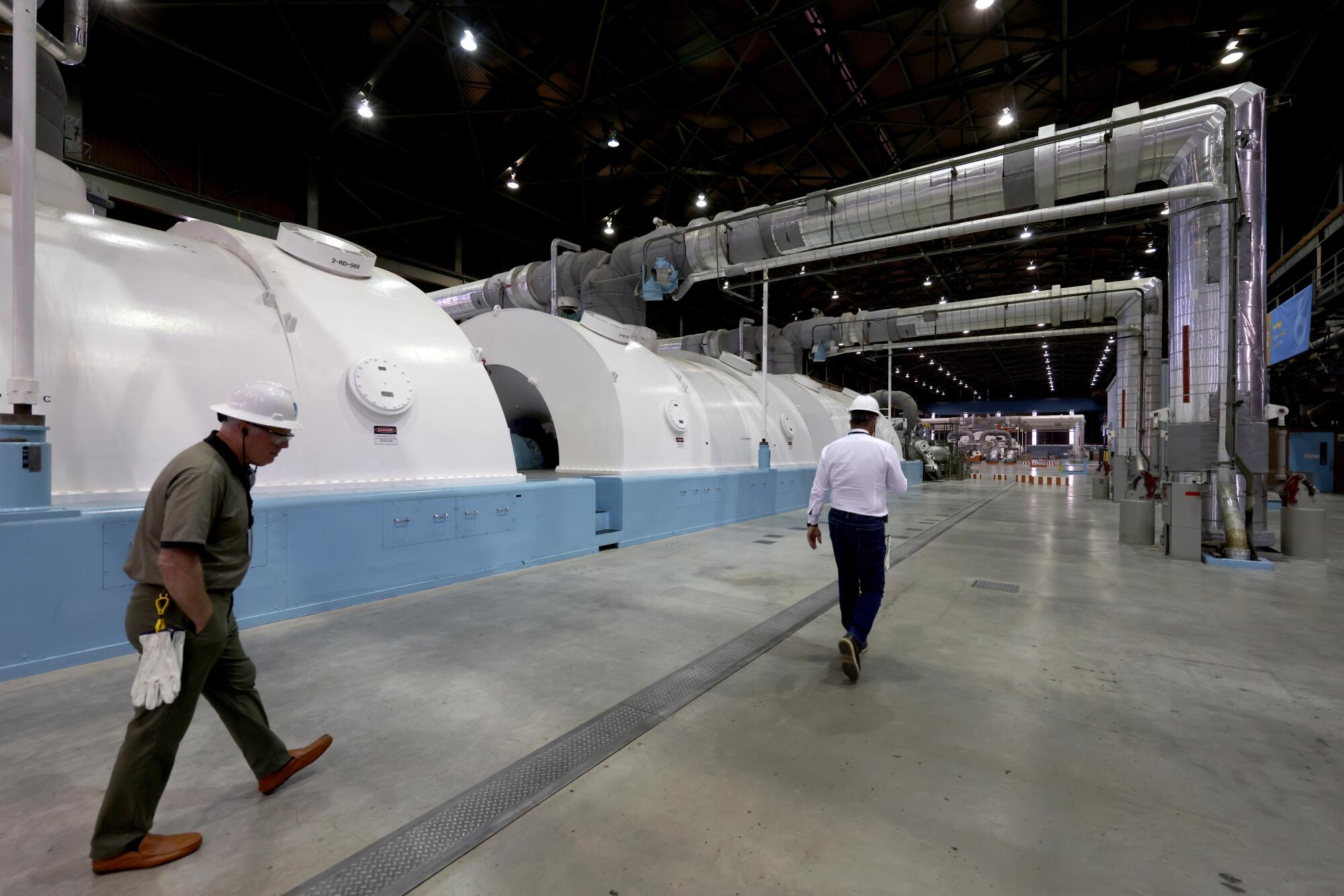
Tom Jones, right, a regulatory and environmental senior director at PG&E, and Jerel Strickland, a senior licensing and spent nuclear storage consultant, walk past one of two massive turbine-generator units inside the turbine building at Diablo Canyon Nuclear Power Plant recently.
(Genaro Molina/Los Angeles Times)
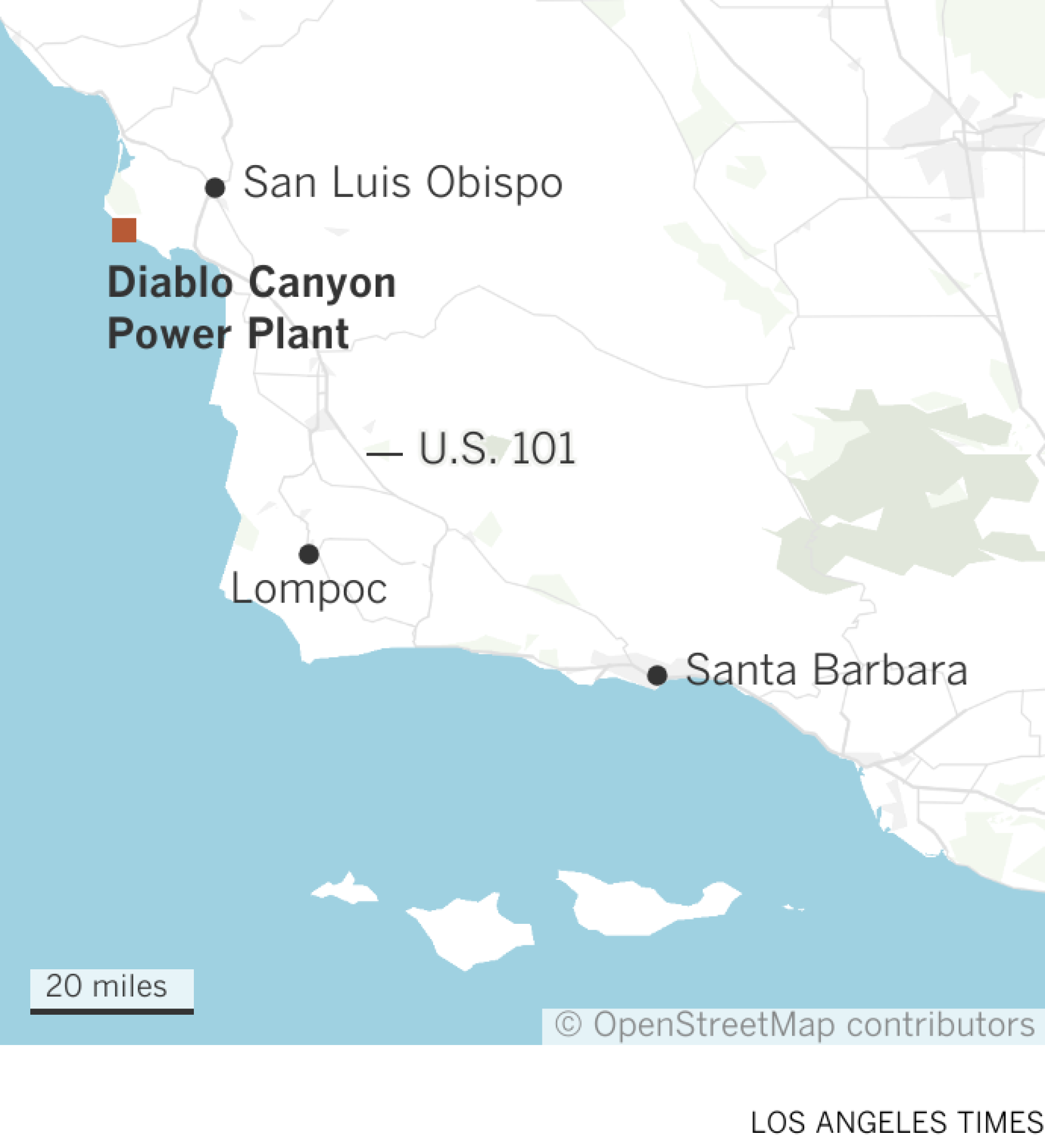
The core of the debate lives in the quaint coastal town of San Luis Obispo, just 12 miles inland from the concrete domes, where residents expected Diablo Canyon to shut down over the next year after its license expired.
Instead, Newsom struck a deal on the last possible day of the state’s 2021-22 legislative session to keep the plant running until 2030, citing worries over summer blackouts as the state transitions to clean energy. The activists who had negotiated the shutdown with PG&E and the state six years prior were left stunned.
Today, the plant is still buzzing with life: Nuclear fission, in the deep heart of the plant, continues to superheat water to 600 degrees at 150 times atmospheric pressure. Generators continue to whir with a haunting and deafening hum that reverberates throughout the massive turbine deck.
Left untouched, nuclear fission erupts into a runaway chain reaction that can heat the core of a nuclear plant to thousands of degrees, liquifying the metal around it into radioactive lava.
So, operators have to constantly stifle the reaction to keep it under control.
In the event of an earthquake, they need to stop the reaction as quickly as possible. But if the shaking is so rapid and intense that the plant is critically damaged before it can shut down, operators could become helpless in preventing a meltdown.

Tom Jones, senior director of Regulatory Environmental and Repurposing at PG&E, talks about how the Diablo Canyon Nuclear Power Plant operates.
(Genaro Molina/Los Angeles Times)
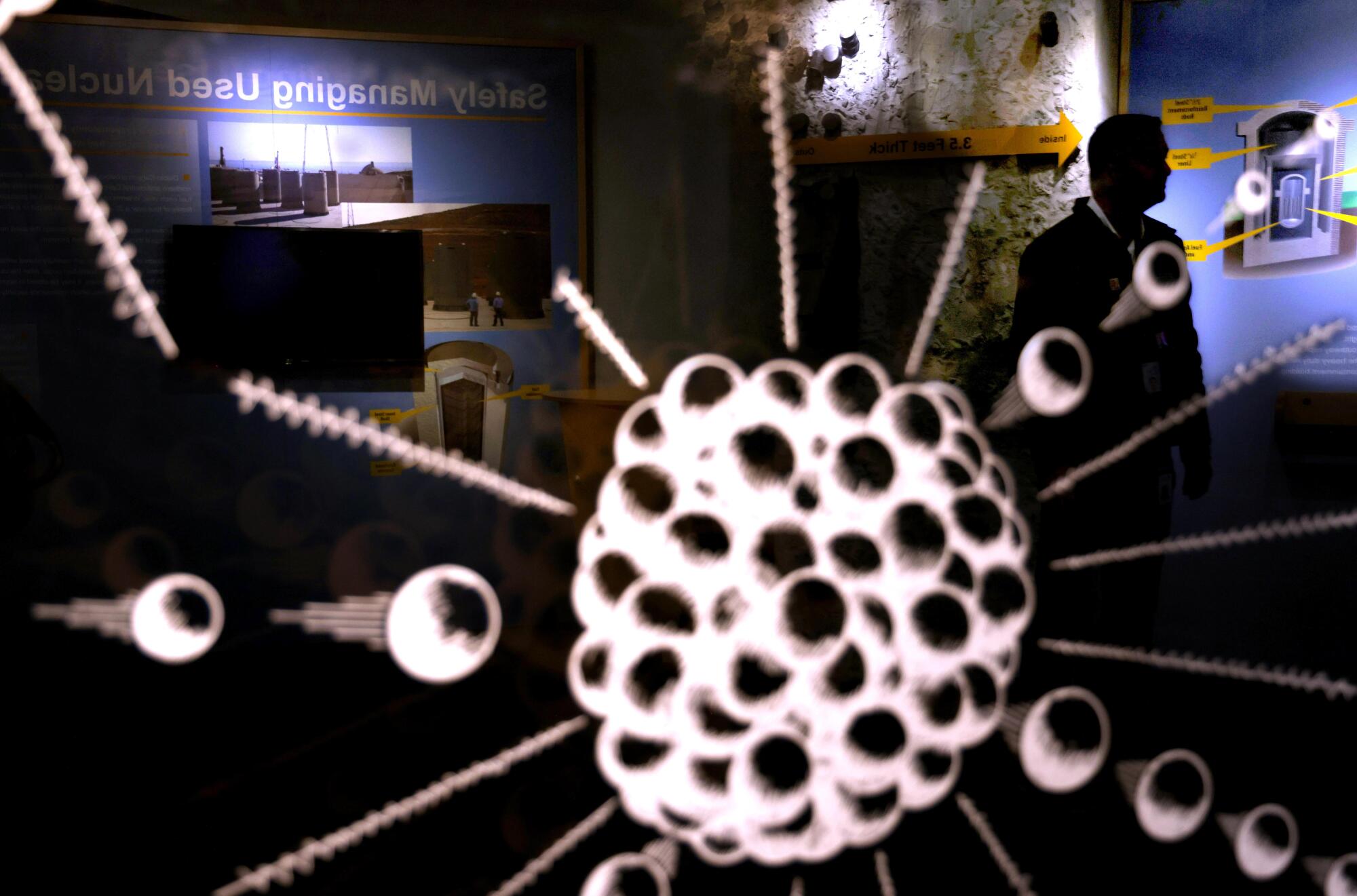
Tom Jones, senior director of Regulatory Environmental and Repurposing at PG&E, is reflected in a display that explains the fission process at Diablo Canyon Nuclear Power Plant recently.
(Genaro Molina/Los Angeles Times)
Diablo Canyon is built to endure specific intensities and speeds of shaking — but predicting how likely an earthquake is to exceed those specifications is no easy task. Earthquakes are the result of deeply complex underground motion and forces, and they’re notoriously chaotic.
In order to start estimating the seismic safety of the plant, geophysicists have to understand: first, where the faults are; second, how much they’re slipping to trigger earthquakes; and finally, when those quakes hit, how much shaking they cause.
Earthquakes account for about 65% of the risk for a worst-case scenario meltdown. Potential internal fires at the plant make up another 18%. The last 17% is made up of everything from aircraft impacts and meteorites to sink holes and snow.
In assessing the likelihood of all these threats, the Nuclear Regulatory Commission estimates that in any given year, each of Diablo Canyon’s two reactor units has a roughly 1 in 12,000 chance of experiencing a nuclear meltdown similar to Japan’s Fukushima disaster.
Likewise, there’s about a 1 in 127,000 chance a failure will cause the plant to release exorbitant amounts radioactive material into the atmosphere before residents could evacuate, creating a Chernobyl-style disaster.
This means that, every year, nearby residents have roughly the same chance of seeing a nuclear meltdown as dying in a car crash. Also, in any given year, they’re about 50 times more likely to face a mass-casualty radioactive catastrophe than get struck by lightning.
Diablo Canyon employees work around the clock to ensure the risk is as small as possible. “Our safety culture, it’s always on the top of my mind,” said Maureen Zawalick, the vice president of business and technical services at Diablo. “It’s in my DNA.”

Maureen Zawalick, PG&E Business and Technical Services vice president, in her office at the Diablo Canyon Power Plant.
(Genaro Molina/Los Angeles Times)
The plant is the only one in the U.S. with a dedicated geoscience team that studies the region’s seismic landscape. And like other nuclear facilities, Diablo has done countless tests on its equipment, hosted walkthroughs with regulators to identify possible points of failure and generated thousands of pages of analysis on the facility’s ability to withstand the largest earthquake possible at the site.
Earthquake precautions include massive metal dampers that are fixed to essential infrastructure, such as the duct carrying the control rooms’ air supply. In the event of a tremor, monstrous concrete pillars penetrate deep into the bedrock to keep the building and essential infrastructure grounded. The hefty concrete walls reinforced with steel rebar as thick as a human arm safely distribute the forces throughout the structure to prevent critical cracks or collapses.
If the plant loses power, there are backup generators for the backup generators.
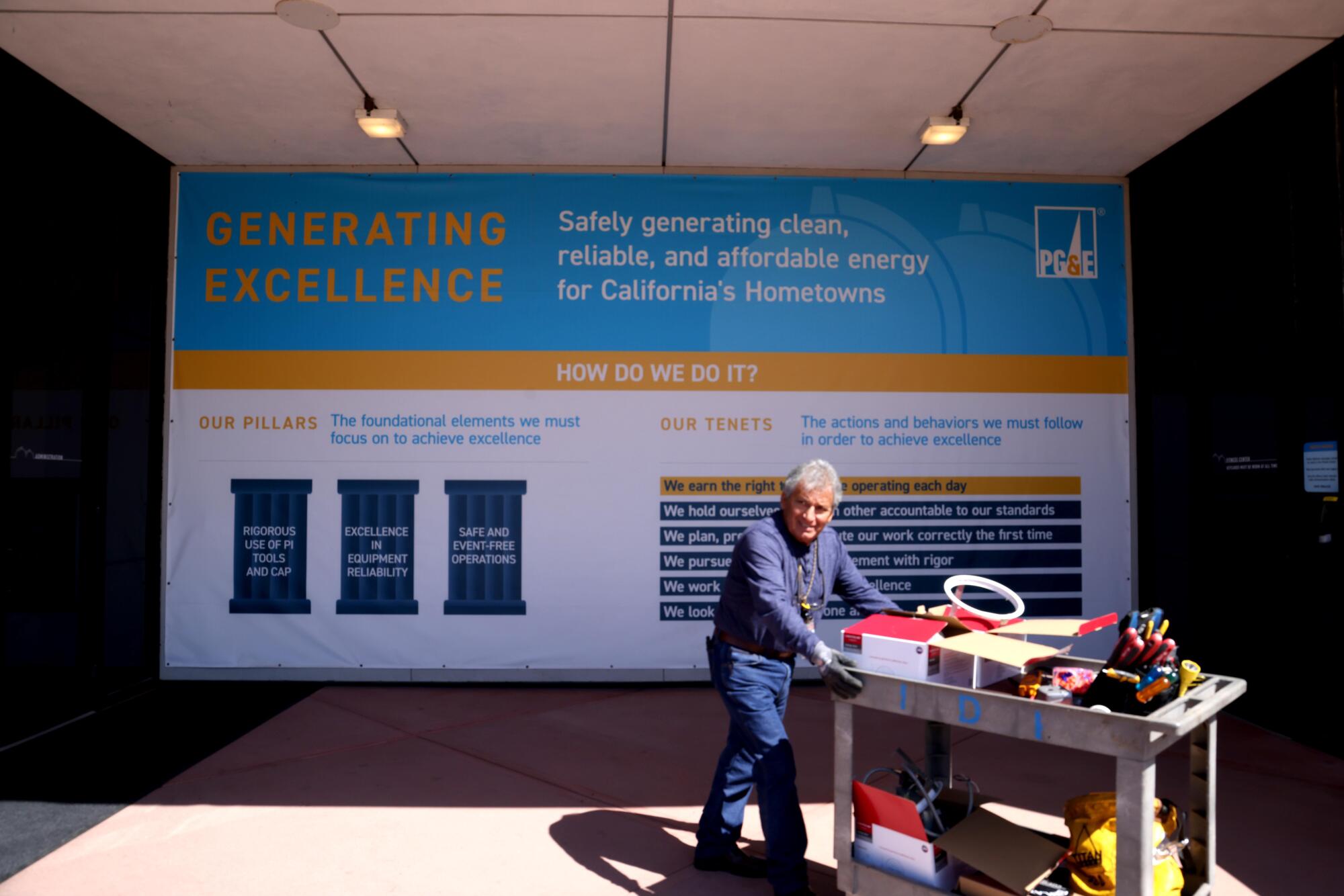
A worker pushes a utility cart past a billboard that lists employee goals at Diablo Canyon Nuclear Power Plant recently.
(Genaro Molina/Los Angeles Times)
Operators spend a fifth of their time on the job training for every possible nightmare. Diablo has a simulator on site that’s an exact replica of the Unit One control room. It’s capable of putting operators through the worst conditions imaginable. It shakes with the vigor of a real earthquake. The lights flicker and the analog dials spin back up as emergency power comes online.
For everyone working on site — including the senior leadership team — safety is personal. Should something go wrong, their lives are on the line.
“With any source of energy, there is risk,” said Zawalick. “All the independent assessments, all the audits, all the third party reviews, all of that …. is what gives me the confidence and the security and the safety of why I’ve been out here almost 30 years.” Her office is no more than 500 feet from the reactors.
“If there ever was an earthquake of any magnitude in this community,” she said, “I would grab my two daughters and we’d come here.”
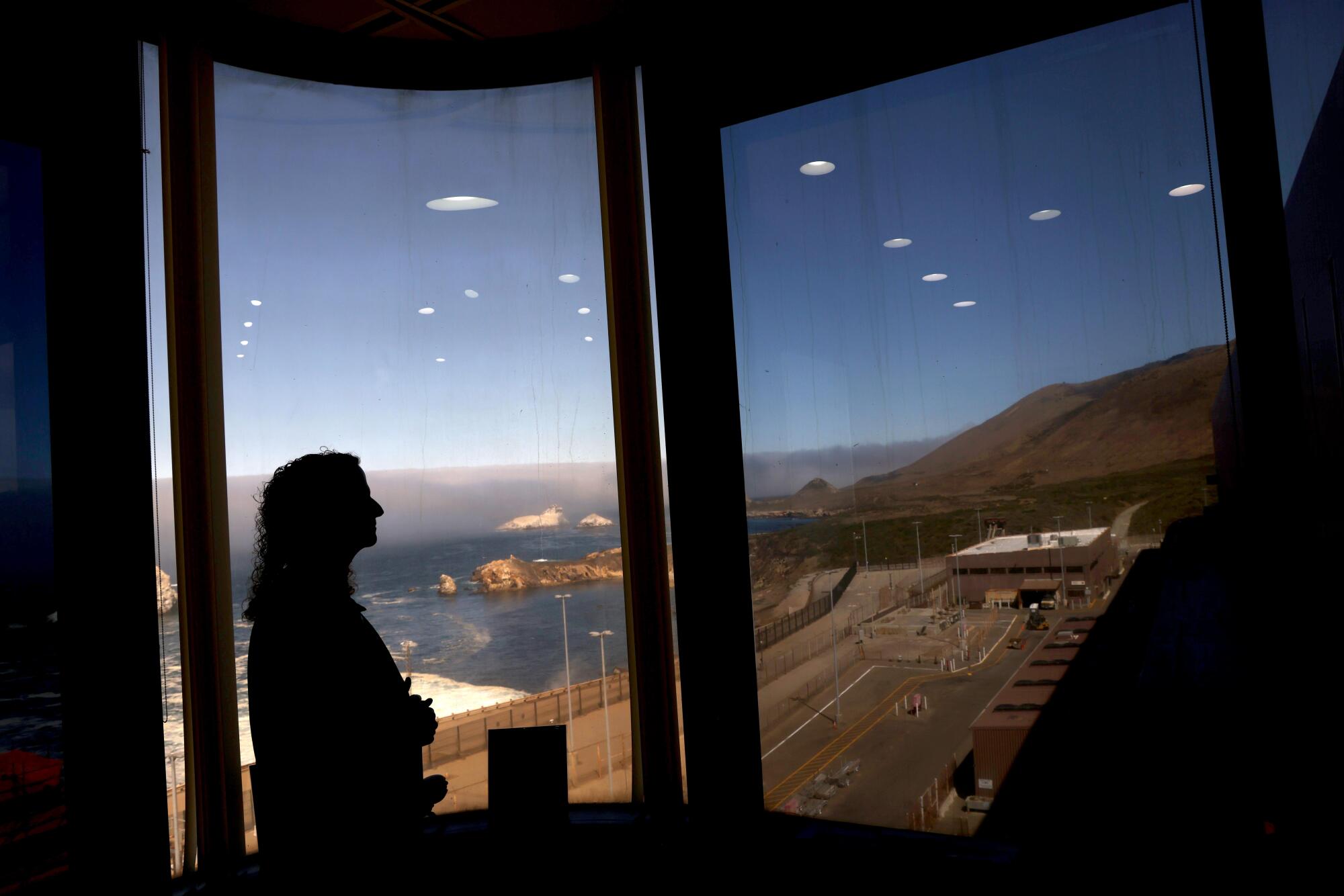
Maureen Zawalick, PG&E Business and Technical Services vice president, looks out her office window at Diablo Canyon Nuclear Power Plant recently.
(Genaro Molina/Los Angeles Times)
Many critics charge that the risks are understated — due in part to a cozy relationship between industry and regulators. (Some scientists involved with one of Diablo Canyon’s two independent review organizations have collaborated on scientific papers with PG&E staff and funding.)
The Nuclear Regulatory Commission also oversees the plant and conducts its own investigations. In July, the government agency dismissed all three formal criticisms against Diablo’s seismic safety in the plant’s license renewal process.
Sam Blakeslee, a San Luis Opispo geophysicist and former state senator and Assembly member, has a list of technical concerns — primarily the lack of shaking data close to fault lines, which are used to inform the models that predict earthquake motion at the plant — but he likens the core of his concern to the NASA Challenger disaster.
NASA publicly touted a strong safety culture and low chances of things going wrong. Yet, the investigation found political and public pressures had corrupted the safety from the top down.
He argues this is a possibility for any large organization dealing with complex and potentially dangerous systems. Therefore, people need to constantly hold the plant accountable.
“That’s why I tend to try to make sure that the community voice is present,” he said, “ because we are the ones that will pay the price.”
In 2022, Newsom introduced a proposal to keep Diablo Canyon open past its two reactors’ 2024 and 2025 shutdown dates. His proposal, distributed to lawmakers just three weeks before the end of the legislative session, set off a flurry of negotiations among PG&E, the governor and the Legislature.
After discussion drew on past midnight, the Legislature passed the bill.
But it comes at a cost.
While the average price of solar and wind have dropped dramatically over the past 15 years, nuclear’s has been steadily rising. In 2009, solar cost three times what nuclear did, and wind was about even with it. Now, nuclear is over two times the cost of both renewables.
Technical advancements have slashed the price of renewable energy, but nuclear power has faced more outages, equipment replacements and increasingly stringent and expensive safety requirements in the wake of the Fukushima disaster.
One study from MIT researchers found that about a third of the increasing cost could be attributed to safety requirements from the Nuclear Regulatory Commission. They attribute another third to research and development projects for efficiency, reliability and safety improvements, and they assign the final third to a decrease in worker productivity — perhaps in part due to lower morale.
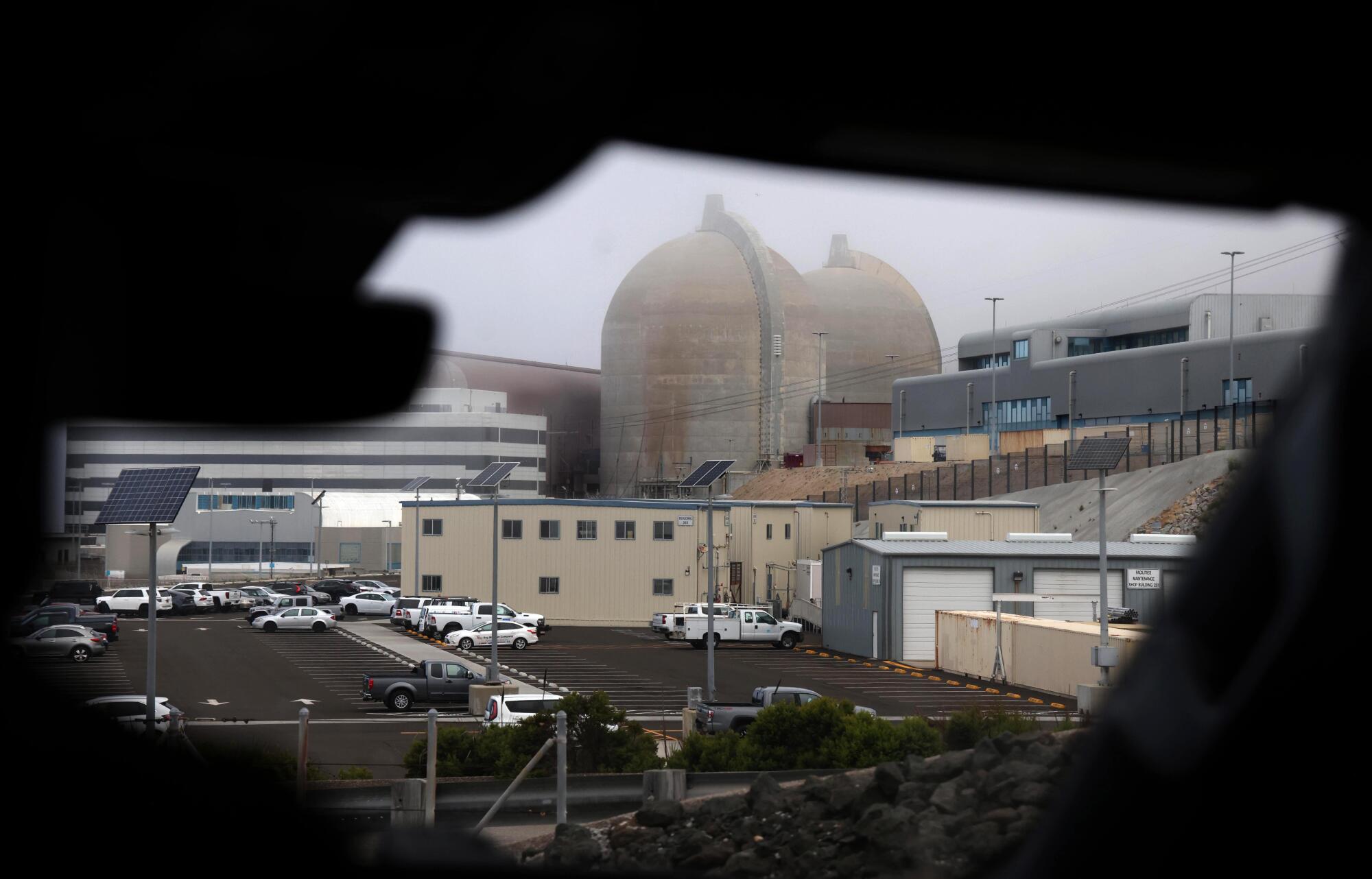
Twin containment domes rise above the facility as seen through a windshield on the drive to the Diablo Canyon Nuclear Power Plant.
(Genaro Molina/Los Angeles Times)
PG&E is estimating that Diablo Canyon will produce energy at $91 per megawatt-hour during its extension. (The average U.S. household buys about 10 megawatt-hours every year.)
However, the Alliance for Nuclear Responsibility argues the plant’s cost is even higher. David Weisman, the legislative director at the alliance, said PG&E is using optimistic predictions of its energy output for the extended period — 5% higher than previous years.
On top of that, the state gave PG&E a $1.4-billion loan to alleviate the initial costs of extended operations. But Wiesman said the funds don’t necessarily need to go toward offsetting the cost of running Diablo. The federal government agreed to reimburse the state up to $1.1 billion — depending on whether the plant meets specific operating criteria — and PG&E is expected to pay off the rest of the loan with profits.
While the loan isn’t a cost that consumers would see on their energy bills, taxpayers across the country could foot the bill. Weisman argued that it brings Diablo’s cost to a maximum of $115 per megawatt-hour — roughly double the cost of solar.
Yet Newsom argues that if California is to meet its goals of 60% renewable energy by 2030, Diablo needs to stay online in the meantime to ensure the state has reliable power amid heatwaves and wildfires.
Diablo Canyon essentially runs 24/7, providing constant power to the state (assuming it doesn’t have any issues, which it sometimes does). For solar to provide similarly constant power, the electric grid will require a massive expansion of its battery infrastructure to store the energy between the midday peak of energy production and the evening peak of energy use.
However, new studies are finding that energy storage is a feasible approach to grid reliability — and that even when adding the price of that infrastructure, solar still costs less than nuclear.
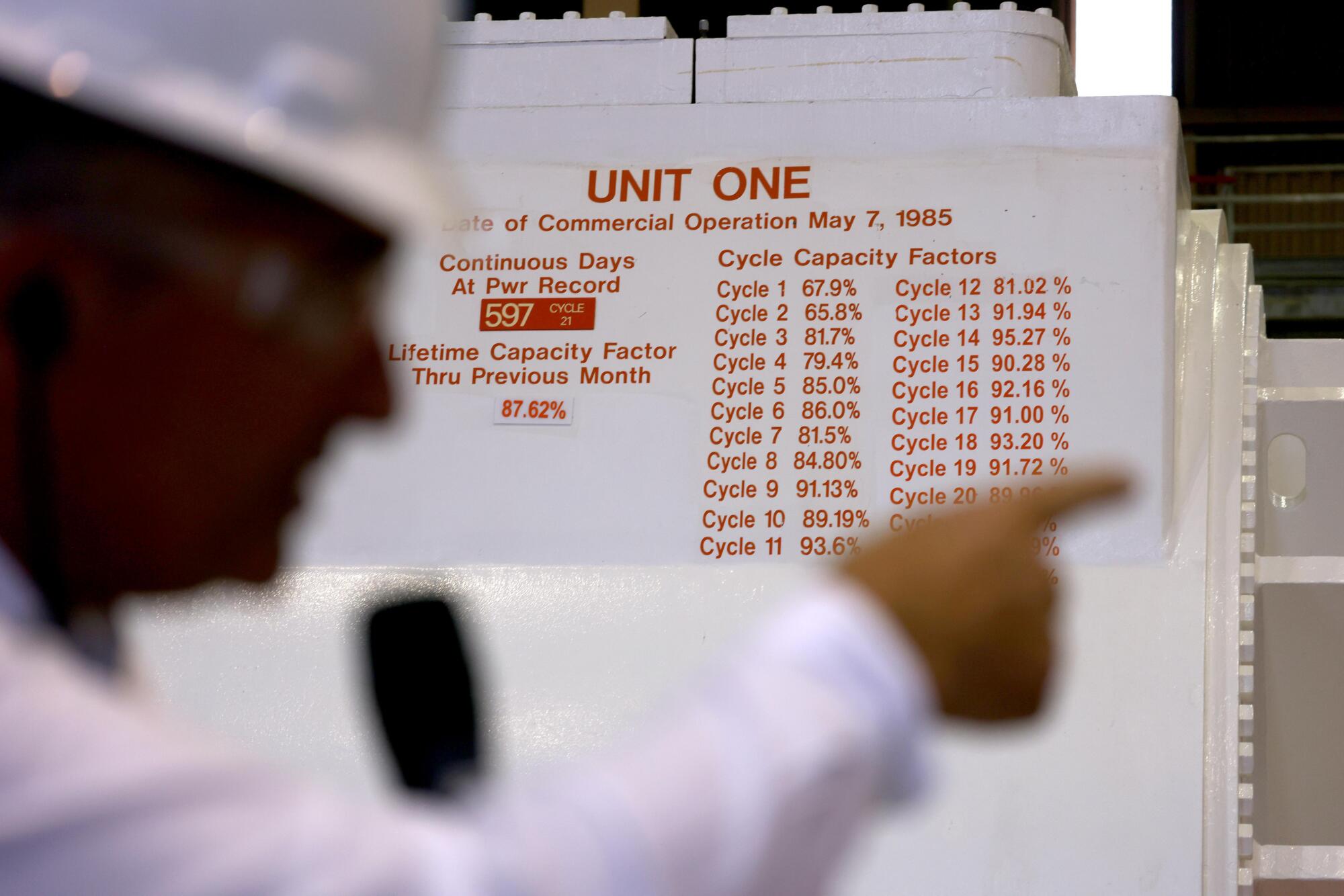
Tom Jones, a regulatory and environmental senior director at PG&E, talks about the number of days that Turbine Unit One has operated to bring power to California while inside the turbine building at Diablo Canyon Power Plant recently.
(Genaro Molina/Los Angeles Times)
Since Diablo’s extension was signed into law, California has almost doubled its battery storage. The state now has enough to supplement about a quarter of the state’s power needs for about half an hour during peak energy usage (although, in practice, it would likely supplement much less for much longer).
“That’s four or five Diablo Canyons,” said Weisman. Newsom should “save the people of California [billions of dollars] thrown down PG&E’s rat hole, declare triumphant victory in the renewable race and accept the laurels.”
Instead, at a recent press event announcing California had reached a fifth of its storage capacity goal, Newsom laughed off the idea that Californians will no longer have to worry about blackouts.
“We have a lot of work to do still in moving this transition, with the kind of stability that’s required,” he said. “So no, this is not today announcing that blackouts are part of our past.”
Diablo Canyon’s leaders and advocates view the plant as supporting California through this challenging transition period: It’s not perfect, but it provides the state with much-needed reliable, clean power, they say.
In a conference call shortly after Diablo’s initial 2024 shutdown date was negotiated, then-chief executive of PG&E Tony Earley acknowledged the plant would eventually become too expensive to operate.
“As we make this transition, Diablo Canyon’s full output will no longer be required,” he said.
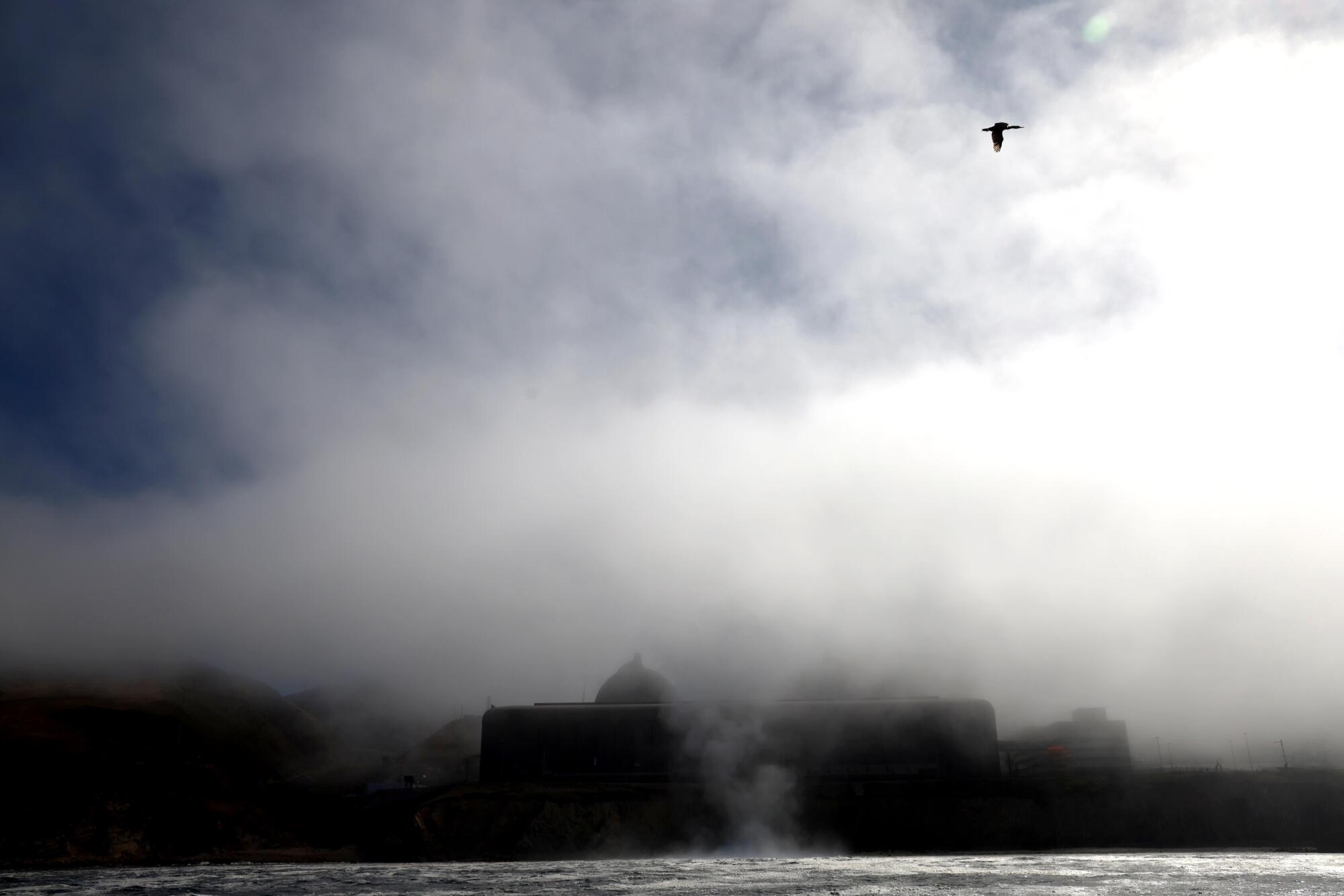
Steam rises from the Pacific Ocean where an outfall of heated water from the Diablo Canyon Nuclear Power Plant pours into coastal waters.
(Genaro Molina/Los Angeles Times)
Zawalick said the Diablo team is ready to continue operating as long as the state needs it to. “Thinking about electrification, [electric vehicle] demand, continued drought, the temperatures we’re seeing, wildfires … tariffs — I mean, the list goes on,” she said. “That’s making the equation a bit challenging to see exactly when Diablo will shut down versus how long Diablo will be needed by the state.”


new video loaded: NASA Announces Artemis III Crew
transcript
transcript
NASA Announces Artemis III Crew
NASA announced the crew of Artemis III mission, which will fly to low-Earth orbit to test rendezvous and docking maneuvers with one or two lunar landers.
-
“I am excited to welcome you as the next crew in the Artemis journey to successfully return to the moon — this time to stay.” “I’m honored by the role that I’ve been given. I’m also very humbled by the task in front of us. But first and foremost, I’m grateful.” “So with that, the Artemis II crew, comrade, hands you the baton. You got the controls.” “As you know, we had a significant anomaly at our Launch Complex 36A on May 28. We’ve redoubled our efforts and are moving forward.”
By Alisa Shodiyev Kaff
June 9, 2026
Science
Santa Monica Mountains’ last steelhead trout survived the Palisades fire — and even had babies

Scientists feared the Santa Monica Mountains’ last remaining steelhead trout were dead, smothered by debris flows unleashed by the Palisades fire.
But the endangered fish surprised them: A team of biologists recently spotted 30 of the rare trout — and 21 babies — in Topanga Creek.
“There was a lot of happy dancing in the creek,” said Rosi Dagit, principal conservation biologist for the Resource Conservation District of the Santa Monica Mountains, which works with public and private landowners to conserve natural resources.
That’s because the steelhead here are endangered, at both the state and federal levels. Once, they swam in most streams of the Santa Monicas, but their numbers plummeted amid overfishing and coastal development. Increasingly frequent wildfire has further stressed their habitat. Topanga Creek, a biodiversity hot spot, is home to their last known population in the mountains that stretch from the Hollywood Hills to Point Mugu in Ventura County.
The trout that were spotted, including this one, are part of a distinct Southern California population that’s listed as endangered at the state and federal levels.
(RCDSMM Stream Team)
The California Department of Fish and Wildlife spearheaded a complex mission to rescue trout threatened by the Palisades fire that sparked in January 2025.
Time was of the essence. The fire hadn’t yet been fully contained. But rain was on the way, which would sweep massive amounts of sediment from the denuded hillsides into the water. Fish are often killed this way.
Crews stunned the fish with electricity, scooped them up in buckets, trucked them to a hatchery and ultimately moved them to Arroyo Hondo Creek in Santa Barbara County.
Within days, Topanga Creek was choked with mud. Some assumed the fish left behind were goners.
But in March, the conservation district’s team found four. The following month, when water conditions were clearer, they saw more.
“These fish continue to amaze me,” said Kyle Evans, environmental program manager for the state Department of Fish and Wildlife, who had seen the damage to the creek. “I had seen populations get wiped out in similar situations. So when I heard, I was thrilled.”
Evans surmises the fish that survived were in an area of the creek where less charred material and sediment were swept in.
“These fish likely hunkered down, were hiding under some rocks or places to try to get away from the main concentration of flow,” he said. “And luckily they weren’t buried.”
The ones that were spotted were fairly small, around 6 to 14 inches. Rainbow trout and steelhead trout are the same species, but with different lifestyles. If the fish remain in freshwater, they’ll be considered rainbows. However, they can migrate to the ocean and become steelhead, where they typically grow larger before returning to their natal waters to spawn.
Topanga Creek hasn’t fully recovered from the damage it sustained, but scientists say it’s looking better. Surveys last year were “so depressing,” Dagit said, with very few animals, and stretches that were essentially transformed into flat roads from all the sediment buildup. Some of the riparian canopy burned right down to the creek.
Then came 32 inches of rain over the last nine months, scouring out and moving sediment, creating deeper pools. Dagit said they recently found newt egg masses for the first time in years, as well as a few adult newts and many frogs. Plants that provide cover are starting to recover.
She provided photos comparing certain pools last year and this year, some dramatically transformed. In September 2025, the Shrine Pool could have been an overgrown hiking trail. This April, it was filled with shallow water.

The Shrine Pool in September 2025, left, and the same location in April 2026, right, with RCDSMM’s Isaac Yelchin donning a wetsuit.
(RCDSMM Stream Team)
Topanga Creek is home to another endangered fish, the small but hardy northern tidewater goby, often described as cute. Not long before the trout operation, Dagit led a rescue of hundreds of these fish too. Many were repatriated to the lagoon at the mouth of the creek in a moving ceremony last June.
There’s still the matter of what to do with the trout that were moved to Santa Barbara County last year. Evans would like to bring them home to the Santa Monicas at some point, but isn’t sure if it will happen. On one hand, they could bolster the small, genetically isolated surviving population. On the other, they might inadvertently bring in a disease or bacteria. There is some time to decide. Evans estimates the creek still needs to recover for two to three more years.
For now, the fish are functioning fine in their adopted creek. Experts worried the trauma wrought by the move would disrupt their spawning process, but they had babies that spring. This year, they spawned again.

The Pacifica Municipal Pier was shut down and taped off Thursday after city workers noticed cracks running through the landmark structure and concrete chunks falling into the ocean.
It’s just one of many coastal California structures that have recently crumbled under pressure from a rising and relentless ocean.
Officials from the small, beach city south of San Francisco said the pier was closed due to “cracking, separation, and displacement of the concrete walkway and structural elements.”
It will stay closed while structural engineers asses its safety.
Photos taken by city employees show a wide crack that runs from top to bottom and across the structure as well. Other photos show a large horizontal crack under the foundation of a small restaurant on the pier, the Chit Chat Cafe.
The cafe was also shut down.
This is not the first time the 53-year-old pier has shown signs of stress. In 2021, part of it was shut down after handrails along the edge collapsed. And in 2023, after a series of storms pummeled the Central California coast, damaging parts of the pier, the structure was partially closed for more than year.
Those same storms caused extensive damage in Aptos and Capitola, 70 miles south, where piers and waterfront infrastructure were swept away or damaged.
In 2024, a 150- to 180- foot section of the Santa Cruz wharf was ripped off by powerful waves.
At least 10 of the state’s dozens of coastal public piers were closed for part or all of 2024 due to structural damage sustained in winter storms since 2022. At least five others have longer-term upgrades planned to address structural issues.
“These things are costly to maintain,” said Zach Plopper, senior environmental director at Surfrider. “They are a part of our California coastal culture in many ways, but we’re going to need to reckon with, one, the state that they’re in, and two, the continuous and worsening threats they’re going to experience,”
He said most of the piers were constructed in the early 1900s, and they weren’t built to withstand decades of rough seas, storms and rising sea level.
“With this incoming El Niño, which is forecasted to be significant, and this marine heat wave we’re in the midst of, we’re kind of in uncharted waters as far as what this winter could bring in terms of storms and swells to the California coast, and we’re likely going to see a lot more damage,” he said. “Not just piers, but roads and other coastal infrastructure up and down the state.”
There was no storm in Pacifica earlier this week, so no single event could be blamed for the destruction.
However, a 2025 report from an outside engineering firm, GHD, found that several sections of the pier were in “poor” or “serious” condition, and they recommended closure before anticipated storms or events that could “subject the piles to high winds, swells and large waves.”
The firm found several areas of the pier where concrete was missing and rebar was exposed and corroding.
“The pier has continued to experience high winds and large waves in a harsh marine environment,” the engineers wrote in the report, noting that continuous exposure to seawater or marine spray was “detrimental” to the structure.
A 2023 city report estimated it would cost $19 million to repair.
That same year, a state law was enacted to require local governments along the California coast to plan for sea level rise in the coming decades.
Sea level has risen some 8 inches, on average, along the coast in the past 150 years, Plopper said, and researchers anticipate another foot in the next 25 years.
“We’re going to see profound shifts on our coastline, none that we have ever experienced before, and building static structures on the coast just doesn’t work all that well,” he said. “We’re going to have to make some really hard decisions.”
-

 Nebraska4 seconds ago
Nebraska pitcher enters transfer portal
-

 Nevada3 minutes ago
VOTE: Now that Nevada’s primary election is over, what best describes your experience?
-
 New Hampshire8 minutes ago
New England Wagyu: Raising Japanese delicacy in New Hampshire – Monadnock Ledger-Transcript
-

 New Jersey15 minutes ago
New Jersey Food Council kicks off nationwide search for new CEO
-

 North Carolina18 minutes ago
4 charged after massive party in Alamance County ends with gunfire, stabbing, fights
-

 New Mexico18 minutes ago
The Battle of Socorro, New Mexico and the Uprising Against AI Data Centers
-

 North Dakota30 minutes ago
North Dakota election results: Latest on US House primary race
-

 Ohio33 minutes ago
$150,000 funding to be voted on for the Lisbon pool

