West
Scott Peterson’s most outrageous defense claims, debunked

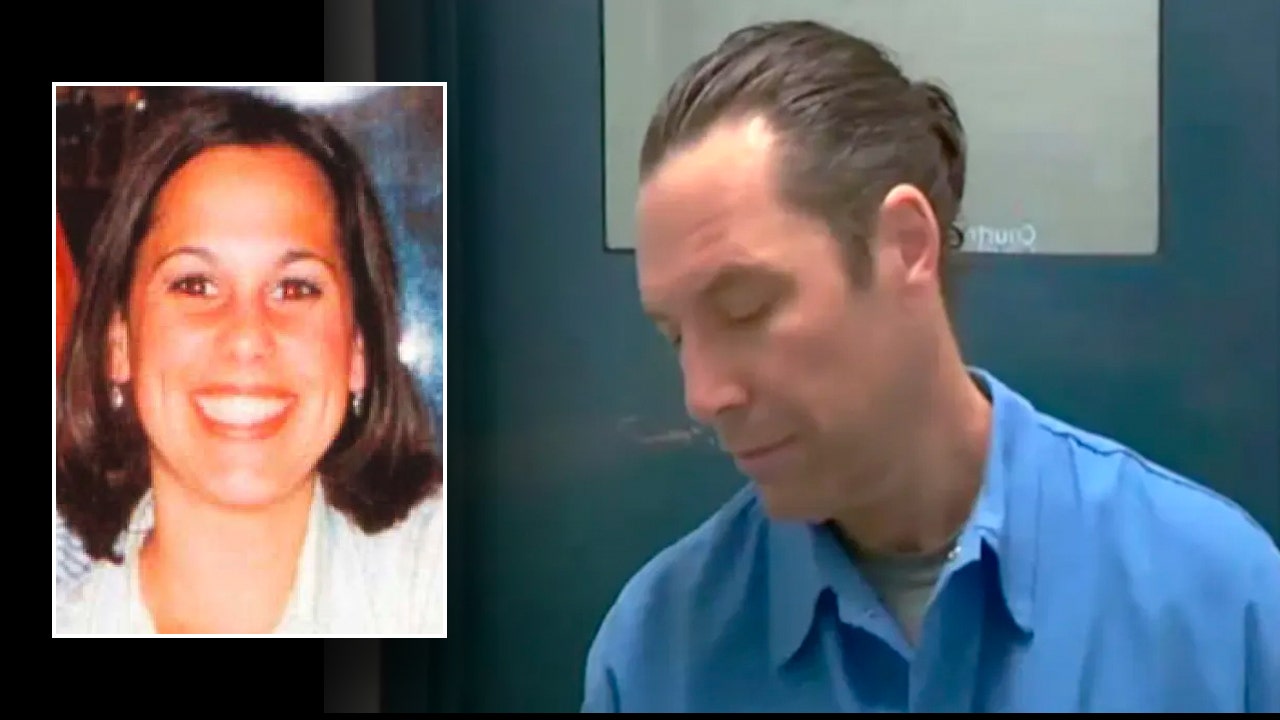
For years, Scott Peterson said he didn’t kill his pregnant wife Laci or their unborn son, Conner. But prosecutors say he did and that the evidence is “overwhelming.”
Peterson, convicted in 2004, returned to the headlines this year after the Los Angeles Innocence Project announced it would take up his latest appeal.
He also broke his silence after two decades in a “Face to Face with Scott Peterson” interview streaming on Peacock.
Netflix also unveiled the “American Murder: Laci Peterson” true crime docuseries Aug. 14, featuring interviews with Laci’s mother, Sharon Rocha, and Peterson’s former mistress, Amber Frey.
LACI PETERSON’S MOM REVEALS FIRST IMPRESSION OF KILLER SON-IN-LAW
Scott Peterson and Laci Peterson in a still photo appearing in the forthcoming docuseries “American Murder: Laci Peterson.” (Courtesy of Netflix)
When Frey learned of Laci’s disappearance, she became a witness for the prosecution and revealed Peterson claimed to her that he was a widower — before Laci’s death.
She started recording her phone calls with him, including one in which he said he didn’t want to be a father and was considering a vasectomy.
However, he admitted in the new interview that his behavior was “horrible,” according to People, which revealed an early look at Peterson’s first interview in 20 years, which begins streaming Aug. 20.
A photo provided as part of the court’s exhibits for the Scott Peterson trial shows Peterson and Amber Frey together. (People’s Exhibits)
“I was a total a-hole to be having sex outside our marriage,” he continued.
TIMELINE: THE LACI PETERSON CASE
Peterson, who has always maintained his innocence despite a conviction at trial and two decades of failed appeals, is still hoping he can convince a court he didn’t kill Laci, who was 8 months pregnant with their son Conner.
“If I have a chance to show people what the truth is, and if they are willing to accept it, it would be the biggest thing that I can accomplish right now,” Peterson claims in the interview. “Because I didn’t kill my family.”
Amber Frey, the former mistress of murder suspect Scott Peterson, leaves the San Mateo Superior County Courthouse after a delay in Peterson’s trial Aug. 18, 2004, in Redwood City, Calif. (Pool/AFP via Getty Images)
Prosecutors at trial revealed a mountain of evidence against him. He had been arrested near the Mexico border with bleached hair carrying thousands of dollars in cash and his brother’s passport.
Peterson has also floated the possibility that the men responsible for a burglary across the street from the Modesto home he shared with Laci were responsible for her death. However, prosecutors say the burglary happened two days after she was reported missing.
Investigators also blew up his alibi. He claimed to have gone fishing in Berkeley, where a police K9 unit picked up Laci’s scent at a boat ramp. They also found her hair in the teeth of a pair of needle-nose pliers they found on his boat.
When an officer asked him what he was fishing for and with what bait, he allegedly mumbled an answer, walked outside, slammed a flashlight on the ground and said “F—.”
SCOTT PETERSON PROSECUTORS LAY OUT ‘OVERWHELMING EVIDENCE’ AGAINST KILLER’S NEW APPEAL IN 337-PAGE FILING
Scott Peterson in a still image taken from police video during his interview with investigators Christmas Day in 2002, hours after his pregnant wife Laci Peterson was reported missing. (Superior Court of California, San Mateo County)
Both her remains and Conner’s washed up separately in the body of water in April 2003.
Laci was missing her head and three limbs. A forensic pathologist determined she had not been dismembered, but her body likely came apart due to the marine conditions after being anchored down.
Prosecutors argued that the homemade concrete anchor Peterson used for his boat would have been easily duplicated. They suggested he made more and used them to try and hold his wife’s body on the seafloor.
FOLLOW THE FOX TRUE CRIME TEAM ON X
Scott Peterson arrives at the county jail in April 2003 after being charged with murdering his wife and unborn child. (AP)
GET REAL TIME UPDATES DIRECTLY ON THE TRUE CRIME HUB
“Peterson’s lawyers are probably unhappy he did the Peacock interview,” said Neama Rahmani, a former federal prosecutor practicing privately in Los Angeles. “It’s unlikely he’ll get a new trial because there was so much circumstantial evidence of his guilt. He was fishing almost a hundred miles away where his wife’s body was found, and her hair was on his boat.”
SIGN UP TO GET TRUE CRIME NEWSLETTER
This undated photo shows Laci Peterson. She was eight months pregnant when she disappeared in December 2002. (Getty Images)
Peterson’s latest appeal suffered a setback this summer when a judge decided most of the evidence he wanted retested shouldn’t be. But the court allowed his request for new testing on some evidence, including a 15½-inch strip of duct tape recovered from Laci’s remains in the San Francisco Bay.
“[His] only real chance is if the DNA on the duct tape on her body shows someone else,” Rahmani said.
However, even if he does get a new trial, prosecutors could use the Peacock interview against him as evidence of a motive, Rahmani said.
“And at a minimum, the jury will hate him because he cheated on his pregnant wife and showed little remorse when she disappeared,” he added.
Peterson previously declined to discuss his case with Fox News Digital, citing the pending appeal.
Read the full article from Here


A man was being sought as the suspect in a double shooting in Bay Point that left one person dead and another injured early Friday morning.
The Contra Costa County Sheriff’s Office said deputies were dispatched at about 1:30 a.m. to an unknown problem on Olivia Lane, just east of Alves Lane and south of Delta de Anza Regional Trail, which later was reported to be “shots fired.”
While arriving at the scene, deputies were flagged down by several people who were injured at the location, the Sheriff’s Office said. Deputies found one person who was unresponsive and he was taken to a hospital. The victim was later pronounced dead at the hospital, the office said.
A second person was taken to the hospital; the victim’s condition was not disclosed. The victim who died has not yet been identified.
Sheriff’s detectives identified the suspect as 35-year-old Avery Alexander Gibbs, described by the Sheriff’s Office as a transient. Gibbs was still at large as of Friday afternoon
The Sheriff’s Office said Gibbs should not be approached, and anyone seeing him should call 9-1-1. People with information on the shooting were asked to contact Sheriff’s Office investigators at (925) 313-2600 dispatcher at (925) 646-2441.
Denver, CO
Nations Cup in Colorado another showcase for Denver’s bid to host the 2031 Rugby World Cup

Think of Saturday’s rugby match at Dick’s Sporting Goods Park as a very physical audition.
The Nations Cup showdown between the USA Men’s Eagles and Portugal on the Fourth of July is another chance for Denver — long an epicenter for American growth in the sport — to showcase itself as a host city for the 2031 World Cup.
“We had that great moment at Dick’s last year where we qualified for the World Cup (by beating Samoa in the Pacific Nations Cup),” said national team captain Jason Damm. “Any opportunity to get out here, sort of in the middle of the country, feels like a connection point for the nation. It’s a good way to kick off this Nations Cup.”
Damm’s professional rugby roots are in Colorado. The Georgia native played for a team in Vail and for the Glendale Raptors, a now-defunct Major League Rugby franchise. Damm thinks Denver would be a “great fit” for hosting the 2031 Men’s and 2033 Women’s Rugby World Cups, the first time the tournaments will be held in the U.S.
“We have a lot of guys now, and I’ve had the pleasure of playing with a lot of guys who went through that American Raptors program that was here for such a long time and really wanted to look after the development of some transition players (from other sports),” Damm said. “There’s just so much great rugby out here and good competitions.”
In addition to the legacy of the Glendale/American Raptors as well as burgeoning club and youth scenes, Denver is home to “Rugbytown USA,” the city of Glendale, which boasts the first rugby-specific stadium in the U.S. at Infinity Park. That’s where Colorado’s pro women’s team, the Denver Onyx, plays. The Onyx are the reigning champions of Women’s Elite Rugby.
And the college scene is solid, too, including strong performances by local women’s squads at this spring’s sevens Collegiate Rugby Championship, where CSU and CU placed in the Division I-AA tournament, Colorado Mesa was the Division II national champion and Mines was the Division III national champion.
All of that background makes Saturday another important milestone for rugby in Colorado. The Eagles have two locals in their player pool in prop Kaleb Geiger (Castle View High School) and lock Sam Golla (Denver East High School), but both players are coming off surgery and are not on the Nations Cup roster.
Golla, the No. 1 overall pick in the 2022 MLR Draft and the league’s 2023 rookie of the year, sees Saturday as another chance for Colorado to prove its support of the sport amid World Rugby’s ongoing selection process for the 2031 World Cup.
“I see myself playing in the 2027 World Cup (once healthy again), and also in 2031,” Golla said. “It’s not often that your home country gets to host a World Cup, let alone you get to play in it. And then on top of that, potentially having a game in my home state in the World Cup representing my country, that would be amazing. Only one can dream of all the stars aligning in that perfect figure.”
In March 2025, the Denver Sports Commission hosted delegates from World Rugby as part of its ongoing, separate bids to host the 2031 Men’s and 2033 Women’s Rugby World Cups. While the bid for the women’s tournament is further off, the bid for the men’s tournament — one of the world’s largest sporting events — is heating up.
Last fall, World Rugby announced that 27 total cities entered the application phase. At the end of this year, World Rugby will reveal the formal candidates, and the host cities and venues will be announced following the Rugby World Cup in the fall of 2027. Eight to 10 cities are expected to be named hosts, according to Denver Sports Commission executive director Matthew Payne.

“We’ll continue to work with World Rugby on portions of the bid as they request them,” Payne said. “And so we’ll continue to give them information during this applicant phase with the whole goal of getting into the candidate phase.”
The 2023 men’s Rugby World Cup in France generated $1.95 billion in total spending, according to the Denver Sports Commission. Should Denver be named a host city, Empower Field will host matches due to its capacity, while Dick’s Sporting Goods Park and Infinity Park will serve as training venues.
The USA Men’s Eagles, which did not qualify for the 2023 Rugby World Cup, have much to prove in the year-plus leading into the sport’s biggest stage next year in Australia. The Eagles, who have never advanced past the pool stage of the tournament, are a combined 2-21 over their last six World Cup appearances. In Japan in 2019, the Eagles went 0-4 with a minus-104 scoring margin.
So beating Portugal in the 7 p.m. match on America’s semiquincentennial, and then notching wins over Zimbabwe (July 11 in Charlotte, N.C.) and Spain (July 18 in Cary, N.C.), would be a good start. None of the other three nations are rugby powerhouses, as they’ve combined for only five World Cup appearances.

The Nations Cup, which also features Tonga versus Zimbabwe on Saturday at 4:15 p.m. at Dick’s Sporting Goods Park, will conclude with three additional rounds in November.
“We want to be able to compete at a Tier 1 level (which consists of the world powers, while the U.S. is Tier 2) around our set piece,” Eagles head coach Scott Lawrence said. “We feel like we have the players and the athletes to do that. We want to have a defense that stays in the fight with discipline and is physical.
“If we think about the game on Saturday and we back up from it, we’ve got to keep the end in mind, which is the World Cup. So it’s really around a new intensity, a new approach to the way that we’re building into that World Cup. And we think of Portugal as a first step along the way.”
Want more sports news? Sign up for the Sports Omelette to get all our analysis on Denver’s teams.

U.S. men’s national team coach Mauricio Pochettino will throw the first pitch before Friday night’s Major League Baseball game between the Seattle Mariners and Toronto Blue Jays, which the team was invited to attend.
Pochettino played catch with a few of his players before Friday’s practice at Husky Soccer Stadium. The U.S. plays Belgium in the World Cup round of 16 on Monday at Seattle Stadium.
Pochettino has also joined tens of thousands of fans in singing John Denver’s “Take Me Home, Country Roads” after the USA wins. The 54-year-old coach, who was born in Argentina and lives in Spain, has fully embraced the American experience this summer.
U.S. forward Folarin Balogun, who was born in the New York City borough of Brooklyn to Nigerian parents but raised in London, marveled at the opportunities he, his teammates and the coaching staff have been afforded.
“I think that sort of stuff can only happen in America. So, I’m very, very proud,” Balogun said. “This is a unique experience for me, being in the World Cup in your home nation. And, I think you’re seeing, we’ve been able to be so focused, but, at the same time have so many things we can do to distract ourselves and to take our mind off the high-pressure environment. This evening will be another opportunity to do that.”
Reporting by the Associated Press.
-

 Los Angeles, Ca15 minutes ago
Wildfire burning on hillside near Cal State San Bernardino
-

 Detroit, MI33 minutes ago
Pistons sign premier shot-blocker to two-way contract
-

 San Francisco, CA45 minutes ago
1 dead, 1 injured in Bay Point shooting; suspect sought
-

 Dallas, TX48 minutes ago
Viral video shows Egypt coach, team director in Dallas police confrontation
-

 Miami, FL48 minutes ago
Fourth of July celebrations planned across South Florida for America’s 250th birthday
-

 Boston, MA60 minutes ago
‘Forever grateful for all we accomplished together’: Jayson Tatum speaks out about Jaylen Brown trade – Boston News, Weather, Sports | WHDH 7News
-

 Denver, CO1 hour ago
Nations Cup in Colorado another showcase for Denver’s bid to host the 2031 Rugby World Cup
-

 Seattle, WA1 hour ago
USA Coach Mauricio Pochettino To Throw Out First Pitch At Seattle Mariners Game

