Crypto
DREA Exchange Leading the Cryptocurrency Market – Empowering Technology


In recent years, the development of the cryptocurrency market has been thriving. In this burgeoning industry, the DREA exchange, with its outstanding technical capabilities and innovative business strategies, is becoming a leader in the industry.
Since the beginning of 2023, the cryptocurrency market has gradually shown a trend of more stable price fluctuations. This is mainly due to the continuous emergence of financial derivative products such as spot Bitcoin ETFs, which have injected more liquidity and vitality into the entire market. Data shows that since the beginning of 2023, the volatility of Bitcoin prices has been maintained below 50%, which means that Bitcoin is gradually growing into a more mature and stable asset class.
Image: https://lh3.googleusercontent.com/pw/AP1GczODngM8pfryYnGkvf4H9HU0W_C6PLikSXTMN9oTuFGK6JyrorvfUGnTZ7UbSmPeN0uFt-bGzp4rJMNi-OTcnUL0cUCoz0NekKZC4hvmod0eDW6scr-QxZKeO2HZwMDJSY8ta2T1UZZEPdFsDorF2OtN=w517-h509-s-no-gm?authuser=0%20
As an industry leader, the DREA exchange has promptly grasped this market trend and provided users with an exceptional cryptocurrency trading experience. The exchange has won widespread recognition in the industry thanks to its outstanding security and advanced technological innovations.
The DREA exchange has an experienced team of cryptocurrency technology experts who are constantly optimizing the performance and stability of the trading system to ensure the security of user transactions and assets. At the same time, DREA exchange is developing more advanced quantitative trading robots and artificial intelligence analysis engines to enhance the trading experience and investment returns for users.
It is worth mentioning that in the past, many cryptocurrency investors often had to spend a lot of time and effort manually adjusting their investment portfolios. But with the digital asset management function of the DREA exchange, investors only need to set their own risk preferences, and the system can automatically adjust based on market changes, significantly improving investment efficiency. DREA exchange recently launched a brand new digital asset management function, providing users with a one-stop asset management solution.
In addition to technical capabilities, the DREA exchange is also keeping up in business expansion. The exchange is constantly expanding its global footprint, providing users with more convenient and efficient cross-border trading services. Currently, DREA exchange has set up operating centers in more than 10 countries and regions around the world, providing localized trading services for local users. At the same time, DREA exchange has also established good cooperation relationships with regulatory authorities in various regions to ensure its compliant business operations, further winning the trust of users.
Driven by both technological innovation and business expansion, the influence of the DREA exchange is constantly expanding. The exchange not only occupies an important position in the cryptocurrency spot trading field, but is also venturing into emerging fields such as digital asset derivatives trading and digital asset management, providing users with more comprehensive financial services.
In addition, DREA exchange will also increase its investment in social responsibility. The exchange will actively participate in public welfare and charity activities, and is committed to promoting the healthy development of the cryptocurrency industry. For example, DREA exchange will cooperate with local universities to carry out cryptocurrency-related education and training, helping more people understand and master the knowledge of this emerging field. At the same time, DREA exchange will continue to support relevant research on the cryptocurrency industry, and provide suggestions and opinions for the government to formulate regulatory policies.
With its innovative operating strategies and advanced technical capabilities, DREA exchange is becoming the leader in the cryptocurrency trading market. The exchange not only provides users with an exceptional trading experience, but also actively fulfills the social responsibility of industry development, which will inject new momentum into this constantly evolving market and promote the healthy and orderly development of the cryptocurrency industry.
Disclaimer: This press release may contain forward-looking statements. Forward-looking statements describe future expectations, plans, results, or strategies (including product offerings, regulatory plans and business plans) and may change without notice. You are cautioned that such statements are subject to a multitude of risks and uncertainties that could cause future circumstances, events, or results to differ materially from those projected in the forward-looking statements, including the risks that actual results may differ materially from those projected in the forward-looking statements.
Media Contact
Company Name: DREA Exchange
Email: Send Email [http://www.universalpressrelease.com/?pr=drea-exchange-leading-the-cryptocurrency-market-empowering-technology]
Address:7 Victoria Road
City: East Central
State: London
Country: United Kingdom
Website: https://www.drea.band
This release was published on openPR.



The stablecoin industry has spent years trying to prove one thing above all else: that blockchain-based money can move faster, cheaper and more efficiently than the financial infrastructure it hopes to replace.

Key Takeaways
- Certik launched a security platform to provide an “anti-virus” layer for agent ecosystems.
- Sector audits reveal high risks, but CertiK aims to protect marketplaces with 90.5% scanning precision.
- Finchip.ai is among platforms expanding integrations ahead of future consumer-facing scan updates.
The Security Challenge
Blockchain and AI security firm Certik, on May 27, unveiled a new security platform designed to evaluate risks in third-party artificial intelligence (AI) skills. Dubbed the “anti-virus for AI agents,” the release comes amid growing industry concern over the security of AI skill marketplaces.
Security researchers have warned that many of these skills are unvetted, can execute system-level actions and may contain hidden malicious behavior, creating a new software supply chain risk for the AI era. Security audits across the sector have identified risks ranging from credential harvesting and data exfiltration to fund-transfer manipulation and prompt-based override attacks.
Despite these concerns, AI skill marketplaces have expanded rapidly as agent ecosystems mature. However, unlike traditional app stores, most skills are sourced from public repositories with little or no review. Analysts say this creates opportunities for attackers to embed harmful instructions, trigger unauthorized data access or manipulate autonomous execution flows.
In a recent blog post, Certik said its skill scanner platform is designed specifically to evaluate risks that emerge during execution, including scenarios involving financial transactions or fund calls. The scanner produces a numerical score from 0 to 100, along with “pass,” “warn” or “fail” verdicts and categorized findings. According to the company, the system achieves up to 90.5% precision in identifying security risks.
“As AI agents become more deeply integrated into financial systems, enterprise workflows and everyday digital interactions, the security model around third-party skills becomes critically important,” said Ronghui Gu, Certik’s CEO and co-founder. “CertiK Skill Scanner was built to establish a standardized trust layer before execution, helping users and platforms identify hidden risks before sensitive data, assets or systems are exposed.”
Certik said AI skill marketplaces can integrate the scanner directly into publishing pipelines, automatically reviewing skills before they go live and displaying security verdicts to users. Enterprises can deploy the tool as part of internal compliance and risk-management workflows, while independent developers can use it to self-audit skills before publishing.
The company said future updates will allow everyday users to scan skills themselves before installation. The scanner has already been deployed in select Web3 AI agent infrastructure environments. Certik is also expanding integrations with additional platforms, including Finchip.ai.
“Trust is the prerequisite for any skill economy to function at scale,” said Gary Yang, incubation investor at Finchip.ai. “CertiK’s work on skill security verification is exactly what this ecosystem needs. It’s what makes Finchip’s mission of programmable skill ownership and distribution worth building.”
The launch follows Certik’s expansion into AI-focused security infrastructure. Earlier this year, the company introduced its AI Auditor initiative to address risks tied to autonomous systems and AI-driven execution environments.
“AI applications are moving toward increasingly autonomous execution, which creates a new category of security and trust challenges,” Gu said. “We believe security infrastructure for the AI era must function proactively, not reactively.”
Crypto
FBI Seizes Over $8 Billion In Cryptocurrency As Part Of The Largest Forfeiture In US Government History

The FBI seized over $8 billion in cryptocurrency, freed nearly 2,000 trafficked workers, and arrested nearly 300 people in a recent international operation.
As part of the operation, authorities shut down several “scam compounds” and crime organizations, including groups known as the Prince Group in Cambodia, Operation Sand Dollar in Dubai, and the Democratic Karen Benevolent Army in Myanmar.
“Scam compounds are modern-day criminal enterprises built to steal from Americans, launder money, and exploit trafficked workers,” FBI director Kash Patel wrote on X announcing the results of the operation.
Fox News reports that the U.S. The Democratic Karen Benevolent Army, an armed militia named after a region in Myanmar that is allegedly connected to the Chinese mob, faces sanctions imposed by the U.S. Treasury. The government has classified it as a transnational criminal organization.
Images from an operation in Thailand reveal that the FBI confiscated office supplies and thousands of smartphones.
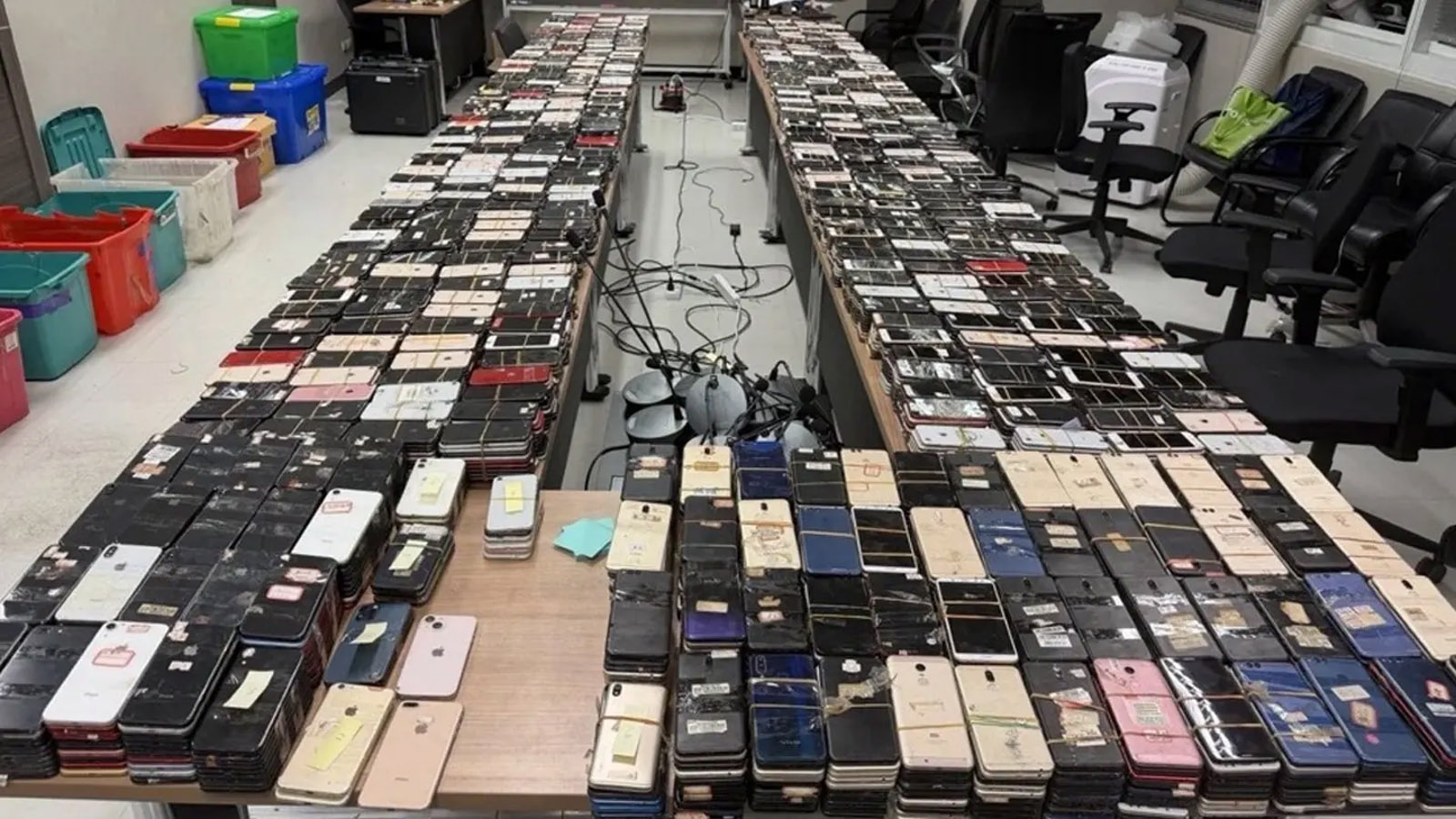
The FBI in Dubai will extradite six of the 275 individuals they and local police detained there to the United States to face federal charges, according to the FBI. The authorities raided nine “scam compounds” in Dubai, each allegedly generating $6 million in fraud proceeds annually.
Cryptocurrency scams in the US reached a record high in 2025
In April, an FBI report revealed that cryptocurrency scams in the U.S. reached a record high in 2025, with reported losses of almost $11.4 billion. According to the FBI, cyber-enabled crimes defrauded Americans of almost $21 billion in 2025, with the costliest complaints involving cryptocurrency and artificial intelligence (AI).
“The FBI’s 2025 Internet Crime Complaint Report highlights the ever-evolving tactics of internet scammers,” the FBI’s Baltimore office wrote on X. “From fake social media profiles to voice cloning and AI-generated content, cyber criminals are evolving.”
The Internet Crime Complaint Center (IC3) received over one million complaints in 2025, up from 859,532 in 2024. The most common complaints were about investment schemes, extortion, and phishing/spoofing.
-

 Health3 minutes ago
Controversial drug delivered rapid relief for severe depression in just hours
-

 Sports10 minutes ago
Thunder lose star Jalen Williams for Western Conference Finals Game 7 as hamstring injury lingers
-

 Technology13 minutes ago
Hyundai to send 25,000 Atlas robots to the US
-
 Business18 minutes ago
After heated debate, California updates key climate limit. Critics say it’s a retreat
-
 Entertainment25 minutes ago
Six Flags bans YouTuber for life for eating chicken nuggets on a roller coaster
-
 Lifestyle27 minutes ago
How to have the best Sunday in L.A., according to Cary Elwes
-
 Politics33 minutes ago
Fire-prone California could lose hundreds of millions of dollars for wildfire prevention
-
 Sports43 minutes ago
Southern California sprinters scorch CIF state prelims, setting up record-chasing finals

