Business
Column: Ted Cruz and Katie Britt claim to be protecting IVF with a new bill. Don't believe them

Ever since the Supreme Court upended reproductive health rights in its 2022 Dobbs decision, antiabortion activists have been trying to make the case that the decision won’t have the dire effect on women and their families that its critics foresaw.
They’ve been wrong, as has been demonstrated by the rising tide of incidents in which pregnant women have been exposed to severe injury or near-death experiences for want of a therapeutic abortion.
But the case also opened the door to legal predicaments throughout the healthcare universe — most recently via a ruling on two cases by the Alabama Supreme Court in February, effectively outlawing in-vitro fertilization in that state.
Opinion polls show that giving people a route to parenthood via IVF is immensely popular, so even conservative lawmakers have scurried to enact laws to protect the method.
Human life cannot be wrongfully destroyed without incurring the wrath of a holy God.
— Alabama Supreme Court Chief Justice Tom Parker, concurring in an anti-IVF decision
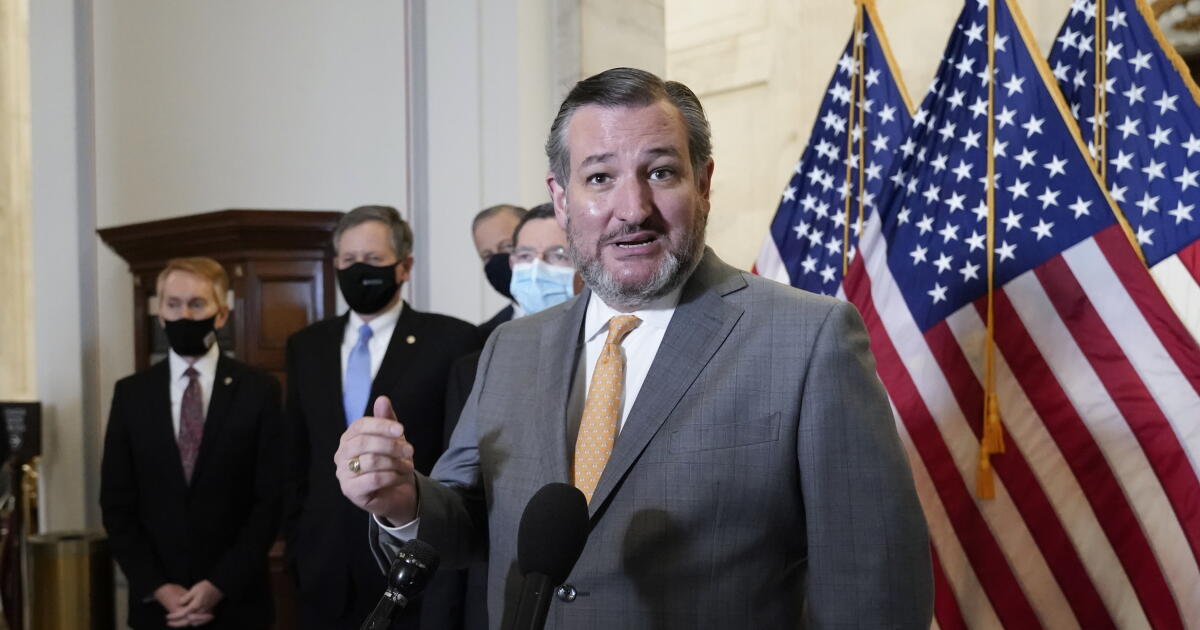
The most recent initiative comes from Republican Sens. Ted Cruz of Texas and Katie Britt of Alabama, who introduced their “IVF Protection Act” on May 20 and have been touting it in the Wall Street Journal, Bloomberg and elsewhere as a measure that “protects both life and IVF.”
Their bill does nothing of the kind. It’s a scam. More on that in a moment.
First, a brief primer on the IVF method. IVF isn’t abortion. Quite the contrary, it’s a means of creating, not terminating, a pregnancy.
But with the Supreme Court signaling via Dobbs and other recent rulings that it won’t interfere with state-level restrictions on reproductive healthcare, legislatures and courts in red states have turned their gunsights on healthcare rights of all varieties. The Alabama Supreme Court reached all the way back to an 1872 law to drive IVF out of the state.
IVF aims to help couples achieve pregnancy when medical issues prevent them from conceiving or they have concerns about heritable genetic mutations that might affect the health of their prospective offspring. Millions of Americans have employed IVF or know couples who have done so. There’s no question about its safety or its efficacy. Celebrities including the Obamas, Paris Hilton and Brooke Shields, and Republican politicians such as Rep. Michelle Steel (R-Seal Beach) have used IVF to conceive.
The procedure begins with the harvesting of unfertilized eggs from a woman’s ovaries. Subsequently, they’re fertilized by sperm from the woman’s partner. A few days later, an embryo — in some cases more than one — is placed in the woman’s uterus. Within another day or two the embryo implants itself in the uterine lining and is allowed to continue gestation normally.
To understand the act of misdirection that Cruz and Britt are pulling off, let’s examine that Alabama Supreme Court decision. The decision says almost nothing about the procedure that most laypersons think is the alpha and omega of IVF — the implantation of manually fertilized embryos into the uterus. To the extent that this process needs regulation, the justices held, that should be left up to the legislature.
But of course there’s more to IVF than that. IVF clinics typically produce multiple embryos but only implant one or two at a time. The idea is to give the parents further options if an implantation fails. In roughly half of all cases, the embryos are subjected to pre-implantation genetic testing to identfy potentially troublesome mutations.
Many couples choose IVF because they’re concerned that one or both prospective parents may be carriers of a genetic mutation that could cause a serious medical condition, and they want to know ahead of time.
“If this genetic mutation is discovered in an embryo, the embryo is usually discarded,” says Joanne Rosen, an expert in public health at Johns Hopkins. She asks whether the Alabama ruling means that “genetic testing should no longer take place because you can’t discard the embryos?”
Also, the thawing and implanting of embryos itself may damage or destroy an embryo. Typically, those embryos are discarded.
The Alabama decision was concerned almost entirely with that stage of the process — specifically with the legal status of the unused or discarded embryos. The court ruled that they fell within the protection of the state’s 1872 Wrongful Death of a Minor Act — largely because that antique law didn’t explicitly provide “an exception … for extrauterine children,” as Justice Jay Mitchell wrote for the court majority.
Indeed, the legal quandary that prompted Alabama’s IVF clinics to shut down after the ruling wasn’t that their right to implant embryos was now in question — it was their potential liability for the treatment of the unused embryos.
This isn’t a trivial issue. By some estimates, more than 1 million embryos are currently in cryogenic storage across the U.S. The Alabama ruling, if it percolates nationwide, “raises a huge question about what the obligations are for these frozen embryos,” Rosen said on the Johns Hopkins website. “Does this mean that they cannot be destroyed and have to be preserved into perpetuity?”
That’s what makes the Cruz/Britt measure so slippery. It purports to guarantee Americans access to in vitro fertilization by forbidding states to outlaw it, but defines IVF simply as “the practice whereby eggs are collected from ovaries and manually fertilized by sperm, for later placement inside of a uterus.”
Nothing there about how to treat the stored embryos or the legal consequences if any are injured in the process of fertilization or placement. Their proposal, moreover, says that nothing can block states from “implementing health and safety standards regarding the practice of in vitro fertilization.”
Abortion rights advocates will recognize that provision as a poisoned chalice, because even before the Supreme Court overturned Roe vs. Wade with its Dobbs ruling, numerous antiabortion states were imposing onerous regulations on abortion clinics in the name of “health and safety” — everything from dictating corridor widths to requiring that providers have admitting privileges at local hospitals.
These pernicious regulations are known as “TRAP laws,” for “targeted restrictions on abortion providers.” They’re “often pushed by anti-abortion politicians under the guise of ‘women’s health,’” in the words of Planned Parenthood, but their real purpose “is to shut down abortion providers and make it more difficult for people to access abortion.” In their bill, Cruz and Britt explicitly encourage more of this in relation to IVF.
One more point: The bill’s guarantee of rights even to its narrowly defined IVF is nothing like absolute. It’s tied to a state’s participation in Medicaid — states would be required to keep IVF legal as a condition of their receiving Medicaid payments.
How big a cudgel is this? In some states, almost none at all. We know this because 10 GOP-led states, mostly in the deep South, still have not expanded Medicaid under the Affordable Care Act, even though the federal government pays 90% of the cost of covering the eligible residents.
In those states, an estimated 1.5 million residents fall into the “coverage gap” — their incomes are too low to be eligible for ACA subsidies, but even though they live below the federal poverty line, their incomes are too high to be eligible for Medicaid in their states.
Those states include the home states of Britt and Cruz: Alabama (174,000 in the coverage gap) and Texas (1.2 million). It’s not hard to imagine their legislators voting to turn away Medicaid services for their poorest residents in order to preserve their status as bulwarks against reproductive health rights for women and couples.
The reaction of congressional Republicans to a proposal that would actually have protected IVF providers and patients from legal peril gives the game away. That measure, the “Access to Family Building Act,” was introduced by Sen. Tammy Duckworth (D-Ill.), who had her two children with the help of IVF.
Duckworth’s bill would have given Americans a legal right to access IVF and empowered patients and the Department of Justice to sue any state or state official who infringed that right. More to the point, it explicitly granted IVF patients “all rights regarding the use or disposition of reproductive genetic materials,” which would preempt any state from undertaking the same interference with the process endorsed by the Alabama court.
Republicans blocked Duckworth’s bill in the Senate. Asked about that on Bloomberg TV, Cruz said that her bill “seeks to back-door in broader abortion legislation.” This is just arrant claptrap. Duckworth’s measure has nothing to do with abortion; it deals explicitly and exclusively with “assisted reproductive technology” as it has been defined in federal law since 1992. Cruz’s beef with it plainly is that it is devoid of the anti-IVF loopholes that he and Britt wrote into their bill.
The cases before the Alabama Supreme Court were brought by two couples whose embryos were accidentally destroyed by an intruder at the Mobile clinic where they were frozen and stored. (Both couples had had healthy babies conceived via IVF.) The court made clear in its 8-1 decision that its rationale had nothing to do with science, and much more to do with religion.
“The theologically based view of the sanctity of life adopted by the People of Alabama,” wrote Chief Justice Tom Parker in a concurring opinion, is that “human life cannot be wrongfully destroyed without incurring the wrath of a holy God.”
The justices adopted the doctrine of legal “personhood” beloved of the antiabortion camp. “All members of this Court,” Mitchell wrote, “agree that an unborn child is a genetically unique human being whose life begins at fertilization and ends at death.”
As for how the 1872 law applies, the court employed the “originalist” doctrine largely crafted by the late Supreme Court Justice Antonin Scalia, who maintained that a law must be interpreted the way its original drafters understood it to mean. Scalia is cited 10 times in the Alabama decision, but in this case the justices squeezed “originalism” until it screamed for mercy.
“Unborn children are ‘children’ under the Act,” Mitchell wrote, “without exception based on developmental stage, physical location, or any other ancillary characteristic.” Yet the idea that 19th century lawmakers contemplated that unborn children could survive outside the womb as were the frozen embryos, and granted them legal rights is plainly absurd. The birth of Louise Brown, the very first IVF baby, was in 1978.
The sole dissenter on the Alabama court, Greg Cook, warned that “the main opinion’s holding almost certainly ends the creation of frozen embryos through in vitro fertilization in Alabama.” His concerns were dismissed by his colleagues in the majority — his “prediction does not seem to be well-founded,” sniffed Parker. Yet the IVF centers serving the bulk of patients in the state shut down in the immediate wake of the decision.
After Gov. Kay Ivey signed a protective law in March purporting to give IVF providers legal immunity, two resumed operations, but not the Mobile clinic connected with the case. And many experts are unsure whether the new law is as effective as its sponsors claim.
That’s the legacy of the U.S. Supreme Court’s Dobbs decision. Antiabortion agitators have signaled that they’ll use any means they can persuade religiously inclined judges to accept, even outlawing contraceptives. Granting “personhood” to cryogenically frozen embryos that can’t be seen without a microscope is just one step on the path to the legal chaos they believe works in their favor.
In their Wall Street Journal op-ed, Cruz and Britt shed crocodile tears over the fact that, following the Alabama decision, “confusion and misinformation has spread, inflamed by partisan commentary.” This was a majestically dishonest take. Their own bill demonstrates that “partisan commentary” had nothing to do with the confusion. The Alabama decision was its cause. Their own bill would only make things worse, and you can be sure that they know it.


A proposal to build a truck parking lot near the Port of Los Angeles is facing backlash from nearby residents.
Port officials say the parking lot would provide much-needed designated space for cargo trucks waiting to pick up loads from the port, helping to ease congestion in the area.
But some neighborhood groups say the proposed staging area would only increase traffic and air pollution in Wilmington.
Gina Martinez, chair of the executive board of the Wilmington Neighborhood Council, said the land in question provides a vital buffer between port activity and residential communities.
“It’s been a bad deal from the beginning,” Martinez said in an interview. “We want open space because we’ve been promised for decades a clear separation from port activities.”
The Los Angeles Harbor Commission signed off on the project in a meeting on June 11, but it was vetoed by the Los Angeles City Council this week.
The veto does not permanently ban the project, but allows for more time to discuss the implications for stakeholders and the community.
Los Angeles City Councilmember Tim McOsker, who introduced a special motion to halt the truck plans, said he was acting on behalf of community residents. McOsker represents Harbor City, Harbor Gateway, San Pedro, Watts, and Wilmington.
“Generally, folks in the community would say, ‘we don’t want the port industrial properties to creep into neighborhoods. We want them to retract or hold the line,’” McOsker told The Times.
The John S. Gibson Truck & Chassis Parking Lot, which was originally proposed in 2023 by the Port of Los Angeles, would cover 18 acres of privately owned land and include 393 truck and chassis parking stalls.
The land is currently designated as open space, though it’s undeveloped and not available for any recreational use. The completion of the parking lot would require a Port of Los Angeles master plan amendment to switch the land’s designation from open space to maritime support.
Martinez said the land should have never been sold to private developers because it’s included in the California State Lands Commission’s tidelands trust, which says certain land near the ocean must be available for public enjoyment.
Building a truck and chassis waiting lot on that space would increase congestion on the freeways and in Wilmington neighborhoods, add particulate matter into the air and increase already-problematic noise pollution from the port, she said.
“Of all the things Wilmington needs, it is not another parking lot for trucks,” Martinez said at a Los Angeles Harbor Commission meeting earlier this month. “It is not the responsibility of our community to take on every single truck that runs through the port.”
At the same meeting, Noel Gould of the Coastal San Pedro Neighborhood Council said the council is supporting the project after working closely with the developers to reach compromises.
The parking lot would prevent port-bound trucks from idling near schools and parks, he said. The lot would also include landscaping with native coastal plants.
“We didn’t start out in a position of support, but we worked very closely with them to get to a place where we felt it was really something that would benefit the community,” Gould said at the meeting.
In an interview, McOsker said there is already space set aside for trucks to wait to access the port.
At the Los Angeles City Council meeting Wednesday, the council unanimously approved what’s known as a 245 motion, which gives the council authority to temporarily veto certain actions taken by city boards and commissions.
“The 245 gives us the opportunity to meet and confer and see if there are revisions or additions or mitigation that can better protect the full community,” McOsker said.
The motion sends the project proposal back to the Harbor Commission for further review.
Supporters of the parking lot say the land is currently uninhabited and requires consistent police presence to deter criminal activities.
The Port of Los Angeles also clashed with coastal communities last year over the possible raising of the Vincent Thomas Bridge. The bridge was already slated to be redecked by the California Department of Transportation, but Port of Los Angeles executive director Gene Seroka proposed raising the bridge height as well.
Raising the bridge would allow larger cargo ships to pass under its deck, helping create jobs and keep the port relevant, Seroka said at the time. Most painfully for local commuters and businesses, it would mean the bridge will be closed for around 28 months rather than the originally planned 16 months.
Last December, the California State Transportation agency rejected the proposal to raise the bridge.
Business
Commentary: Puncturing the myth of Alan Greenspan, whose policies gave us the Great Recession

Noah Cross, the archvillain of the movie “Chinatown,” had the definitive line on how old age brings respectability. “‘Course I’m respectable,” he tells Jake Gittes. “I’m old. Politicians, ugly buildings and whores all get respectable if they last long enough.”
I wouldn’t necessarily slot former Federal Reserve Chairman Alan Greenspan into any of those categories, but the general reaction to his death Monday at age 100 puts the lie to Cross’ observation.
As much as he was revered during his nearly two decades as Fed chairman for protecting the stock market from a series of crashes and near-crashes, his obituaries take a more measured view. The headline on the Wall Street Journal’s main take on his legacy is: “The Myth of Alan Greenspan as ‘The Maestro.’”
Stripped of its academic jargon, the welfare state is nothing more than a mechanism by which governments confiscate the wealth of the productive members of a society to support a wide variety of welfare schemes.
— Alan Greenspan, writing as an Ayn Rand cultist (1966)
The Journal blames Greenspan for fostering “the great credit mania of the mid-2000s” and observes that “the music stopped in 2008, producing the panic that did so much harm to the free-market economy that Greenspan promoted.” That was the Great Recession, which started with the 2008 crash in the housing market and persisted into 2012.
That is from a publication that was more or less in accord with Greenspan’s goals of less regulation and lower taxes. His contemporary adversaries were harsher. “R.I.P. Alan Greenspan: You were charming, thoughtful, powerful, and wrong,” writes Robert Reich, who served as Bill Clinton’s Labor secretary while Greenspan led the Fed.
The Great Recession, “in which in which millions of Americans lost their jobs, their savings, and even their homes — resulted from the deregulation of Wall Street that Greenspan advocated,” Reich wrote. But he had to admit that Greenspan’s “iron grip” over Fed policy forced Clinton “to do exactly what Greenspan wanted — which was to reduce the federal budget deficit and thereby destroy much of the agenda Clinton ran on.”
It would be unfair to depict Greenspan’s influence as invariably pernicious. Social Security advocates still think highly of his work chairing the so-called Greenspan Commission of 1982-1983, which developed a series of changes in benefits and revenues for that program to address a looming, immediate fiscal crisis.
Greenspan led the bipartisan panel “masterfully,” recalls William J. Arnone, the former chief executive of the National Academy of Social Insurance, who witnessed its deliberations as a consultant to the New York Citizens Committee on Aging.
Before the commission’s formation, “Republicans and Democrats fiercely disagreed over underlying data,” Arnone told me. “Greenspan used his expertise as an economic empiricist to convince both sides to agree on a singular, shared set of actuarial facts. Quite an accomplishment.”
To the public, Greenspan was known for his impenetrably cryptic speaking style and for the relative tranquility in the American economy during his tenure, which has been termed “the great moderation” despite recurrent short-term crises.
Greenspan was the second-longest serving Fed chair. But he may have had the weirdest background. Having grown up in an affluent New York household, he was talented enough on clarinet and saxophone to have sat in with Stan Getz’s band and attended Juilliard for a time.
He began his economics education in 1945 at New York University and got as far as a master’s degree, but by then he was already working on Wall Street, where his skill at financial analysis propelled him toward the top echelons of high finance.
Somewhere along the line he fell in with the arch-libertarian Ayn Rand, becoming part of her inner circle of economic cultists. Referring to his dour mien and predilection for charcoal gray garb, Rand called him her “undertaker.”
Greenspan provided a veneer of rigorous economic analysis for Rand’s ideology, which lionized the rich and described them as fighting a ferocious battle with the lazy and grasping hoi polloi. He contributed three essays to her 1966 anthology “Capitalism: The Unknown Ideal.”
His association with Rand was seldom highlighted during his Fed tenure, but even a casual reading of those essays exposes the Randian underpinnings — and the Randian self-contradictions — of his Fed policies.
One essay defended the gold standard, which had been discredited in the 1930s. Greenspan blamed “welfare-state advocates” for the developed world’s abandonment of the gold standard.
He wrote, “Stripped of its academic jargon, the welfare state is nothing more than a mechanism by which governments confiscate the wealth of the productive members of a society to support a wide variety of welfare schemes…. Gold stands in the way of this insidious process. It stands as a protector of property rights” — language that could have come right out of the text of Rand’s “Atlas Shrugged.”
Another essay called for the dismantling of government regulators such as the Food and Drug Administration and the Securities and Exchange Commission. Greenspan’s argument was that the consumer was adequately protected by the businessman’s profit-seeking, which in turn depended on maintaining a reputation for honesty and fair-dealing.
For drug companies, he wrote, “the loss of reputation through the sale of a shoddy or dangerous product would sharply reduce the market value of the drug company.” The same goes for securities brokers — “The slightest doubt as to the trustworthiness of a broker’s word or commitment would put him out of business overnight.”
One might ask what inspired Greenspan’s faith in, well, the faithfulness of business enterprises, given centuries of proof otherwise. Anyway, he refuted his own argument. “The guiding purpose of the government regulator is to prevent rather than to create something,” he wrote. “He gets no credit if a new miraculous drug is discovered by drug company scientists; he does if he bans thalidomide.”
He didn’t bother to question why his trustworthy drug companies had tried to market as a morning-sickness drug in the U.S. a formulation that already had been shown to produce severe birth defects in the children of mothers who took it overseas. (American families were largely saved from this tragedy by Frances Oldham Kelsey, who blocked its importation as an official of, yes, the FDA.)
To stock market investors, Greenspan’s chief legacy was the “Greenspan Put.” This was an implicit commitment by the Fed to counteract sharp declines in the market by pumping liquidity into the economy through the mass purchase of Treasury bonds.
The term comes from the options market, in which a “put” gives the holder the right to sell the underlying stock at a set price in the future, even if the market price has fallen below that price. In effect, it establishes a floor to the investor’s losses in a downturn.
The Greenspan put first appeared on Oct. 19, 1987, when the stock market suffered its greatest one-day percentage crash ever, 20.47%. Greenspan had been in office for only a few weeks, but his Fed issued a statement promising to inject liquidity into the system and cut interest rates. “We will back you,” he told bankers in a series of phone calls.
In truth, Greenspan had no legal authority to make that pledge. In any event, the market recovered the next day, and the Fed’s image as a willing bulwark against market declines was born.
The problem was that the idea that the Fed would act in a market crisis encouraged ever more flagrant risk-taking on Wall Street.
The harvest was a series of crises, notably the 1998 collapse of the hedge fund Long Term Capital Management, which was founded by Nobel economics laureates to pursue abstruse arbitrage trades. It was brought low by market moves that confounded their projections. LTCM was so deeply embedded in Wall Street trading it had to be saved with a $3.6-billion bailout the Fed orchestrated.
The Greenspan put, like so many other such grand schemes, worked well right up until it stopped working. That moment came in 2008, with a crash and a long, throbbing hangover.
Testifying to Congress in 2008, Greenspan acknowledged that maybe self-regulation, that watchword of his economic worldview, didn’t work.
“I made a mistake in presuming that the self-interest of organizations, specifically banks and others, were such that they were best capable of protecting their own shareholders and their equity in the firms…. Something which looked to be a very solid edifice, and, indeed a critical pillar to market competition and free markets, did break down.”
That, he said, “shocked me.” It was a rare admission of blame by a man who, as my former colleagues Thomas S. Mulligan and Don Lee reported in their Greenspan obituary, had told CNBC a few months earlier that he had “no regrets” about his policies.

San José tech company Cisco plans to cut 471 workers in three Bay Area offices, according to layoff notices filed to a state agency.
The company, which provides networking devices along with other services including video conferencing and cybersecurity, told employees in May that it was going to cut fewer than 4,000 jobs or less than 5% of its workforce.
The notices, processed by the California Employment Development Department this week, provide more details about what jobs Cisco will cut in California.
The artificial-intelligence boom has fueled more investments in data centers, commercial real estate and other areas. But advancements in AI tools have also been reshaping jobs, especially in Silicon Valley, the epicenter of the tech industry.
Cisco’s layoffs in California impacted workers in its San José, Milpitas and San Francisco offices. The company cut a variety of roles in software engineering, product management, design, business operations and other areas, the notices show.
Cisco said it didn’t have anything additional to share beyond what it published in May about its restructuring plans.
Tech companies have been citing various reasons for layoffs including prioritizing investments in artificial intelligence. As workers use AI-powered tools to generate code, words and other content, some executives have said they don’t need as many employees. There’s also skepticism, though, about how big a role AI is playing at companies with a large amount of workers globally.
From January to May, U.S. technology companies announced 123,653 cuts, up 66% from the same period in 2025, according to a June report from global outplacement and executive coaching firm Challenger, Gray & Christmas. The firm said that AI was the leading reason companies cited for cuts but it still isn’t the “jobpocalypse some predicted.”
Meta, Snap, Block, Oracle and Amazon are among tech companies that have announced mass layoffs this year.
Cisco markets itself as a company that “provides critical infrastructure for the AI era” and has benefited from the AI boom, reaching a record revenue of $15.8 billion in the third quarter this year. The company’s net income grew 35% to $3.4 billion year-over-year during that quarter.
Cisco Chief Executive Chuck Robbins told employees in May it’s cutting costs in certain areas while prioritizing other investments. That includes employee use of AI across the company.
He said Cisco will be among winners in the AI era, but that means “making hard decisions — about where we invest, how we’re organized, and how our cost structure reflects the opportunity in front of us.”
As of July 2025, Cisco had roughly 86,200 employees, according to its annual report.
-

 New York49 minutes ago
Metropolitan Diary Challenge Day 1: What Is Your N.Y. Story?
-

 Los Angeles, Ca56 minutes ago
LASD releases video of man shot by deputy after allegedly charging them with knife
-

 Detroit, MI1 hour ago
Rick Mahorn returns to coaching Detroit basketball with BIG3 Amps
-

 San Francisco, CA1 hour ago
Suspect arrested after shooting near San Francisco Pride events, police say
-

 Dallas, TX1 hour ago
Dallas shooting injures 2 as police search for suspect
-

 Miami, FL2 hours ago
Colombia wins Group K after 0-0 draw with Portugal in Miami Stadium; both teams advance to World Cup knockouts
-

 Boston, MA2 hours ago
Beyond the frame: ‘Where’s Boston?’ revisited through new oral histories – Boston News, Weather, Sports | WHDH 7News
-

 Denver, CO2 hours ago
Arizona Cardinals will face Denver Broncos QB Bo Nix for 1st time

