South
The Grits Belt is an unmarked but undeniable demarcation of American culinary cultures

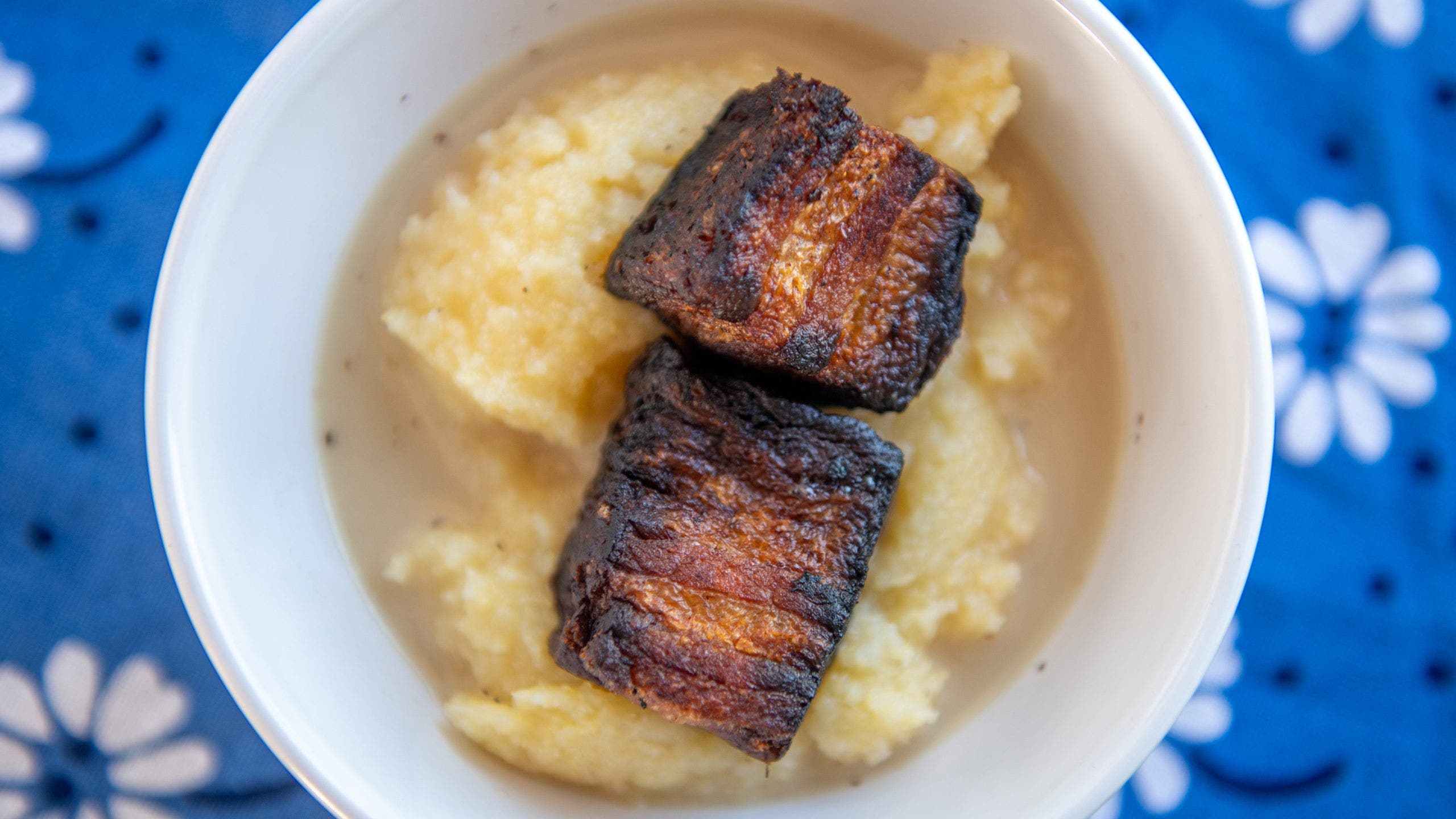
The United States continues to be a house divided. The so-called Grits Belt lays it bare.
Political borders are well-defined, the line on the map matching the “welcome to” sign on the road.
On the other hand, cultural borders are undefined and unmarked — yet their existence is undeniable. The Grits Belt, largely a phenomenon in the eastern half of the country, is a perfect example.
JIMMY DEAN, COUNTRY CROONER AND HOMETOWN HERO, IS ALSO AMERICA’S PORK PRINCE: ‘ONE HELL OF A MAN’
It does not appear on a map, AAA guide or smartphone app. Yet it’s as obvious as the delicious joy that comes with eating the creamy ground corn drenched in butter and love.
“The Grits Belt is a real geographic phenomenon,” Matthew Zook, a professor of geography at the University of Kentucky, told Fox News Digital.
Shrimp and Grits, made with Andouille Sausage Tomato Gravy and Crispy Garlic, at Benne On Eagle in Asheville, North Carolina. (Tim Robison for The Washington Post via Getty Images)
“But like all cultures, it has porous and diffuse borders.”
The Grits Belt separates an America in which grits are at best a novelty from an America in which grits are gloriously abundant.
WASHINGTON PASTOR REVEALS WORDS OF HOPE, FAITH AND STRENGTH FOR KATE MIDDLETON: ‘GOD IS WITH YOU’
Grits are rare in New England, the Mid-Atlantic and Midwest.
But during a drive south, New Yorkers will, without notice, enter the Grits Belt.
They will know only when they pull over at the country café and find grits on the menu with their sunny sides, shrimp or fried chicken.
University of Kentucky professor Matthew Zook, and other scholars, used social media geotags to map the Grits Belt — which they published on the website floatingsheep.org. (Courtesy Matthew Zook/Floatingsheep.org)
Road-trippers from South Carolina, conversely, will at some undetermined point leave the Grits Belt.
They will know only when they look at a menu and find that meals come with some sort of potatoes: home fries with their eggs, French fries with fried fish, mashed potatoes with chicken dinner.
“A relatively small number of coastal localities in the Low Country … have the strongest connection to grits.”
Zook and other scholars mapped the Grits Belt in 2014 on the website floatingsheep.org, by surveying geotagged posts on X (formerly known as Twitter).
“The South in general demonstrates a general preference for grits over the rest of the country,” they wrote.
Beef with grits served on the farm, Conowingo, Maryland. (Edwin Remsberg/VWPics/Universal Images Group via Getty Images)
But, they noted, it “is actually a relatively small number of coastal localities in the Low Country that have the strongest connection to grits through social media.”
The Southeast is the heart of the Grits Belt, said Zook.
But “it shifts as people travel and preferences change.”
NASHVILLE HOT CHICKEN CONQUERS AMERICA: TENNESSEE TRADITION HAS EXPLODED IN POPULARITY
Erin Byers Murray of Nashville, Tennessee is the author of “Grits: A Cultural and Culinary Journey Through the South” and editor-in-chief of The Local Palate, a South Carolina magazine devoted to Southern food culture.
“I don’t know where the line is, but I think it’s pretty firmly in Virginia,” she said, while agreeing that the border of the Grits Belt moves with time, tastes and trends.
Frank Stitt, owner and executive chef of Highlands Bar and Grill in Birmingham, Alabama. He’s one of the high-profile chefs currently devoted to Southern cuisine and to elevating humble grits. (Maranie Staab/Bloomberg via Getty Images)
She is far more certain about the history of grits — and its gritty name.
Corn is native to the Western Hemisphere and its ground, softened form was a staple of the Native American diet.
CLICK HERE TO GET THE FOX NEWS APP
European settlers arriving in coastal Virginia in the 1630s, she notes, adopted it from indigenous culinary culture. The texture of the corn porridge was similar to the grist mashed from grains known to Europeans.
The name quickly evolved into grits.
The Breakfast Klub’s catfish and grits with sunny side up eggs and biskit. Photographed on Monday, Aug. 15, 2016, in Houston. (Nick de la Torre/Houston Chronicle via Getty Images)
“This moment launched the official archive of grits: written accounts, and trackable moments of a now named dish that could be etched into historical records,” Murray writes in her book, “Grits.”
“Through that naming process, grits, the term and the dish, were then permanently tied to what was about to become the southeastern United States.”
CLICK HERE TO SIGN UP FOR OUR LIFESTYLE NEWSLETTER
She listed several high-profile chefs devoted to Southern cuisine and to elevating humble grits: Sean Brock in Nashville, Frank Stitt in Birmingham, Alabama, and Dominic Lee in New Orleans, Louisiana.
“These are the folks who are doing grits fancy right now,” said Murray.
For more Lifestyle articles, visit www.foxnews.com/lifestyle.


Klyde Warren Park, a top attraction in Dallas for more than a decade, is growing. Park and city leaders revealed details about the project on Monday morning, which will expand the park to 7.1 acres.
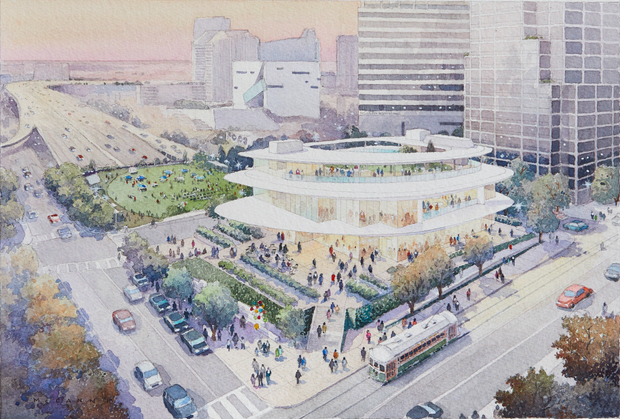
The park, which opened in 2012, connects Uptown Dallas with the Arts District over a recessed portion of Woodall Rodgers Freeway. The construction will span west to cover the remaining portion of the freeway, totaling 1.7 acres of new park space, according to the plans released Monday.
It will feature the Jacobs Lawn, a 37,000-square-foot green space that can be used for all types of community gatherings, performances and markets. In the winter, the lawn will feature an ice rink. Next to the lawn, the Overlook will give visitors a view of the highway traffic below them.
The expansion will also include a two-story pavilion with 24,000 square feet of climate-controlled event space, plus a rooftop terrace.
“This expansion isn’t simply about adding acreage. It’s an investment in Dallas, an investment in the community and an investment in future generations,” Klyde Warren Park chairman Jody Grant said in a statement.
“The expansion of this Park is exactly the kind of transformative investment we must continue to make throughout Dallas’s urban core. It will add new green space for residents to enjoy while driving continued economic growth, connecting our communities, and enhancing the quality of life that makes Dallas a destination for families, businesses, and visitors from around the world,” Dallas Mayor Eric Johnson said in a statement.
Construction firm Archer Western won a competitive bid to work on the project, the same firm that built the first phase of the park.
Construction will begin by the end of the year, and is expected to take two years to complete.

A person was hospitalized after a fire broke out at an apartment building in North Miami Beach on Monday, officials said.
The fire happened at the 7-story building at 16850 S. Glades Drive.
Miami-Dade Fire Rescue officials said crews found smoke and flames coming from a unit on the sixth floor.
Firefighters worked to extinguish the flames and were able to bring it under control before checking to see if other units were damaged.
Officials said two patients were assessed including one who was taken to a local hospital for treatment.
No other details were immediately known.
Check back with NBC6 for updates.

Here’s a closer look at Atlanta’s newest eateries, drinking spots, hotels, conference areas, private rooms, and other spaces available for events this summer. The new and renovated Atlanta-area venues are available for corporate parties, weddings, fundraisers, outdoor functions, business dinners, team-building activities, conferences, meetings, and more.
Hotel Phoenix
Rendering: Courtesy of Green Olive Media
One of downtown Atlanta’s most anticipated openings, Hotel Phoenix brings 292 guest rooms, 15 suites, and more than 15,000 square feet of indoor and outdoor event space to the rapidly evolving Centennial Yards district, just in time for FIFA festivities. Opening in December 2025, the 18-story property sits steps from Mercedes-Benz Stadium and offers floor-to-ceiling skyline views throughout. For planners, the headline is the flexible event footprint, anchored by an 8,214-square-foot ballroom that can be separated into three spaces by airwalls. The indoor flexibility is complemented by outdoor gathering spaces, which debuted this spring, including a resort-style pool deck, event lawn, and terrace lounge. With modern industrial design, built-in AV capabilities, and easy access to Atlanta’s sports and entertainment corridor, Hotel Phoenix is poised to become a go-to destination for conferences, galas, receptions, and high-energy corporate events.
JW Marriott Atlanta Downtown

Photo: Courtesy of JW Marriott Atlanta Downtown
Following a complete transformation of the former W Atlanta Downtown, JW Marriott Atlanta Downtown debuted in May with 237 guest rooms and nearly 10,000 square feet of refreshed meeting and event space. The property’s redesigned venues include conference rooms, banquet spaces, prefunction areas, and JW Marriott’s signature Blank Canvas Room, a gallery-style venue featuring white walls and wood floors designed to be fully customized for any event vision. An elevated boardroom, one of the city’s largest executive lounges, wellness-focused guest accommodations, and a rooftop pool bar add extra appeal for executive retreats and multi-day conferences. For planners seeking a luxury downtown option with a fresh new identity, this one deserves a spot on the shortlist.
Cosm Atlanta
Photo: Courtesy of Cosm Atlanta
If your attendees have already seen every ballroom in Atlanta, introduce them to Cosm. The new 70,000-square-foot venue in Centennial Yards is anchored by an 87-foot-diameter LED dome that delivers immersive “shared reality” experiences unlike anything currently available in the meetings market. The three-level venue accommodates up to 2,000 guests across three distinct event environments. The Dome seats up to 500 for screenings, presentations, and private experiences beneath the massive 12K+ LED display. The Hall offers a two-story event space with theater seating for 500, while The Deck provides outdoor reception space for up to 400 guests overlooking Mercedes-Benz Stadium and State Farm Arena. From product launches and media events to client entertainment and branded activations, Cosm offers planners a built-in wow factor that requires very little additional dressing.
SKOL Brewing Company & Valhalla Gaming Lounge
Photo: Courtesy of Caren West PR
Already known for its Nordic-inspired brewpub atmosphere inside downtown Atlanta’s historic 200 Peachtree building, SKOL Brewing Company is leveling up with the addition of Valhalla Gaming Lounge, a 30,000-square-foot expansion designed for immersive group experiences. Combined with SKOL’s existing 5,000-square-foot footprint, the venue creates a sprawling entertainment destination packed with more than 40 interactive attractions, including simulators, bocce courts, billiards, darts, arcade games, and experiential gaming zones. Private event options are already available, making this a compelling choice for team-building programs, client entertainment, conference after-parties, and events that need a healthy dose of friendly competition.
Thrillz Atlanta
Photo: Courtesy of Thrillz Atlanta & Brown Bag Marketing
Forget trust falls. Thrillz Atlanta is bringing adrenaline-fueled team building to the city with a massive indoor adventure park featuring more than 20 attractions under one roof. Designed for group outings, corporate events, and large-scale celebrations, the venue combines amusement rides, virtual reality experiences, laser tag, duckpin bowling, obstacle courses, arcade gaming, and towering slide attractions reaching up to 40 feet high. Ten themed private event rooms, dedicated event coordinators, and full food-and-beverage service make planning surprisingly turnkey. For companies looking to inject some serious energy into meetings, incentive programs, or employee events, Thrillz offers an experience attendees won’t forget.
You42 Studios
Photo: Courtesy of You42 Studios
Part content campus, part entertainment complex, part event venue, You42 Studios is one of the most unconventional new event destinations to open in metro Atlanta. Located in Roswell, the 36,000-square-foot facility combines creator studios, production suites, restaurants, nightlife concepts, live entertainment, and flexible event space under one roof. For planners, versatility is the selling point. The campus includes a 3,800-square-foot event venue, 11 professional content-creation studios, podcast suites, themed production sets, and The Block Theater, featuring a 30-by-18-foot LED screen for presentations, screenings, and live performances. Add multiple food-and-beverage concepts led by celebrity chef Katsuji Tanabe, and You42 becomes a one-stop shop for conferences, content-driven events, brand launches, influencer programs, and corporate gatherings looking for something far more memorable than a hotel meeting room.
Peachtree Sporting Club & American Dive
Photo: Zachary Bobo
Downtown Atlanta’s new 207 Peachtree development is betting big on experiential events. The 45,000-square-foot entertainment, dining, and event destination opened this month with Peachtree Sporting Club, an upscale sports bar concept, and American Dive, a live music venue serving Southern barbecue in a nostalgic dive-bar setting. For planners looking to move beyond traditional ballrooms, the venue offers built-in energy, multiple environments under one roof, and the flexibility to host everything from watch parties and networking receptions to buyouts and branded activations. It’s the kind of place where attendees can swap conference badges for cocktails without ever leaving the venue.
-

 Los Angeles, Ca4 minutes ago
Stolen Sea Scouts boat found in Marina del Rey, suspect arrested
-

 Detroit, MI26 minutes ago
Michigan House passes bill to restrict big investors from amassing single-family homes
-

 San Francisco, CA34 minutes ago
San Francisco rolls out heightened security measures ahead of World Cup knockout match, 4th of July
-

 Dallas, TX41 minutes ago
Klyde Warren Park reveals expansion plans, construction timeline
-

 Miami, FL44 minutes ago
Person hospitalized after fire breaks out at North Miami Beach apartment building
-

 Boston, MA49 minutes ago
Scottish soccer fan who died in Boston was ‘Tartan Army to his core,’ fundraising page says – The Boston Globe
-

 Denver, CO56 minutes ago
Nuggets decline Jalen Pickett’s team option for 2026-27 season, sources say
-

 San Diego, CA59 minutes ago
Former City Manager, Jack McGrory: Straight Talk About San Diego, Part 2

