Midwest
Minneapolis Police Officer Jamal Mitchell fatally ‘ambushed’ while responding to double shooting: officials

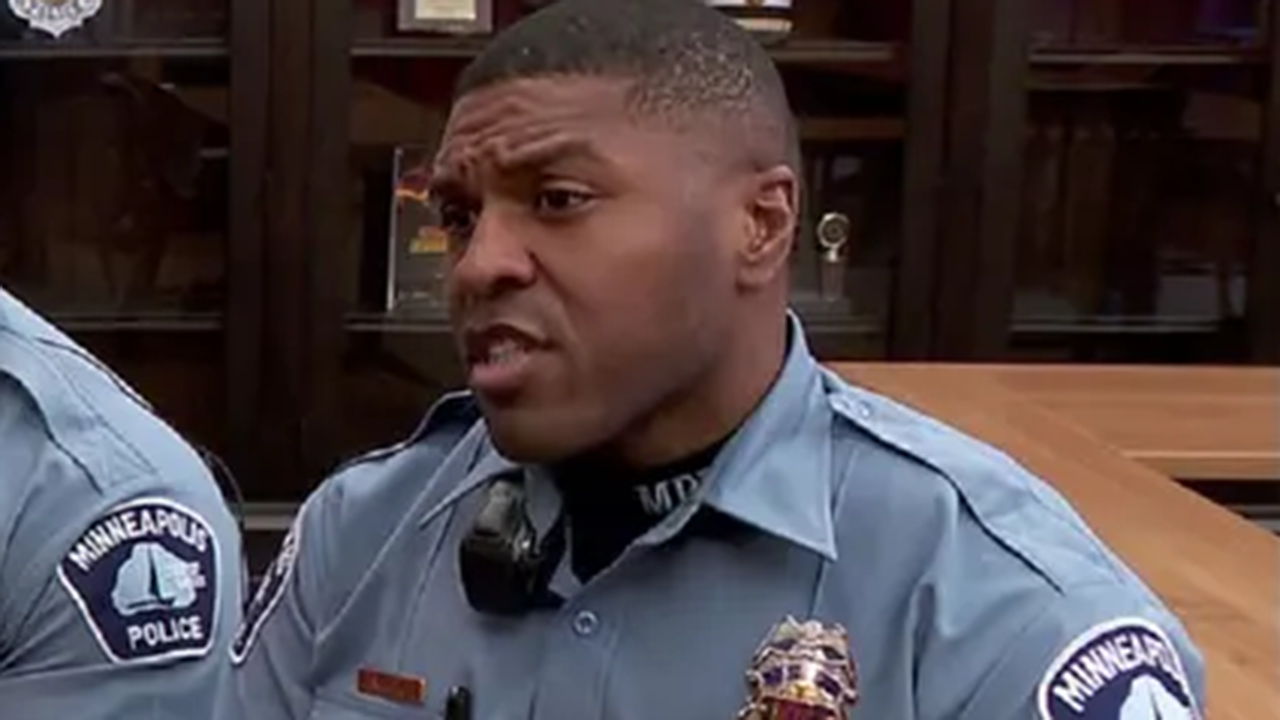
The Minneapolis Police Department is mourning the loss Friday of a “courageous hero” police officer who officials say was fatally “ambushed” while responding to the scene of a double shooting.
Officer Jamal Mitchell was struck with gunfire Thursday after approaching an apartment complex and spotting individuals said to be injured and in need of medical care, according to Minnesota Bureau of Criminal Apprehension Superintendent Drew Evans.
“As he was attempting to provide medical assistance, he was ambushed,” Evans said. “Officer Mitchell was attempting to assist the individual who shot him. It happened very fast and that he ambushed him.”
Evans said a second officer arrived shortly after Mitchell was shot and exchanged gunfire with the suspect, who ultimately was pronounced dead at the scene.
SUSPECT, BYSTANDER INJURED IN POLICE SHOOTOUT AT CINCINNATI-AREA GROCERY STORE
Minneapolis Police Officer Jamal Mitchell has died after being “ambushed” while responding to the scene of a double shooting Thursday, officials say. (KMSP)
Minneapolis Assistant Police Chief Katie Blackwell told reporters Thursday that Mitchell died at a hospital despite efforts to save him. The second officer involved in the gunfight suffered non-life-threatening injuries, she said.
Evans added that two other people were shot during the chaos – an innocent bystander who is now in critical condition, and a firefighter.
When investigators arrived at the apartment that sparked the initial call for response, about two blocks away from where Mitchell was targeted, they found a deceased person and another individual suffering from gunshot wounds.
Law enforcement officers salute the flag-draped remains of fallen Minneapolis police Officer Jamal Mitchell as he is escorted to a waiting medical examiner’s vehicle outside Hennepin County Medical Center in Minneapolis, Minnesota, on Thursday, May 30. (Aaron Lavinsky/Star Tribune via AP)
Minneapolis Mayor Jacob Frey described Mitchell – who he says was engaged and was a father – as a “courageous hero” who “would run towards danger when the rest of us would run in the other direction.”
“The city of Minneapolis lost a hero in police officer Jamal Mitchell,” Frey said Thursday. “This officer gave the ultimate sacrifice to protect and save the lives of others. His life, his service and his name will forever be remembered in the city of Minneapolis.”
NEW LOUISIANA LAW CRIMINALIZES APPROACHING POLICE AFTER BEING ORDERED TO STAY BACK
Minneapolis Police Officer Zachery Randall, left, and Officer Jamal Mitchell were hailed in February 2023 for saving lives during a house fire.
Police announced last February that Mitchell, who had been newly sworn in, responded to a house fire with another officer and “ran into the building and rescued an elderly couple before their home was completely engulfed in flames.”
“Cops are not trained to run into burning buildings. The officers ran in and put their lives on the line despite the danger, and saved two of our residents as if they were members of their own family,” Minneapolis Police Chief Brian O’Hara said at the time. “Today was only Mitchell’s third day on the job, and this is exemplary work by both officers. Their quick actions today were truly heroic, as they prevented this fire from being even more tragic.”
In a statement on X, Minnesota Gov. Tim Walz thanked first responders for keeping the community safe.
“The State Patrol is on the scene in South Minneapolis assisting local law enforcement,” Walz said. “The State of Minnesota stands ready to provide any resources necessary. Praying for all the first responders on the ground working to keep the community safe.”
The Minneapolis Police Department said two other people are dead after a shooter opened fire in a neighborhood south of downtown. (KMSP)
As of 8:30 p.m. Thursday, city officials said there was no ongoing threat to the public after the shooting, but they asked residents to avoid the area as the investigation continues.
Read the full article from Here



MISSOULA, Mont. — Two Indiana men accused of helping illegally obtain oxycodone from Montana pharmacies have pleaded guilty to federal charges, Acting U.S. Attorney Mark Steger Smith said.
Jaylan Javier Wash, 23, pleaded guilty Monday to one count of conspiracy to possess with the intent to distribute oxycodone.
Wash faces up to 20 years in prison, a $1 million fine, three years of supervised release and a $100 special assessment.
Brandon Lavelle Winfrey, 32, who went by “Juice,” pleaded guilty Tuesday to one count of possession with intent to distribute oxycodone.
Winfrey faces up to 20 years in prison, a $1 million fine, three years of supervised release and a $100 special assessment.
Sentencing is set for Nov. 10, 2026, in Missoula.
The following was sent out by U.S. Attorney’s Office, District of Montana:
Two men from Indiana who helped illegally obtain oxycodone from Montana pharmacies have admitted to charges, Acting U.S. Attorney Mark Steger Smith said.
Jaylan Javier Wash, 23, pleaded guilty Monday to one count of conspiracy to possess with the intent to distribute oxycodone. Wash faces 20 years in prison, a $1 million fine, three years of supervised release and a $100 special assessment.
Brandon Lavelle Winfrey, 32, who went by “Juice,” pleaded guilty Tuesday to one count of possession with intent to distribute oxycodone. Winfrey faces 20 years in prison, a $1 million fine, three years of supervised release and a $100 special assessment.
U.S. Magistrate Judge Kathleen L. DeSoto presided at the change of plea and U.S. District Court Judge Dana L. Christensen will determine a sentence after considering the U.S. Sentencing Guidelines and other statutory factors. Sentencing was set for Nov. 10, 2026, in Missoula. Winfrey and Wash were released pending further proceedings.
The government alleged in court documents that Winfrey and Wash, along with a group of associates, used fake prescriptions to illegally obtain oxycodone. The Chicago-based outfit flew into Montana, visited various pharmacies across the state, and used falsified prescriptions to get oxycodone and other controlled substances. Several members of the group would give the oxycodone to Winfrey and Wash, who then distributed it. Winfrey and Wash paid for expenses and directed group members which pharmacies to hit and when to enter.
The U.S. Attorney’s Office is prosecuting the case. The FBI and DEA conducted the investigation.

Governor Kim Reynolds, her husband and five of their grandchildren stopped in Mason City this morning to get a look at the city’s new bike park.
“This is a great example of Destination Iowa funds,” Reynolds said, “I think they received $4.5 million, and the partnerships is how we get things like this done.”
Starting in 2023, Governor Reynolds used federal pandemic relief dollars to create the Destination Iowa program to invest in infrastructure, like airports, and boost locations to attract tourists and new Iowa residents and legislators have provided state tax dollars to continue the program. Reynolds said an Iowa Economic Development Authority survey shows the value of the program. “It really pointed out that when people come here from out of state and if they love the experience, they really are more likely to move here and become a resident,” Reynolds said.
The Reynolds family is making a week long tour around the state, visiting outdoor destinations and attractions to draw attention to the governor’s June 8 executive order that established an Iowa Office of Outdoor Recreation. “It’ll partner with tourism, it’ll really highlight all of the great amenities that we have in this state and really drive people to the state,” Reynolds said.
This is day three of the Reynolds’ family road trip. Yesterday they hiked in the Loess Hills and stopped at the West Bend Grotto. The governor said her grandkids were excited this morning as they drove into Mason City’s new bike park. “The whole Winnebago was full of the wow factor,” Reynolds said. “They were lined up on the windows and they were like pointing stuff out and we about tripped over each trying to get out the door so they could get out there and experience it.”
The Prairie Rock Trails Bike Park features wood boardwalks, jumps, and several single-track routes for riders of varying ages and skill levels. It connects riders to more than 20 miles of trails and 600 acres of scenic parkland.
(By Bob Fisher, KGLO, Mason City)
-

 Hawaii7 minutes ago
Suspect arrested in attempted armed robbery on North Shore
-

 Idaho10 minutes ago
U.S. Marshals track Meridian man in Idaho Falls after suspected robbery
-

 Illinois15 minutes ago
Illinois Product Farmers Market Highlights Local Flavors and Family Traditions
-

 Indiana22 minutes ago
2 Indiana men plead guilty in Montana oxycodone conspiracy case
-

 Iowa25 minutes ago
Iowa’s governor and her family on weeklong tour of Iowa tourist sites – Radio Iowa
-

 Kansas30 minutes ago
New mural to be unveiled Thursday afternoon in North Topeka
-

 Kentucky37 minutes ago
Former Northern Kentucky school bus driver sentenced in child pornography case
-

 Louisiana39 minutes ago
Audit finds barriers hinder Louisiana WIC enrollment – American Press

