South
Planters nuts recalled after discovery of potentially fatal contamination

Inflation is falling but buying food can still be expensive. Grocery prices surged 21% in the last three years, surpassing the overall 18% pace of inflation during that same time period, according to the Bureau of Labor Statistics.
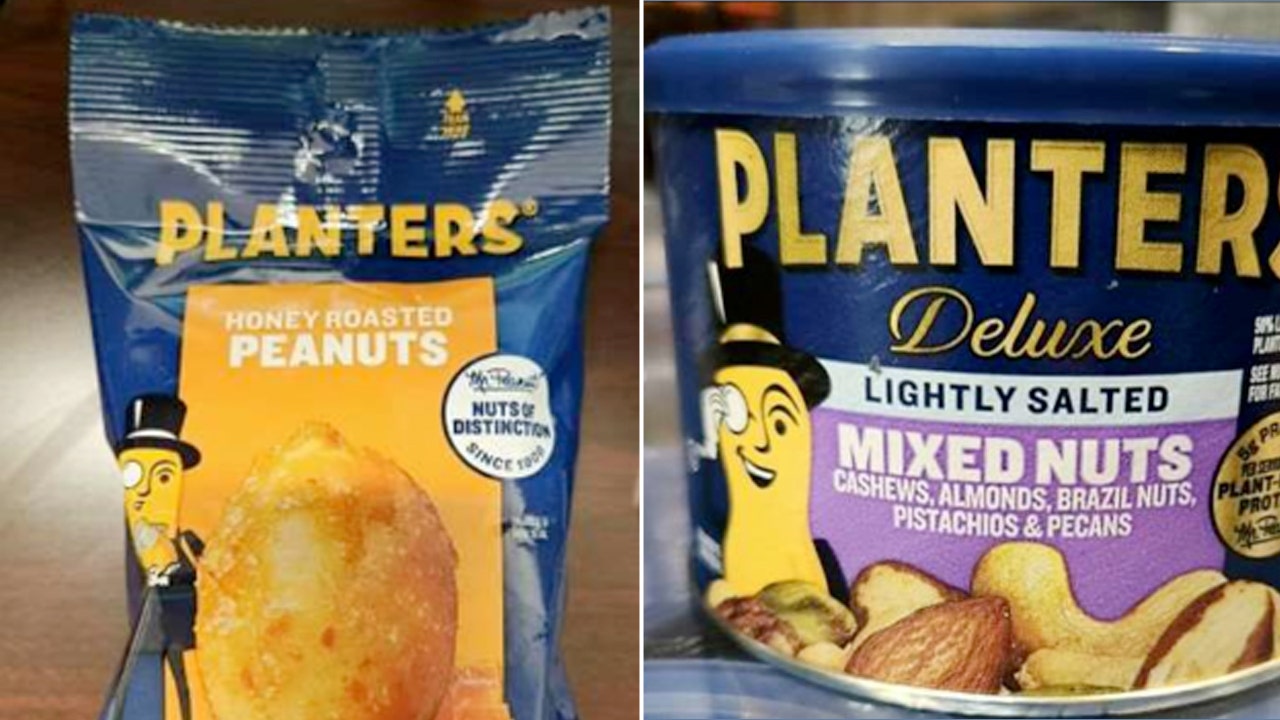
Minnesota-based Hormel Foods Sales LLC issued a recall for two Planters products produced at one of its facilities and distributed to five states in the southeast portion of the U.S. because they could cause fatal infections.
Hormel produced the contaminated Honey Roasted Peanuts and Deluxe Lightly Salted Mixed Nuts for Planters at one of its facilities before distributing them to Publix warehouses in Florida, Georgia, Alabama and North Carolina as well as Dollar Tree warehouses in South Carolina and Georgia.
After producing and distributing the products in April, Hormel discovered the packaged contents could be contaminated with listeria monocytogenes.
The organism listeria monocytogenes can cause serious and sometimes fatal infections in young children, elderly people and others who have weakened immune systems.
GROUND BEEF SOLD AT WALMART RECALLED OVER E COLI CONCERNS
Hormel recalled Planters Honey Roasted Peanuts distributed to Publix and Dollar Tree in the southeastern U.S. (FDA / Fox News)
Healthy individuals who consume the organism could suffer short-term symptoms like high fever, severe headache, stiffness, nausea, abdominal pain and diarrhea, according to the voluntarily issued recall.
Additionally, listeria infections can cause pregnant women to have miscarriages or stillbirths.
The product being recalled is limited to 4-ounce packages of Planters Honey Roasted Peanuts and 8.75-ounce cans of Planters Deluxe Lightly Salted Mixed Nuts.
FDA SAYS MULTISTATE E COLI OUTBREAK TIED TO WALNUTS
Hormel recalled Planters Deluxe Lightly Salted Mixed Nuts distributed to Publix and Dollar Tree in the southeastern U.S. (FDA / Fox News)
Cans of Deluxe Lightly Salted Mixed Nuts have a “Best if Used By Date” on the bottom as well as a UPC code on the side.
The UPC code for Honey Roasted Peanuts in question is 2900002097 with a best-by date of April 11, 2025. For deluxe Lightly Salted Mixed Nuts, the UPC code in question is 2900001621 and the best-by date is April 5, 2026.
Hormel said these are the only products in the recall.
H-E-B RECALLS ICE CREAM OVER POTENTIAL METAL CONTAMINATION
This view shows the U.S. Food and Drug Administration headquarters in White Oak, Maryland. (Stefani Reynolds / Bloomberg / File / Getty Images)
The company also said there have not been any reports of anyone getting sick from the recalled products and all retailers affected have been notified.
Anyone in possession of the affected products is urged not to consume the nuts but instead either discard them or return them to the store where they were purchased for a replacement or full refund.
“Our commitment to food safety remains our utmost priority,” Hormel said. “A full investigation is currently underway to determine the potential source of the contamination.”
GET FOX BUSINESS ON THE GO BY CLICKING HERE
For questions or concerns about the recall, consumers can contact Hormel Foods customer relations at 800-523-4635.


COVINGTON, Ky. (WKRC) – A Boone County man who previously worked as a Northern Kentucky school bus driver has been sentenced to 15 years in federal prison for possessing thousands of images and videos of child sexual abuse material.
Derrick Becker, 51, of Burlington, was sentenced Monday to 180 months in prison after pleading guilty to possession of child pornography, according to the U.S. Attorney’s Office for the Eastern District of Kentucky.
Federal investigators searched Becker’s home in July 2025 and seized electronic devices containing more than 7,000 images and more than 80 videos depicting the sexual abuse of children, including material involving bondage and bestiality.
According to prosecutors, Becker admitted he knew the material depicted minors and had been transmitted over the internet.
Becker was previously convicted in 2017 of possessing or viewing material portraying the sexual performance of a minor.
Under federal law, Becker must serve at least 85% of his sentence. He will also be supervised for 15 years after his release.
According to Boone County Schools, Becker worked as a district bus driver from 2011 to 2015, driving routes for Ryland Heights Elementary, Woodland Middle School and Scott High School before his employment ended following his 2015 arrest.
The FBI and Boone County Sheriff’s Office investigated the case.

More than half of Louisiana’s WIC clinics failed to meet required outreach standards, most operated only during traditional business hours, and the state ranked last in the nation for participation in the federal nutrition program, according to a performance audit by the Louisiana Legislative Auditor.
The analysis found the Louisiana Department of Health did not adequately oversee outreach efforts intended to connect eligible women, infants and children with the Special Supplemental Nutrition Program for Women, Infants and Children, commonly known as WIC.
Auditors concluded stronger oversight, expanded clinic access and improved community outreach could increase participation among families eligible for the federally funded program.
The audit also found Louisiana returned approximately $111.6 million in unused federal WIC food benefits to the U.S. Department of Agriculture between federal fiscal years 2021 and 2024 because eligible participants did not redeem them. The benefits were federal funds, not state taxpayer dollars.
During federal fiscal year 2024, about 92,000 people participated in Louisiana’s WIC program even though an estimated 196,000 residents were eligible, placing the state last nationally for participation.
State policy requires every WIC clinic to conduct at least one outreach activity each month to raise awareness of the program among eligible residents. However, auditors found 56 of Louisiana’s 100 WIC clinics failed to report meeting that requirement during federal fiscal year 2025, up from 51 clinics the previous year.
The audit also found weaknesses in the department’s oversight. Although the department said it reviews clinic outreach reports and issues findings when clinics fail to comply, auditors determined it identified only four of the 56 clinics that failed to meet the monthly outreach requirement.
According to the audit, the department generally reviews outreach activities only during comprehensive evaluations, which state policy requires for at least 20% of clinics each year, rather than reviewing reports submitted by every clinic.
Auditors also found clinics lacked clear guidance on what qualified as outreach. They reviewed 3,780 outreach activities reported during federal fiscal years 2024 and 2025 and found 328 were not consistent with the department’s outreach goals.
Examples included answering telephone calls, donating unused infant formula and processing prescription formula requests for participants already enrolled in the program rather than activities intended to reach eligible families who were not participating.
Access to services presented another challenge. Although the U.S. Department of Agriculture estimates 77% of WIC households nationally include working families, 81 of Louisiana’s 100 WIC clinics operate only between 8 a.m. and 4:30 p.m. Just 19 clinics offer appointments outside those hours, and only two provide weekend appointments. The department’s own 2024 WIC Participant Satisfaction Survey found that 275 of 518 complaints, or 53.1%, involved appointment availability.
The audit also found Louisiana has limited alternatives for residents who cannot easily travel to a clinic. While at least 11 states use mobile WIC clinics or other approaches to deliver services outside traditional offices, Louisiana operates one mobile clinic that serves Barksdale Air Force Base. Auditors identified several communities, including Vinton, Raceland, Kaplan, Jeanerette and Mandeville, where large numbers of lower-income residents live more than 10 miles from the nearest WIC clinic.
In addition to recommending expanded mobile services, auditors said the department should increase off-site appointments in the community and strengthen partnerships with home visiting programs that can help enroll eligible mothers and children. The report noted other states have used community-based appointments to increase enrollment and said Louisiana could build on its existing partnership with the Maternal, Infant, and Early Childhood Home Visiting program to help families enroll outside traditional clinic settings.
Survey results included in the audit suggest personal connections often played a larger role in enrollment than clinic outreach. Among 424 current WIC participants surveyed, 63.7% said family or friends encouraged them to enroll, while 42.7% said a medical professional encouraged them.
To improve participation, auditors recommended the department review outreach reports from every clinic each month, provide clearer guidance on acceptable outreach activities, expand appointment availability outside traditional business hours, increase mobile and off-site services, and continue developing partnerships that help enroll families in community settings.
The Louisiana Department of Health agreed with the recommendations. In its response, the department said it will begin reviewing outreach reports from every clinic each month, update outreach policies and clinic toolkits, and continue a statewide initiative launched in December 2025 aimed at increasing WIC participation by 25% by the end of 2026.

Wrapping June’s National Gun Violence Awareness Month commemorations, community leaders, advocates and health care professionals met with Maryland Rep. Glenn Ivey (D) to discuss community-based solutions to address safety concerns across Prince George’s County.
For Ivey, who served as state’s attorney for Prince George’s County from 2003-2011, gun violence solutions start with the community.
‘It’s not necessarily just funding, but it’s connecting people,” Ivey said during the June 29 conversation at Union Bar and Grill in Hyattsville. “You can be a catalyst on that front.”
The congressman listened and spoke to residents and representatives from gun violence and health organizations, including: University of Maryland Medical System CAP-VIP Program; University of Maryland Capital Region Hospital Trauma Services; University of Maryland Progress Initiative; Community Justice Action Fund; Hope in Action; Everytown for Gun Safety; Guns Down Friday; Jacob’s Ladder Youth Foundation; and Maryland Crime Victim’s Resource Center.
According to the Maryland Department of Health, firearms were connected to 17 injuries and 16 homicides in the county between January and May of this year. Between 2024 and 2025, homicides dropped by 40% from 96 fatalities to 57. Youth violence also declined, with 21 people under the age of 25 who died from firearms in 2025, a drop from 45 deaths in 2024.
Still Jawanna Hardy is working to reduce numbers even more.
“That bullet, it goes so far,” said Hardy, founder of Guns Down Friday. “It hits the entire community.”
One point of discussion was funding gaps for various programs addressing community violence, whether due to federal cuts, grant delays or inconsistent funds for state and local initiatives.
Many attendees present advocated for gun violence solutions starting with county programming,, primarily by establishing an office dedicated to gun violence prevention.
“It’s sustainable because it’s built into the state and county budget,” said Joseph Richardson, co-director of the University of Maryland’s gun violence research initiative PROGRESS.
For Donica Thompson, an Injury Prevention and Outreach coordinator for Trauma Services at UM Capital Region Health, the county needs more support for basic necessities like mental health, education, housing and employment.
“I feel the community needs to take more action,” Thompson said. “Create opportunities for the youth, create more jobs for the youth.”
The conversation ended with Ivey affirming the need to begin building towards a local office to address gun violence prevention through conversations with Prince George’s County Executive Aisha Braveboy and Maryland Gov. Wes Moore.
“I think it makes a lot of sense, because [then] we have a stakeholder,” Ivey said.
As a staunch advocate for addressing gun violence, Hardy was overall optimistic about the conversation and hopes it’ll prove to be effective for the county in the future.
“I just pray that there is a solution to the problems, not just us talking about it,” she told The Informer. “But I’m feeling very hopeful.”
-

 Hawaii7 minutes ago
Suspect arrested in attempted armed robbery on North Shore
-

 Idaho10 minutes ago
U.S. Marshals track Meridian man in Idaho Falls after suspected robbery
-

 Illinois15 minutes ago
Illinois Product Farmers Market Highlights Local Flavors and Family Traditions
-

 Indiana22 minutes ago
2 Indiana men plead guilty in Montana oxycodone conspiracy case
-

 Iowa25 minutes ago
Iowa’s governor and her family on weeklong tour of Iowa tourist sites – Radio Iowa
-

 Kansas30 minutes ago
New mural to be unveiled Thursday afternoon in North Topeka
-

 Kentucky37 minutes ago
Former Northern Kentucky school bus driver sentenced in child pornography case
-

 Louisiana39 minutes ago
Audit finds barriers hinder Louisiana WIC enrollment – American Press

