New Hampshire
UNH's Class of 2024 reflects on a tumultuous few years — and offers words of wisdom


Seniors at the University of New Hampshire donned their caps and gowns this weekend for graduation ceremonies. For many in the class of 2024, college was bookended with upheaval – beginning with the onset of the pandemic, finishing with campus protests of Israel’s war in Gaza, some of which ended in arrests.
For many of this weekend’s graduates, college was also what it has been for generations of alumni: a place to learn new things and meet new friends.
“It’s rare to have this opportunity to be in such a tight-knit community for so many years in a row,” said Seth Rupp, who majored in music. “I don’t know if we’ll have that again in life.”
Rupp said his high school graduation was far from normal – and the start to his college career was disorienting, too.
“Going right into college with virtual classes and kind of limited social capabilities and quarantining and covid testing is kind of a really strange world. So it’s really cool to graduate and kind of have reached a point where it’s sort of normal again,” he said.
The campus protests have been a big part of his last weeks as an undergraduate – he says they’re on everyones’ mind. But he says it wasn’t an interruption – just another part of his college experience.
“I personally was pretty proud of my community, to see people just showing up for what they believe in and using their voices,” he said. “It’s been a little tumultuous and tense, but we made it nonetheless.”
Rupp’s friend Anna Coulobme, who majored in psychology and justice studies, said her favorite parts of college were the new people and opportunities.
“Some of the stuff that I’ve done here I’ve been nervous to do,” she said. “And that’s ended up being some of the stuff that I’m most thankful that I did.”
Advice from the class of 2024
Mason Davis, who studied history and played football, said he didn’t get a real graduation from high school, so this one felt particularly special.
His team won the Coastal Athletic Association conference championships in 2022, which was a highlight. And Davis said making lifelong friends was one of his favorite things about college.
“It’s like a small town in Durham,” he said, “but it’s like a big group of people that always have your back and will support you no matter what.”
His advice for college students is to work hard and seek out advice from professors.
“They’re there to help you, big time,” he said. “Have fun as well, enjoy it. You only get to be in college one time.”

Rachel Dalai, who majored in political science and loved being a resident assistant, said students should make the most of their time in school.
“Make it worth it,” she said. “Do an internship, go abroad. Make good professional relationships.”

Joy Woolley and Clarissa Gowing said the key to college is getting involved — namely through joining clubs and studying abroad.
Both graduated from high school as the pandemic was starting. Woolley’s high school commencement was in a parking lot. She got her diploma in a plastic bag, while her parents watched from the car.
They met on Instagram, and then became friends in a Zoom class, talking on the Zoom chat. Now, they live together. And they started a club, Reading Rainbow, where members read books together by queer authors and authors of color.
“It will build you such a good support system, and you’ll meet so many people that you wouldn’t have otherwise,” Gowing said.

For Gabriela Onasanya, a political science and justice studies major, exploring campus was the best part of college. And having her family watch her graduate on Saturday was exciting.
Her advice? “Be open to new experiences. Be open to new people. Just be open.”

Sam Flynn, who studied mechanical engineering, had similar wisdom: “Join clubs, talk to new people they wouldn’t normally.”
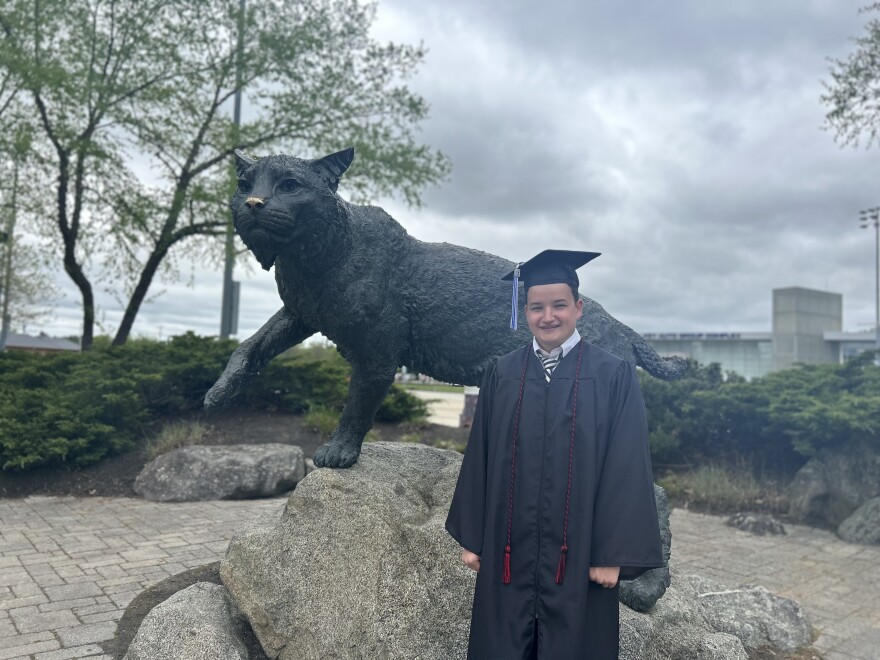
“Find your people. Find people who you click with,” said Adam Dapolit, who majored in political science and international affairs.” And it might not be right away, but just find people who you can surround yourself with and really make the experience what you want it to be.”

Isabella Hart, who studied fine art and food systems, said starting college with the pandemic was tough. But by sophomore year, she’d found her place. She started working as a tour guide and lived with seven roommates.
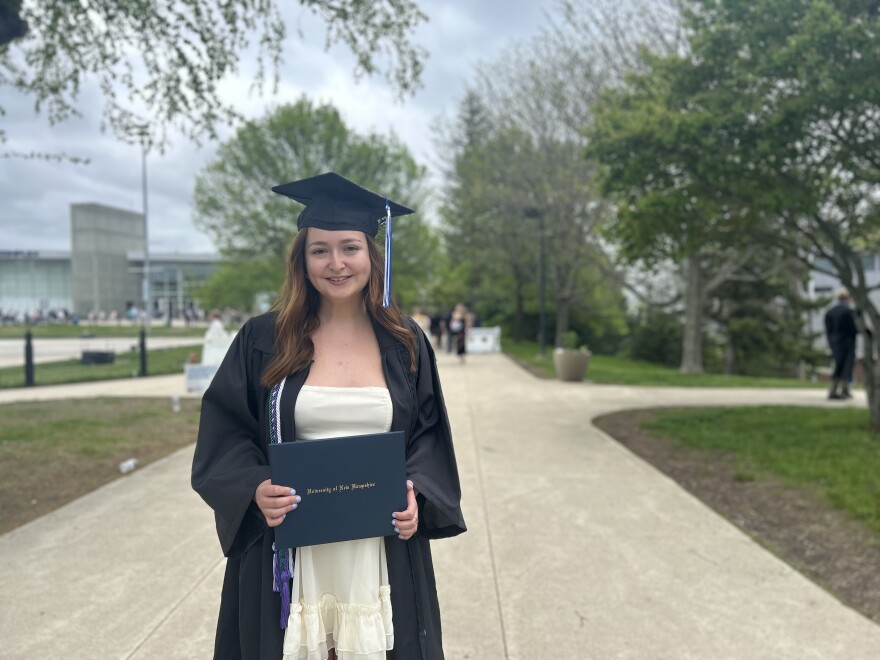
She was frustrated by the university’s response to protesters earlier this month. But she said it was exciting to see students getting involved and coming together.
Hart was looking forward to graduation, and she said it went by too fast. Her advice for future students is to build community and try new things.
“Get involved and talk to as many people as you can,” she said. “I think you’ll find your connections in the most random places.”

New Hampshire
Missing Berlin Motorcyclist Found Dead After Route 2 Crash: New Hampshire State Police Roundup

06/19/2026 02:16, EAST KINGSTON, BOLDUC, NATHAN RICHARD (22); ASHFORD, CONNECTICUT, 635:1,I (BURGLARY-NIGHT / HOME / WEAPON), 635:1,V (BURGLARY TOOLS-POSSESSION), 637:7 (RECV STOLEN PROP; $1501+), 637:7 (RECV STOLEN PROP; $1501+), 634:2,II (CRIMINAL MISCHIEF).
06/15/2026 19:49, RAYMOND, KETCHEN, DANA CANNEY (63); BROOKLINE, 265-A:2,I(A) (DUI-IMPAIRMENT), 264:25 (CONDUCT AFTER ACCIDENT), 265-A:2,I(B) (DUI; ADULT>.08; MINOR>.02), 172-B:3 (PROTECTIVE CUSTODY-ALCOHOL), 265-A:44 (TRANSPORTING ALCOHOLIC BEVERAGES OR MARIJUANA).
06/15/2026 21:05, GILFORD, SEXTON, JALEN R. (26); ALTON, 263:64,VI (DRIVE AFTER REV/SUS-SUBSQT), 263:64,IV (DRIVE AFTER REVOCATION/SUSPENSION; RECKLESS DRIVING), 263:1,II (LICENSE REQD; OP W/EXPIRED LICENSE W/IN 12 MONTHS OF EXPIRATION), 265:60 (SPEEDING 25 MPH OVER LIMIT OF 55 OR LESS).
06/16/2026 02:40, PORTSMOUTH, LANE, MICHAEL CORY (29); HUBBARDSTON, MA, 631:3 (RECKLESS CONDUCT), 265-A:2,I(A) (DUI-IMPAIRMENT), 265:79,I (RECKLESS OPERATION).
06/16/2026 17:16, GILFORD, COSTARELLI, ROBERT L. (55); EAST BRIDGEWATER, MA, 631:2-B,I(A) (DV; SIMPLE ASSAULT; BODILY INJURY OR PHYSICAL CONTACT), 634:2,III (CRIMINAL MISCHIEF).
New Hampshire
Concord City Manager Receives ‘Satisfactory’ Review, 2.5% Raise, But Sabbatical Request Gets Trimmed

Schultz said she “highly respects” Aspell, too, but there was a “dissonance between reality” when eyeing what the public and city employees were earning.
Ward 6 City Council Aislinn Kalob, too, would not be voting for the increase, saying it had been “heavily on my mind since we’ve had our nonpublic sessions,” which lasted about six hours of work. She appreciated Kretovic clearly outlining the job of city manager. But people were frustrated with the city manager, and she saw that in the comments in online forums.
“I do feel, after really digging into this, and learning about his job,” she said, “and thinking toward the future when, eventually, at some point, somebody new will be sitting in that seat, we are the ones who direct policy and he is the one that implements it… there is anger out there that should be directed more toward us.”
Kalob said, too, a room full of firefighters, upset about their contract, also made voting for the wage increase something she could not consider.
Michele Horne of Ward 2 echoed similar concerns to Schultz, saying there was significant “wage disparity” between the public and staff and the city manager. She also agreed with Kalob’s point that previous councils created this contract.

Sunflowers are my absolute FAVORITE flowers. I truly feel like they have magical uplifting abilities. Hence, why I’ve always kept fresh sunflowers in my house, brightening up my kitchen table or even my TV stand.
Obviously, it was a dream of mine to have my maternity photos taken in a sunflower field. They reflect sunshine and exude happiness.
Not to mention, one of my favorite quotes is about sunflowers! “Keep your face to the sunshine and you cannot see the shadow. It’s what sunflowers do.” Helen Keller
A beautiful reminder to keep an optimistic outlook on life and not dwell on the negative.
So, you can imagine the joy I felt when I learned that New Hampshire had its very own Sunflower Festival at Coppal House Farm in Lee!
About the Sunflower Festival:
During the summer, the farm transforms into a sea of golden blooms, giving visitors the chance to wander through thousands of sunflowers, snap photos, enjoy local food vendors, artisan crafts, listen to live music, and experience one of New Hampshire’s most beautiful summer traditions.
Other unique activities on the itinerary? Sip-n-snip! Guests can enjoy a cocktail or mocktail of their choice and cut their own fresh bouquet of flowers.

Or maybe you’re a yoga fan? You can join a 60-minute sweat session from Lee, New Hampshire yoga instructors right in the heart of the flower field.
And because the farm grows oilseed sunflowers for culinary oil (which they harvest in the fall months), the flowers only stay at their peak for a brief window, making the festival a limited-time experience, according to the festival organizers…
What makes this event even more special is the reason behind it. The festival started as a way to share the beauty of the sunflower fields, but it has grown into something much bigger. Organizers say the event has raised more than $90,000 for Make-A-Wish New Hampshire over the years and now shares a portion of its proceeds with several local nonprofit organizations serving the Seacoast community.
Anyone who knows me knows that paying it forward is something that’s incredibly important to me. It’s right up there with my love of sunflowers because both fill my cup in the best way. So, when I found out this festival celebrates my favorite flower and gives back to the community, I knew I had to share it.
Sunflower Festival Details:
This festival only runs from Saturday, July 25th until Sunday, August 2nd. You can get the full list of activities and more on the Coppal Farm website.
Daily Field Hours
10:00 AM – 6:30 PM
(last admission at 6PM because fields close at 6:30)
Weekend Tickets (prepurchased online – day before)
$12 per person ages 13 & older
$10 per person ages 5-12
$10 per person Seniors (65+) & Military
4 yrs & under are always free
Weekend Tickets (purchased day of – online or at farm):
$16 per person ages 13 & older
$14 per person ages 5-12
$14 per person Seniors (65+) & Military
4 yrs & under are always free
includes: access to sunflower fields, craft fair, food vending area, tented shade area, picnic area, farm animals, & live music
Weekday Tickets (prepurchased online – day before)
$8 per person ages 13 & older
$6 per person ages 5-12
$6 per person Seniors (65+) & Military
4 yrs & under are always free
Weekday Tickets (purchased day of – online or at farm)
$12 per person ages 13 & older
$10 per person ages 5-12
$10 per person Seniors (65+) & Military
4 yrs & under are always free
What tickets include:
Access to sunflower fields, food vending area, tented shade area, picnic area, and farm animals
READ MORE: A Classic Fairy Tale Comes To Life At Portsmouth’s Prescott Park This Summer
This festival might just leave you smiling long after you leave the fields!
What Flowers Thrive in New England
See what flowers thrive in New England weather: Maine, Massachusetts, and New Hampshire.
Gallery Credit: Logan
14 of the Best New Hampshire Farms Offering Locally Grown Strawberries
14 of the Best New Hampshire Farms Offering PYO Strawberries
Gallery Credit: Sarah Sullivan
-

 Los Angeles, Ca20 minutes ago
Southern California hits hottest day of its extreme heat warning
-

 Detroit, MI44 minutes ago
Steve Yzerman out as Detroit Red Wings GM, moves to senior advisor role
-
 San Francisco, CA56 minutes ago
Supervisors urge California to expand S.F. speed-camera program
-

 Dallas, TX1 hour ago
Five teens injured after crashing carjacked vehicle during Dallas police chase
-

 Miami, FL1 hour ago
Tokyo-style Neapolitan pizza is coming to Miami, led by legendary pizzaiolo chef Bun
-

 Boston, MA1 hour ago
SEE THE GOOD: Roxbury center reminds young adults ‘You got this’ – Boston News, Weather, Sports | WHDH 7News
-
Denver, CO1 hour ago
Five Points affordable housing building honors Dr. Justina Ford | Rocky Mountain PBS
-

 Seattle, WA1 hour ago
Seattle weather: Hot and sunny day Wednesday, highs in the 80s


