Seattle, WA
Tactical Analysis: Philadelphia Union 2 – 3 Seattle Sounders


Photo by: Paul Rudderow
After losing 2-1 at home to RSL on Saturday, the Union conceded their second straight home loss on Tuesday night against Seattle. In a continuation of their March 9th rain-out, the Sounders punched a rotated Union squad in the mouth – scoring three first half goals. Being slightly hamstrung in the match by the roster rules pertaining to match resumptions, the Philly club responded, bringing on some key pieces at half to rally a response.
Hamstrung by roster rules
With the game being a resumption of play due to a postponement, each team was limited to using squads that mirrored the previous matchup – barring players injured or transferred. Remember, the week of the previous Seattle game was the weekend prior to the Union traveling to meet Pachuca south of the border the following Tuesday. Therefore, the Union planned to use a rotated squad to rest Mcglynn, Bedoya, Glesnes, and an injured (at-the-time) Carranza.
Andre Blake, Markus Anderson and Damion Lowe all being injured this time around, afforded the Union three free substitutions to replace them.
Though, it was a technicality with this rule that left Tai Baribo the victim.
Baribo was actually listed in the starting XI in place of Markus Anderson for this match, but he never actually started or saw the field. The catch being that Julian Carranza not being listed in the 20 man squad for the original matchup, made it so getting their best attacker on the field forced Philly to expend one of their five substitutions with 84+ minutes left to play.
Unfortunately for Baribo, he was the odd man out.
Curtin had this to say about it when asked: “Look, again, I want to win, guys, and it’s hard to become a starter for this group. It really is. Tai has been a professional, but we have chosen to go with other guys. We wanted to start Julian for sure, so someone was going out. We wanted to put our best guys against a good Seattle team, and unfortunately the decision goes against [Baribo]… and unfortunately, right now, Chris [Donovan] is ahead of him.”
Clearly, the challenges brought about by the stringent rules upon match resumption hindered the Union tactically. Still, both teams were operating under these rules, so it is tough to say the rules or circumstance were any causation for the poor result.
Lacking intensity/quality
Seattle were happy to sit deeper in the first half and allow the Union to try to break-through. Once Seattle would win possession, the team would break out with deliberate pace and speed that left Philly in the dust. Seattle simply looked faster, sharper, and ready for the match in the first half.
(The Union were lucky to not give up a goal in the 10th minute, as Seattle break out from a defended corner in a 5 on 1)
The Union didn’t quite match.
“I can live with mistakes, the mistakes on the first goal, mistake on a PK,” said Jim after the match. “I can live with mistakes, but I can’t live with being out-competed. And that was the case with a Seattle team that was desperate for points, a lot of experience and a lot of great players – we didn’t match their intensity for the first half.”
In the original matchup, Seattle opted for a flat 4-4-2, with their playmaker Christian Roldan playing the right midfielder role. In this resumption, the team played a 4-2-3-1, with Roldan coming in centrally to play the 10 role, and Jordan Morris sliding out to the right from his striker role.
Roldan coming into the middle allowed him to see more of the ball, which afforded Seattle more attacking license. It also allowed Roldan to be in a much closer proximity to Jose Martinez when the Union were in possession, pressing Jose into some errors. Raul Ruidiaz was then able to use his speed and adept decision making to press the CBs based on where Roldan was in the
Without McGlynn on the field, and with Jose being closed down quickly, it became an issue for Martinez and Bueno to try to pick passes to break through the Seattle defense. Bueno struggled to play forward, and Sullivan had trouble finding the space he is accustomed to finding in the half space on the right.
This was, of course, with a much narrower shape than the Union are accustomed to playing. In the Union’s 4-4-2 diamond, their outside backs are tasked with providing the width that allows the Union to break forward in possession, and switch the point of attack from one side of the field to the other with a diagonal pass to bypass the opposing press.
Both Mbaizo on the right, and Harriel on the left struggled with picking and choosing times to get forward to assist the build up. Seattle’s front four worked well together in the Union half, forcing the outside backs to be mindful of getting forward and abandoning their defensive responsibilities.
This also kept Carranza and Uhre quiet for much of the first half. Without the quality of McGlynn on the field, it was apparent that any sort of progression in build-up from back to front would have to be done by finding Gazdag in tight spaces, or playing low-percentage long-balls to the heads of the forwards.
It took until the Union were down by three goals in the first half for them to muster up any sort of response. Seattle was content to just sit back now that they had the 3 goal advantage, and the Union began to try to claw back a goal before halftime – to no avail.
Substitutes rally the troops
At halftime, the Union opted to bring on McGlynn, Bedoya, and Wagner for Bueno, Martinez, and Mbaizo respectively. Harriel moved from left back to right back, Bedoya filled in at the 6, and McGlynn slotted in at his normal left shuttler role.
Bedoya was seen visibly rallying the team in the pre-match huddle. This is both exactly the role he should be playing, but also sad that it takes getting the 37-year-old onto the field for the Union to actually match the intensity of the opponent.
Immediately, the Union’s attacking malaise wore off, as the team were able to finally find ways to play forward with the width added by Wagner down the left, and Harriel more comfortable on the right.
Bedoya may have been beaten man-for-man in a couple instances in the middle of the park, but his adept movement and interplay with McGlynn was part and parcel in helping the Union’s improved second half play.
Now, it is easy to wax poetic about what McGlynn provides to this team. I have long been proponent of incorporating his game into the Union’s “defensive-first” system – as when you are in possession, you are not defending. And perhaps the most important trait McGlynn provides is his swagger in possession.
But what McGlynn provided to the team on Tuesday night was more than his normal ability on the ball.
His movement analogous to Ozil for Arsenal. His ability to play forward comparable to Fabregas for Chelsea. His left-footed shot akin to Lampard’s legendary right.
His laced smash flew true into the right panel of the net – exactly the jolt the team needed to defibrillate the first half stagnation. His six progressive passes in 45 minutes matched Seattle’s best over 90 minutes. His presence in the starting lineup is paramount to this team’s success, in the same vein as those who felt Leon Flach’s presence in the eleven was in years past.
Another thing to note is that this goal comes from a broken set-piece. Whether or not it counts as a set-piece goal, Wagner’s set-pieces seemed to find Union heads in a way that Bueno’s weren’t in the first half.
It was another McGlynn pass that led to the break out for the Union’s second goal. Two touches and one single pass stretched Seattle enough to force them to retreat docilely, leading to Daniel Gazdag eclipsing Sebastian Letoux as the club’s all-time goal-scoring leader.
Not coincidentally, Wagner and McGlynn’s play down the left allowed Sullivan and Harriel to come into the game on the opposite side. The diagonal passes that were lacking in the first half came in droves from Wagner, Bedoya, and McGlynn – switching play from left to right in a matter of touches.
Gazdag came close to extending his mark in the club record books, but he was called back for offside in a similar build-up pattern to his earlier goal on the evening.
Truths
The truth is, that in any given instance, the Union can be the superior team.
The team were unfortunate to be the recipient of a bye week at a time that caused the squad to lose momentum. But another truth is that bye week would have given them a much-needed rest had they still been competing for CONCACAF Champions Cup.
After an undefeated start in MLS saw them in a favorable position – second place in the East with a couple games in hand – the team are now left picking up the pieces. A second straight home loss with one less game in hand led Jim Curtin to say, “Everyone’s voice grows when we don’t win. That is reality I have to understand, and I respect it.”
The voices seem to be growing inside the camp as well. Andre Blake and Jose Martinez took to social media with some unpleasantries – both leaving cryptic messages that have since expired or been deleted.
As the voices from the inside the building exceed the decibels of megaphone-guy in the River End, it will be on Curtin to right the ship and keep it sailing true into the summer time.


SEATTLE — Seattle Mayor Katie Wilson is wading into a series of high-profile Democratic primaries, backing progressive challengers against longtime state lawmakers in a move that could test both her political reach and Seattle’s relationship with Olympia.
Wilson has endorsed several local candidates, including Ron Davis in the 46th Legislative District and Hannah Sabio Howell in the 43rd District. Both are running from the left against veteran Democratic legislators, including Senate Majority Leader Jamie Pedersen.
The endorsements come as Democrats in Washington state face a series of intraparty challenges, with younger and more progressive candidates arguing that longtime lawmakers have not moved quickly enough on affordability, housing, taxation and social services.
An image of Mayor Wilson and Gov. Bob Ferguson giving an update on how the World Cup matches have played out so far in Seattle. (KOMO)
Political analyst Sandeep Kaushik called Wilson’s decision “a high-risk roll of the dice,” saying she is not only challenging veteran Seattle Democrats but also potentially putting at risk the city’s relationship with state leaders in Olympia.
“It’s definitely going to be” a test of her political influence, Kaushik said, noting that Pedersen can point to a long list of progressive credentials, including work on LGBTQ rights and the state’s new millionaires’ tax.
Wilson’s endorsements follow a national trend in which progressive candidates have tried to build momentum by challenging establishment Democrats in deeply blue areas. Kaushik said the timing did not appear coincidental, coming shortly after New York City Mayor Zohran Mamdani endorsed several candidates who went on to win their races. But he also noted a key difference: Wilson won Seattle’s mayoral race by a much narrower margin and has faced a bumpier start in office.
Davis, who is running against Rep. Gerry Pollet in the 46th District, said he entered the race after working on statewide housing legislation and deciding Olympia was a place where he could make a larger impact.
“Urgency” has been missing in Olympia, Davis said, arguing that too many lawmakers treat the job as a side role while families struggle with the cost of living. He said he wants the state to move faster on housing, transit, Sound Transit accountability, and progressive taxation.
Davis said Wilson’s endorsement matters because of her role in Seattle’s JumpStart payroll tax and broader progressive organizing.
“Katie Wilson is one of the people who has done more to bring taxation on the rich in Washington state than anyone else,” Davis said, calling JumpStart a measure that “broke the legal dam” for other forms of progressive taxation.
Davis also defended a challenge from the left after Democrats delivered the millionaires’ tax, saying internal competition is healthy and necessary.
“I think it’s needed,” Davis said. “There needs to be disagreement, and there needs to not be a cling to the status quo.”
According to a Washington Public Disclosure Commission candidate finance chart, Democrat William Dreher has raised about $258,000 in the race and spent $21,000. Davis has raised about $140,000 and spent $26,000.
Pollet has raised about $96,000 and spent $14,000.
Kaushik noted that Dreher, a prosecutor who worked on cases connected to the Jan. 6 attack on the US. Capitol, makes that race a three-way contest.
In the 43rd District, Sabio-Howell is challenging Pedersen, one of the most powerful Democrats in the Legislature. Sabio-Howell said she is running because the affordability crisis has worsened under current leadership.
“I believe in Washington’s potential to be the best place in the country to build good lives if we can afford it,” Sabio Howell said. “Status quo leaders, career politicians who have been in office as the crisis of affordability has only gotten worse, are not the people who are going to make an affordable future possible.”
Sabio Howell acknowledged the millionaires tax as a “historic win,” but argued it came only after a severe budget deficit forced lawmakers to act. She said progressive leadership from the 43rd District should have pushed for the policy earlier.
She also rejected arguments from large employers that Washington has reached a tipping point on taxes, comparing the current debate to warnings made during the fight for a $15 minimum wage. Sabio-Howell said voters have repeatedly shown support for funding social services through measures such as the capital gains tax, the Climate Commitment Act and the Long Term Care Act.
Sabio-Howell said Wilson’s endorsement aligns with her campaign’s focus on affordability, housing, schools, public transit and shifting political power away from corporate interests.
The fundraising gap in the 43rd District remains significant. The PDC chart shows Pedersen has raised about $348,000 and spent $77,000. Sabio-Howell has raised about $82,000 and spent $23,000. A third candidate, Heather-Marie P. Wilson, reported no contributions or expenditures on the chart.
Wilson did not return a request for comment.
The Washington State Labor Council also issued a statement, “Jamie Pedersen is the most progressive Senate Majority Leader we have ever had, delivering on major progressive priorities like progressive tax reform and rent stabilization when previous majority leaders couldn’t. If he is not re-elected, the next majority leader will most likely be less progressive and less willing to tackle the toughest problems. Campaigning is an extended job interview and Pedersen has demonstrated he can do the job effectively and in-line with his district’s values. Our unions and community allies should be united in fighting back against a right-wing authoritarian government, not divided against legislators like Jamie Pedersen and Gerry Pollet, who have strong progressive voting records. We have a common foe: the conservative forces in Washington seeking to take over our State Supreme Court, attack our trans community, and repeal the Millionaire Tax and force deep cuts to education and healthcare.”
His campaign also cited a statement from Katy Ozog, the Executive Director of the Washington Senate Democratic Campaign, “Jamie Pedersen is the most progressive Senate Majority Leader in state history, and the author of landmark legislation like the Millionaires Tax, a champion for affordability measures like rent stabilization, and a leader in the fight for LGBTQ+ equality. He is proud to be the only candidate in the race to have sole endorsements from labor unions and Planned Parenthood.”
Kaushik said the broader picture is a Democratic Party “at war with itself” in Washington, with younger, outsider candidates challenging incumbents they view as part of a failed establishment.
“The mayor doesn’t see herself as just another typical Democratic politician,” Kaushik said. “She very much sees herself as part of and a leader of a movement, a progressive political movement that really aims to take over and change the Democratic Party.”
Whether Wilson’s endorsement can help deliver victories for those challengers remains uncertain. Her allies see the move as part of a broader push for progressive leadership at every level of government. Her critics may view it as an unnecessary risk at a time when Seattle still depends on Olympia for housing, transportation, public safety, and budget support.
For now, the races offer a clear test of whether Wilson’s narrow mayoral victory has grown into broader political power or whether longtime Democratic incumbents can withstand a challenge from their own left flank.

The Seattle Seahawks are the defending champions, but that doesn’t mean their rookie class isn’t important.
If anything, it means the rookie class is more important because these first-year players will have to play at a very high level right from the jump in their careers. The Seahawks’ rookie class is going to be expected to help the team win a Super Bowl by replacing some key players on the roster.
“The world champion Seahawks, as I saw it, had three clear areas that became needs this offseason: running back, safety and corner, with the departures of Kenneth Walker III, Coby Bryant and Tariq Woolen,” Sports Illustrated reporter Albert Breer wrote.
“Accordingly, running back Jadarian Price, safety Bud Clark and corner Julian Neal were their first three draft picks, and all three will be guys to watch in late July and August. And another storyline, one that’ll tie back to Price, will be Zach Charbonnet’s return from a torn ACL.”
Jadarian Price
With Zach Charbonnet tearing his ACL during the divisional round game against the San Francisco 49ers back in January, first-round pick Jadarian Price will be thrown into the limelight in Week 1, assuming he gets through training camp in full health.
This will be an excellent opportunity for Price to get early reps, especially considering he was a backup in college to Jeremiyah Love, the No. 3 overall pick in the draft. He’ll compete with George Holani in training camp for the starting job against the New England Patriots on Sep. 9.
Bud Clark
Clark shouldn’t be expected to start over Julian Love and Ty Okada, but he should still have a handsome role in the secondary. Last year, the secondary proved how important depth is, and everyone in Seattle’s back line can play at a high level.
Clark is taking over for Coby Bryant, who signed with the Chicago Bears back in March. Those are tough shoes to fill, but Clark will be given an opportunity to show why he was a second-round pick.
Julian Neal
The Seahawks won’t have Riq Woolen this season after he signed with the Philadelphia Eagles. Josh Jobe and Nick Emmanwori will also need to fill in for Woolen’s absence, but third-round pick Julian Neal will have to shoulder some of the responsibility as well.
Woolen played in 78 percent of the team’s defensive snaps last season, which means Neal could hear his number early and often if he has a strong showing in training camp.
— Enjoy free coverage of the Super Bowl champions from Seattle Seahawks On SI —
Sign Up For the Seahawks Daily Digest – OnSI’s Free Seattle Seahawks Newsletter
 Add us as a preferred source on Google
Follow

PHOTOS BY OLIVER HAMLIN FOR WEST SEATTLE BLOG
Hundreds of people spent Sunday admiring and photographing the 12 gardens spotlighted on this year’s West Seattle Garden Tour. Among them was WSB contributing photojournalist Oliver Hamlin, who presents a scene from each garden (including some of the gardeners. First, at Garden A, “A Show of Northwest Natives“:
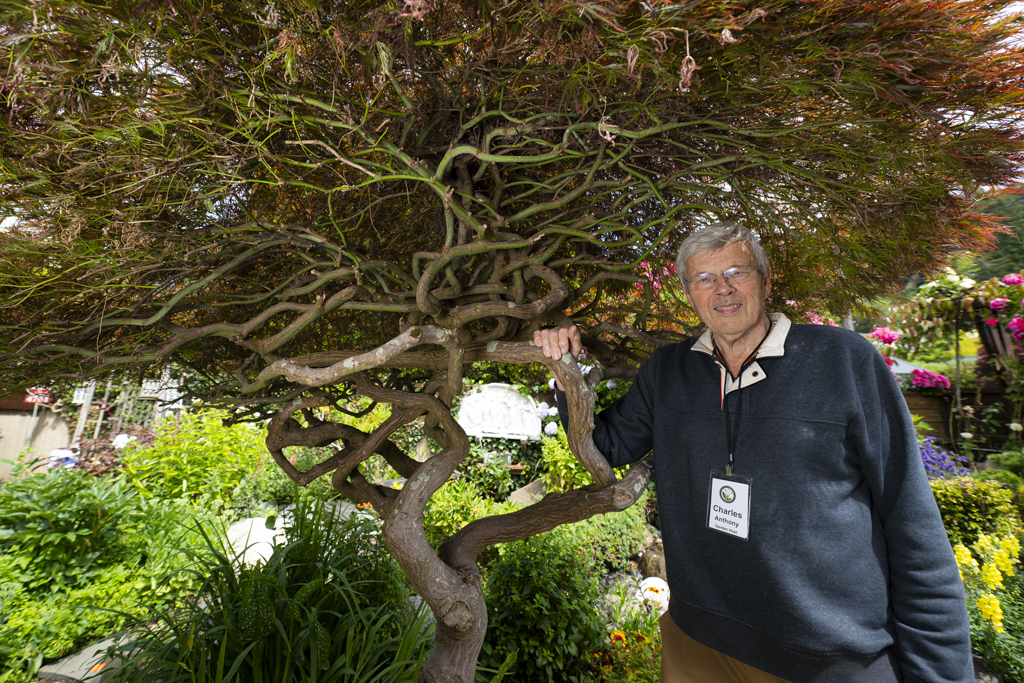
Charles Anthony, who created Garden B, “Salish Sea Sanctuary,” posed with his Japanese Maple:
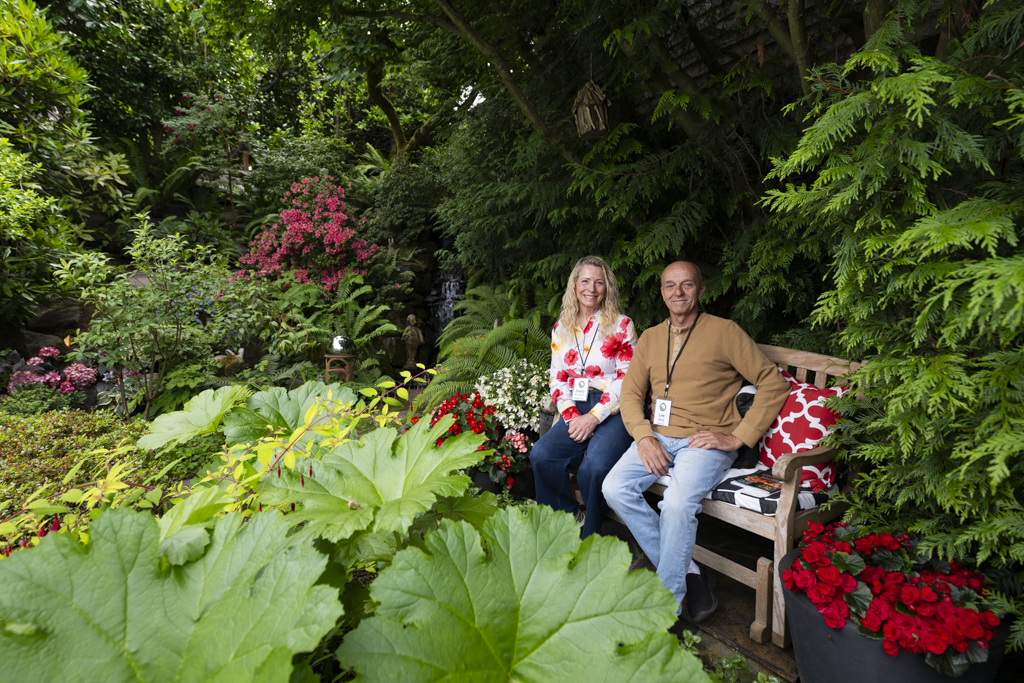
Garden C, “Heron Cove,” has its namesake standing sentinel:

Below are Debra Montgomery and Lee Kelly; she bought the “Heron Cove” house 7 years ago and inherited Lee, who has been the gardener for 40 years. She said the previous homeowners sought out a buyer who wouldn’t tear down the house and would keep caring for the garden, which she and Lee both now do.
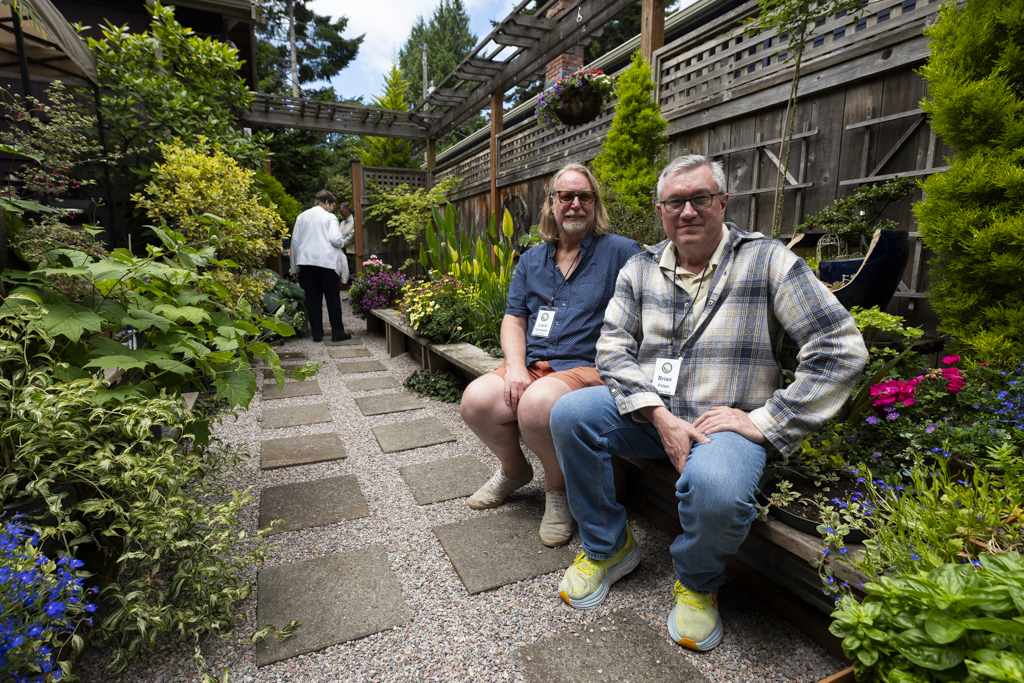
Garden D was described as “Small Spaces, Big Moments”:

Below (L-R) are the gardeners behind Garden D, Laird Applegate and Brian Pelzel:
Garden E was “From a Sprawling Lawn and One Tree to …”

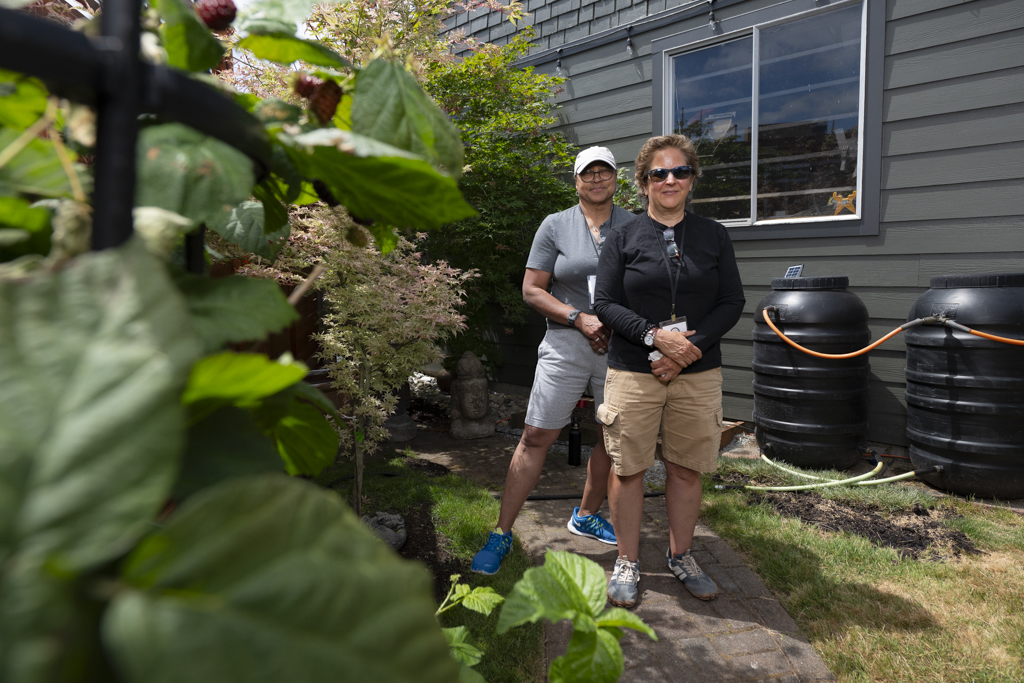
Blackberries are often the bane of a gardener’s existence, but in Garden F, “Transformation,” they were beautiful:

Garden F’s (L-R) Diane Elie and Raquel Gonzalez store water in 60-gallon rainbarrels and told Oliver that it fills most of their irrigation needs:
At Garden G, “Hidden Gem,” Julie Robinson-Jasper and Maple the dog are seen through a mirror surrounded by star jasmine at Garden G, “Hidden Gem”:

Another scene from Garden G:

Garden H, “Behind the Fences,” sported an arch of bittersweet nightshade:
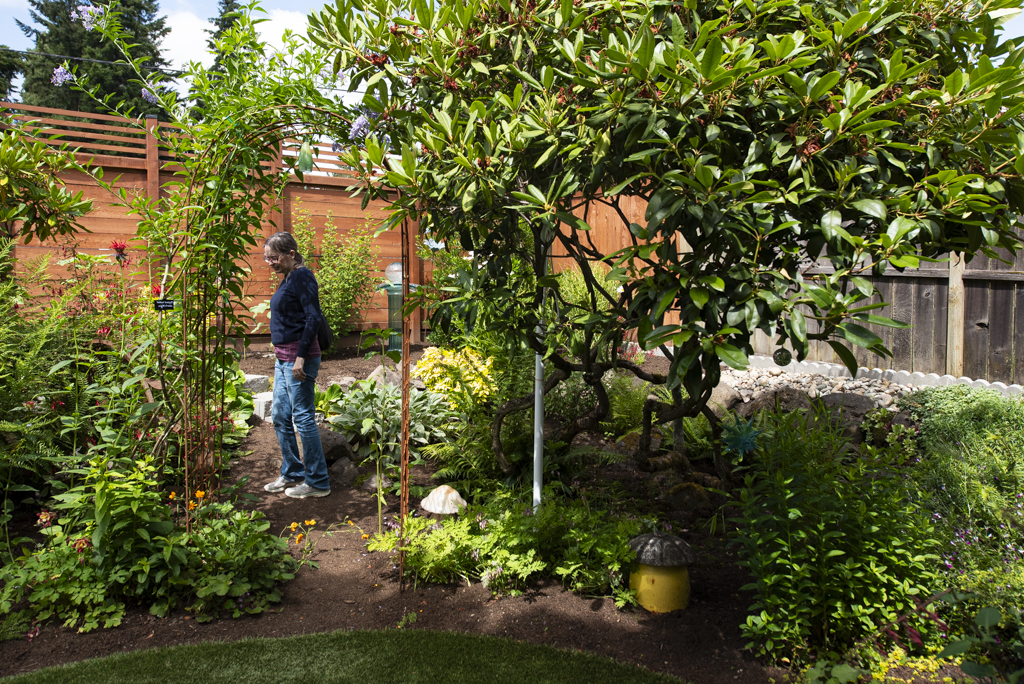
A clawfoot bathtub graced Garden I, “A Fresh Look for A Once-Beloved Garden“:

Garden J, “Garden of Many Rooms,” was conducive to wandering:
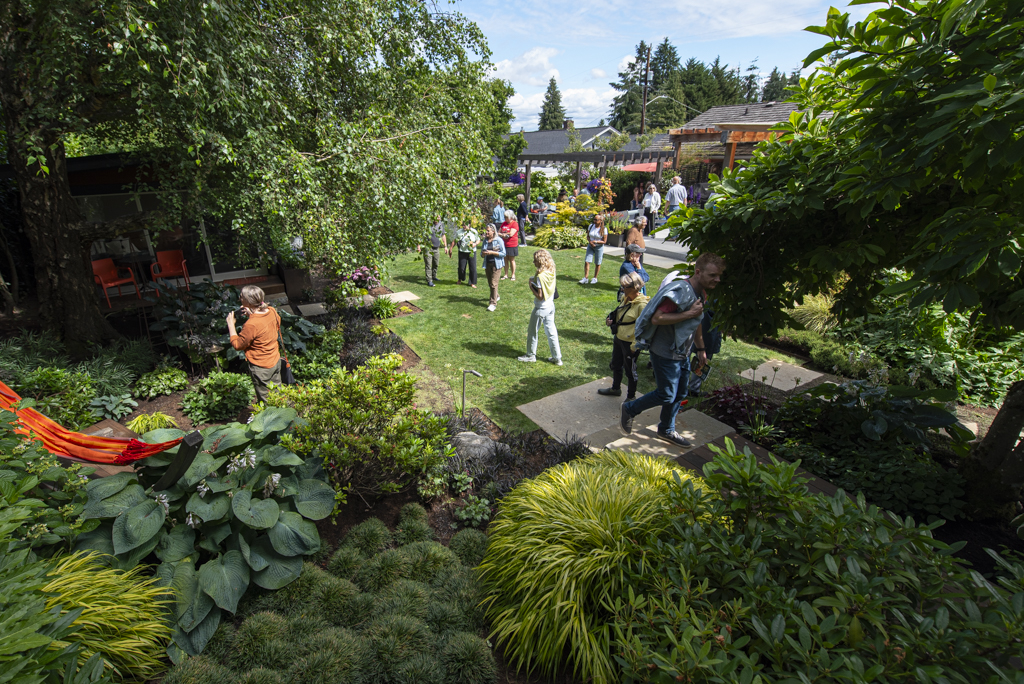
Garden K offered onlookers “Plants from Around the World“:
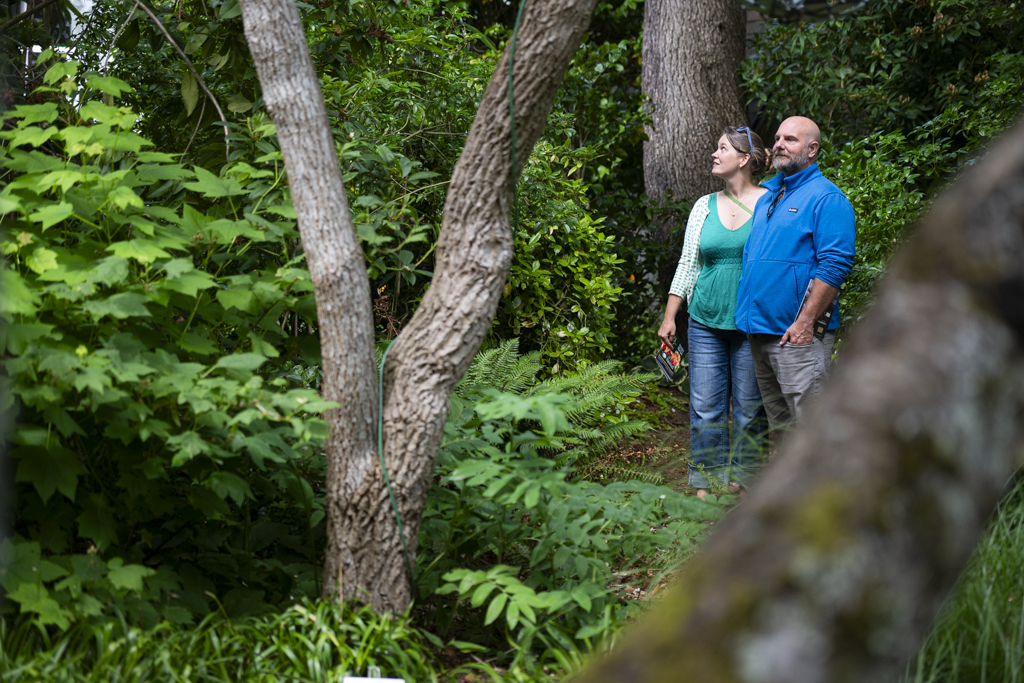
And Garden L, “Conifer Corner,” featured a 75-year-old wisteria:
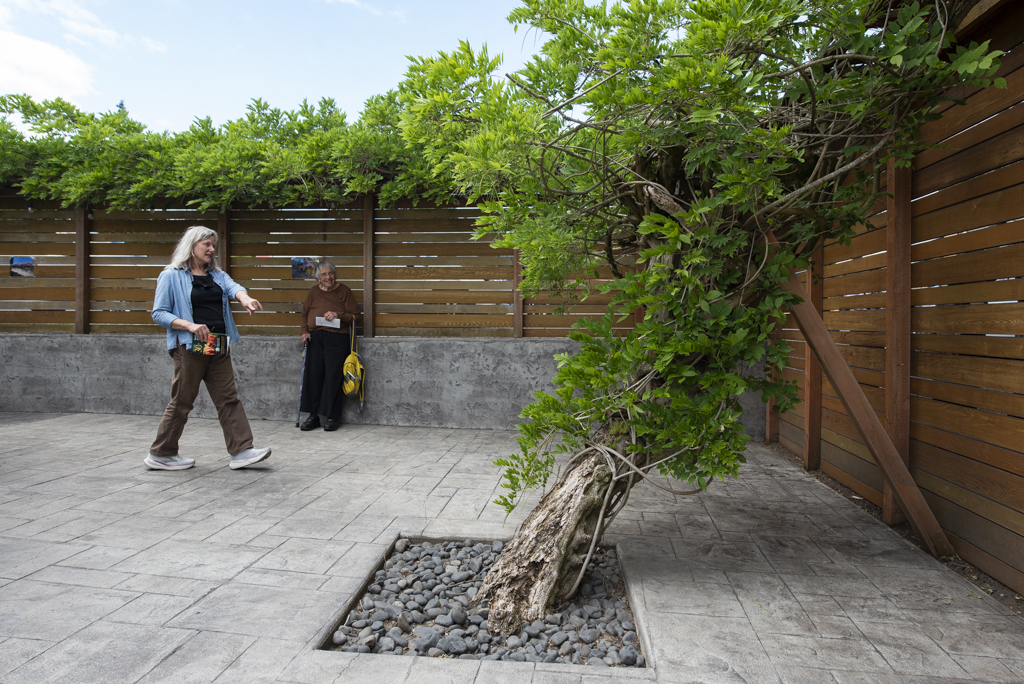
(Read details of each garden here.) The West Seattle Garden Tour is organized by a nonprofit that uses the proceeds to support other nonprofits – here are this year’s grant recipients; see how to apply for one of next year’s grants by going here (July 15 is the deadline).
-

 Los Angeles, Ca1 hour ago
Los Angeles County man convicted of sex trafficking, abusing woman he was dating
-

 Detroit, MI1 hour ago
Detroit Tigers tee off on New York Yankees with 5 homers in win
-

 San Francisco, CA2 hours ago
Popular brewery shutters San Francisco location amid industry woes
-

 Dallas, TX2 hours ago
Eight arrested after repeated attempts to enter World Cup matches without tickets
-

 Miami, FL2 hours ago
Reports: Heat add potent bench scorer in Tim Hardaway Jr.
-

 Boston, MA2 hours ago
Boston Pops gearing up for major July 4th celebration: ‘You only turn 250 once’ – Boston News, Weather, Sports | WHDH 7News
-

 Denver, CO2 hours ago
Colorado wildfires destroy more than 100 structures, force more evacuations
-

 Seattle, WA2 hours ago
Will Katie Wilson’s endorsements help or hurt Seattle’s position in Olympia?

