CHARLESTON, W.Va. — The West Virginia EMS Coalition are going to request $10 million in the anticipated May special legislative session for what they describe as needed programs.
The legislature’s Joint Committee on Volunteer Fire Departments and Emergency Medical Services talked about the funding last week at the state capitol.
Jody Ratliff
The funding would offer mental health and training resources, leadership and management classes, and opportunities to apply for a state grant for an EMT to earn an emergency medical service certification, supporters said.
State Office of Emergency Services Executive Director Jody Ratliff said he believes the request is right in line with what is needed in the state.
Advertisement
“From an office standpoint, I have a job to do, but from a paramedic standpoint, in this state, I stand by their legislation,” Ratliff said. “I think what they’re presenting is perfect for what EMS needs across the state.”
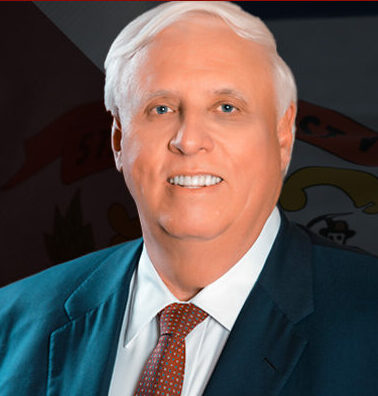
Gov. Jim Justice recently approved $10 million to fund training for EMTs and Ratliff said for the first time in a decade, they’ve had back-to-back years of increases in numbers. Ratliff didn’t reveal the numbers and acknowledged the gains are modest but it’s a move in the right direction.
“For the second year in a row since, I think, 2011, we’ve had another net positive gain in the state, and that’s just EMTs,” Ratliff said. “It’s a small number, I’m going to lie but I’ll tell you where I stand; that’s a small win for us.”
Gov. Jim Justice
The leadership and management classes are vital for agencies to continue operations. First responders have the critical skills to save lives, put out fires, and pull victims from car accidents but sometimes they lack the essential skills needed to properly maintain the books and pay bills, Ratliff said.
“If we teach the small agencies how to run their agencies and how to be profitable, at least break even; they are 501(c)(3) organizations—be profitable to that point,” Ratliff said. “If they float, the whole state floats. If they don’t load, we’ve seen it right now; nobody floats.”
Meanwhile, with a grant of $83,179, Ratliff told lawmakers they will hold the first ever Emergency Medical Services Symposium for Children. The event will be held at the Summit Bechtel Reserve from Sept. 29 through Oct. 2.
Advertisement
“It’s the first multi-day pediatric symposium we’ve had in the state,” Ratliff said. “What I’m really excited about is that we have instructors from Shriner’s Children’s National Hospital, WVU Medicine, CAMC, Florida-based Pediatrics, and the University of Kentucky—they’ve all committed so far.”
Some of the training sessions planned involve head trauma, snake bites, respiratory, pediatric abuse, and special needs for children. All hands-on activities will be held on day two, and Ratliff said they will have access to all of the Boy Scout training facilities on the property. For the children, there will be training sessions about gun safety, CPR and stopping the bleeding.
“The trucks with the high-fidelity mannequins and the simulation trucks will be involved in that also,” Ratliff said. “Command will come down and set up a temporary medical command, so providers can call into the company just like they normally would and go through the scenarios.”
CHARLESTON, W.Va. (WCHS) — West Virginians who receive Supplemental Nutrition Assistance Program benefits can once again use them to purchase soda after a federal judge blocked the state’s restriction, though the ruling could still face an appeal.
U.S. District Judge Amy Berman Jackson ruled that the U.S. Department of Agriculture exceeded its authority and failed to follow required public notice procedures before approving waivers allowing five states, including West Virginia, to restrict certain SNAP purchases. The ruling vacates those waivers, effectively restoring previous purchasing rules unless a higher court intervenes.
Gov. Patrick Morrisey said the state is consulting with the U.S. Department of Justice and the other states involved in the lawsuit before deciding whether to appeal the decision.
“We do think it’s lawful,” Morrisey said. “We think that the way that SNAP was designed, it’s trying to focus on nutrition, and I think our decisions are consistent with that. We want nutritious foods for people.”
Advertisement
Morrisey said discussions are ongoing about the state’s legal strategy.
“We’re conferring with the other states. We’re conferring with the Department of Justice on that, and we’re going to be developing our litigation plan,” he said.
The lawsuit was filed by the National Center for Law and Economic Justice on behalf of plaintiffs challenging the USDA’s approval of the restrictions.
Katherine Deabler-Meadows, an attorney with NCLEJ, said the ruling provides immediate relief for SNAP recipients and retailers.
“For our clients it means a lot that they’re going to be able to buy the food products that they need to buy to manage their lives and their health conditions,” she said.
Advertisement
Deabler-Meadows said the restrictions created confusion for grocery stores and made it more difficult for recipients to use their benefits.
“Legally, this is very clear,” she said. “The district court vacated the five waivers. USDA’s approval of those restrictions has been vacated. Legally, people should be able to just walk in and use their SNAP benefits the exact same way they could before the restrictions went into effect.”
Supporters of the restrictions argued they would encourage healthier food choices. However, Deabler-Meadows said the limits placed an unnecessary burden on families relying on SNAP benefits.
“It might seem like a small thing to not be able to drink a soda,” she said. “If your day is that long and you have that many things to juggle, sometimes that is something that you need in order to meet all of those responsibilities.”
Although the restriction has been struck down, it may take time for retailers across West Virginia to update their systems. The federal government may also appeal the ruling, but unless a court issues a stay, attorneys say the restrictions are no longer legally in effect.
People with disabilities, families, caregivers, professionals, students and trainees are invited to take a brief survey to help choose the topics covered at the 2027 Mountain State Conference on Disabilities.
The survey is a great opportunity to ensure the conference covers topics that are important to you.
They say the definition of insanity is doing the same thing over and over again and expecting a different result.
At this point, Paul Hardesty, President of the West Virginia Board of Education, must be on the precipice of losing his mind. During a recent call with reporters, Hardesty again emphasized the dire financial outlook for the state’s public schools. Enrollment continues to decline, and more school closures and consolidations may be coming next year.
It’s not the first time Hardesty has sounded the alarm.
Hardesty has repeatedly pointed out that public schools are withering under the current school-aid formula and burdensome regulations.
Advertisement
Some state lawmakers have received the message but during the 2026 60-day legislative session, while there was more discussion that legislative action is needed to address growing financial strains, ultimately, there was not enough political will for state lawmakers to take any action.
Senator Amy Nicole Grady, R-Mason, chairs the Senate Education Committee and is a public school teacher. She has spent the last three years trying to educate her fellow legislators about the frustrations teachers and school officials deal with on a daily basis.
“We know it’s nothing new. It’s something we have discussed for at least three years now, knowing that we need to move forward and change that formula in some way. But how we change it, that’s the challenge,” Grady said during an appearance on Metronews Talkline.
Grady recognizes the “how” is the major stumbling block for legislators who must make difficult decisions and must then face unhappy constituents.
“It’s very, very difficult, and this is something that’s big that really takes a lot of thinking, and it can require a lot of hard, difficult decisions, and you also have that model of self-preservation.
Advertisement
“A lot of people are thinking, this is hard for me to make this decision. I don’t want to make this decision because it could mean my seat. But when it’s the right thing, it’s the right thing regardless.”
House Education Committee Chairman Joe Statler, R-Monongalia, has also been on the front line trying to build a case for legislators to support major changes. Statler has repeatedly emphasized the gap in special education funding, where costs continue to outpace revenues.
The number of special education students continues to grow, now making up nearly 21 percent of the student population.
It is not only the legislature that has not found the political fortitude to address public education. It has not been a priority for the executive branch either.
Gov. Morrisey focused his political capital on accelerating the elimination of the personal income tax and preventing changes to the Hope Scholarship.
Advertisement
You can’t help but question whether the lack of action is due to a lack of political will or indifference to public schools’ failure. There’s no doubt that outside interest groups, many of which have supported legislative campaigns, have indicated a preference for alternative education choices.
Either way, if lawmakers continue to ignore the tidal wave of financial failures in the public education system, they will have abdicated their constitutional duty to provide West Virginia students with a “free and efficient” education system.