Sports
Nepotism in sports broadcasting: 'A tremendous advantage,' but 'what do you do with it?'


When Jac Collinsworth, at just 27 years old, debuted on the prestigious job as NBC’s play-by-play voice for Notre Dame football in September 2022, he succeeded one of the most decorated announcers in sports, Mike Tirico.
To receive such a position suggested he was a sportscasting prodigy, but from his first game — when Marshall upset Notre Dame — Collinsworth did not sound like he deserved the national stage in this role. He lacked precision and rhythm, and he kept saying, “Mmm, hmm,” a bad habit that usually is eradicated with years of practice.
The focus on Collinsworth only grew last year, especially during a flat performance with his partner, Jason Garrett, on a Notre Dame-USC prime-time game in October.
Underlying all the criticism is that Collinsworth’s father, Cris, is NBC’s top NFL analyst, showcased on “Sunday Night Football” and in five Super Bowl broadcasts. Jac also appears on the SNF pregame show as an on-site reporter/host, among other roles at the network.
Any son or daughter who goes into the family business is stamped with the nepotism label. Jac Collinsworth’s case was no different, but the attention grew as he floundered.
Though Collinsworth, after graduating from Notre Dame in 2017, had success at ESPN as a reporter and then on the sidelines and hosting for NBC Sports, his failure on the Fighting Irish games caused the man responsible for the move in the first place, Sam Flood, the president of production for NBC Sports, to finally remove Collinsworth from the role last month, admitting his mistake as Collinsworth did not have the requisite play-by-play reps yet for such a large assignment.
Jac Collinsworth, Cris Collinsworth and Flood all declined requests to be interviewed.
Jac Collinsworth working the Chargers-Bills game before Christmas with Tony Dungy, center, and Rodney Harrison. (Kirby Lee / USA Today)
Sportscasting is filled with father-and-son stories of succession. There are more successes than failures — and to be clear, Jac Collinsworth should not be put in either category just yet; especially at 29. He is just not alone.
This offseason, in Oakland, the A’s hired 24-year-old Chris Caray, a fourth-generation broadcaster dating back to his great-grandfather Harry. In Toronto, 23-year-old Ben Shulman, son of Dan, is joining the Blue Jays radio booth, just a door over from his father, who calls TV for the team along with his ESPN work.
There is a long list of sons and daughters following their parents into sportscasting from Mike Golic Sr. and Jr. to Karl and Sam Ravech to Kevin Harlan and Olivia Harlan Dekker.
And the trend is nothing new, as Fox Sports, after luring the NFL from CBS in the mid-1990s, hired three sons of famous play-by-play broadcasters — Joe Buck (son of Jack, voice of the St. Louis Cardinals and national football and baseball broadcasts), Kenny Albert (son of Marv, the legendary NBA play-by-play voice) and Thom Brennaman (son of Marty, the former voice of the Cincinnati Reds).
Like Fox three decades ago, NBC has shown a penchant for sportscasting offspring from Collinsworth to Chris Simms, son of Phil, and Noah Eagle, son of Ian.
Collinsworth’s demotion opened the door further for Noah Eagle to continue to rise. Eagle, who is just 27, excelled on Big Ten Saturday prime-time games and the NFL playoffs in his first season with NBC.
Next season and beyond, he and his analyst, Todd Blackledge, will continue on the Big Ten, but, in a given week, if Notre Dame is the top game on the network, the duo will slide over to that matchup.
Eagle has started on a path reminiscent of Buck’s, but the issue of nepotism in the booth is complicated.
When Joe Buck talks to kids who want to become a sportscaster, he often falls back on an old joke.
“My advice is to start with a famous father,” Buck told The Athletic.
Buck is often cited as the quintessential example of sportscasting nepotism, but he is also probably its greatest success story. His dad, Jack Buck, is one of the most legendary play-by-play announcers in history and, at 54, Joe has matched his father, if not exceeded his accomplishments.
Joe Buck has already called 24 World Series and six Super Bowls on TV. Jack called two World Series and one Super Bowl on the medium, while also being a constant soundtrack as the radio voice on both events.
Growing up in St. Louis, by the time Joe turned 6, he began studying how his dad prepared for MLB and NFL broadcasts.
At 12, Joe was calling games into a cassette recorder in an empty TV booth in the press box at Busch Stadium. On the drive home, he and his dad would listen back and Joe would learn. With Jack doing the reviews, it was as if a raspy-voiced Mozart was giving feedback to a teenage violinist.

Joe Buck (right), with Cris Collinsworth (left) and Troy Aikman on the call for Super Bowl XXXIX in Jacksonville, Fla., in February 2005. (Frank Micelotta / Getty Images)
By 21, Buck was slated to be in the Cardinals’ main booth, but before he could call a game, he had tears in his eyes.
He was still living at home when he opened the biggest newspaper in St. Louis, the Post-Dispatch, and saw that its respected media critic, Dan Caesar, had written a column about how nepotism helped Buck land the job.
In June 1990, Caesar wrote: “The burning question is why is Joe Buck, at age 21, being force-fed to Cardinals fans? The reason is simple, and it’s spelled B-U-C-K.”
It hurt Buck, but he knew it wasn’t wrong.
“While it crushed my soul reading about how off-putting my hiring was, he was right,” Buck said. “I remember crying about it.”
Buck said he felt like he was in a race but was beginning behind the starting line. While recognizing he had the advantages of an apprenticeship from the earliest of ages, he realized he had the job in large part because of his last name.
Over the years, even as Buck has often come across as the most confident guy in the booth, that insecurity drove him — and still does — because he always knew there would be those who felt his accomplishments were due to his dad’s Hall of Fame credentials.
“It was a gift that I got from Dan to be given a window into what people think,” Buck said. “It’s human nature. ‘Oh well, we know how he got the job.’”
Today, with social media, it is even more difficult, Buck said, because everyone’s a critic.
“It makes it really hard to kind of get your legs,” Buck said.
Eagle has done well under the same NBC umbrella as Collinsworth, but it comes from being credible on the broadcast.
“For Noah Eagle, he’s been meteoric, and he’s obviously worked really hard at this and put in the hours,” Buck said. “I think all of us — and it’s a big group — had the advantage of being around it as a kid. I think there’s something to that.”
Noah Eagle first thought he wanted to be a sportscaster at 13. Less than a decade later, he was sitting in front of one of the richest people in the world — Los Angeles Clippers owner Steve Ballmer — for 90 minutes in a conference room in the Seattle area, overlooking Mount Rainier and Lake Washington, in an attempt to land a job on Ballmer’s broadcast team.
In college, Noah did his best to be his own person — almost too much. Since his father and his mother, Alisa, both attended Syracuse, he was at first reluctant to go there but ultimately decided it was the right place for him. Once he got there, though, he tried to hide his last name. He would introduce himself as just “Noah.”
“I wanted to be like Cher or Madonna or Beyonce, you know. I just wanted to be ‘Noah,’ period,” Noah said.
He didn’t want the perception that any opportunity was because of his father, who is considered one of the best broadcasters in all of sports and will call the Final Four this year.
Halfway through Noah’s time at Syracuse, Ian told his son that he should embrace who he is, not run from it.
“I respected the fact that Noah wanted to be his own person when he got to Syracuse but reminded him to be proud of his last name,” Ian said.

“For Noah Eagle, he’s been meteoric, and he’s obviously worked really hard at this and put in the hours,” fellow broadcaster Joe Buck says. (James Black / Icon Sportswire via AP Images)
By his senior year, Noah had the respect of Olivia Stomski, an Emmy Award-winning sports producer who heads Syracuse’s Newhouse School’s sports media center. She had a contact with the Clippers, who were looking for candidates after longtime TV play-by-play voice Ralph Lawler retired.
Stomski recommended Eagle and Drew Carter, Eagle’s classmate, who is now part of the Boston Celtics’ broadcast crew. The Clippers liked each of their tapes but preferred Eagle’s and invited him out to Los Angeles for an initial interview.
Stomski said the Clippers knew this was Ian’s son, but it was Noah they were deciding on.
“I would say very little, if any,” Stomski said when asked Ian’s impact. “I know for a fact they didn’t call Ian. Ian didn’t call anyone else. If anyone was pushing, it was probably me.”
After Noah Eagle aced the first interview, he advanced to meet Ballmer, the Clippers’ owner. The two went back-and-forth with Eagle even having the chops to disagree on some points with Ballmer.
Eagle ended up receiving the radio job, not the TV one. It allowed him to have four years of play-by-play in the second-biggest market in the country.
This has led to calling Nickelodeon’s well-received Slimetime broadcasts, including for this year’s Super Bowl, and then landing NBC’s top college football job. He’s also called games for Fox Sports.
The four years of 82 games on radio and the playoffs gave Eagle the reps for the national stage. He then handed the Clippers job off.
“My biggest goal was that I would do a good enough job that other people would be more willing in the future to hire younger people,” Eagle said. “I would basically go out there and they would know a 22-year-old can get this done. And so the most pride that I’ve had, it literally did not come from the four years that I was there. It came from the fact that they hired another 22-year-old after me.”
At 22, Carlo Jiménez, right out of USC, succeeded Eagle as the radio voice of the Clippers. Jiménez’s dad is a professor at Santa Clara, teaching ceramics, and works in academic advising, while his mother is chief revenue officer for a tech startup. With an assist from Eagle, Jiménez has quickly leveled the playing field and is honing his craft on a big stage.
“I think it gives you a tremendous advantage,” Buck said of being the son of a famous sportscaster. “But then the question is, ‘What do you do with it?’”
(Top photo of Jac Collinsworth: Dylan Buell / Getty Images)



Sports
Knicks miraculously overcome 29-point deficit to take commanding 3-1 lead in NBA Finals over Spurs

NEWYou can now listen to Fox News articles!
NEW YORK – The New York Knicks do not die.
After trailing by as many as 29, the Knicks had yet another comeback — this one perhaps the greatest of all-time, to steal a 107-106 win over the San Antonio Spurs and take a 3-1 lead in the NBA Finals.
The winning moment came at the fingertip of OG Anunoby, whose tip-in off a missed Jalen Brunson three-pointer put Madison Square Garden in an absolute frenzy.
But it sure was a grind to get to that point.
New York Knicks PG Jalen Brunson shoots over San Antonio Spurs PG De’aaron Fox in Game 3 of the 2026 NBA Finals at Madison Square Garden. (Vincent Carchietta/Imagn Images)
Karl-Anthony Towns was hit with two fouls in just the first 62 seconds of the game, one which the Knicks faithful were not happy with. And while there was plenty of ball left after that, the game changed from that moment.
The refs certainly did not help the case, but the Spurs opened the game on a 41-20 run, mostly while Towns was off the floor. Combine that with the team knocking down 54% of its three-pointers in the first half, and you have a 76-49 Spurs lead at halftime, and they got up to a 29-point lead.
But we’ve learned to never count out New York. As they cut the deficit to 15 to close out the third quarter, the crowd that was dying to pounce was finally alive. A slow start to the fourth put San Antonio up 20, but the Knicks went on a 13-2 run to cut it to just nine with a little less than seven minutes to go. And then it was seven with 5:15 to go.
Members of the New York Knicks celebrate their 107-106 victory against the San Antonio Spurs in Game 4 of the 2026 NBA Finals at Madison Square Garden in New York City, New York on June 10, 2026. (Dustin Satloff/Getty Images)
KNICKS OWNER, MAMDANI TRADE BARBS OVER CANCELED KNICKS WATCH PARTY OUTSIDE MSG: ‘DON’T WANT THE CELEBRATION’
And then it was four with 4:32 to go.
Then one with two minutes.
And then the lead with just 90 seconds left.
Pandemonium.
The Spurs hit two free throws to regain the lead with 30.3 seconds left. Yet again — it’s the Knicks.
New York Knicks guard Jalen Brunson reacts after making a three-point basket against the San Antonio Spurs during the fourth quarter of Game Four in the 2026 NBA Finals at Madison Square Garden in New York City, New York on June 10, 2026. (Al Bello/Getty Images)
Then came what head coach Mike Brown dubbed the greatest play in the history of Knicks basketball.
San Antonio was unable to get a shot off the inbound, and Madison Square Garden was the loudest it may have ever been, as the greatest comeback in NBA Finals history was complete.
After the game, head coach Mike Brown dubbed Anunoby’s tip-in the biggest play in the history of Knicks basketball.
The Knicks outscored the Spurs 58-30.
Follow Fox News Digital’s sports coverage on X, and subscribe to the Fox News Sports Huddle newsletter.
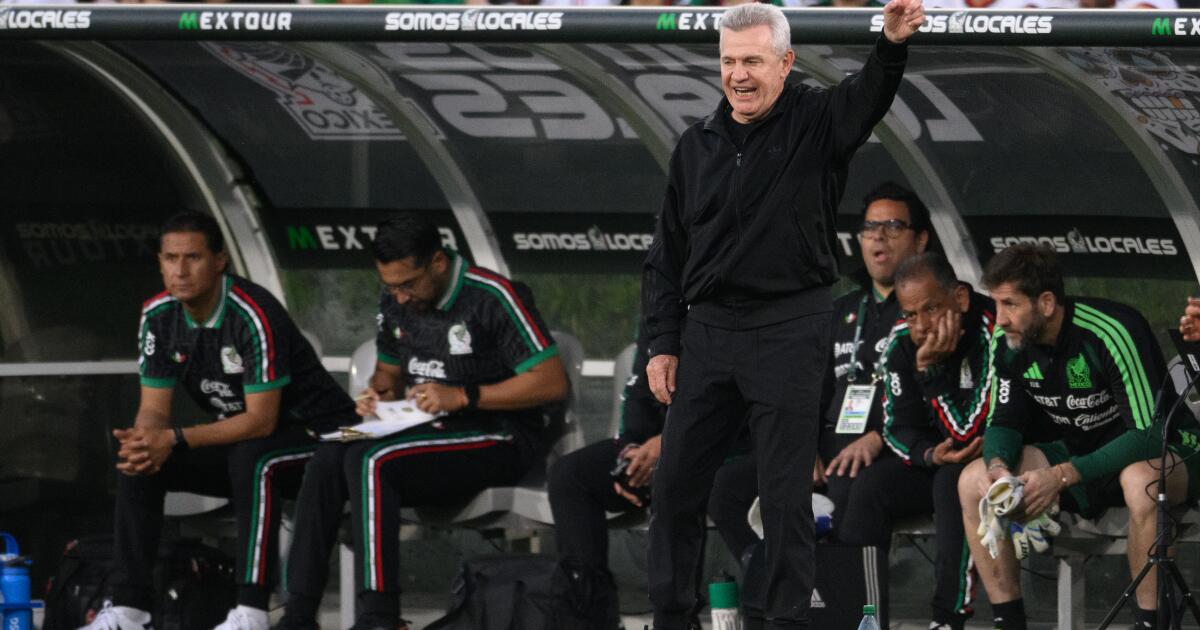
MEXICO CITY — The Mexican national team will kick off the 2026 World Cup against South Africa on Thursday with the weight of entertaining 83,000 at iconic Azteca Stadium and soccer fans around the globe.
The match at the venue known as Mexico City Stadium during the World Cup will kick off at noon PDT and air on Fox and Telemundo.
Once the ball starts rolling, the stadium’s altitude — 7,216 feet above sea level — will be one of the biggest assets for the Mexican lineup led by coach Javier Aguirre.
It will be Mexico’s eighth opening match in a World Cup, and El Tri carries a historical burden. It has never won a tournament opener, with a record of 0-5-2, including a 1-1 draw against South Africa in the opening match of the 2010 World Cup in Johannesburg.
Mexico coach Javier Aguirre directs his players during a friendly against Australia on May 30 at the Rose Bowl.
(Kyusung Gong / Ap Photo/kyusung Gong)
Aguirre will likely deploy the 4-3-3 formation he used during Mexico’s final warm-up match against Serbia.
“We’re ready; we’ve been working for 22 months,” said Aguirre, 67, who took the reins of the national team on Aug. 1, 2024, following Jaime Lozano’s failure at that year’s Copa América, when Mexico was knocked out in the group stage.
Since his arrival, Aguirre has led the team to its first Concacaf Nations League title and the Gold Cup. Mexico enters the tournament on an eight-game unbeaten streak, though several of those results came against lower tier opponents and at home. The two most encouraging highlights of that streak were the draws against Belgium and Portugal.
“If my teams are known for anything, it’s for their character,” Aguirre said. “My team is just like me.”
The starting goalkeeper position remains a topic of debate, but it appears Aguirre has already made his decision. Guillermo Ochoa, who will be playing in his sixth World Cup with Mexico, is considered by many to be the ideal experienced goalkeeper to use during the opener, when nerves are sure to be high. However, Raúl Rangel has been the starting goalkeeper during Mexico’s past three warm-up matches, playing the full 90 minutes each time.
Rangel, who was 10 years old when Mexico tied South Africa in the opening match of the 2010 World Cup and who fondly remembers El Tri’s victory over France that tournament, is confident between the posts.

Mexico could turn to veteran goalkeeper Guillermo Ochoa to calm nerves during the World Cup opener on Thursday.
(Ronaldo Bolanos/Los Angeles Times)
“We’re in great shape; we proved it against Portugal and Belgium, two teams that are among the world’s elite,” said Rangel, who noted that Ochoa has instilled a sense of calm in the team.
“I do believe we can be champions. We have to start keeping that in mind and believe that it’s possible. Not everyone can boast that they played in a World Cup on home soil.”
The Mexican team’s lack of elite club experience, however, is obvious and could be a problem. El Tri has few players in top-tier leagues and lacks game-changers on the wings, as Diego Lainez, Uriel Antuna and Hirving Lozano were left off the final roster. Offensive output is a cause for concern. In tight matches, goals have come mainly from defenders, with César Montes and Johan Vásquez being the primary threats on set pieces.
The commitment to youth appears to be a key factor in Aguirre’s approach to building the roster. Mexican American Brian Gutiérrez brings freshness and dynamism to the midfield, alongside Erik Lira’s energy. As an option off the bench, Aguirre could turn to 17-year-old Gilberto Mora, the youngest player in the tournament, who is sure to draw cheers from the crowd.
For his part, South Africa’s 74-year-old head coach, Hugo Broos, knows the Azteca Stadium well, having marked Maradona during the 1986 World Cup semifinals. To acclimate his players to the altitude, he held training camp in Pachuca, at an elevation of 7,979 feet.
“This game is special. I’ve played in European championships, but there’s nothing like a World Cup. And we’re going to play at the Azteca Stadium — it’s incredible that this is going to happen,” Broos said.

South Africa coach Hugo Broo talks with Nigeria’s players during a World Cup qualifying match against Nigeria in Bloemfontein, South Africa, on Sept. 9.
(Themba Hadebe / Associated Press)
He expects to be challenged by Mexico.
“They’re a very well-rounded team, with great mobility and teamwork,” Broos said of El Tri. “You can tell they want to be world champions.”
South Africa will pose a real threat with Mbekezeli Mokoena driving the midfield and the speed of Oswin Appollis and Relebohile Mofokeng on the wings. The team’s main weakness lies in finishing, as Lyle Foster is their only striker, and if he doesn’t perform well, the South African side will suffer.
“We can’t say we don’t have a chance against Mexico, because that’s not true,” said Broos about his team, which is ranked 60th in FIFA rankings and will tangle with a Mexican squad ranked No. 14.
Pregame entertainment will kick off at 10:30 a.m. PDT with performances by Shakira, Burna Boy, Maná, J Balvin, and Alejandro Fernández. As a new ceremonial feature, all 26 players from each team — starters and substitutes — will participate in the ceremony by lining up around the tournament’s central emblem on the field, rather than in the traditional pregame formation.
The match is expected to be played in the rain. Protests are expected around the stadium throughout the day, including demonstrations by the teachers’ union and groups representing the families of missing persons.

NEWYou can now listen to Fox News articles!
The 2026 FIFA World Cup is almost here, and fans stateside are starting to feel the excitement.
For the next month, some of the best soccer players and teams the world has to offer will duke it out on North American soil for the right to hoist the World Cup.
The U.S. Men’s National Team in particular is an exciting young soccer squad that is looking to make some noise on their home turf, and their road to the knockout stage couldn’t have been much easier (with all due respect to their fellow group members).
Folarin Balogun #20 of United States celebrates with teammates after scoring during the second half of the international friendly match between United States and Senegal at Bank of America Stadium on May 31, 2026 in Charlotte, North Carolina. (Cory Knowlton/ISI Photos/ISI Photos via Getty Images)
The Stars and Stripes will begin their quest for a World Cup on Friday, June 12, at 9 p.m. Eastern against Paraguay in Los Angeles.
US MEN’S NATIONAL TEAM GETS FAVORABLE GROUP MATCHUPS AT WORLD CUP DRAW
The Paraguayans will be making their return to the World Cup stage for the first time since 2010, and have been giant killers throughout their qualifying rounds, taking down the likes of South American heavyweights Uruguay, Argentina and Brazil.
Next on the docket, the U.S. will face off against Australia on Friday, June 19, at 3 p.m. Eastern in Seattle.
The Socceroos will try their best to muck it up and play a very defensive brand of soccer against America, while also boasting a great goalkeeper in Matthew Ryan.
SEATTLE, VANCOUVER COORDINATE CROSS-BORDER PLANNING FOR 2026 WORLD CUP TOURISM
Tyler Adams of the United States looks on before the FIFA World Cup Qatar 2022 Round of 16 match between the Netherlands and the United States at Khalifa International Stadium in Doha on Dec. 3, 2022. (Maddie Meyer/FIFA/Getty Images)
Goals will be at a premium for anyone who plays Australia in this tournament.
To conclude group play, the United States will play Turkey on Thursday, June 25, at 10 p.m. Eastern back in Los Angeles.
Fresh off a quarterfinals appearance in Euro 2024, this is a very talented Turkey who may not have the star power of a France or Brazil, but will be a very dangerous out for anyone in the World Cup.
ZERO BS. JUST DAKICH. TAKE THE DON’T @ ME PODCAST ON THE ROAD. DOWNLOAD NOW!
Team USA fans celebrate with a flag during the soccer game between the United States and Panama at Mercedes-Benz Stadium in Atlanta, Ga., on June 27, 2024. (David J. Griffin/Icon Sportswire)
Though the subject of who moves on may already be decided when Türkiye and the United States square off, these are the two heavyweights of Group D and should make for an exciting conclusion to group play.
All three games will be streaming on Fox Sports and Fox One, with both the Australia and Paraguay matchups available on Fox (blackout restrictions may apply).
CLICK HERE TO DOWNLOAD THE FOX NEWS APP
Additionally, the U.S.-Paraguay matchup will be available for free on Tubi.
Happy World Cup, everyone, and go, go USA!
-

 Pennsylvania5 minutes ago
Pride on Passyunk | Pennsylvania
-

 Rhode Island11 minutes ago
A-List Cast Grows For Movie About This Wild RI Story
-
South-Carolina14 minutes ago
South Carolina Buc-ee’s draws customers from North Carolina
-

 South Dakota19 minutes ago
Strong winds, rain expected Thursday across South Dakota
-

 Tennessee27 minutes ago
Tennessee’s Ban on THCA
-

 Texas29 minutes ago
Texas confirms five new world screwworm cases, sets infested zones to contain spread
-

 Utah35 minutes ago
Utah couple fights human-trafficking through Salt Lake-based nonprofit
-
Vermont42 minutes ago
VT Lottery Powerball, Gimme 5 results for June 10, 2026


