Dallas, TX
Feds Give $5.8 Million for New Dallas Parks, Community Centers


The federal government is sending nearly $10.5 million to North Texas and over half of the dollars are allocated for projects in Dallas.
U.S. Rep. Jasmine Crockett, D-Dallas, announced Wednesday that a House appropriations bill would provide funding for 11 projects in District 30, which includes southern and west Dallas, Grand Prairie, Arlington, Cedar Hill, Duncanville, DeSoto, and Lancaster.
Six Dallas projects received a cumulative $5.8 million, which Crockett described as being “truly transformational” for their communities. Those include rehabilitating the aging Martin Luther King Jr. Community Center in South Dallas; a new resource center to serve the Bonton neighborhood, which will be operated by Bonton Farms; new parks in South Oak Cliff and at Fair Park; money to redevelop a YMCA; and a center at UNT Dallas for attorneys to provide free legal aid to residents.
The Martin Luther King Jr. Community Center received $2.5 million in federal funding. In documentation provided with the earmark request, the city outlines plans to improve the center, which serves more than 300,000 Dallas residents annually across its five-building campus. The center acts as a community hub and event space, as well as polling place.
The existing facility opened in 1969 and has evolved to be the access point for residents to get affordable healthcare, library services, child care, rental assistance, home repairs, and more. It’s also the office space for several community organizations, such as the Dallas Black Chamber of Commerce, the Dallas Civil Rights Museum, and Miles of Freedom.
The federal money will go toward an overhaul of the interior of the main building by improving accessibility and adding a teaching kitchen, an enhanced computer lab, more storage, and restaurant infrastructure. It will also reconfigure conference and meeting spaces to provide more flexibility. The city wants to expand an existing facility or build a new one to provide clinic facilities for mental health and WIC services.
“The Martin Luther King, Jr. Community Center is the heart of the Fair Park community, providing all ages recreational and cultural amenities, critical nutrition, housing, and childcare services, and space for civic and nonprofit organizations,” the city explained in its appropriations requisition. “We all love the MLK Community Center, but that love has put a lot of wear and tear on the facility.”
Just down the street, a new 18-acre community park received $850,000. Fair Park First, the nonprofit tasked with restoring and revitalizing the 277-acre Fair Park fairgrounds where the park will sit, will oversee construction of a new community park on top of what is presently a parking lot.
“We could not be more thankful to Congresswoman Crockett for supporting the community and the development of the Community Park at Fair Park,” Fair Park First CEO Brian Luallen said. “This investment will continue to fund the park, and provide 15-minute walking access for 13 surrounding neighborhoods in the district.”
Last September, Luallen told the city’s Park and Recreation Board that about $22.5 million of the $67 million needed to build the park had been raised so far, or roughly 34 percent. He said the park would break ground when the project raises 50 percent of its goal.
This week, the Park and Recreation Board approved an application seeking another $10 million from the Texas Parks and Wildlife Department Outdoor Recreation Legacy Partnership Grant program for the park’s second phase.
Bonton Farms will receive $600,000 towards its 2,000-square-foot Bexar Street resource center. Gabe Madison, the organization’s CEO, says that the new center will support Bonton residents and apprentices in the program’s new workforce development program. Bonton Farms has been working with the Texas Irish Foundation and other local organizations to complete the center.
“The new facility will be home to the only one-on-one counseling rooms in South Dallas, farm staff break room, bathrooms, office space, and entrepreneurial workspaces for our ‘Bontonpreneurs’ like the much beloved Kerry’s Bike Shop,” Madison said. “Kerry, a local entrepreneur, has been trained by Bike Friendly South Dallas to repair and rebuild bikes and will open a new business to provide bicycles to adults and children in our neighborhood.”
Judge Charles R. Rose Community Park, located in southern Dallas’ Highland Hills neighborhood, will also benefit from federal funds. Crockett said the Trust for Public Land will receive $500,000 to move the park forward. TPL state director Robert Kent said the park is part of the 17-mile Five Mile Creek Greenbelt trail project. (The entire Five Mile Greenbelt project will include three new parks and stretch east from near the Westmoreland DART station and into the Trinity Forest through South Oak Cliff.)
“This funding will help realize the Highland Hills community’s vision for their new park while creating opportunities for improved health, recreation, and neighborhood gatherings,” Kent said.
The University of North Texas at Dallas’ College of Law received $500,000 for its Community Lawyering Center, which provides free legal services to qualifying residents. The Park South Family YMCA will also get $850,0000 toward its ongoing renovation.
Projects in Lancaster, Grand Prairie, DeSoto, and Cedar Hill also received funding in this bill.
The money comes from the 2024 Consolidated Appropriations Act, the first fiscal year package of appropriations that funds community projects in several sectors, including agriculture, transportation, housing, commerce, justice, and science. It aligns with a top line agreement struck between Senate Majority Leader Chuck Schumer and House Speaker Mike Johnson in January.
The bill passed out of the House Wednesday afternoon, and Schumer indicated Wednesday that the Senate will pass it before midnight on Friday. President Joe Biden is expected to sign it into law by the end of the week.
“These projects represent a foundational investment in the food security, infrastructure, and development of the under-resourced communities of TX-30, and I look forward to building on these investments for years to come,” Crockett said in a statement.
Author

Bethany Erickson
View Profile
Bethany Erickson is the senior digital editor for D Magazine. She’s written about real estate, education policy, the stock market, and crime throughout her career, and sometimes all at the same time. She hates lima beans and 5 a.m. and takes SAT practice tests for fun.


Courtesy of Juliet
Drake, Travis Scott, Lizzo and many other celebrities were name-dropped in the release we received about the latest modern steakhouse opening in Dallas this summer.
Juliet opened in Houston in 2022, and the movie-themed steakhouse quickly became a buzzy celebrity hangout. Now, it’s expanding into Dallas with a new location in the Design District at 1400 Hi Line Drive, right next to Delilah, another “celebrity-magnet supper club,” they called it.
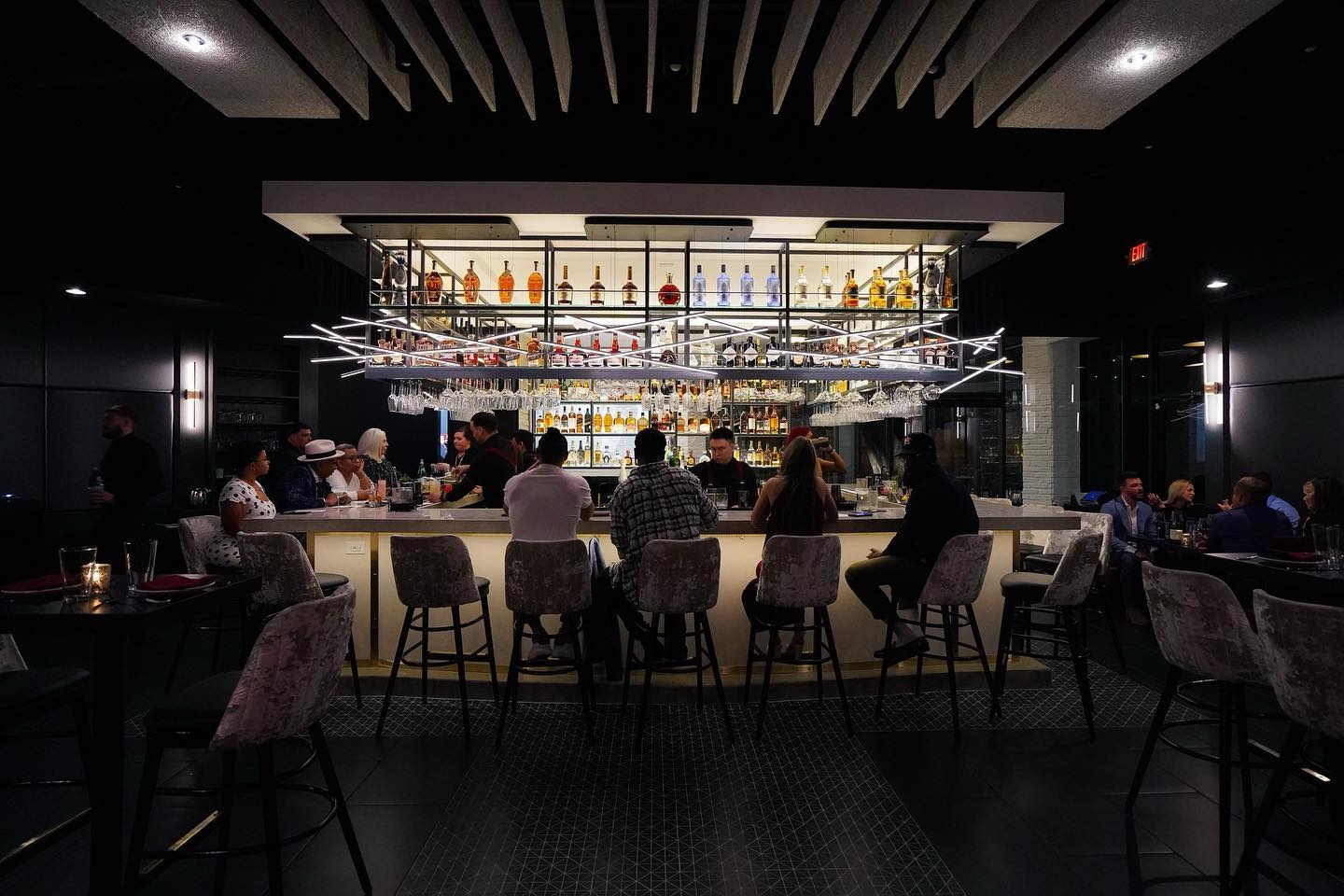
The release touts that if we thought Delilah turned heads, we should wait until we see what is walking in beside it. If it’s anything like the last four Old Hollywood art deco-themed supper club restaurants to open in Dallas, sadly, they’re probably right.
The layout
What will make Juliet different is that it’s an immersive dining experience built around a movie-theater concept. Classic films will play in the background, and the dining room will have cinematic elements throughout.
The exterior of the Houston location is a replica of a movie theater marquee, and inside, it features a mock lobby with candy and popcorn displays.
A black curtain separates the lobby from the main dining room. Past it, you’ll find a wall of mirrors and black-and-white photos from iconic scenes in cinema decorating the dining room.
If they have The Godfather running in there, count us in.
The cinematic dining destination has made a name for itself with a laundry list of A-list celebrities coming in to dine with them. Notable guests they mentioned were the Dallas Cowboys wide receiver Cee Dee Lamb, Lizzo, Glorilla, Olandria, Travis Scott and Drake.
They say that to match the ambition of the Dallas dining scene, they’re delivering an even more elevated atmosphere than the Houston original.
Juliet is likely to come in swinging with its entire roster of menus, which includes brunch, dinner, dessert, steak night and happy hour. Executive chef Jeff Auld is leading the kitchen.
The dinner menu is straightforward and centered around prime steak cuts, seafood, a raw bar and classic apps like crab cakes and calamari.
Prices aren’t listed on their website, but based on Google images, you can expect appetizers to range from $14 to $28. Entrees start at $34, but there’s a jump from that cheapest option to the others, which cost $42 and up. All sides are $14.
Wednesday night is Steak night. This is $39.95 on OpenTable; diners get a choice of potato soup or Caesar salad with a 6-ounce filet mignon. There’s also a $25 Girl Dinner on Sunday nights.
Interestingly, Juliet will seemingly work in tandem with its new neighbor, Delilah, instead of against it. The side-by-side glitz of both restaurants is likely to make this strip of Dallas the place to go to see and be seen.
Imagine that.

Organizers at the FIFA Fan Fest in Dallas’ Fair Park paused entry on Sunday evening as lightning moved across the area.
Those who were already inside the fest were advised to take shelter under the main stage viewing area or take shelter in their personal cars.
North Texas was placed under a Severe Thunderstorm Watch Sunday afternoon. The watch expires at 10 p.m. Sunday night.

DALLAS – A coordinated holiday crackdown by Dallas police and fire officials resulted in the seizure of nearly a ton of illegal fireworks and multiple citations on the Fourth of July, authorities said Sunday.
Massive fireworks seizure
What we know:
The joint operations, conducted Saturday by Dallas Fire-Rescue’s Arson Division and the Dallas Police Department’s Southeast Division, netted more than 1,800 pounds of contraband across two separate incidents.
The largest seizure happened around 5 p.m. in the 3300 block of Elsie Faye Heggins Street, near Second Avenue. Acting on investigative leads, officials found a large cache of fireworks being sold out of a U-Haul truck and a van.
Authorities confiscated more than 1,400 pounds of illegal fireworks and issued two citations at the scene. Dallas Fire-Rescue’s Inspections Division assisted in taking the explosives to a secure location.
Later that evening, at 8:17 p.m., inspectors and patrol officers conducted a second, unrelated enforcement action at a home in the 4400 block of Penelope Street. That operation resulted in one citation for possession and the seizure of approximately 400 pounds of fireworks.
Officials emphasized that the illegal sale and possession of fireworks pose severe safety risks, including property damage, injuries, and fires. Both incidents remain under investigation.
The Source: Information in this article is from the Dallas Police Department.
-

 New York2 hours ago
How a Museum Security Guard and Artist Lives on $51,000 in Parkchester
-

 Los Angeles, Ca2 hours ago
Heat advisory issued as Southern California temps near triple digits this week
-

 Detroit, MI2 hours ago
Detroit Battery Safety Provider Reaches to the Skies with Med Hawk
-

 San Francisco, CA2 hours ago
A Locals-Approved Modern Guide to Fisherman’s Wharf: Seafood, Beer Gardens + Iconic Bay Views
-

 Dallas, TX2 hours ago
New glitzy Houston steakhouse Juliet opens next to Delilah this summer
-

 Miami, FL2 hours ago
Allapattah man faces charges over armed robbery after crash in Miami’s Liberty City
-

 Boston, MA2 hours ago
Somehow, This is a Fitting, Confusing End to Jaylen Brown’s Boston Celtics Career
-

 Denver, CO2 hours ago
Denver Broncos 2026 schedule

