Midwest
Wisconsin Assembly approves bill to hike hunting and fishing license fees for out-of-state residents


- The Wisconsin Assembly unanimously passed a bill to raise hunting, fishing and trapping license fees for out-of-state residents.
- The bill, which was sent to the Senate for consideration, aims to address a deficit in the state’s fish and wildlife account.
- The Department of Natural Resources estimates the fee adjustments would generate approximately $780,000 annually.
The Wisconsin Assembly approved a bill Thursday that would raise a variety of hunting, fishing and trapping license fees for out-of-state residents to help shrink a deficit in the state’s fish and wildlife account.
The Assembly passed the legislation 97-0, sending it to the Senate.
The state Department of Natural Resources estimated the changes would generate about $780,000 more annually for the account, which funds a variety of projects ranging from fish stocking to wildlife surveys.
WISCONSIN GOV. EVERS SIGNS NEW LEGISLATIVE MAPS INTO LAW AFTER REPUBLICANS PASS THEM
The account is built largely on license fee revenue. But years of waning interest in outdoor activities has led to a projected $16 million deficit in the account heading into the state’s next two-year budget period.
Two whitetail deer are seen in the Wyomissing Parklands on Nov. 19, 2020. The Wisconsin Assembly approved a bill on Thursday that would raise a variety of hunting, fishing and trapping license fees for out-of-state residents to help shrink a deficit in the state’s fish and wildlife account. (Ben Hasty/MediaNews Group/Reading Eagle via Getty Images)
Republican lawmakers raised nonresident deer hunting licenses by $40 to $200, nonresident hunting and fishing license fees by $5 and nonresident combination licenses by $20 in the state budget that Gov. Tony Evers signed in the summer.
WISCONSIN LEGISLATURE PASSES LAWS RESTRICTING AI-PRODUCED DEEPFAKE CAMPAIGN MATERIALS
The license increases in the bill range from a $1 increase on a nonresident two-day sports fishing license to a $5,750 increase for a nonresident commercial fishing license. The Assembly on Tuesday approved a bill that would raise nonresident bow and crossbow hunting license fees by $35 to $200, sending the measure to the Senate. The broader bill approved Thursday includes that increase as well.
Read the full article from Here


RITTMAN, Ohio — Four people are dead, including a Rittman police officer, following a violent night in Wayne County.
Speaking to reporters in the early morning hours, Sheriff Tom Ballinger said that the dispatch center received 911 calls around 9:30 p.m. on Sunday “for some type of disturbance and shots fired.” Responding officers immediately started taking fire, according to the sheriff.
What Ballinger told reporters:
Rittman officer killed
One police officer was killed, and two others were injured. A K9 from the sheriff’s department was also injured. Ballinger said the suspect and two victims are dead.
The department has identified the fallen officer as Sgt. Scott Ries.
“Sgt. Ries served the Rittman Police Department with honor and courage. Throughout his service, Sgt. Ries demonstrated an enduring commitment to protecting others and upholding the values of our department. Our hearts are broken with this unimaginable loss. The incident remains under active investigation with BCI. We are grateful for the outpouring (of) support from our community and law enforcement partners,” Rittman Police said in a news release Monday morning.
Wayne County Coroner Dr. Amy Jolliff told News 5’s Bob Jones the suspect was a 38-year-old man, and the victims were a woman and her teen daughter who were killed before the officer was killed, and the suspect killed himself.
The officer died at the hospital in Akron.
The Bureau of Criminal Investigation is handling the investigation. Multiple law enforcement agencies responded.
News 5 Cleveland
A News 5 crew was on scene around Cheyenne Drive as they saw drones and a helicopter in the air. They also watched as law enforcement ran through front lawns and backyards, and asked residents how many people were in their house. Their focus appeared to be on a two-story home.
Vehicles from the sheriff’s department and Rittman, Wooster and Smithville police departments, some of which had bullet holes, were towed from the scene.
Watch Nadeen Abusada’s report:
Vehicles with bullet holes where officer was shot
Last night, the Wooster Post of the Ohio State Highway Patrol asked people to avoid the area near Rittman High School.
We Follow Through
Want us to continue to follow through on a story? Let us know.

Catholic Charities Fort Worth developed the Padua program, which is an anti-poverty program that ‘meets clients where they are.’
In the heart of one of Chicago’s most challenged neighborhoods, a proven, dignity-centered approach to breaking the cycle of poverty is about to take root.
Goodwill Greater Milwaukee & Chicago recently announced a major partnership with Catholic Charities Fort Worth (CCFW) to bring the innovative Padua program to the greater Englewood community in south Chicago.
Named after St. Anthony of Padua, patron saint of the poor, the program pairs participants with a team of two dedicated caseworkers for long-term, client-led support, with no arbitrary time limits. The only eligibility requirements for the program are that the client be 18 years old and willing to work.
The collaboration marks a significant expansion of the model, which was developed in 2015 by CCFW and validated through a randomized controlled trial by the University of Notre Dame’s Lab for Economic Opportunities (LEO).
Participants in the study were 25% more likely to achieve full-time employment, earned 46% higher incomes, and were 64% more likely to secure stable housing.
Brendan Perry, director of Padua National at Catholic Charities Fort Worth, told EWTN News that the program was in response to the nonprofit “seeing a lot of repeat customers,” which, “in the nonprofit world is not a good thing.”
“We weren’t truly creating economic mobility,” Perry recalled of the organization’s earlier efforts. “Padua was our answer to that challenge.”
Perry said the program was born from a simple but powerful question: What if?
“What if the way we’ve always addressed poverty isn’t the way it has to be?” he explained. “What if we created a program where clients set their own goals, timelines were built around people instead of funders, and we holistically addressed a client’s root issues instead of just the symptoms of their poverty? And what if we could prove it through research and create a model that was replicable?”
Unlike many short-term workforce programs, Padua’s two-person case management teams (a case manager and caseworker) provide holistic support in employment, housing, education, and emotional resilience. Clients define their own goals and remain in the program for as long as needed.
Perry said that people begin their journey with Padua from many different places and often come from a place of crisis. While Padua “is not a crisis program,” Perry said the program helps clients get to a place of stability.
“Once theyʼre there, weʼre gonna be sticking with you for the long haul to get to a point of strength and of prosperity.”
One client who has benefited from the Padua program is Lisa, a divorced mother of three who faced single parenthood, housing instability, unemployment, and mental health issues among her children.
“When I was in my marriage, there was a lot of breaking up and getting back together,” Lisa said. “There was a lot of moving around, and I believe thatʼs how my son developed separation anxiety, which led to depression, and [he] became highly suicidal.”
Lisa’s caseworker helped her find counseling for her son as well as for Lisa, who learned coping skills that helped her better care for her son.
“I pour into his life daily by reminding him that you are handsome, you are smart, you are capable, you have a mum and a family that loves you. You are loved, you deserve to be alive. This world needs you,” she said.
The Padua program helped her attend culinary school and taught her financial skills like budgeting and saving.
Lisa is now employed, has a stable home for her children, and has attended a culinary arts program with dreams of becoming a catering and private chef.
She gives credit to her caseworker, Taelor: “I call her my guardian angel because … sheʼs just been so loving and supportive.”
Perry added that the partnership with Goodwill reflects a shared commitment to human dignity.
“We’re not just expanding the program — we’re ensuring more families have access to the tools they need to build bigger, brighter futures.”
Clayton Pryor, chief mission officer for Goodwill Greater Milwaukee & Chicago, emphasized how naturally the program aligns with their existing work.
“At Goodwill, we believe lasting change starts with meeting people where they are,” Pryor told EWTN News. “Padua allows us to go deeper with individuals who need more intensive, long-term support. It’s client-led, research-backed, and focused on real stability — not just a job, but a foundation for life.”
The Illinois program is scheduled to launch in October out of Goodwill’s new Neighborhood Opportunity Center in Englewood. Pryor said the organization aims to serve 50 clients in the first year, scaling to more than 200 over five years.
Indiana
Indiana gov to Porter County: If you want to miss out on fun of giving $250m in tax money to Bears, your loss
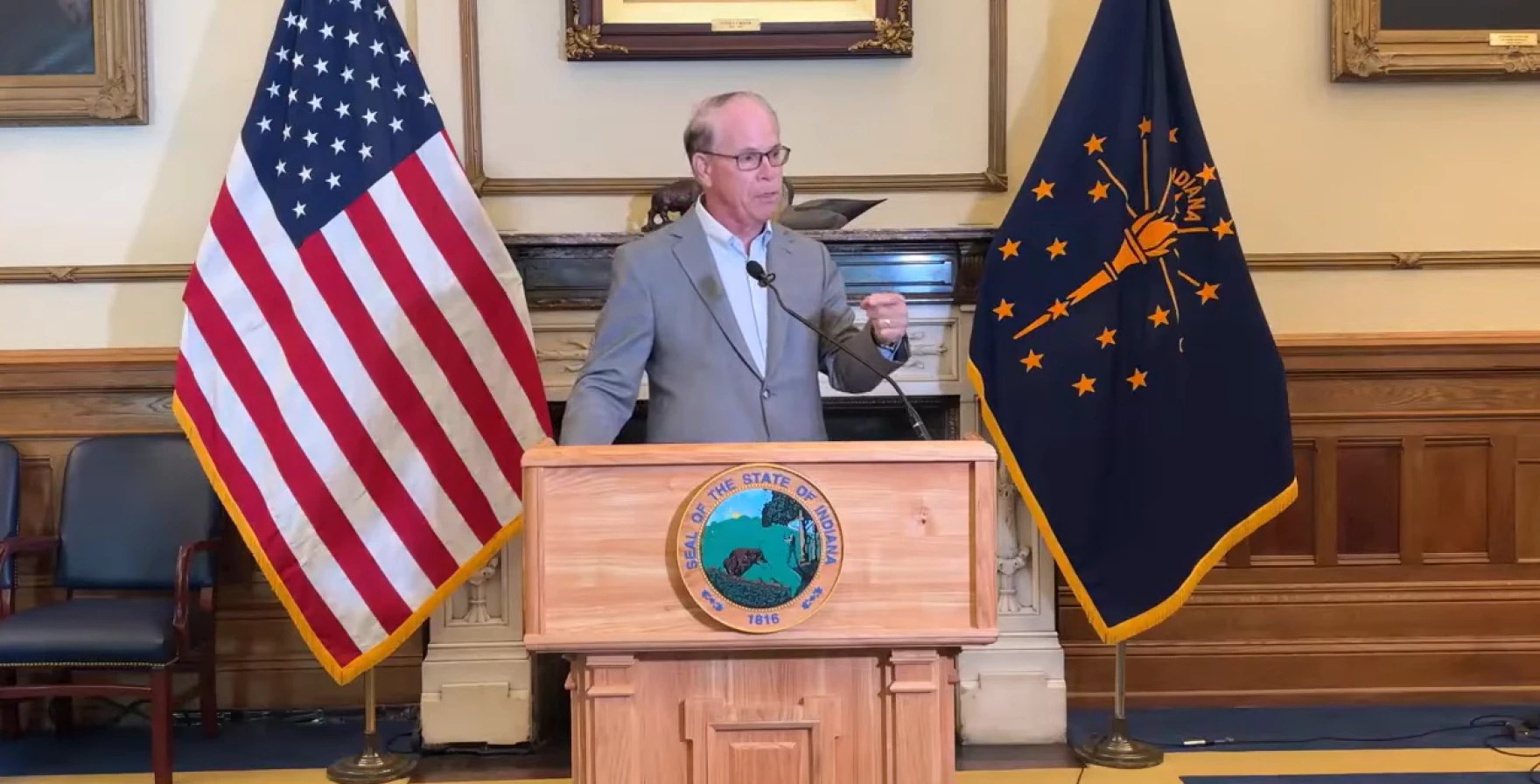
Indiana Gov. Mike Braun says he isn’t sweating Porter County leaders’ opposition to raising food and beverage taxes for a new Chicago Bears stadium the next county over, because really it’s Porter County that would be missing out on all the fun of taking part in shoveling money at the Bears owners:
Under the law, Porter County would have to approve a one-percent food and beverage tax to have representation on the stadium authority. The governor said if it doesn’t get approved, the biggest impact would be on Porter County itself.
“If they choose not to put any skin in the game, they’re not going to have any say-so for what happens from all the economic benefits we’re going to get from it,” Braun said.
Maybe you’re the one up a stump, Porter County! Does a county get a chance to fund a stadium deal every day?
The whole Porter County kerfuffle points up one of the weirder things about the Indiana Bears stadium deal: Though it was passed by the legislature back in February, it didn’t precisely spell out who would be spending what on a stadium, or even where exactly it would be. A newly created sports authority will be able to offer the Bears owners money from a whole bunch of taxes, only some of which actually exist yet:
- All new property tax, income tax, and sales tax for the next 35 years from an omni-TIF district encompassing the stadium and an undetermined number of square miles around it. This could certainly amount to billions of dollars, much of it potentially cannibalized from spending that has nothing to do with the Bears, but just as we saw in Kansas, it’s impossible to say exactly how much without knowing the size of the district.
- A doubling of the Lake County hotel tax from 5% to 10%, which would provide at least $90 million.
- Those 1% food and beverage tax surcharges in Lake and Porter counties, which would be worth about $250 million each, if approved.
- A 12% ticket tax, which would be worth about another $200 million, though as established ticket taxes are unlike other taxes in that they tend to come out of team owners’ revenues.
The best guess at the total public cost is “easily past $4 billion,” but that could go up or down depending on what gets approved in terms of that tax diversion district plus the new taxes. And a quarter-billion dollars from Porter County seems like a significant amount of money, though I suppose Braun is right in that if county leaders balk at that, the state could always compensate by running the omni-TIF district all the way to the Ohio border.
All this makes Indiana’s bid for the Bears a bit of a moving target in the state’s bidding war with Illinois, which is no doubt very much to Bears owner George McCaskey’s liking. (“You’re willing to give us $1.5 billion in property tax breaks and infrastructure money, you say? Well, what if I told you Indiana was offering a TIF district the size of the entire Local Group?”) Right now you have a three-way — or more, given the various Illinois factions — game of chicken going on, and nobody’s showing each other their cards, and … okay, maybe it’s too early in the day for me to be writing extended metaphors. If anyone says they know how much money Bears execs could get out of either Indiana or Illinois, they’re lying, that’s the upshot here.
-
Cleveland, OH6 minutes ago
Rittman police officer among 4 dead in Wayne County
-

 Austin, TX9 minutes ago
Dinosaur Day Returns to Austin with Fossil Identifications, T. rex and Family Fun
-

 Alabama14 minutes ago
The 5 most important position battles facing Kalen DeBoer, Alabama ahead of fall camp
-

 Alaska21 minutes ago
A sympathetic shooter and botched prosecution: How did Lovely Lois get away with murder in 1960s Anchorage?
-

 Arizona22 minutes ago
Where to watch Arizona Diamondbacks vs San Diego Padres: TV channel, start time, streaming for July 6
-

 Arkansas29 minutes ago
Arkansas Storm Team Forecast: Thunderstorms will start to pop around 2:00 this aftenoon
-

 Colorado39 minutes ago
Startups move to Colorado amid concerns state losing its luster for tech companies
-

 Connecticut44 minutes ago
Parts of Connecticut could see nearly 7 inches of rain Monday

