Midwest
Indianapolis Waffle House shooting victim identified by authorities
Authorities in Indianapolis have released the name of a 35-year-old woman who was slain during a shooting that apparently started with an argument between two groups of people at a Waffle House restaurant.
Crystal Kennebrew was pronounced dead at a hospital following the shooting early Monday that also left five other people wounded.
SHOOTING AT INDIANAPOLIS WAFFLE HOUSE KILLS 1, INJURES 5 OTHERS
The Marion County coroner’s office has listed her death as a homicide. The updated conditions of the other shooting victims — four men and another woman — were not available Tuesday. Three of the men and the woman were listed Monday in stable condition. The fourth man had been listed in critical condition.
The dispute started about 12:30 a.m. inside the restaurant. Indianapolis police have said it was not immediately clear if any of the victims fired shots. No arrests have been reported.
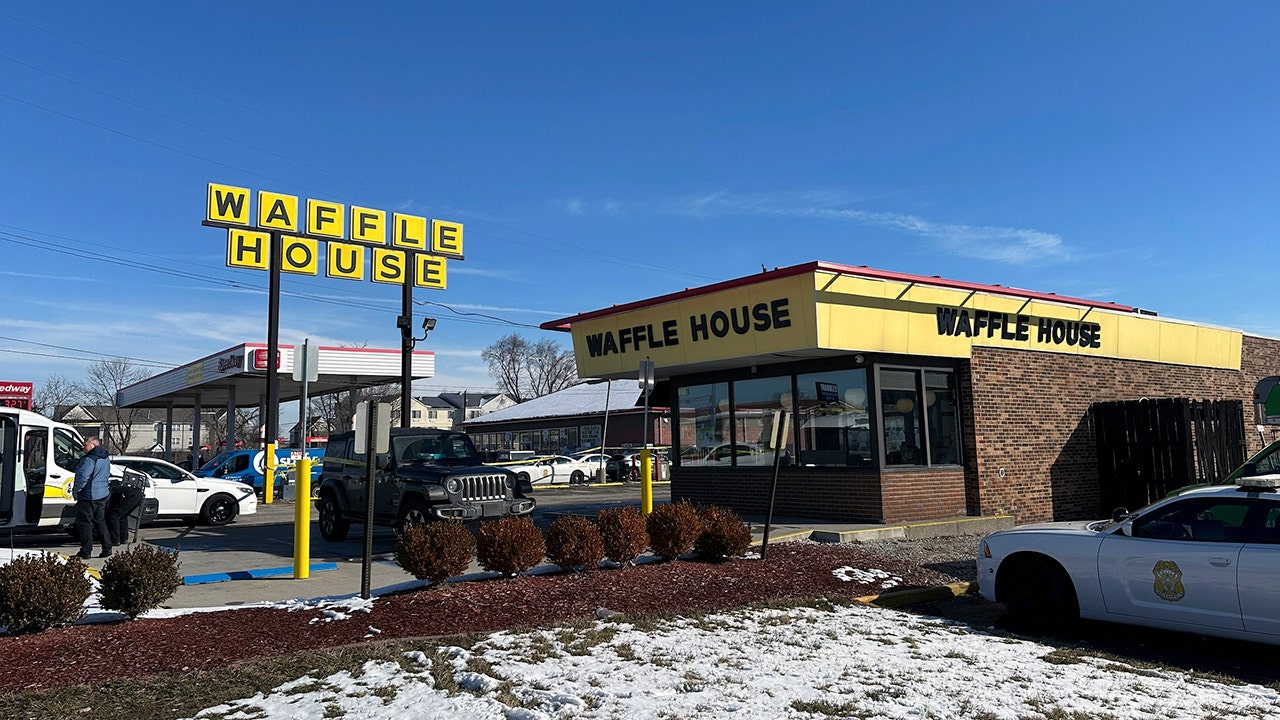
Police cars are shown near a Waffle House in Indianapolis Monday, Feb. 19, 2024, where at least one person was killed and several injured. (AP Photo/Isabella Volmert)
“We do not have any more updates about this case,” the Indianapolis Metropolitan Police Department said Tuesday in an email. “The investigation is still active and ongoing.”
Kennebrew worked as a bartender and co-owned a pub in Gary, Indiana. She was in Indianapolis over the weekend for a party at another club while the city hosted the NBA All-Star game events, The Indianapolis Star reported.
“I don’t know what happened exactly, but Crystal is gone now,” childhood friend Jaleesa Joseph told the newspaper.
“She brought people together. Even in her absence, we are still coming together because of her,” Joseph said. “A lot of my family called after this happened and said she was their favorite bartender in Gary because she always remembered what they needed.”
Read the full article from Here

Midwest
Man gunned down after offering ride to woman seeking warming shelter in Missouri: report
NEWYou can now listen to Fox News articles!
A Missouri man who offered a ride to a woman who asked for help getting to a warm shelter was gunned down over the weekend, according to reports.
William Palmer was found shot early Sunday and pronounced dead at the scene, the St. Louis Metropolitan Police Department said.
Brittany Rivoire, 36, is accused of fatally shooting Palmer and then stealing his truck after he stopped to offer her a ride, First Alert 4 reported.
GEORGIA TEEN CHARGED WITH MURDERING UBER DRIVER IN SUBURBAN CARJACKING, LEAVING HIM TO DIE
William Palmer, a dad, was allegedly murdered by a female hitchhiker in St. Louis, Mo. (Riyen Jones/GoFundMe)
Palmer’s fiancé, Riyen Jones, told the news outlet he was known for picking up people who needed rides.
“I used to tell him all the time not to pick up people off the side of the road anymore. He did it a lot. If he saw someone walking, he was picking them up and taking them as far as he could,” Jones said.
Palmer was collecting scrap metal Saturday night when he encountered Rivoire, Jones said.
FLORIDA MAN ALLEGEDLY TELLS VICTIM ‘SORRY … I NEED TO SEE MY GRANDMOTHER’ DURING ARMED CARJACKING
Brittany Rivoire, a woman arrested for allegedly murdering a man in St. Louis, Mo. (SLMPD)
Palmer’s friend was also in his vehicle when he picked up Rivoire, but got out after becoming concerned about her behavior, investigators said.
“As far as we know, she asked him at a gas station to take her to a warming shelter because she was cold,” Palmer’s fiancé, Jones, said.
“For somebody to take him for granted when all he was doing was helping her and then to do it to basically take his truck is … I can’t wrap my head around it,” she added.
William Palmer was murdered by a woman he offered a ride to, Missouri authorities said. (Riyen Jones/GoFundMe)
CLICK HERE TO DOWNLOAD THE FOX NEWS APP
Rivoire faces multiple charges, including first-degree murder, unlawful possession of a firearm, armed criminal action and first-degree tampering with a motor vehicle.
She remains in jail without bond.
Read the full article from Here
Detroit, MI
Q&A: James Tate, Detroit’s new City Council president, has ‘huge expectations’
City Councilman James E. Tate Jr. describes his new role as council president as “the seat.”
To get to that seat, the native northwest Detroiter has lived and worked through the city’s most public challenges of the past 20 years. One of his first jobs after college was working in the communications office for the scandal-ridden Mayor Kwame Kilpatrick. He became a Detroit police spokesman when plenty of “blood and guts” stories dominated the news.
He first became a councilman in 2010, just in time to deal with crushing city debt that would lead Detroit to file for Chapter 9 municipal bankruptcy in 2013.
Tate, 51, says his faith in Detroit never wavered. He has always felt he was among the Detroiters who would improve the city for all, he said. Now, he has “huge expectations” working with the new Mayor Mayor Sheffield, the former city council president, will result in policy breakthroughs that will benefit Detroiters.
Tate spoke with The Detroit News about his path to the council presidency and his goals going forward. This conversation has been edited for length and clarity.
Question: What did your parents do?
Answer: So, mom was a teacher. So, initially she was in the EKG unit at Henry Ford Hospital and then made an abrupt decision to be a (Detroit public school) teacher. And ended up getting moved around because of all the changes that were going on in the school system at the time. She was a teacher, I want to say about for 14 years. My dad; GM worker. A GM worker for 40 years. He retired, actually, in 2009.
They were from Alabama. Mom from Birmingham, dad from Montgomery.
Q: Moving to Detroit was very much the Black middle-class dream?
A: Yeah.
Q: How was Detroit, from your perspective, when you were growing up?
A: It wasn’t hard for me at all. I’m blessed to not have one of those real hard luck stories. You know, both parents together, never had abuse in the house or anything like that. They just loved on me, but I made life a little bit difficult for them. From the time I was from kindergarten to graduation of high school, I was either kicked out, put back or transferred nine times.
Q: Were you seeking action elsewhere, say out in the street?
A: It was never, like, into criminal stuff. I was just a jokester. It really hit me when I started applying to colleges and, you know, taking SATs . . . and nobody accepted me. The only way I was able to go to Wayne State was through a probationary program.
I went to Wayne State University and didn’t pay a dime. My parents paid for that. My dad really showed me what it was like to be a strong man in the family. Treated my mother with respect to this day.
I feel like Forrest Gump sometimes, like, how did I end up here? I think all of the lessons that they poured into me as a kid. At some point, they bubble up and they get to the point where it fills the cup. I would say the majority of what I do today is to make them proud and to show them that all the work they put into me, it mattered.
Q: Shortly after college you ended up in the Kwame Kilpatrick administration, working in communications. Then you became a spokesman for the police department.
When you worked for the mayor, what was the status of the Kilpatrick controversies?
A: It was bad. It was prior to the re-election. I ended up working in the mayor’s office for nine months. One day when the person over in the police department’s office of public information … ended up leaving, they said, ‘Hey, we need someone to go over to the police department.’ That was a day after the fireworks shooting, when nine people were shot. They needed someone to go over to the police department and deal with all of the media stuff.
I worked at the police department, the office of public information, as the second deputy chief, for five years. That was a complete culture shock, going from non-law enforcement to being basically embedded in the police department. There were a lot of folks who didn’t trust me. I was like, 20-something years old at that time, right? My job was to find stories that we can get out to the community that went beyond that we just arrested somebody or the blood and guts.
Q. Back to the Kilpatrick administration, I think the basic question would be, what did you see?
A: I didn’t go to any parties. (Laughs)
Q: Did you have any sense there was corruption?
A: No, it was not as salacious as some people would think, right? All I saw was, you know, people working hard, burning the candle from end to end. It was a lot of young, Black, positive energy.
I would come in at four in the morning, call the news stations, and I wouldn’t leave until about 8 p.m. because I was in love with it. It was intoxicating. I never got tired, never got frustrated. It felt this was the time for a younger generation of Detroiters to now take the place to the next level.
Q: Did it take you a while to admit, personally, that there was some wrongdoing going on?
A; I mean, whatever was dealt with in court, that was the final arbiter for me. I never had to reconcile what I saw in front of me versus that, because . . . I was there for the work, and I think we did some pretty doggone good work when we were there.
Q: Do you recall a moment of clarity, or someone who pushed you to run for council? What was the turning point?
A: When I was at the police department, I was on TV a lot. I was the guy who dealt with, you know, the public statements on all the blood and guts. I was never prepared for what I would see. I remember the first body that I saw. I was a 14-year-old girl, face down. She had on blue jeans, a pink shearling coat with little fur around it. Thankfully, I didn’t get a chance to see her face. But I remember her to this day.
But me being on camera meant that people got a chance to see me. And they felt that I was articulate enough to speak on behalf of the community. Folks who were in my atmosphere, they kept pushing me and saying, ‘You should run.’
If, I can’t trust myself, who can I trust? I wanted to be a part of making things better, period.
And I (remember) clearly … asking my wife, you know, for permission to do this. She said, ‘I got your back, whatever you decide to do.’ I resigned from the police department. Nine months my wife held down the household. Now this is in return, because I held down a household when she was getting her master’s degree.
Q: I want to ask about the bankruptcy. Was there any other choice?
A: There was no other path to getting beyond that point. When we had broken vehicles that weren’t being repaired. We had, you know — it’s 10 o’clock at night when the trash collector would come by and other times they missed it, right? That wasn’t great quality of life for residents.
When you get here (at council) and you look at the documents and you see how dismal our financial situation is, there was no choice. It absolutely needed to happen. There were a lot of people that were hurt, let’s be honest. Especially when we talk about our retirees, who are still trying to figure out what their next infusion of assistance is going to be.
Q: Could that have been avoided?
A: Any time a deal is made, you can always make it this way or that way. So there’s always alterations that could have been made. I never want to say when people are thrust through the pain that they’re still trying to figure out, that it was worth it. But it paid off going through that process for us as a city. Because we were able to now restructure that massive debt. We now were able to purchase vehicles. We now were able to slowly increase our credit rating so that now we can borrow more. We were now able to increase services period within the city of Detroit.
Q: Gosh, we’re talking about such tremendous things, from the Kwame administration corruption, crime, the bankruptcy. Was there ever a point where you thought it was too overwhelming?
A: No. It’s my city, yeah, and now I’m in the seat. So, it’s up to me to be a part of the group. I remember sitting at the table, prior to bankruptcy, and we are arguing about $1,000 going to a department here versus a department there. That’s how tight it was, right?
We’re now talking about healing and growing and making things better. We still have a long way to go, because we got a lot of folks who need help right now.
Q: You were the creator of the urban agricultural ordinance back in 2013. Was there hope it would be the start of a flourishing urban farming scene?
A: Honestly, I wasn’t that guy who even tried to think . . . that large scale. I was just saying it doesn’t make sense . . . that we can’t grow fruits and veggies in a neighborhood. And allow neighbors to pick them and, you know, eat the food.
I didn’t do all the sweat equity that all those men and women did in the urban gardens, in the urban farms. But I want to say that I played a role in getting the ball rolling.
Q: Any other pieces of legislation that you consider high marks for you?
A: The cannabis legislation. That one was important to me, because we’re talking about a new industry. That’s very rare that you’re on the forefront of an industry in the city. So, for me, it was important not to try to entice, you know, Detroiters to either consume or to own these businesses. But if they’re going to exist in the city of Detroit, it makes sense to try to identify ways to allow Detroiters to participate, have an opportunity to succeed. You still got to have a great business plan. But how do we level the playing field when you are now competing against folks who are much more connected and have deeper pockets?
Now, the industry has changed completely since then. So everybody, whether you are in the city or outside the city, there’s the challenge for many of them.
Q: Is there anything that you think the public generally often gets wrong about what you do?
A: I don’t know if it’s wrong. I just don’t think that they know what all it entails. You know, many times they only see the headline. They see a vote, but they don’t recognize that, every Tuesday, there’s sometimes hundreds of items that we have to go through (at council meetings.) Those 100 items or plus, don’t just pop up. They’re in the committee. We’re doing that homework in the committee, and we are doing everything we can to read all these documents that come before us. It’s a constant flow of information that we are receiving, and also information that we’re trying to put out and provide to the community.
I think one misperception is people believe we don’t want the community to be involved, especially our younger folks. You know, I come across 20-year-olds all the time, they don’t want cars, they don’t want to drive.
So now that really puts a bigger emphasis for us to improve our public transportation. So last year, I was one who raised my hand with other council members, and we put an infusion of dollars into our DDOT system. We’re going to have to do that over and over again. But it becomes more challenging year by year, especially nowadays, with all this financial uncertainty and political uncertainty. The dollars that we receive for our public transportation come from the federal government. Yeah, that’s been cut a bit now.
Q: There’s a council member who wants to get rid of the Detroit land bank. How do you think that conversation is going to go?
A: I don’t think getting rid of the land bank is the answer. There’s got to be far more conversation than just a will and desire to get rid of it. I don’t think that’s where overall the body is. But are we at a point where we want to see some changes in how it operates? Absolutely.
Q: Many people are frightened of what’s happening at the federal government level, national policies … tell me what that means for you as an elected official for a local city government. How do you respond?
A: From what’s happening potentially, like in Minnesota, coming (to Detroit), yeah.
Q: It’s not just ICE, of course. The federal cuts, other measures.
A: When you see what’s happening in Minnesota, and then when you saw what was happening in LA, that’s really what’s shaking our country, without a doubt. Do I want that to happen here? Absolutely not. Part of it is we have to be very strategic in our communication to our residents and how we project what our intentions are. We can get a crowd excited in a room, but also, in a way, poke the bear. And the same people that we’re trying to help are the ones who end up being harmed. While we get applause, people are being harmed.
It’s not about telling and forecasting every move that you’re going to make. Make the moves, build connection with the community, understand clearly what those needs are, and just do them to the best of your ability. Everything does not, in my opinion, have to have this stance, this statement, that we are declaring that we shall not do this if it has not arrived. Now, when it arrives, it’s time to kick butt. It’s time to respond. We don’t have to forecast it, just do it.
Thus far, I want to give credit to the mayor, the former mayor, former council and this council, we’re doing just that; listening to the community, taking in the information, investigating, but not putting us in a point where we are a target.
Q: How long do you think you will stay on council?
A: You got to ask the people of the city of Detroit. You’ve got to ask my wife, ask my doctor. I’m just blessed, you know, to be this late in my tenure on council and run unopposed in my district, that’s huge. Yeah, and now to be appointed council president by my colleagues, you know that again, is a very tremendous honor. I don’t put a shelf life on it. I just, you know, continue to work.
Q: A former council member is now the mayor. How does that change the dynamic?
A: Huge expectations. Not just because she’s a former council member, but a Detroiter. She has a heart for the community . . . she has certainly the intelligence to pull this off.
Q: Huge expectations for lowering taxes? New developments? For lowering crime?
A: Fill in the blank.
Q: Really?
A: Yeah, I mean, so it’s not just about lowering taxes or another single issue. It’s about the way you approach things, right? It’s about all those items that we have been talking about on council. How do we actually make those things happen? And it’s not that they weren’t happening with the previous administration. It was just happening in a different way.
But there’s huge expectations for this current administration, because this one feels a bit more organic. And you know, Mayor Sheffield was on council for 12 years. So when you get a chance to know a person, you have expectations that person will bring out all those things that are inside of them, and not just allow the world to consume them.
laguilar@detroitnews.com
Milwaukee, WI
Milwaukee Admirals fall to Rockford IceHogs; 3-1
MILWAUKEE – The Milwaukee Admirals outshot the Icehogs 28-19 but couldn’t generate enough momentum to complete a comeback, falling 3-1 to the Rockford IceHogs on Saturday night, Feb. 7 at Panther Arena.
Ads fall to IceHogs
What we know:
The last time the Admirals and the IceHogs faced off, the game totaled 126 penalty minutes, and that trend continued with 110 penalty minutes in the first period alone, including a pair of fights just 22 seconds after puck drop.
Check out the new and improved FOX Sports app
Zach L’Heureux opened the scoring for Milwaukee after he collected a loose puck in the Ads zone and capitalized on the mistake by converting on a breakaway breaking and beating Rockford Goalie Drew Commesso five-hole.
Rockford responded late in the period, scoring back-to-back goals just 26 seconds apart to give them a 2-1 lead going into the second. Gavin Hayes picked up the first one at with 1:59 to go in the first and the was quickly followed by Kevin Lombari’s tally at 18:27.
FREE DOWNLOAD: Get breaking news alerts in the FOX LOCAL Mobile app for iOS or Android
Halfway through the second period Nick Lardis snapped a quick shot passed Ads netminder Matt Murray to push Rockford’s lead to 3-1.
The Ads pulled Murray with just over four minutes remaining in the third, in favor of an extra attacker, but could not find their groove to erase the two-goal deficit. Even after Joakim Kemell rang a shot off the post to try and spark a late rally.
SIGN UP TODAY: Get daily headlines, breaking news emails from FOX6 News
With the AHL All-Star break coming up this week, Milwaukee will return to play at Rockford for back-to-back games next Saturday and Sunday, Feb. 14th and 15th. The Admirals come back to Panther Arena to host the Texas Stars Wednesday, Feb 18.
The Source: Information in this post was provided by the Milwaukee Admirals.
-
Indiana6 days ago13-year-old rider dies following incident at northwest Indiana BMX park
-
Massachusetts1 week agoTV star fisherman, crew all presumed dead after boat sinks off Massachusetts coast
-
Tennessee1 week agoUPDATE: Ohio woman charged in shooting death of West TN deputy
-
Indiana6 days ago13-year-old boy dies in BMX accident, officials, Steel Wheels BMX says
-
Politics4 days agoTrump unveils new rendering of sprawling White House ballroom project
-
Politics1 week agoVirginia Democrats seek dozens of new tax hikes, including on dog walking and dry cleaning
-
Austin, TX1 week ago
TEA is on board with almost all of Austin ISD’s turnaround plans
-
Politics1 week agoDon Lemon could face up to a year in prison if convicted on criminal charges