Fitness
Intensity Versus Consistency: The Real Impact of Exercise on Older Adults' Cardiorespiratory Health


Reevaluating the Importance of Exercise Intensity
A recent systematic review and meta-analysis has challenged the widely held belief that high-intensity exercise is superior for older adults, highlighting that the consistency of regular aerobic exercise may hold the key to improved cardiorespiratory fitness in this demographic.
Aerobic Exercise: A Heart-Healthy Choice
According to the American Heart Association, older adults should aim for at least 150 minutes of moderate-intensity aerobic exercise every week. This regular exercise, whether it be walking or running, has numerous benefits for heart health. Improved circulation within the heart and throughout the cardiovascular system, reduction in cardiovascular risk, and improved metabolic rate are just a few advantages. This type of exercise also promotes fat burning, increases lean muscle mass, and reduces visceral fat. Additionally, exercise releases endorphins, which can improve mood, reduce stress levels, and lower the risk of anxiety disorders and depression.
High Intensity vs. Moderate Intensity: The Verdict
The systematic review and meta-analysis in question aimed to compare the effects of moderate and high-intensity aerobic exercise on cardiorespiratory fitness in older adults. The study included 23 RCTs with 1332 older adults, divided into moderate-intensity and high-intensity groups. The findings challenge the notion that high-intensity exercise is inherently superior, showing that regular aerobic exercise, irrespective of the specific approach and intensity, provides primary benefits to cardiorespiratory fitness in older adults.
Virtual Exercise: A New Reality
The COVID-19 pandemic has underscored the potential of digital transformation in terms of physical exercise. With the challenges of providing in-person care, alternative ways of medical assistance and supervision have emerged, including virtual environments for exercise. The promotion of various sports activities online has provided employers with the possibility for the long-term implementation of innovative programs to promote employees’ physical activity.
Exercise Variety for Heart Health
Aerobic exercise, strength training, and stretching all contribute to better heart and blood vessel function. The 2018 Physical Guidelines for Americans recommend at least 150 minutes per week of moderate-intensity exercise, along with strength training two to three times per week. Stretching is also important to maintain strong, supple muscles and to avoid injury, and exercises like yoga and tai chi are highly recommended.
The Importance of Regular Physical Activity
Regular aerobic exercise is crucial for older adults to maintain cardiorespiratory fitness. Various activities, including cardiovascular training, strength training, and balance training, are important to promote longevity and reduce the risk of serious health issues. Balance training is particularly important to reduce the risk of falls and injury. Strength training is essential for maintaining muscle and overall health as we age. Research shows that participants who perform moderate physical activity have a lower risk of all-cause mortality and cardiovascular disease mortality.


InnerCity Weightlifting volunteers find a sense of fulfillment by helping clients improve their fitness.
When people think about treating or managing their mental health, therapy, journaling and reading are often among the first solutions that come to mind. While those are all valuable tools, one of the most effective outlets is often overlooked: physical fitness.
At the Lift US Foundation, based in Oakland, leaders emphasize the mental benefits of exercise for adolescents through a strength-training-focused approach. Through its partnership with the NBA Foundation, the organization has expanded its efforts to empower young people and, as founder Mike Jenkins describes it, “create superheroes.”
“The need in the community is very foundational about strength and health in general, physical and mental,” Jenkins said. “I locked in on a term I like to call generational health, and what that means is the young people in our program become the healthiest in their families, and they take those values going forward in their own.”
As for InnerCity Weightlifting, which is based in Boston and Chicago, the organization uses personal training to help people affected by systemic barriers and past challenges build a new path forward. The nonprofit helps individuals with histories of gang involvement earn personal training certifications before connecting them with paying clients.
Though some people may not want to pursue personal training full-time, ICW still provides them with fitness tools they can carry throughout life while also helping guide their next steps into the workforce.
“Learn how to work out safely, learn how to give your friends a workout and then tell us what you need, what kind of jobs you’re interested in, what’s holding you back from some stability,” said ICW’s head of development Ian Kilpatrick.
Fitness to opportunity
From the ground up, Lift US focuses on teaching young people how to understand their bodies through fitness, nutrition education, counseling, mentorship and mental health support, all while helping them develop a future-focused mindset beyond the program.
Seeing a program participant progress through each phase and ultimately succeed is Lift US’s ultimate goal.
Rucker Johnson Jr. joined the organization at age 10 with a passion for science, art and drawing. Over time, he developed a love for weightlifting as well, eventually earning a spot on Team USA and setting his sights on representing the country at the 2028 Olympic Games.
“A complete human. A complete person, physically strong, mentally strong, academically strong, and not relying on getting a football or baseball scholarship. They are just doing it to empower themselves,” Jenkins said.
Johnson Jr. also branched out to the Hidden Genius Project, an Oakland-based nonprofit that trains and mentors young Black men in technology, entrepreneurship, and leadership. The organization has partnered with the NBA Foundation for several years.
Job pathways beyond fitness
As mentioned before, ICW ultimately helps place participants into jobs even outside the fitness industry, with their interactions with clients playing a key role.
The organization has seen numerous trainers transition into different industries simply by networking and performing well with the people they train. “We had guys get jobs at Toyota because a training client was a manager at Toyota, we’ve had a client start a dog grooming business and hire her trainer as one of the first employees,” said Kilpatrick.
The organization also builds partnerships with corporations such as UPS and Home Depot to streamline job pathways for participants.
Looking ahead, ICW is also focusing on creating more in-house managerial roles for participants who may not want to become full-fledged trainers. Either way, the organization provides volunteers with a sense of belonging and direction that helps them rebuild stability in their lives.
At their core, both organizations aim to build belonging and long-term success through fitness, which is a great place to start.
Fitness
Alexandra Daddario, 40, Relies on This Underrated Crunch Upgrade for Strong Abs – Here’s How to Do It Properly

From enduring some serious physical prep for Baywatch to working consistently with elite trainer Patrick Murphy, Alexandra Daddario’s dedication to fitness is well-documented. She often shares insights on social media, and in a recent Instagram post, the White Lotus star gave an insight into how she trains her core with one powerhouse movement: the reverse crunch into shoulder stand.
Why is it so good? Most traditional ab exercises require repetitive spinal flexion—the process of pulling your chest down toward your knees, like in a standard crunch. This isolates only the upper section of your abs, and for women who spend hours sitting at a desk, it can reinforce a slouched, rounded posture.
Daddario’s movement flips the mechanics entirely since you actively curl your pelvis up toward your chest. In doing so, you target not only your upper abs, but the lower portion and your obliques (the sides) simultaneously, all while keeping your chest open and your neck unstrained. This translates into a much stronger core, better posture and crucial lower back protection. Research also shows that a controlled posterior tilt – the lower-body curl that initiates Daddario’s move – recruits a significantly higher percentage of deep core muscle fibers than traditional crunches.
Daddario then drives her hips directly up into a vertical shoulder stand. This completely removes momentum from the equation (meaning you can’t “cheat”) and forces your abs—particularly your obliques—to balance your body and prevent you from tipping sideways.
She then takes it one step further into a Pilates plow position with her legs overhead, before reversing the movement and, again, using her abs to control the lowering of her entire lower body as she slowly unrolls her spine down onto the mat. The plow portion is optional (and super advanced); the slow, controlled, lowering phase, which happens whether you move into plow or not, is where the magic happens, challenging your core through both lifting and resisting gravity. Inspired? Here’s exactly how to do the move with good form, and how many reps and sets to aim for.
How to do a reverse crunch into shoulder stand
- Lie on your back (either on a mat, or on a reformer Pilates machine, like Daddario, with your arms anchored tightly to the floor.
- Engage your core to curl your knees toward your chest, then fluidly press your feet straight up toward the ceiling, lifting your hips and lower back off the floor.
- Slowly lower down, one vertebra at a time. Aim for 3 sets of 6-8 controlled reps.
Optional progression:
- As you reach shoulder stand with your legs extended to the ceiling, slowly start to lower your toes toward the floor over your head. Your weight should rest entirely on your shoulders and upper back – not your neck.
- Keeping your legs straight, use your core to extend them straight back up to the ceiling, then control the descent by rolling your spine down one vertebra at a time, with your legs remaining straight.

As Women’s Health UK’s fitness director and a qualified Pilates and yoga instructor, Bridie Wilkins has been passionately reporting on exercise, health and nutrition since the start of her decade-long career in journalism.
After earning a first-class degree in journalism and NCTJ accreditation, she secured her first role at Look Magazine, where she launched the magazine’s health and fitness column, Look Fit, before going on to become Health and Fitness writer at HELLO!
Since, she has written for Stylist, Glamour, Cosmopolitan, Marie Claire, Elle, The Metro, Runner’s World and Red. Today, she oversees all fitness content across Women’s Health online and in print, spearheading leading cross-platform franchises, such as ‘Fit At Any Age’, which showcases the women proving that age is no barrier to exercise.
She has also represented the brand on BBC Radio London, plus various podcasts and Substacks – all with the aim to encourage more women to exercise and show them how. Outside of work, find her trying the latest Pilates studio, testing her VO2 max for fun (TY, Oura), or posting workouts on Instagram.
Fitness
Steffie Bryant, Alistair Brownlee to Share AI, Performance Insights at European Congress – Health & Fitness Association

From artificial intelligence to elite sport, the HFA European Congress keynote speakers will explore the forces reshaping health and fitness around the world.
By Lia Palazzo, Manager of Public Affairs
Steffie Bryant and Alistair Brownlee are set to offer the two keynote addresses at the 2026 HFA European Congress.
Artificial intelligence and high-performance leadership will take center stage at the 2026 HFA European Congress, where Keepme.ai President Steffie Bryant and two-time Olympic triathlon champion Alistair Brownlee will headline the annual gathering of fitness industry leaders.
The Congress, scheduled for September 24-26 at London Stadium in Queen Elizabeth Olympic Park, will bring together executives, operators, suppliers, investors, and innovators from more than 35 countries to explore the trends shaping the future of health and fitness.
Bryant will open the event on September 24 with a keynote examining how artificial intelligence is transforming fitness businesses. As president of Keepme.ai, she has helped clubs adopt AI-driven tools to strengthen member engagement, improve operations, and drive sustainable growth. Her session will focus on how operators can leverage emerging technology while maintaining a people-first approach. Her keynote is sponsored by Keepme.ai.
Brownlee will headline the second day of the Congress, sharing lessons from Olympic competition, entrepreneurship, and health innovation. The only athlete to win two Olympic gold medals in the individual triathlon, Brownlee is also founder of sports nutrition company truefuels, an investor in health and wellness companies, and co-founder of the Brownlee Foundation, which promotes youth participation in sport.
The speaker lineup reflects this year’s Congress theme, One Vision. One Voice., which focuses on the role innovation, collaboration, and leadership will play in the next chapter of the global fitness industry.
In addition to the keynote presentations, attendees will hear from more than 40 speakers from the fitness sector and related industries addressing trends, GLP-1 usage and exercise, emerging markets to watch, investment opportunities, retention, payment ecosystems, corporate wellness, community initiatives, and more. The full schedule can be viewed here and includes time to connect with suppliers in the Sponsor Marketplace. On September 26, attendees can participate in club and studio tours across London. The club tours can be added at the time of registration.
Presented in partnership with ukactive and hosted by industry leader David Minton of EVOLVE, the HFA European Congress is the industry’s premier European event, offering business leaders insight into emerging trends, new technologies, and opportunities shaping the future of the industry.
-

 Technology2 minutes ago
FBI warns Microsoft users about passwordless scam
-
 Business9 minutes ago
Swipeless online dating? How AI is reshaping the search for love
-
 Entertainment12 minutes ago
Review: They’re finally too old for it in the middling clip reel ‘Jackass: Best and Last’
-
 Politics24 minutes ago
Costs of Iran war will linger despite conflict’s end, experts say
-
 Sports32 minutes ago
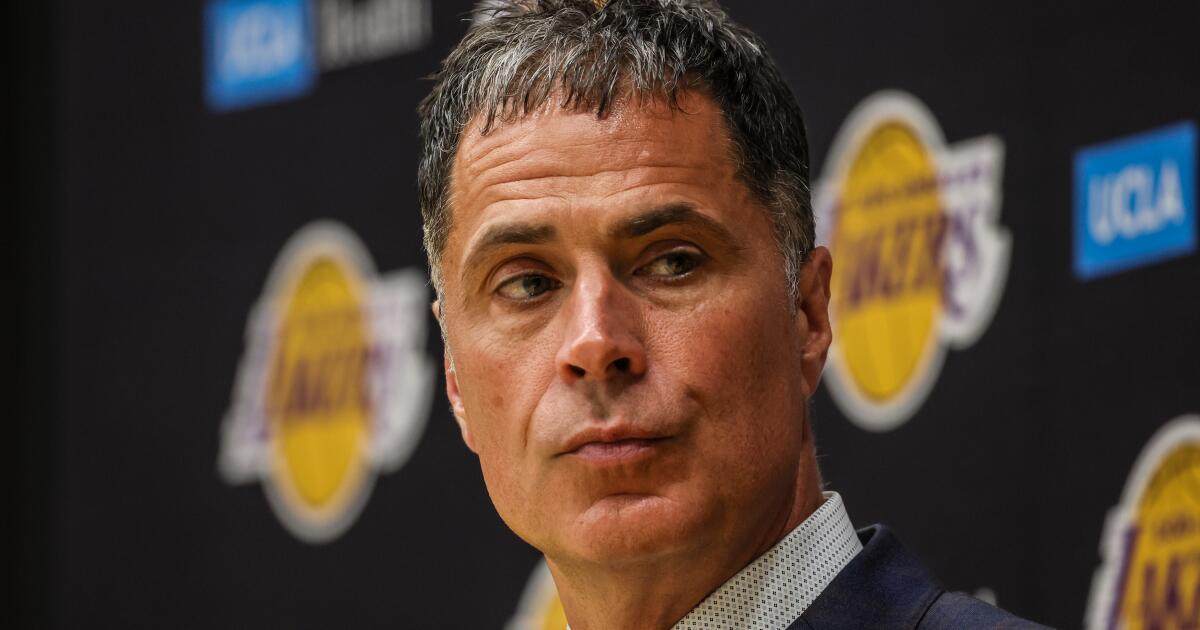
Commentary: You’re up, Rob Pelinka. To avoid Ned Colletti’s fate, the Lakers’ GM has to deliver this offseason
-

 World42 minutes ago
Q&A: Why humanitarian aid is crucial to stopping the Ebola outbreak
-
 News1 hour ago
Three firefighters killed on Colorado-Utah border as wildfires intensify
-

 Los Angeles, Ca2 hours ago
6 members of suspected South American burglary crew arrested by Irvine police

