Business
Column: Chuck Philips (1952-2024) singlehandedly made music industry journalism better

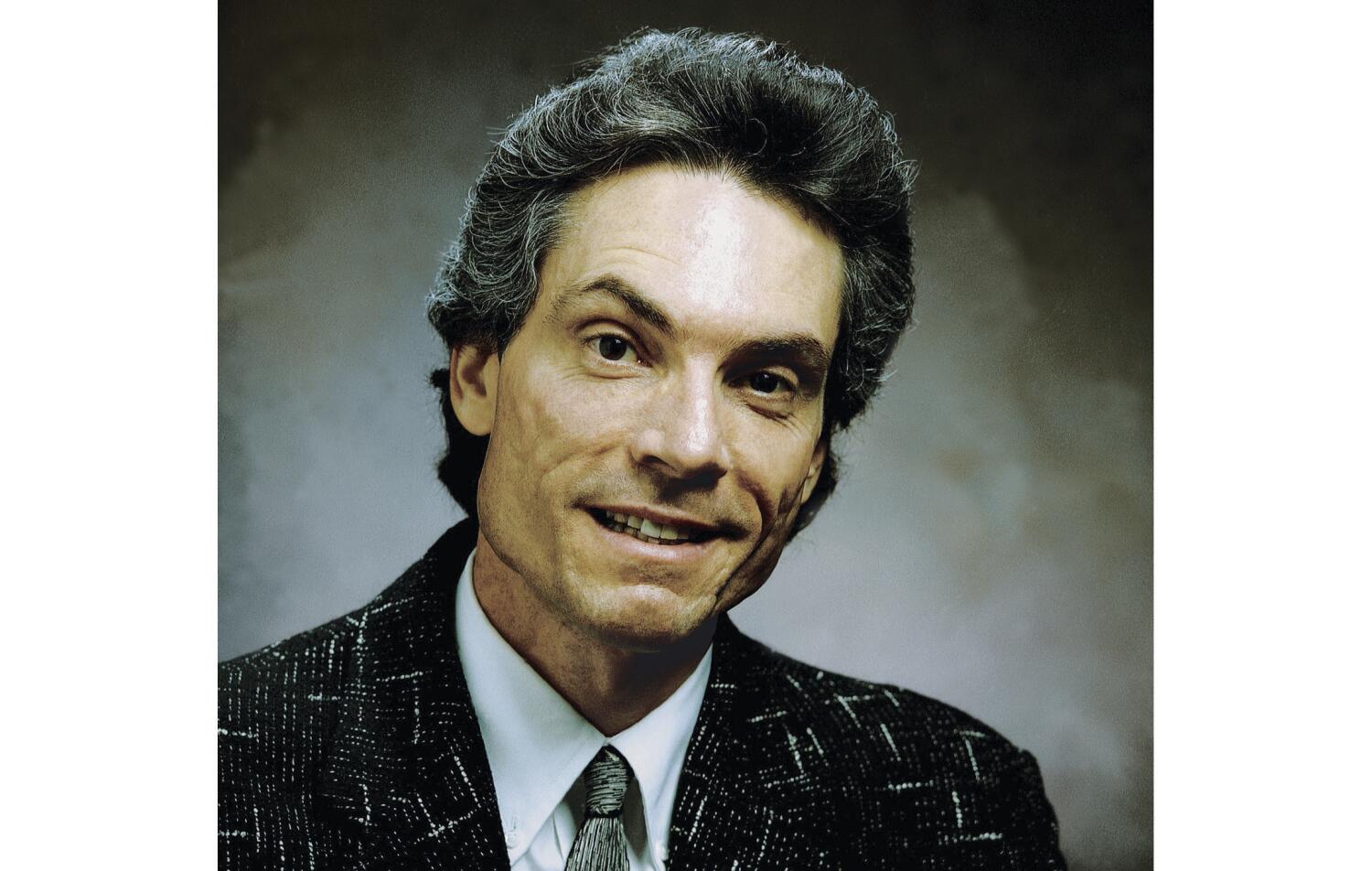
Few people outside the music industry may know the name Chuck Philips, but few inside the industry will forget it.
As the leading music industry investigative reporter of his generation and a mainstay of Times entertainment coverage for more than a decade, Chuck aimed to force a celebrity-driven corner of journalism into taking seriously how the pursuit of money by industry bigwigs often left the artists themselves at the side of the road.
He may not have entirely succeeded — the coverage of celebrity lives is still a fundamental feature of music writing — but he set a standard that has seldom been matched. Chuck died last month at 71.
“There are two ways to look at investigative reporting in the world of pop music journalism,” says Robert Hilburn, who as The Times’ pop music critic and pop music editor began publishing Chuck’s freelanced stories in the 1980s. “There’s pre-Chuck Philips and post-Chuck Philips. Before Chuck, the coverage, nationally, was mostly timid and sporadic. Chuck turned it into something relentless and uncompromising.”
That’s a global perspective. Here’s a personal perspective, drawn from my working with Chuck on investigations of the music industry in 1998 that won us the Pulitzer Prize: Chuck was the most tenacious, scrupulous and principled journalist I’ve ever known.
There are two ways to look at investigative reporting in the world of pop music journalism. There’s pre-Chuck Philips and post-Chuck Philips.
— Former Times pop music editor Robert Hilburn
I had an elite Ivy League journalism degree and he held a baccalaureate in journalism from Cal State Long Beach and, before joining The Times, had been running a silk-screening business.
After we were paired on our project I stood in awe of his skill at interviewing reluctant subjects, identifying the crux of a tough story, and pursuing it wherever it led, while his rigorous sense of probity and commitment to fairness earned him the trust and respect even of industry executives who knew they were about to be skewered. I learned more from our partnership than I did with anyone else I’ve worked with over a long career.
Hilburn relates that in the early 1980s, he saw the need for a reporter to supplement the reviews and features that made up the bulk of pop coverage with reporting on the business side of the industry.
“There was no place in the budget to hire a reporter,” Hilburn told me, “so I put out the word that I was looking for a free-lance, but the field was so barren that only one person responded.”
It was Chuck Philips, who had “scant experience as a reporter — just a few stories for local music publications. Yet he had an intelligence and desire in our first meeting that stood out. Unable to hire him, I took money allocated for reviews and features to pay him by the story.”
He started with a couple of stories covering a censorship case in Florida that confronted the rap group 2 Live Crew with possible criminal and obscenity charges involving its debut album. “But Chuck didn’t just stop there, he did more than a dozen follow-up stories as new developments arose,” Hilburn said.
Few stories illustrated the compassion and empathy for recording artists that infused Chuck’s work like his coverage of the Milli Vanilli scandal in 1990. Largely forgotten now, the duo of Rob Pilatus and Fabrice Morvan had burst onto the music scene with a 1988 album titled “Girl You Know It’s True.”
The single by that name soared to No. 1 on the Billboard charts. The dreadlocked break dancers, whom Chuck later described as “a sharp-dressing dance duo on the Munich club and fashion-show circuit,” became a worldwide sensation, winning the award for best new artist at the 1989 Grammys.
The truth was that they hadn’t sung a note on the album or on stage, but lip-synced on stage and on videos to tracks laid down by freelance vocalists. They were outed at a news conference by Frank Farian, their own Germany-based producer, who evidently was trying to undercut their insistence on singing on a forthcoming release by destroying their credibility.
“Rob” and “Fab” were showered with vilification and ridicule in the music press. Not in Chuck’s stories, however. He saw clearly that they were the victims in a scam perpetrated by Farian and abetted by what his reporting indicated was the willful blindness, if not the knowing consent, of their American label, Clive Davis’ Arista Records.
A few days after the story broke, the performers granted their first joint interview to Chuck, who showed how they had been ruthlessly manipulated by industry figures who unaccountably escaped with their fortunes and reputations intact. Underlying the fiasco, he wrote, was “the record industry’s myth-making machine built with a recording technology capable of deceit and operated by men who chose to deceive.”
In 1995, The Times finally hired him for its full-time business staff. For Chuck, covering the music industry was not about quick hits or superficial celebrity-driven stories to be turned around in a day or two, but a determined effort to gain the trust of potential sources and infuse them with a sense of responsibility for the integrity of the business.
“Chuck Philips changed my life,” recalls Terri McIntyre, who was executive director of the Los Angeles chapter of the Grammy organization when Chuck and I began investigating the organization, the National Academy of Recording Arts and Sciences, and its CEO, C. Michael Greene. “We became trusted friends as I shared ‘off-the-record’ the horrors of my experience at NARAS and the names of many other individuals he should seek out” for further information, recalls McIntyre, who recently filed a lawsuit alleging she was raped by Greene. (Greene denies her allegations.)
“Chuck’s dedication played a meaningful and significant role in my transition from victim-to-survivor,” McIntyre says. “He doggedly fought for the truth.”
For Chuck, every story involved a long-term investment. He was unfailingly sincere and rigorously honest in his treatment of colleagues and record industry workers, from secretaries to executives. Chuck was one of the most gracious colleagues I ever encountered. As long as we worked together he never forgot my birthday, leaving me CDs with mixes of new music that are still in my collection.
Chuck often took on issues that would not be taken up by the broader press for months, even years. In 1991, working with the late Laurie Becklund, he broke the story of sexual misconduct at three leading record companies and a prominent Los Angeles law firm, unearthing legal settlements and government complaints by secretaries and other women in their offices, divulging damning details and identifying the accused perpetrators by name — a quarter-century before reporting on sexual harassment in the entertainment industry launched the #MeToo movement.
Investigative reporters at other media outlets scurried to follow The Times’ reporting. “Chuck Philips was responsible for bringing sexual harassment in the music industry to a national forum,” Richard D. Barnet and Larry L. Burris observed in a 2001 book on music industry controversies.
In 1994, he reported on accusations about Ticketmaster’s strong-arm tactics to preserve its near-monopoly over ticket sales at major concert venues, focusing in part on a complaint by the Seattle band Pearl Jam that Ticketmaster had pressured concert promoters into canceling dates for a national tour on which the band had tried to cap ticket prices.
In 1999, the late Mark Saylor, then the editor of entertainment coverage in The Times’ business section, was inspired to pair me and Chuck together for an investigation of the music industry. Chuck had unique access to the upper echelons of the industry and I could read a financial report.
But Chuck was the guiding spirit of the project, which began with stories exposing financial irregularities at NARAS, which sponsors the Grammys, under the all-powerful Greene — among them its spending less than 10% of the millions of dollars donated to a Grammy charity on its stated purpose of providing assistance to indigent and ailing musicians. We also reported on settlements of numerous complaints of sexual harassment by female workers at NARAS during Greene’s reign.
Greene kept his job until 2002, when the NARAS board finally ousted him after further sexual harassment cases, many of them relentlessly reported by Philips, came to light.
It must be said that Chuck was ill-served by The Times’ former management, which yielded a bitter breakup that may have contributed to his wish, communicated by his family, that no formal obituary appear, including in The Times.
The inflection point came with his indefatigable reporting on the 1996 murder of Tupac Shakur. The product was a front-page article on March 17, 2008, that traced personal animosity between Tupac and the rap artist known as Biggie Smalls, or Notorious B.I.G., to a 1994 ambush at a New York recording studio at which Tupac had been robbed and pistol-whipped. The fallout from that incident, he reported, contributed to both rappers’ killings.
Chuck later recounted that he had tried to track down everyone who witnessed the 1994 assault, visiting witnesses in “prisons across the nation” and in violent neighborhoods in L.A. and New York. His story reported that information “supported Shakur’s claims that associates of music executive Sean “Diddy” Combs orchestrated” the assault; its principal target was the rap music mogul James “Jimmy Henchman” Rosemond, an associate of Combs. It was accompanied by purported FBI reports, known as 302s, of interviews with informants; the documents appeared to support Shakur’s claims, though the 2008 article didn’t hinge on those documents.
Chuck had been tipped to the documents by an associate of Henchman’s, who told him that he had filed the 302s in a lawsuit he had brought in federal court in Florida and that they made a reference to the 1994 assault.
The documents were “privileged” — meaning that because they had been filed in an earlier court case, they could be reported on without legal liability. As it happened, however, they were also fabricated. When the article ran, Chuck did not know he had been steered toward faked documents, though he realized it soon afterward. In the aftermath, he suffered the consequences.
The Times retracted the story and removed it from its website.
Chuck disagreed with the retraction, arguing that the documents had been at best peripheral to his reporting and that the article held water without them — indeed, that he had striven to minimize references to the documents in his original draft but had been overruled by editors.
In any event, his targets exploited the retraction in a concentrated campaign to undermine his credibility. Henchman, as it happens, was sentenced in 2018 to life in prison plus 30 years for ordering the murder of a rap music rival.
A few months after the retraction, Chuck was swept out of The Times in a layoff wave, ending a career as one of the most distinguished staff members in the newspaper’s history.
Chuck spent years defending himself, including via a lengthy first-person accounting in New York’s Village Voice in 2012. The retraction permanently overshadowed his career; he never again was able to secure a full-time reporting job. Now his voice is permanently stilled, but his impact on the way we try to cover entertainment lives on.


An aging downtown office complex will be converted into apartments as part of an ambitious plan by local real estate companies to create 4,000 affordable housing units in Los Angeles.
The first project will be a $200-million makeover of the L.A. World Trade Center, a sprawling white elephant of an office complex on Figueroa Street built in the 1970s that will be turned into 512 apartments in one of the largest affordable housing conversions to date downtown.
Future projects being planned in the central city for delivery over the next five years will include other office-to-apartment conversions and new housing built from the ground up.
The 10-story World Trade Center, right, at Figueroa and Fourth streets in downtown Los Angeles, was built in the mid-1970s.
(Myung J. Chun / Los Angeles Times)
Behind the building campaign unveiled Monday are two of the region’s largest real estate companies, Jamison and Kennedy Wilson. Jamison is the city’s most prolific converter of offices to market-rate apartments and currently has a major makeover of a downtown office skyscraper underway for tenants who can pay top rents.
Kennedy Wilson, a real estate investment company based in Beverly Hills, owns Vintage Housing, which builds and operates affordable housing using tax credits and other state and federal financing to help fund it.
Vintage Housing and Jamison’s new affordable housing division, Arden Residential, will take on the campaign to build the housing where qualified tenants will pay rents below market rates.
Rents in the World Trade Center — which will be renamed Sky Castle when it opens in early 2028 — are expected to start at $937 for a one-bedroom unit. Some two- and three-bedroom units would rent for $1,100 and $1,300 per month, respectively, developers said.
Sky Castle will have shared amenities found in more expensive modern apartments, the developers said, such as a fitness center, resident lounge and co-working space. It already has six tennis courts on the roof, which may be converted to pickleball courts, Jamison Chief Executive Garrett Lee said.
The goal is to build higher quality affordable housing by using efficient construction methods Jamison has learned through building more than 8,000 market-rate apartments in the past, Lee said. The makeover of the World Trade Center will mark Jamison’s 15th conversion of an office building to housing.

The plan to redevelop the L.A. World Trade Center, bottom left, is one of the largest affordable housing conversions to date downtown.
(Myung J. Chun / Los Angeles Times)
The 10-story World Trade Center was built in the mid-1970s to fanfare saying it would be home to international companies. In 1976, The Times described the center as a place to prepare for an overseas trip where visitors could get passports and visas, as well as exchange dollars for francs, marks, rubles and other currency. There was a language school and branches of U.S., Swiss and Japanese banks.
By the mid-1980s, the 400,000-square-foot office complex covering a city block at Figueroa and Fourth streets had lost its international flavor and was falling out of favor with corporate tenants who were moving into glossy new skyscrapers on Bunker Hill and in other locations.
The building has been cleared of remaining office tenants to allow work to begin in August, Lee said.
Kennedy Wilson is a nationwide operator of market-rate apartments that has also moved into building affordable housing in the last decade, said Nicholas Bridges, global head of capital markets at the company.
Building affordable, workforce housing “in almost all cases requires public subsidies,” Bridges said, and Kennedy Wilson has developed expertise in assembling “a cocktail of public financing sources” that includes low-income housing tax credits and tax-exempt bonds.
In the past, many housing developers have shied away from building affordable housing because assembling the subsidies needed to make construction profitable is challenging.

An artist’s rendering shows what the L.A. World Trade Center could look like after being redeveloped into affordable housing. The new complex is to be called Sky Castle.
(Ian Camarillo)
“It’s complicated,” Bridges said, “and not for the faint of heart.”
Eligible tenants must earn between 30% and 80% of the median income in the area where the housing is built.
Jamison and Kennedy Wilson will develop about 15 affordable housing projects between downtown and the 405 Freeway, Bridges said, many of them in aging office buildings such as the World Trade Center that are already owned by Jamison and are close to public transit.
Substantial potential for affordable housing lies in L.A.’s underused office buildings, he said.
“In this post-COVID world, the way people are utilizing office buildings, particularly older office buildings, has just fundamentally changed,” he said.
It makes sense for developers of conventional multifamily housing to move to building affordable housing, Lee said, because the government supports it through subsidies, zoning reform and the fast-tracking of construction permits. The city of Los Angeles also recently streamlined its adaptive reuse rules to make it easier to convert office buildings to housing.
“There are a lot of incentives pushing us in this direction,” Lee said.

Comcast is spinning off its NBCUniversal entertainment and news media businesses into a separate publicly traded company, a move that would unwind an audacious play the cable giant made for the storied Hollywood assets 15 years ago.
The plan would put broadcast networks NBC and Telemundo, NBC News, cable network Bravo, streaming service Peacock, the Los Angeles-based Universal film and television studios, Universal theme parks and British TV service Sky in a new stand-alone company.
Philadelphia-based Comcast would remain in its core business of distributing pay-TV channels, broadband internet and wireless services.
The spinoff would be the second such move by Comcast in two years. Late last year, the Brian L. Roberts-controlled company cast off most of its cable portfolio, including CNBC, USA Network, MS NOW and Golf Channel to form a new entity called Versant.
But the maneuver failed to budge Comcast’s listless stock, which has languished for years as its primary business lost thousands of broadband customers.
Comcast executives needed to make a bolder move to mollify frustrated investors.
Comcast stock peaked at nearly $26 per share Monday before closing at $24.22, up roughly 4.5% from Friday. Still, the stock remains below its 52-week high of $34.34.
The plan announced Monday would unravel Comcast’s bold decision to acquire NBCUniversal from General Electric Co. in 2011. At the time, Comcast saw tremendous value in marrying NBC’s entertainment operations, including its then-lucrative cable channels, with its cable TV distribution service that Roberts’ late father, Ralph, launched in Tupelo, Miss., in 1963.
“They were two distinct businesses,” longtime cable analyst Craig Moffett wrote in a Monday note to investors. “Having them under the same roof didn’t make either better.”
Consumers shifted to streaming, and Comcast’s attempt to build a top-tier digital service, Peacock, has fallen well short of its goal. Peacock lags behind rivals despite billions of dollars in investment from Comcast.
The concept of unwinding its NBCUniversal operation began in earnest in the fall, when Comcast joined the bidding for Warner Bros. Discovery. Comcast executives knew they could ill afford to spend billions to buy a rival; Wall Street would have pummeled the company.
So Comcast offered to spin off NBCUniversal and pair it with Warner Bros., turning two original Hollywood studios into a new media colossus.
But 43-year-old billionaire David Ellison prevailed in the bidding, agreeing to pay $111 billion to capture Warner Bros. Discovery. Losing the auction forced Comcast to find a different path forward.
On a call with investors, Roberts said the separation would bolster the two firms as they navigate increasing competitive challenges while technology companies continue to transform entertainment.
“We asked ourselves three basic questions,” Roberts said. “One, can these businesses stand alone and have the heft to stand alone in separate companies? Two, do they have a clear, viable capital allocation path to invest? And three, is now the right time? And the answer we came back with was yes to all counts.”
A free-standing NBCUniversal, home of the “Minions” and “Jurassic Park” franchises, probably would be an acquisition target, as media companies have been consolidating in an effort to get more content and mass distribution for their streaming services. Ellison’s Paramount is on track to close its Warner Bros. purchase, which would combine such media assets as HBO Max, CBS, CNN, Paramount Pictures and Warner Bros. studios.
With its Sky business, NBCUniversal has a toehold in Britain and Europe at a time when Amazon and Netflix are flexing their global distribution muscles.
Comcast would be positioned to combine with another cable and internet provider, such as Connecticut-based Charter, which owns the Spectrum television service. Charter is in the process of buying the smaller Cox cable service, which also has operations in Southern California.
Comcast is expected to complete the spinoff next year and will retain an 19% stake in the new entity.
The timetable could put NBCUniversal up for grabs by 2028 — when the company is set to broadcast the Summer Olympics, which will be held in Los Angeles.
Comcast acquired NBCUniversal in 2011. The industry-reshaping deal combined the largest distributor of TV channels with a provider of top-rated TV channels and a movie studio. But the streaming revolution has decimated the cable television business. Traditional TV viewing has been in a steady decline over the last decade. NBC has relied heavily on NFL broadcasts, and more recently, NBA and Major League Baseball games to remain relevant.
NBCUniversal has invested heavily in its streaming service, Peacock, but has been unable to reach the scale necessary for profitability. Comcast‘s stock price has struggled as a result.
Roberts, chairman and chief executive of Comcast, will continue to be involved in the leadership of Comcast and NBCUniversal, working in partnership with the CEOs of both companies.
Mike Cavanagh will remain as CEO of NBCUniversal, and Comcast’s former chief financial officer, Michael Angelakis, will return to run Comcast after the spinoff.
“Perhaps the best part of today’s welcome announcement … is that Mike Angelakis is coming back,” Moffett, the analyst, wrote. “He will now helm the cable business, [which] is unequivocally good news. With Mike Angelakis’s return, Comcast has come full circle.”
Moffett added that, despite Monday’s announcement, the 2011 combination was not a complete bust.
“The deal to acquire NBCU from GE was financially brilliant,” he said. “It was structured so that Comcast paid for just half of the acquisition and then let NBCU’s own cash flow pay for the rest.”
Over the years, Comcast has raked in billions in profit from its media holdings.
Comcast executives on the analyst call played down the notion that the two companies were being positioned for another deal.
“Absolutely not,” Roberts said. “This is the right move to put each company in the strongest position to create value, fully monetize its assets and aggressively pursue its own organic growth strategies.”
Cavanaugh, who has been running the combined company for three years, sounded more like a buyer than a seller.
“Our plan for NBCUniversal and Sky is to build and invest for growth,” he said. “We have the freedom now to explore adjacent businesses where we have the right to play, and that’s thanks to the stability of our company and management team.”
The spinoff announcement comes a week after Fox Corp. announced its deal to purchase the streaming platform Roku for $22 billion. The deal is aimed at ensuring that Fox has a means to get its portfolio of sports, news and entertainment channels into viewers’ homes as the traditional pay-TV business continues to erode.

Rocket Lab took a big step Monday to better compete with rivals SpaceX and Amazon, announcing an $8-billion acquisition of satellite communications company Iridium.
The Long Beach rocket-and-satellite maker is buying a company that provides critical communications services to pilots, mariners and others, while giving Rocket Lab a foothold in the emerging satellite-based mobile phone market.
“We are going to absorb it, optimize it and scale it into something that is really truly fantastic,” said Rocket Lab Chief Executive Peter Beck in a YouTube presentation of the deal.
Rocket Lab is paying $54 a share for McLean, Va.-based Iridium — $27 in cash and the rest in shares. Deutsche Bank and Wells Fargo are providing $3.6 billion in financing in the deal, which is expected to close next year.
Iridium’s 66 low-Earth-orbit satellites provide voice, data, navigation and other services to remote regions and across the globe to 2.55 million government, defense, aviation, maritime and commercial subscribers.
Iridium reported net income of $114 million in 2025, up 2% from the previous year. Revenue climbed 5% to $872 million.
The market for mobile cellular and other satellite-based communications is growing rapidly.
Elon Musk’s SpaceX spent $17 billion last year to acquire spectrum from EchoStar and then followed it up with a $2.6-billion purchase. The spectrum will allow its Starlink broadband satellite network to provide mobile phone service worldwide.
In April, Amazon agreed to acquire satellite operator Globalstar in a roughly $11.6-billion deal that would expand the services of its satellite system and the so-called direct-to-device smartphone market.
The competition has raised concerns about Iridium’s ability to compete.
SpaceX went public this month in the largest initial public offering ever, raising $86 billion, with the company now valued at more than $2 trillion.
In February, Iridium Chief Executive Matthew Desch said the company has shown it’s not “in decline,” dismissing concerns that it couldn’t compete with Starlink, according to Morningstar.
Founded in 2006 in New Zealand, Rocket Lab moved to the U.S. a decade ago and opened its Long Beach headquarters in 2020. It has manufacturing and mission operations in Virginia, New Mexico, Colorado, Maryland, Toronto and New Zealand.
The company manufactures a small rocket called Electron that has launched 262 satellites into space, making it the second-busiest U.S. launch provider behind SpaceX. Rocket Lab is developing a larger rocket called Neutron, and it also makes satellites, subsystems and space components.
Beck said the acquisition of Iridium will propel Rocket Lab into the satellite communications business. That would otherwise be a slow process, requiring the acquisition of spectrum, satellite development and establishment of a customer base.
“We think we’ve found a little bit of a shortcut here,” Beck said, noting the combined company will be vertically integrated, able to design, build, launch and operate its own satellites.
The deal is “very strategic” for Rocket Lab, William Blair analyst Louie DiPalma said in a note to clients, according to Morningstar.
Rocket Lab has announced multiple contracts this year.
Last week, the company said it would launch Electron rockets for three NASA missions from its New Zealand site.
In May, Rocket Lab announced a $30-million contract with Costa Mesa defense contractor Anduril for multiple hypersonic test flights in Virginia using Rocket Lab’s HASTE launch vehicle.
The company is among scores of businesses that have revitalized Southern California’s aerospace and defense industries since SpaceX was founded in 2002. SpaceX, now headquartered in Texas maintains operations in Hawthorne.
Secretary of Defense Pete Hegseth visited Rocket Lab’s headquarters in January during a stop on his tour of defense contractors in Southern California and across the country.
“This company, you right here, are front and center, as part of ensuring that we build an arsenal of freedom that America needs,” Hegseth told several hundred cheering workers. “The future of the battlefield starts right here with dominance of space.”
Iridium investors cheered the news. Its shares gained 25% to close Monday at $54.59. Rocket Lab shares jumped 16% to close at $97.95.
-

 Oklahoma57 seconds ago
Oklahoma AG announces settlement that would cut PSO rate increase from 15% to 1%
-

 Oregon6 minutes ago
Oregon leaders celebrate, slam Supreme Court ruling on trans athletes
-

 Pennsylvania13 minutes ago
What to know as Pennsylvania’s state budget deadline arrives
-

 Rhode Island16 minutes ago
Foulkes still holds 20-point lead over McKee, but gap is narrowing
-

 South-Carolina21 minutes ago
Live nightly lottery drawings hit ABC15 as SC Education Lottery partner
-

 South Dakota28 minutes ago
130 mph straight line winds devastate South Dakota wind farm – Oklahoma Energy Today
-

 Tennessee31 minutes ago
Former Tennessee baseball pitcher Garrett Stallings called up by Milwaukee Brewers
-

 Texas36 minutes ago
Texas man admits embezzling $3.2 million to pay student loans, fuel online gambling, prosecutors say

