Charleston WV – The following events happened on these dates in West Virginia history. To read more, go to e-WV: The West Virginia Encyclopedia at www.wvencyclopedia.org.
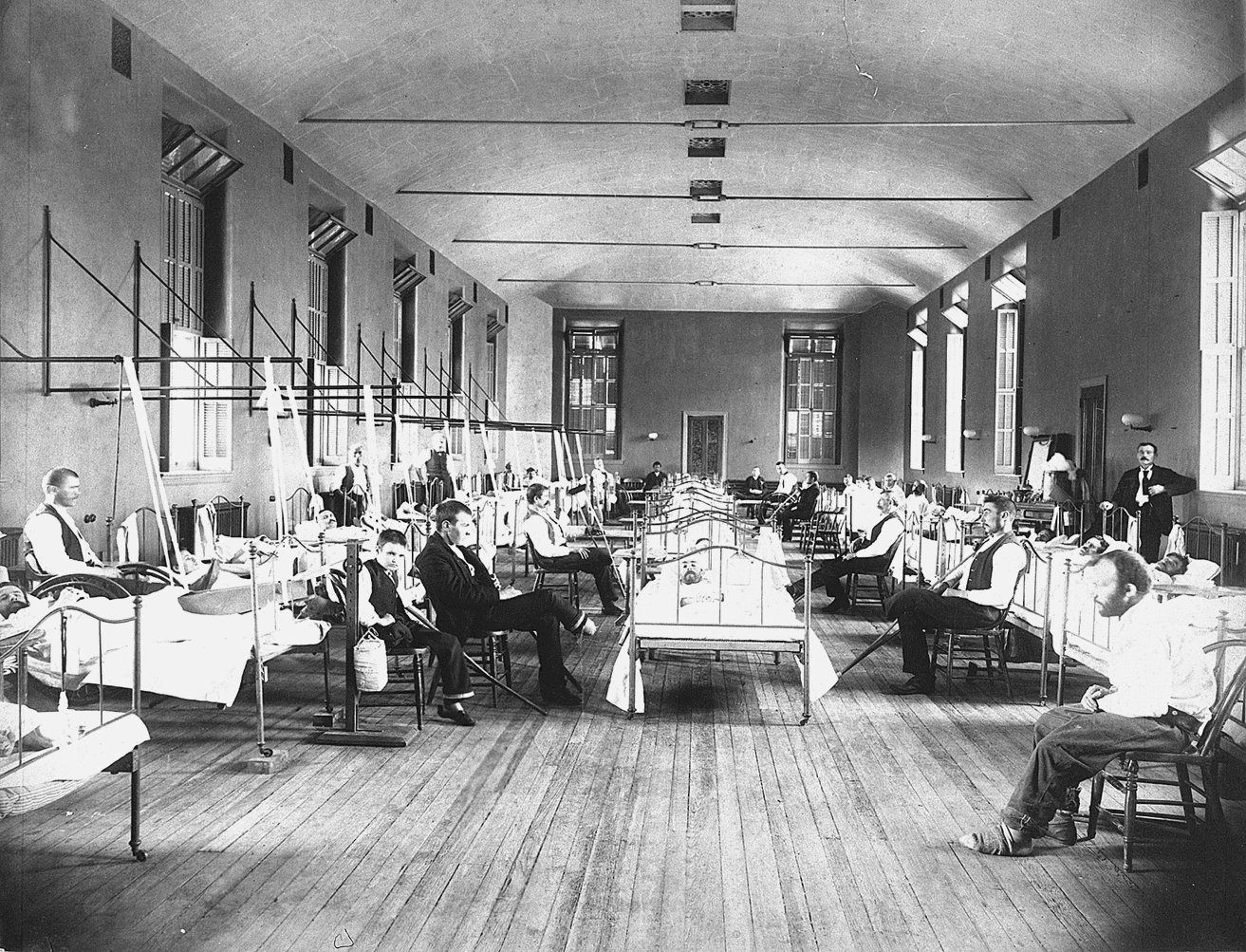
Jan. 28, 1902: Miners Hospital No. One opened at Welch, with a young Dr. Henry Hatfield as president. The legislature had passed a law requiring state hospitals for those engaged in dangerous occupations, and eventually three hospitals for miners were built in different sections of the state.
Jan. 28, 1937: In a flood that drove a million Ohio Valley residents from their homes, the Ohio River crested at Huntington at 69.45 feet, more than 19 feet above flood stage. By the time the water receded, five people were dead, and the city was in ruins. Parkersburg, Ravenswood and Point Pleasant also were badly damaged.
Jan. 29, 1903: The great rhododendron was designated the official state flower of West Virginia, after being recommended by the governor and voted on by public school schools.
Advertisement
Jan. 30, 1818: Nicholas County was created by the Virginia legislature from parts of Greenbrier, Kanawha and Randolph counties. The county was named for Wilson Cary Nicholas, a Virginia governor and U.S. senator who lived from 1761 to 1820.
Jan. 30, 1895: Mingo County was created from the southern part of Logan County. Mingo is the youngest county in West Virginia.
Jan. 31, 1878: Educator William Woodson Trent was born in rural Nicholas County. He served as state superintendent of schools from 1933 until 1957.
Jan. 31, 1922: Movie and television actress Joanne Dru was born Joan Letitia Lacock in Logan. Her movie career included more than 40 films. Her brother, singer and TV host Peter Marshall, is also a West Virginia native.
Jan. 31, 1945: Sergeant Jonah Edward Kelley of Mineral County was killed in action while leading his squad against German positions during World War II. He was awarded the Medal of Honor for his “superb courage.”
Feb. 1, 1832: Education reformer Alexander Luark Wade was born. Wade reorganized rural Monongalia County schools to require progress through eight prescribed levels with a graduating exercise and receipt of a diploma. Wade’s system worked so well it was copied in other counties and states.
Advertisement
Feb. 1, 1901: Frank Buckles, the last surviving American veteran of World War I, was born in Missouri. Buckles purchased a farm in Charles Town in 1954 and continued to live there until his death in 2011.
Feb. 2, 1908: Justice Marion Chambers was born in Huntington. Chambers was awarded the Medal of Honor for his actions in the World War II Iwo Jima campaign in February 1945.
Feb. 3, 1825: Confederate General William Lowther Jackson was born in Clarksburg. He was one of at least three Southern officers to bear the nickname “Mudwall.”
Feb. 3, 1845: Gilmer County, located in the heart of West Virginia, was established from parts of Kanawha and Lewis counties. It was named for Thomas W. Gilmer, a governor of Virginia.
Feb. 3, 1923: Broadcast announcer Jack Fleming was born in Morgantown. He was the long-time “Voice of the Mountaineers.”
Feb. 3, 1961: The West Virginia legislature passed a resolution adopting “The West Virginia Hills” as an official state song. Prior to “Take Me Home, Country Roads,” “The West Virginia Hills” was the best-known of our four official state songs.
Advertisement
Jonah Edward KelleyJustice M. ChambersMiner’s HospitalRhododendron – West Virginia State Flower
photo by David FattalehAlexander WadeFrank Woodruff BucklesJack FlemingJoanne Dru
People with disabilities, families, caregivers, professionals, students and trainees are invited to take a brief survey to help choose the topics covered at the 2027 Mountain State Conference on Disabilities.
The survey is a great opportunity to ensure the conference covers topics that are important to you.
They say the definition of insanity is doing the same thing over and over again and expecting a different result.
At this point, Paul Hardesty, President of the West Virginia Board of Education, must be on the precipice of losing his mind. During a recent call with reporters, Hardesty again emphasized the dire financial outlook for the state’s public schools. Enrollment continues to decline, and more school closures and consolidations may be coming next year.
It’s not the first time Hardesty has sounded the alarm.
Hardesty has repeatedly pointed out that public schools are withering under the current school-aid formula and burdensome regulations.
Advertisement
Some state lawmakers have received the message but during the 2026 60-day legislative session, while there was more discussion that legislative action is needed to address growing financial strains, ultimately, there was not enough political will for state lawmakers to take any action.
Senator Amy Nicole Grady, R-Mason, chairs the Senate Education Committee and is a public school teacher. She has spent the last three years trying to educate her fellow legislators about the frustrations teachers and school officials deal with on a daily basis.
“We know it’s nothing new. It’s something we have discussed for at least three years now, knowing that we need to move forward and change that formula in some way. But how we change it, that’s the challenge,” Grady said during an appearance on Metronews Talkline.
Grady recognizes the “how” is the major stumbling block for legislators who must make difficult decisions and must then face unhappy constituents.
“It’s very, very difficult, and this is something that’s big that really takes a lot of thinking, and it can require a lot of hard, difficult decisions, and you also have that model of self-preservation.
Advertisement
“A lot of people are thinking, this is hard for me to make this decision. I don’t want to make this decision because it could mean my seat. But when it’s the right thing, it’s the right thing regardless.”
House Education Committee Chairman Joe Statler, R-Monongalia, has also been on the front line trying to build a case for legislators to support major changes. Statler has repeatedly emphasized the gap in special education funding, where costs continue to outpace revenues.
The number of special education students continues to grow, now making up nearly 21 percent of the student population.
It is not only the legislature that has not found the political fortitude to address public education. It has not been a priority for the executive branch either.
Gov. Morrisey focused his political capital on accelerating the elimination of the personal income tax and preventing changes to the Hope Scholarship.
Advertisement
You can’t help but question whether the lack of action is due to a lack of political will or indifference to public schools’ failure. There’s no doubt that outside interest groups, many of which have supported legislative campaigns, have indicated a preference for alternative education choices.
Either way, if lawmakers continue to ignore the tidal wave of financial failures in the public education system, they will have abdicated their constitutional duty to provide West Virginia students with a “free and efficient” education system.
For the first time since the 2015-16 season, the West Virginia Mountaineers women’s basketball roster will feature a West Virginia native.
Advertisement
Wheeling product Alexis Bordas transfers in after having a tremendous freshman season up the road at Duquesne, where she averaged 15.5 points (ranked fifth in the A-10) and 3.1 rebounds per game while shooting 34.6% from beyond the arc. At season’s end, she was named to the A-10 All-Rookie Team.
Advertisement
Morgantown’s Olivia Seggie was the last West Virginia-born player on the women’s hoops roster.
Of course, WVU was Bordas’ dream school. Pretty much her entire family went to school here and grew up coming to Mountaineer games, so Mark Kellogg probably didn’t have to do much convincing once he made it known that they wanted her.
“Chase Harler’s from Wheeling, so I came to a lot of his games. Jevon Carter, my brother, loved him. We watched a lot more of the men back then, but Kysre Gondrezick, she was someone that I always watched.”
When asked what it’s like to finally be in a Mountaineer uniform and practicing with the group, she responded, “Yeah, it’s great to finally be here and get to meet all my teammates and become such good friends with them already. It’s been super fun, and just seeing the difference from day one to now, and how much we’ve progressed already, it’s super exciting to see.
Advertisement
“All the fan support last night, we had an event, and just seeing all the fans and how it’s June, and everyone’s already so excited and rallies around this team,” she added. “I know it’s extra special being from West Virginia, and I’m sure lots of little girls will look up to me and hope to be playing here one day, so it’s great to be a role model for them, too.”
Advertisement
Nine times last season, Bordas registered 20+ points, and of course, as a true West Virginian would, she had her best performance against the Pitt Panthers, dropping 38 on them in an 84-69 win. She went 11/22 from the field in that one, including a 10/18 day from three-point range.
Bordas is a high-volume shooter from range, as 58.8% of her attempts came from downtown last season. When you shoot 34% from there and can maybe hit the high 30s, no one will care about the shot diet being so reliant on the three-ball.
Under the new rules, Bordas will have four years of eligibility remaining.