When I was invited by Ford to visit its headquarters in Dearborn, Mich, last week and check out its new in-car operating system, I thought I knew what to expect.
Technology
Ford’s new 48-inch digital dashboard is a lot of Android for one car

/cdn.vox-cdn.com/uploads/chorus_asset/file/25239997/Lincoln_Digital_Experience_Full_Interior.jpg?ssl=1 "Ford’s new 48-inch digital dashboard is a lot of Android for one car")
It was going to be built on the Android Automotive operating system, so there would be native versions of Maps, Assistant, and other popular Google apps. It would look pretty slick, with graphics powered by Epic’s Unreal engine. And it would still support Apple CarPlay and Android Auto, because Ford has said it won’t restrict access to the popular phone-mirroring services like its rival General Motors.
What else could there possibly be? A lot, apparently. Like a massive 48-inch curved display with crisp 4K graphics stretching the full length of the dash. This pillar-to-pillar panoramic display is the most eye-catching new feature to come to Ford’s vehicle lineup in a long time.
What else could there possibly be? A lot, apparently.
And it puts the automaker on the vanguard of a controversial trend in the auto world that I call “screen maximalism,” in which companies like Tesla, Cadillac, Mercedes-Benz, and BMW are cramming larger and larger screens into their cars, despite warnings from safety experts that larger screens can distract drivers and make driving more dangerous.
But for Ford, the screen is just window dressing. The real innovation is the personalization and modularity offered by Google’s native Android OS, as well as 5G wireless connectivity for over-the-air software updates. The car will recognize the driver and adjust the settings accordingly. And the interior displays can be configured to as much — or as little — information as desired. In that way, the company hopes to better compete with Tesla and other tech-forward car rivals.
“I think displays, in many ways, have been like windows into the inside of the car,” Doug Field, the former Apple and Tesla engineer who now runs Ford’s model e division, told me. “That was one of the things Steve [Jobs] taught us: the hardware should gradually become just a window into the world of software.”
It’s been almost three years since Ford announced it would be swapping its Blackberry QNX-powered version of Sync with one that runs on Google’s Android. The move would allow vehicle owners to experience popular Google apps natively on their cars’ infotainment system without mirroring their phones.
But it would also allow it to continue to offer an OS that was unique to Ford. Sync, the company’s factory-installed infotainment system, has been slowly adding functionality over the years and is now on its fourth generation. Still, the company promised that “millions” of Ford and Lincoln vehicles using the new operating system would hit the road by 2023.
That turned out to be an overly optimistic prediction. The switch took longer than expected, with Ford CEO Jim Farley telling us back in 2022 that the integration was running “months” behind schedule. Now, Ford says the system is ready to go, with the 2024 Lincoln Nautilus being the first to feature the new OS and panoramic display. Other models, including the first Ford-branded vehicle, will be announced later.
Ford says the system is ready to go, with the 2024 Lincoln Nautilus being the first to feature the new OS and panoramic display.
The new system won’t be branded as Sync, but Ford has no immediate plans to phase out its in-house operating system. But individual vehicle teams will have discretion about how much screen they want for their models. This suggests that the display layout in a Lincoln Nautilus won’t look the same as that in a Ford Bronco or an F-150 Lightning.
“We’ve really approached infotainment as a platform, and there will be a number of screen configurations that are built into that platform,” Alan Hall, director of technology communications at Ford, told me.
At first glance, the total acreage devoted to screens inside the Nautilus is a little overwhelming. Bringing up a map on the 11.1-inch central display and then casting that same map into the panoramic displays creates the odd effect of seeing two versions of the same map in two different places at the same time. Same for the music player. But Ford said everything will be customizable, with customers being able to choose how much or how little information they want to see inside their vehicle.
Ford organizes the panoramic screen into three sections. Moving from left to right there’s the Critical section, which sits behind the steering wheel and serves as the instrument cluster; Supportive, in the central position; and Glanceable, which sits in front of the passenger seat.
At first glance, the total acreage devoted to screens inside the Nautilus is a little overwhelming.
Critical information includes typical gauge cluster stuff, like speed, gear selection, and driver assist features. The Supportive section features navigation and directions. And the Glanceable section includes the music player, a clock, and a variety of other so-called “widgets” that can be swapped in and out, depending on the driver’s preferences. These include vehicle information, like graphics for tire pressure and fuel economy. The weather graphic includes little animations for clouds and rain.
Importantly, the panoramic display is not a touchscreen — nor is it actually one contiguous screen. It appeared to be at least two different screens fused together under one piece of curved glass.
All functions are controllable through the 11.1-inch center touchscreen. The panoramic display is positioned directly below the windshield, which Ford says will only require a slight downward glance by the driver to minimize distractions from driving.
Of course, minimizing distractions will be a challenge given how much real estate is being given over to screens. Research suggests that the shift toward touchscreen-based infotainment systems has accompanied a huge increase in driver distraction, with a AAA study concluding that drivers using touch screens were visually and mentally distracted for more than 40 seconds when completing tasks like programming navigation or sending a text message. Removing eyes from the road even for just two seconds doubles the risk for a crash.
Field argues that Ford is following a set of internal guidelines about what it will show drivers on each screen in order to prevent distractions, such as how much animation to allow on the panoramic screen. Ultimately the goal is to keep drivers from looking at their phones by giving them enough information and functionality in the infotainment screen.
“Ford is much more structured in how it thinks about safety than some of the newer companies that are really pushing the envelope on user interfaces,” Field said, “sometimes to the point where I have quite some arguments.”
Ford isn’t going as far as some of its rivals in embracing futuristic tech for its vehicles. The company made no mention of “generative AI,” “large-language models,” “augmented reality,” or “software defined vehicles” during its presentation — all of which were major themes to emerge from the 2024 CES consumer electronic show earlier this month.
But it wasn’t totally ignoring some of these trends. Ford said its next-gen Android-powered vehicles will offer a range of video streaming and gaming options. The product team demonstrated some of this during the event, including a racing game called Asphalt Nitro 2. Any Bluetooth-enabled video game controller can be linked to the car for easier play. Video streaming and gaming are features that will only be available when the vehicle is parked.
Web browsing will also be available while parked, initially through the Vivaldi browser and then later through Google Chrome. Video streaming apps like PBS Kids, YouTube, and Amazon Prime are also available for download through the Google Play store. And coming soon, Ford owners will be able to use a variety of video conferencing apps — only while parked, of course.
“Ford is much more structured and how it thinks about safety than some of the newer companies that are really pushing the envelope on user interfaces.”
Ford has said it has no plans to get rid of Apple CarPlay and Android Auto. GM caused a stir last year when it said it would ditch the beloved phone-mirroring services for its future lineup of electric vehicles, arguing it curate a better experience for its customers with its own operating system (which also runs on Android).
Not only is Ford not doing the same, it’s leaning into phone-mirroring by making it easier and giving it more prominence. While using CarPlay, customers can project either Apple Maps or Google Maps onto the 48-inch panoramic screen for additional visibility. And Ford’s EVs will be able to link with CarPlay or Android Auto to exchange information like battery life or range estimations for better route planning.
“We’ve actually got like the best CarPlay implementation in our vehicles of anybody in the industry,” Field said. “So why would you try and cut that off from somebody who loves their Apple ecosystem?”
There was nothing official to announce about Apple’s next-generation version of CarPlay that is supposed to take over all the screens in your car. But this looked pretty close to what was promised.
As cars continue on their present trajectory of becoming giant computers on wheels, automakers have struggled with one of the main drivers of the trend: software. Laggy systems, software bugs, and unresponsive screens have become ubiquitous in the automotive world. Connectivity turns everything into a subscription. The transition to the digital age has been rocky at best.
Moreover, people are growing increasingly frustrated with the level of complexity needed to find basic controls. A recent JD Power survey found that overall satisfaction among car owners is down two points from a year ago and three points lower than in 2021. That’s the first time in the 28-year history of the study that the consumer research firm registered a consecutive year-over-year decline in owner satisfaction.
Automakers have struggled with one of the main drivers of the trend: software.
Ford’s product team cited this survey while presenting its new digital interface, arguing its new software will be easier and more user-friendly than other systems. But soon after, I was sitting in the driver’s seat of a Lincoln Nautilus watching a designer demonstrate how to direct climate control by tapping the touchscreen and moving the air current around with the tip of my finger. No physical knobs to adjust the vent, just the screen.
Ford isn’t the only company routing more controls through its screens. Tesla was the first to replace physical controls for functions like climate control and windshield wiper speed with digital interfaces. Other automakers have followed, leading some safety experts to decry what they see as the rapid extinction of physical controls.
Ford’s approach was to combine the teams responsible for physical and digital interfaces to reduce competition between designers, Field said. The company also analyzed anonymized data of how its customers interact with their screens, including how often they change settings to surface certain controls, to get a better sense of which controls they prefer to be physical versus digital.
“I think the way you execute a screen has a lot to do with whether people become really angry that you pulled a button off,” he said. “So it is a hard balance, because the returns you get from moving stuff to the screen aren’t always quite as apparent.”
He added, “Some of it also is a leap of faith that you will be on a journey with the customer. And help them learn over time, that hey, this is actually really cool.”

Continue Reading

Congress narrowly voted to fund President Donald Trump’s mass deportation agenda, giving the Department of Homeland Security $70 billion over the next three years.
The house voted 214 to 212 in favor of the reconciliation bill Tuesday, following the Senate’s 52-47 vote last Friday morning. The vote fell largely along party lines. Sen. Lisa Murkowski (R-AK) was the only Senate Republican to vote against it. Rep. Tim Walberg (R-MI), initially voted against the bill — meaning it would have failed — but changed his vote after huddling with House Majority Leader Steve Scalise (R-LA) and Appropriations Chair Tom Cole (R-OK), according to The Hill. No Democrats voted in favor of the funding bill, which was done through a budget reconciliation process to avoid a Democratic filibuster.
In a speech on the House floor ahead of the Tuesday vote, Rep. Mary Gay Scanlon (D-PA) criticized Republicans for using the budget reconciliation process to avoid negotiating with Democrats, and emphasized ICE’s lack of popularity with the American people.
“At its core, this Republican reconciliation budget bill is a statement about priorities, and the priorities represented in this budget bill could not be more out of step with the needs and values of the American people,” Scanlon said.
Scanlon noted that DHS has yet to spend $100 billion of the nearly $200 billion it received under Trump’s One Big Beautiful Bill Act. She added that Trump has not only expanded ICE’s reach by increasingly going after legal immigrants but also weaponized DHS against its critics. The bill, she said, will “supercharge” Trump’s abuses.
After the House markup last Friday, Rep. Rosa DeLauro (D-CT), ranking member of the House Appropriations Committee, noted that the bill not only lacks sufficient reforms but also cuts funding for cybersecurity and TSA, whose workers went weeks without pay during the DHS shutdown.
The funding bill comes at a time of deep unpopularity for ICE. One recent poll found that just 33 percent of voters approve of how the agency is doing its job.
And it comes amid yet another threat from border czar Tom Homan to flood New York City with ICE agents. In an interview with Fox News on Monday, Homan said he would send “more ICE agents than you’ve ever seen” to New York City if the state government passed a bill limiting cooperation with DHS.
“Providing a quarter trillion dollars to an administration promising that the public ‘ain’t seen shit yet’ when it comes to mass deportation is a historic mistake,” Todd Schulte, president of the immigration reform group FWD.us, said in a statement. “Supercharging the funding for these already out of control systems will come with terrible human consequences and continue to be met with increasing opposition from voters.”
Correction, June 9th: A previous version of this story said Rep. Tim Walberg voted against the funding bill. He initially voted against it but then changed his vote to support it.
Update, June 9th: This story has been updated to include comment from FWD.us president Todd Schulte.

NEWYou can now listen to Fox News articles!
Food prices have a way of sneaking up on you. One week, your usual grocery run feels normal. The next week, a few basics suddenly cost a lot more than you expected.
That is why money-saving food apps are worth a closer look. All of these apps are free to download or sign up for, but you still pay for any food, groceries or purchases you make through them.
Some help you find discounted groceries before stores toss them. Others connect you with surprise meals, receipt rewards, free local listings or recipes based on what you already have at home.
The trick is knowing which app fits the way you actually shop. Here are eight apps that can help you stretch your food budget, reduce waste and maybe make your next receipt feel a little less painful.
10 THINGS TO STOP PAYING FOR TO SAVE MONEY NOW
Food savings apps can help shoppers find discounted groceries, restaurant meals, receipt rewards and free local food listings. (iStock)
Join CyberGuy Live: Lock Down Your Phone in 30 Minutes (Saturday, June 13, 10 am ET)
- Your phone holds your email, passwords, photos, banking apps and personal data. In this free, live online class, Kurt the CyberGuy will walk you step by step through simple phone security fixes you can do in real time. You’ll learn how to improve your privacy settings, spot the latest phone scams, use trusted security tools and walk away with a simple checklist to stay protected. Register here: CyberGuyLive.com.
1) Flashfood
Flashfood helps you find discounted groceries from participating stores near you. The app focuses on food that is still good but getting close to its best-by date. You browse local deals in the app, pay through the app and pick up your order in the store. Flashfood says shoppers can find grocery deals for up to 50% off. That can include produce, meat, dairy, pantry items and other staples, depending on what stores near you have available.
- Best for: Discounted grocery pickup.
- How you save: Buy marked-down groceries from participating stores before they go to waste.
- Good to know: Availability depends on participating stores near you.
2) Misfits Market
Misfits Market delivers groceries to your door. The company says it offers high-quality rescued foods and lets you choose what goes in your order. After signing up, you receive a weekly shopping window. You can review your cart, remove items, add groceries and skip orders when needed. This can work well if you want grocery delivery and like the idea of reducing food waste at the same time. Misfits Market says there are no subscription fees or order obligations. You can skip, pause or cancel.
- Best for: Grocery delivery with rescued food.
- How you save: Order discounted groceries, including rescued or excess food, delivered to your door.
- Good to know: Delivery depends on your ZIP code. Misfits Market says it serves nearly every ZIP code in the contiguous U.S., with limited service in select areas.
Misfits Market lets you customize grocery deliveries with rescued or excess food that may cost less than traditional shopping.
3) Too Good To Go
Too Good To Go helps you buy surplus food from nearby restaurants, bakeries, cafés and stores. The app uses “Surprise Bags,” which means you usually know the type of food and pickup window, but not every exact item inside. That surprise part can be fun, especially if you like trying local spots. It can also be less ideal if you need a very specific dinner plan. Too Good To Go says users can save and enjoy food at half price or less.
- Best for: Discounted restaurant and bakery food.
- How you save: Buy discounted Surprise Bags from local restaurants, bakeries, cafés and stores.
HEALTH-CONSCIOUS AMERICANS EMBRACE YUKA APP TO GUIDE GROCERY SHOPPING CHOICES
Food savings apps work best when they match how you already shop, pick up food, save receipts or plan meals. (David Paul Morris/Bloomberg via Getty Images)
4) Olio
Olio connects people locally so they can give away food and other useful items. The app says you can browse free food from local shops and neighbors. You may also find books, toys, toiletries and household items. This one feels more community-based than a regular coupon app. It can be especially helpful if you live in an active area where neighbors and local shops often post.
- Best for: Free local food and household items.
- How you save: Find free food and household items shared by neighbors or local businesses.
- Good to know: Results depend heavily on your local community.
5) SuperCook
SuperCook helps you turn the food already in your kitchen into meals. You enter the ingredients you have at home, and the app suggests recipes you can make. That can save money in a different way. Instead of buying more groceries, you may find a way to use the half bag of rice, frozen vegetables or canned beans you already paid for.
- Best for: Using up food you already have.
- How you save: Turn ingredients you already have into meals, so you can avoid another grocery run.
- Good to know: This one does not give cash back. It helps you avoid extra spending and food waste.
6) Ibotta
Ibotta gives you cash back on eligible purchases. Before you shop, you add cash-back offers in the app. After shopping in-store, you submit your receipt. Ibotta says you can withdraw earnings once you reach $20. It’s great because it can work with groceries and other everyday purchases. The key is remembering to add offers before you shop and submit your receipt after.
- Best for: Grocery cash back.
- How you save: Earn cash back on eligible grocery and everyday purchases after you submit receipts.
- Good to know: You need to match the right offers and follow the redemption steps.
7) Fetch
Fetch turns receipts into points. You shop, snap receipts and earn points that can be redeemed for gift cards. Fetch says you can earn points from in-store or online shopping, plus offers from participating brands. This app can be simple because you do not always need to pick offers before you shop. Still, special offers can help you earn more points.
- Best for: Turning receipts into gift cards.
- How you save: Snap receipts to earn points you can redeem for gift cards.
- Good to know: Points vary by receipt, brands and offers.
Fetch turns receipts into points you can redeem for gift cards from popular retailers.
10 TECH UPGRADES TO SAVE YOUR TIME, PRIVACY AND MONEY
Receipt rewards apps such as Ibotta, Fetch and Upside can help shoppers earn cash back or gift cards on eligible purchases. (SDI Productions/Getty Images)
8) Upside
Upside is best known for gas savings, but it can also work for groceries and restaurants where offers are available. You open the app, claim a cash-back offer near you, shop as usual and pay with a credit or debit card.
- Best for: Cash back on groceries, gas and dining.
- How you save: Claim cash-back offers on gas, groceries and restaurants at participating locations.
- Good to know: Grocery and restaurant offers depend on participating locations near you.
For direct links to each app and any available CyberGuy savings codes, visit CyberGuy.com and search for “8 apps that can help you cut your food bill.”
Which app should you try first?
Start with the app that fits your normal routine. If you already shop at grocery stores in person, try Flashfood or Ibotta. If you save receipts anyway, Fetch is an easy add-on. If you order groceries online, Misfits Market may be worth checking. If you like trying local food, Too Good To Go can be a fun way to save. If your fridge is full, but dinner still feels impossible, SuperCook may help you avoid another grocery run. For gas and food cash back in one place, Upside deserves a look. For free local food and community sharing, Olio may surprise you, depending on where you live.
A few smart tips before using food savings apps
Before you download every app on this list, take a moment to think about your habits. First, check whether the app works in your area. Some apps depend on local stores, restaurants or community activity. If there are no nearby offers, the app may not help much yet.
Next, watch pickup windows. Apps like Flashfood and Too Good To Go can save you money, but they also require timing. If you miss the pickup, you may lose the deal. Also, avoid buying food only because it looks cheap. A discounted item saves money only if you actually use it. Finally, read the app’s privacy settings. These apps often work through location, receipts, purchases and rewards accounts. Use only the permissions you feel comfortable sharing.
Kurt’s key takeaways
Food savings apps can help, but they work best when they match your real life. Flashfood and Too Good To Go are great for deal hunters who can pick up food nearby. Misfits Market works better for people who want groceries delivered. Ibotta, Fetch and Upside can help you earn something back from purchases you already make. SuperCook and Olio come at savings from a different angle. One helps you use what you already bought. The other connects you with local people and shops that share food and useful items. The biggest takeaway? Do not let the app make you spend more. Use it as a tool, not a temptation.
CLICK HERE TO DOWNLOAD THE FOX NEWS APP
Would you try an app that sells surprise food bags, or do you want to know exactly what you are getting before you pay? Let us know by writing to us at Cyberguy.com.
Sign up for my FREE CyberGuy Report
- Get my best tech tips, urgent security alerts and exclusive deals delivered straight to your inbox.
- For simple, real-world ways to spot scams early and stay protected, visit CyberGuy.com – trusted by millions who watch CyberGuy on TV daily.
- Plus, you’ll get instant access to my Ultimate Scam Survival Guide free when you join.
Copyright 2026 CyberGuy.com. All rights reserved.

MacOS 27 Golden Gate will usher in a bunch of changes to the Mac when it’s released later this year, with its biggest new features revolving around Siri AI. But for now, using the first developer beta, Siri AI is only offered through a waitlist. So what’s available to try is mostly about how the upcoming operating system looks and feels.
You’re not welcomed with any fanfare when you boot up the macOS 27 developer beta (that’ll probably come later), but there’s reason to celebrate. Jump to the appearance settings, and you find that Apple now has a Liquid Glass slider, allowing users to set the amount of UI transparency in macOS. On one end of the slider, it’s as seethrough as Liquid Glass gets, and on the other end the transparent accents are heavily frosted. Golden Gate starts you in the middle of the slider by default, for just a touch of frosting — perhaps a gentle admission that the original look went too far. You sadly can’t go fully opaque, but this frosted look does greatly reduce the distracting elements of Liquid Glass.
After spending just a short while with Golden Gate, I already prefer the minimum transparency look. I’d crank that slider in the full version and never turn back. For the strongest Liquid Glass haters out there, the Reduce Transparency option is still available in the Accessibility settings, but using it is like taking a hammer to all that glass — introducing lots of harsh gray and black backgrounds to the dock, Menu Bar, and Control Center.
The absolute wins for macOS 27’s design is the return of edge-to-edge sidebars with colorful icons and the increased corner radii of windows across the OS. The former is basically a backtrack to the way sidebars used to look (which looked better and easier to parse, with less wasted space). And the latter is just logical. How on Earth did Apple get so high on its own design supply that it allowed windowed apps to have mismatched corners?
I do have my nitpicks — the new battery icon taken from iOS is less legible (really, I hate it). Also, after Apple finally added the most basic window snapping feature in Sequoia, it hasn’t refined it one bit. Both Tahoe and now Golden Gate are leaving me wanting better and faster tiling controls like Windows 11, as well as the simple ability to rename virtual desktops. But so far, nothing.
Apple says Golden Gate is supposed to feel snappier, with faster search indexing. It’s too early to tell how much of a difference this makes on the MacBook Neo I’m testing it on — especially since dev betas are notoriously buggy and unstable. Using Spotlight search for local files on Golden Gate performed similar to another Neo I had on-hand running macOS 26 Tahoe. And opening apps on both systems side-by-side led to mixed results: Golden Gate opened Lightroom Classic and Slack faster, but Tahoe was faster to open Photoshop and Steam. I hope Apple’s under the hood improvements to memory and CPU usage will really show on the MacBook Neo, which could use all the efficiency it can get, but the jury’s out for now.
There’s still more to come with further beta releases of macOS 27, where we’ll at some point be able to fully test Siri AI, Visual Intelligence, and the revamped Spotlight Search. Last year’s power user-focused Spotlight with clipboard history was a nice improvement, but I’m skeptical that Siri AI being baked into Spotlight will be quite the gamechanger Apple’s billing it as. I’ll keep an open mind and be looking to find out once I’m off the waitlist.
For now, I’m relieved Apple is slightly backpedaling on Liquid Glass. While the look was never quite as bad on the Mac as it was on iOS, it’s a welcome change to be able to turn down these transparencies and get a little closer to the old looks from Sequoia. That and the other bits of UI polish are a nice upgrade on their own. Now, Apple has to show that it can nail all the new AI features, too — I’m eager to see how it fares.
-
 Business2 minutes ago
Primm is a spooky shell of its former self. But the gambling oasis may have found a savior
-
 Entertainment7 minutes ago
Hiker who died in Runyon Canyon ID’d as Hollywood screenwriter, pal of Caitlyn Jenner
-
 Politics17 minutes ago
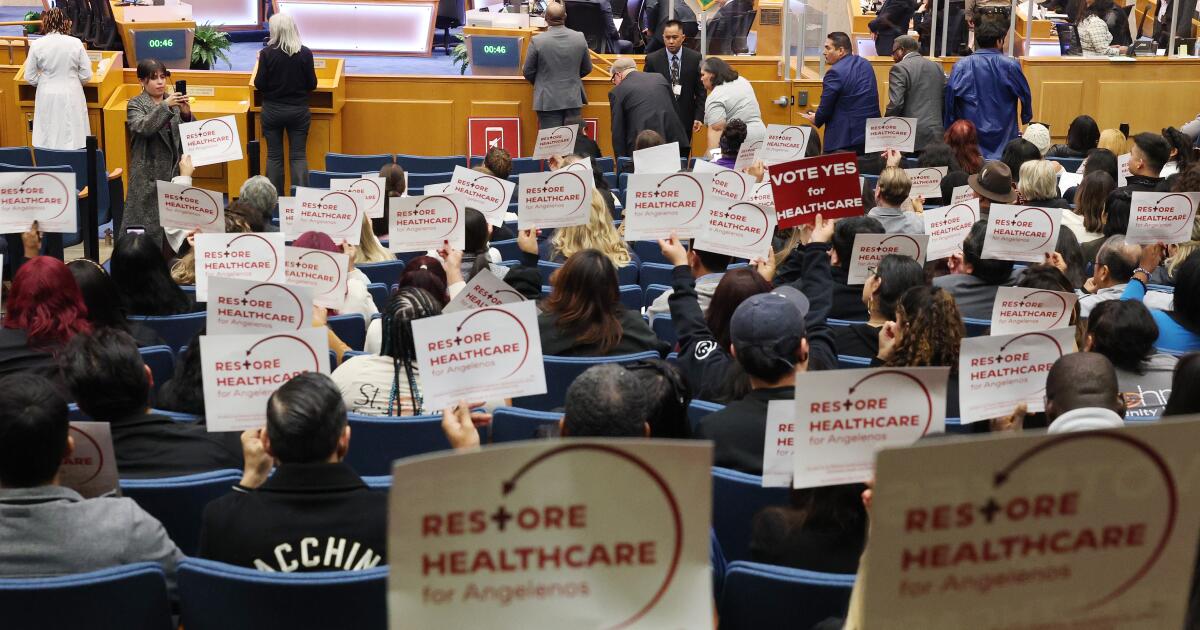
Supporters of L.A. County healthcare sales tax declare victory
-
 Sports29 minutes ago
USC freshman linebacker Talanoa Ili joins lawsuit seeking to upend new NIL system
-

 World37 minutes ago
Who has the most and fewest judges in the EU?
-
 News57 minutes ago
In Nevada, Trump’s policies are making things tough for Republican Gov. Joe Lombardo
-

 New York2 hours ago
This Parking Spot Is Free. Should It Be?
-

 Los Angeles, Ca2 hours ago
O.C. Uber customer says driver asleep in Tesla on 405 Freeway

