Midwest
Pritzker names new head of embattled Illinois family services agency

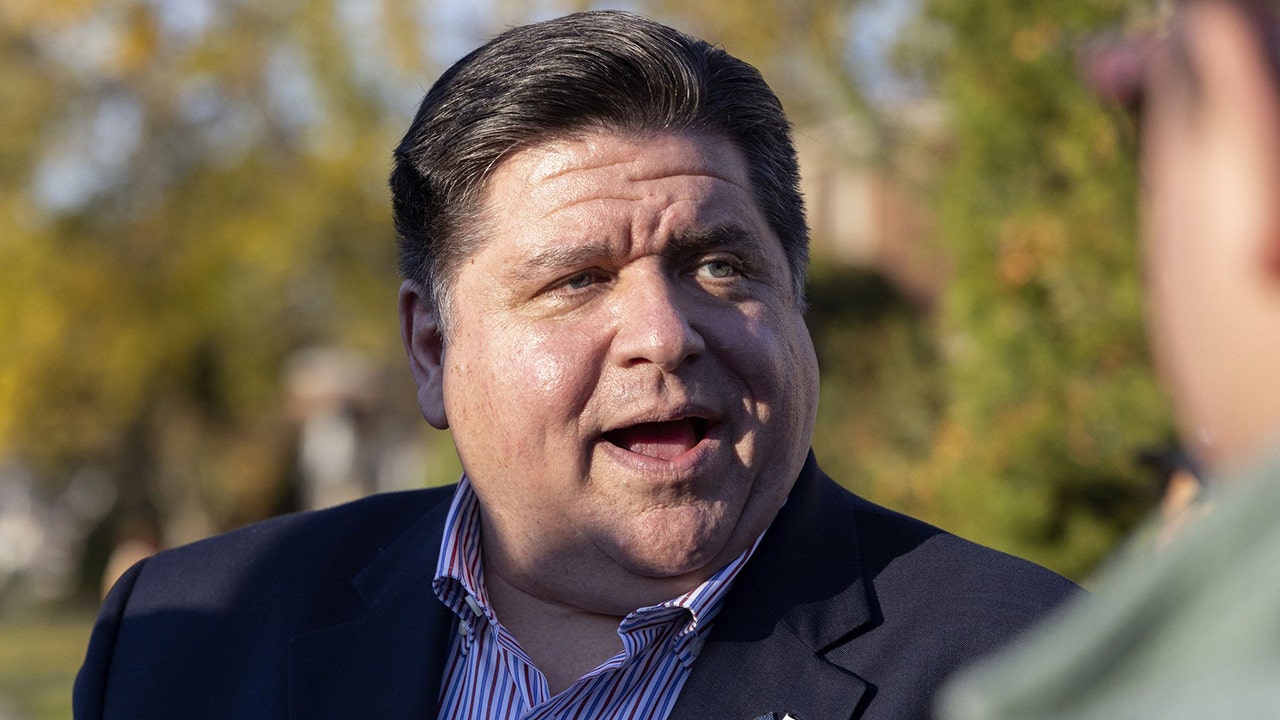
Gov. J.B. Pritzker on Wednesday named his director of juvenile justice to take over the troubled Department of Children and Family Services.
Heidi Mueller, 49, will replace Marc D. Smith, who has been at the helm since 2019 and has been held in contempt of court numerous times for improper housing of young people under the agency’s care. Smith, who announced his resignation in October, will help with the transition through January.
Mueller has been director of the Department of Juvenile Justice since 2016. The agency oversees the custody of young people committed to the state by Illinois courts.
HEAD OF EMBATTLED ILLINOIS CHILD SERVICES AGENCY TO RESIGN AT YEAR’S END
“I have witnessed firsthand the critical importance of a strong and supportive safety net for our state’s most vulnerable residents and the tragedy that results when there are holes in that net,” Mueller said in a statement. She thanked Smith for “driving real progress at DCFS.”
Mueller, who currently makes $173,250, was chosen after a nationwide search. Pritzker said her “transformative” work at Juvenile Justice has gained her national attention.
“Heidi’s care and compassion for the most at-risk young people in our state and her exceptional leadership are hallmarks of her career and I know that her passion and expertise will be a significant asset as we continue to improve our state’s child welfare system,” Pritzker said in a statement.
Gov. J.B. Pritzker greets constituents as he campaigns in Bellwood, Illinois, on Nov. 1, 2022. (Erin Hooley/Chicago Tribune/Tribune News Service via Getty Images)
Smith, 54, whose salary is $210,000, began his tenure months into Pritzker’s first term. The Democrat had pledged reforms, releasing an outside report on agency failures including the deaths of three children under its care in just a few months.
But the department continued to struggle. In 2022, Smith was held in contempt of court on numerous occasions for failing to find proper placement for young people in the agency’s care. Pritzker repeatedly blamed his Republican predecessor for the dismantling of private social-service agencies capable of proper youth housing during a budget stalemate with Democrats in the Legislature from 2015 to 2017.
The situation has seen little improvement. DCFS’ own annual report on placement released last week showed that during the fiscal year that ended last June, hundreds of children were kept in so-called temporary quarters, in some cases for months, or held in psychiatric hospitals beyond need for treatment or juvenile incarcerations past their release dates because DCFS had no place to put them.
The DCFS inspector general’s annual report released last week indicated that during the same fiscal year, 160 children with some level of involvement with the department had died.
PRITZKER ADMIN SCRAPS CHICAGO MIGRANT CAMP PLAN OVER SOIL CONTAMINATION CONCERNS
“The DCFS director has arguably the hardest and most important job in state government. Heidi Mueller has an outstanding reputation as a reform-minded manager and brings substantial child welfare experience to the task,” said Charles Golbert, the Cook County public guardian, whose office has filed class-action lawsuits over lengthy placements in psychiatric hospitals and juvenile justice incarceration. He urged Mueller to make the expansion of DCFS’s placement capacity an urgent priority.
Heidi Dalenberg, interim legal director of the American Civil Liberties Union of Illinois, which also has legal action against DCFS, said Mueller “must embrace the challenge of finding a safe place to stay — preferably with the child’s family members” and turn away from large, institutional settings.
“This is a challenging job that requires a leader with vision and a commitment to transformational change,” Dalenberg said.
Robert Vickery, currently deputy director of programs at Juvenile Justice, will serve as interim director of the agency during a search for Mueller’s permanent replacement.
Read the full article from Here


FARGO — Terri Hedman has voted in North Dakota elections for 40 years, but during the coronavirus pandemic, she said she made the switch to mail-in and absentee ballots.
She’s cast her ballot at her south Fargo home ever since, she said, adding she appreciates the ease of voting ahead of the election.
“I’m a nurse. I like to plan ahead, and I like to make sure things are done,” she said. “I love the idea that I can vote and know that is a task that is completed.”
Hedman was one of 91,556 North Dakota voters who cast their ballots by mail or absentee in the 2024 general election. That made up 25% of the state’s votes that year, according to a Forum analysis of Secretary of State’s Office data.
Troy Becker / The Forum
“Vote by mail is critical for North Dakota,” Secretary of State Michael Howe said. “As a rural state, people can be hours away from a physical polling location. Voting by mail gives folks that option to vote.”
Another 27% cast their ballots during early in-person voting, meaning less than half of North Dakota voters went to the polls on Election Day in November 2024.
Cody Schuler, an advocacy manager for the ACLU in North Dakota, said he wasn’t surprised that mail-in and absentee voting have become more popular. Voting by mail offers many benefits, and people have many reasons for using that method, he said.
“That’s fantastic that people are exercising their right in a way that is easy and convenient for them,” he said in response to the 2024 numbers.
Absentee ballots can be requested 40 days before an election in North Dakota. Under a state law passed in 2025, mail-in and absentee ballots must be received by the county election office no later than the close of polls on Election Day.
That’s June 9 for the primary election and Nov. 3 for the general election this year.
Nearly 36,000 mail-in and absentee ballots have been sent to North Dakota voters as of Thursday, May 28, with 17,705 returned to election officials, according to state data. The state has 600,394 eligible voters, Howe said.
Of the state’s 53 counties, 34 are classified as vote-by-mail, meaning those counties automatically send out an application to eligible voters for mail-in ballots.
In the remaining 19 counties, voters must request ballots by mail.
North Dakota’s voting by mail process is “very secure,” Howe said. Voters have to prove that they have lived in North Dakota for 30 days prior to the election.
No one is sent a ballot unless a person applies for one, Howe said.
“Similarly, you are only mailed a ballot after identity verification,” he said.
Some counties depended on mail-in and absentee ballots much more than others, according to the Forum analysis. In McHenry County, 2,001 voters used the remote option, making up 72% of the county’s voters. Rolette County had the lowest rate of voting by mail or absentee with 11%, followed by Morton County (12%) and Cass County (13%).
Voting in person can be challenging, Schuler and Howe said. North Dakota law requires each county to have at least one polling place during elections, Howe said.
Nearly half of North Dakota’s counties only have one voting center, according to the Secretary of State’s Office. Those polling places may be miles away, making it difficult for some to make it, Schuler said.
“We are a very rural state, and for many people, distance is an issue,” he said.
Eight counties allow early in-person voting up to two weeks before Election Day: Burleigh, Cass, Grand Forks, Morton, Sioux, Stark, Stutsman and Ward.
Early voting in Cass County runs 11 a.m. to 7 p.m. June 2-5 and 11 a.m. to 5 p.m. June 6.
Nine of Cass County’s 17 Election Day polling places are in the metro area. A Cass County resident who lives near Colgate, which sits on the Steele County border, has to drive 30 miles to the nearest polling place in Tower City to vote.
McHenry County’s lone polling place is Towner, which is about 50 miles east of Minot. The polling place is roughly 60 miles from the county’s southwest corner and 40 miles from Anamoose, a city of 212 people in the county’s southeast corner.
Many counties can’t have early voting or more than one polling place because they can’t find enough poll workers, Howe said.
“Each county is responsible for the cost of their election,” he said, adding counties have to pay poll worker wages and rent for polling places.
Voting is a fundamental right, Schuler said.
“Eligible voters should have as many opportunities and options to exercise that right as possible,” he said. “Mail-in voting is really an easy way to do that.”
‘Confident that my voice is heard’
Mail-in ballot voting has grown in North Dakota over the last decade, from 52,319 ballots, or about 21% of voters, in the 2014 general election to almost double the number of voters in 2024, according to state data.
Minnesota’s growth in absentee and mail-in voting grew more dramatically. Nearly 244,000 people, or 12% of voters, used the option in the 2014 general election, according to The Forum’s analysis of Minnesota data. That jumped to 41%, or 1.33 million voters, in the 2024 general election.
Voting by mail in the North Star State has inched up over the years, with the high mark coming in 2020 during the coronavirus pandemic, Minnesota Secretary of State Steve Simon said. More than 1.93 million voters, or 59%, cast their ballots by mail, according to his office.
“I think it reflects our flexible menu of ways that people can vote in Minnesota,” Simon said. “I think people like that accessibility and choice.”
About 39% of Clay County voters mailed in their ballots in the 2024 general election, according to Minnesota Secretary of State data.
Minnesota law allows townships and cities with fewer than 400 residents to forgo setting up a polling place and hold elections entirely by mail, Simon noted. Towns like it for the cost-savings, and residents in rural areas like the option of voting from home instead of having to drive miles to a voting center, he said.
“That’s something that more and more cities and townships have taken advantage of as well,” he said of mail-in only elections. “It’s gotten good reviews from people who just want to be able to vote with ease in a way that makes sense for their own lives.”
North Dakota held its 2020 primary election completely by mail in an effort to prevent the spread of COVID-19. Roughly 160,000 voted in that election, according to the Secretary of State’s Office.
Months later, more than 185,000 North Dakotans, or 51% of the state’s voters, cast their ballots by mail, according to state data.
“I think that opened up a lot of people to experience voting by mail for the first time,” Howe said. “I think people liked the comfort of it and liked the convenience of it.”
Overall, Howe said North Dakota does well at offering voting choices.
“That’s the beauty of North Dakota elections,” he said. “North Dakotans have the choice to vote in a way that is most convenient to them.”
As a nurse, Hedman said emergencies can happen, including on Election Day, that call her attention away from tasks at hand. Being able to plan ahead makes voting easier, she said.
“This way, I feel confident that my voice is heard,” she said.
More information on voting in North Dakota, including absentee voting, can be found at
sos.nd.gov/elections/voter
. Voters also can find Minnesota information at
sos.mn.gov/elections-voting
.


AI influencers are all over your feed
AI influencers may not change minds — but they can amplify division and inflame political tensions online.
We can’t believe our eyes
Re “AI political ads bring fears over ’26 election,” May 27: I fully support House Bill 185. It probably doesn’t go far enough. This is a prime example of “don’t believe everything you see on the Internet.”
I am being inundated with emails and text messages from organizations and people I do not know. I block them as spam, but it doesn’t seem to do any good. About the only way to combat this is to attend a live debate between candidates, but most people do not have the time to do that.
I use AI every day with caution. We need better ways of identifying AI-created falsehoods.
Edwin Heller, Dublin
Tell voters what’s real
Re “AI political ads bring fears over ’26 election,” May 27: I don’t think AI should be used in political ads, but there is no way to stop it.What we can and should do is require campaigns to certify that their ad did or did not use AI to generate or edit content that:
- Makes a real person appear to say or do something they didn’t say or do.
- Alters footage of a real event or place.
- Generates a realistic-looking scene that didn’t actually occur.
We grade movie content. Why not political advertising? The public needs a way to help distinguish truth from fiction.
Richard Wires, Columbus
Ban political ads, already
Re “AI political ads bring fears over ’26 election,” May 27: Political ads should be banned. Those using – AI-generated or not. I don’t trust anything I read online anymore, and especially political ads.
People read/see those ads, don’t research the information in them, and vote according to, oftentimes, the misinformation in those ads. The huge amounts of money being spent on ads is sinful!
Lyn Miller, Smithville
Food cuts hurt hungry families
While President Donald Trump and Republicans continually find new ways to enrich their billionaire funders and friends, they’ve made the largest cuts to SNAP in history, making it more difficult for over 40 million Americans, including 16 million children and 8 million seniors, to access healthy foods and forcing them to rely on the cheapest foods (usually the most ultra-processed}.
They’re especially hurting American children and setting them up for worse health outcomes than previous generations by making it harder for them to access healthy foods.
They’ve cut funding to support farm-to-school programs and food banks, passed the largest cut to food assistance in history, and are pushing to end the decades-old practice of putting fluoride in water to reduce tooth decay. Most appalling, they’ve even allowed food companies to use cancer-causing chemicals in snack foods targeted to children.
Meanwhile, they’ve allowed food companies to take advantage of inflation to raise prices to increase their profits. A Kroger executive suggested that inflation is good for business when he testified the chain has hiked the milk and eggs prices beyond the costs from inflation.
This is one more reason that we must do all we can to get Republicans out of office.
Russ Smith, Strongsville

The South Dakota State baseball team is fighting for its season today against Arizona State in the Lincoln Regional. The game is set for 2 p.m.
The No. 4 Jackrabbits (24-32) lost 4-1 to No. 1 Nebraska in the opening game. No. 3 Arizona State lost a 706 heartbreaker to No. 2 Ole Miss in the opening round in 14 innings. The game took nearly 5.5 hours and ended around 1:20 a.m.
Here’s how to watch South Dakota State’s win-or-go-home game.
Watch South Dakota State baseball vs … on ESPN+
South Dakota State vs. Arizona State baseball stream, radio
Stream: ESPN+
Radio: KJJQ 910 AM
South Dakota State vs. Arizona State time today
- Date: Saturday, May 30
- Time: 2 p.m. CT
- Location: Haymarket Park in Lincoln, Nebraska
South Dakota State vs. Arizona State prediction
Paul Cifonelli, Argus Leader: This was always a tough draw for South Dakota State, as I thought this was the toughest regional in the country. At worst it’s the third toughest, with Chapel Hill and College Station in contention.
The Jackrabbits do have an advantage since Arizona State and Ole Miss went at it until after 1 a.m. Both teams stressed their pitching staffs, and every at bat required intense focus. The problem is South Dakota State doesn’t have the same top-end pitching these other teams do.
If Drew McDowell pitches, the Jacks might have a shot here. Otherwise they’ll have to win a slugfest, and I just don’t like those odds.
Prediction: Arizona State 8, South Dakota State 3
-

 New Mexico5 minutes ago
Patrick Brenner: New Mexico can’t afford permitting paralysis | Carlsbad Current Argus
-

 North Carolina7 minutes ago
North Carolina felon gets 22 years for 15 guns, fentanyl pills, meth and cocaine
-

 North Dakota13 minutes ago
How popular is mail-in and absentee voting in North Dakota?
-

 Ohio20 minutes ago
Ohio voters literally can’t believe our eyes. Danger of AI ads not overblown | Letters
-

 Oklahoma23 minutes ago
Oklahoma’s dramatic literacy goals now up to elementary schools to implement
-
Oregon28 minutes ago
Oregon Lottery Mega Millions, Pick 4 results for May 29
-

 Pennsylvania35 minutes ago
Cheers to summer: Try these Western Pennsylvania beers that pair perfectly with warm weather
-

 Rhode Island37 minutes ago
R.I. House Finance budget phases in millionaires tax over three years – The Boston Globe

