Lifestyle
David Soul, of TV's 'Starsky and Hutch,' dies at 80


David Soul is photographed at an event in Los Angeles on Dec. 6, 1983. Soul, who hit fame as blond half of crime-fighting duo “Starsky and Hutch” in a popular 1970s television series, has died at age 80.
Wally Fong/AP
hide caption
toggle caption
Wally Fong/AP

David Soul is photographed at an event in Los Angeles on Dec. 6, 1983. Soul, who hit fame as blond half of crime-fighting duo “Starsky and Hutch” in a popular 1970s television series, has died at age 80.
Wally Fong/AP
LONDON — Actor-singer David Soul, a 1970s heartthrob who co-starred as the blond half of the crime-fighting duo “Starsky & Hutch” and topped the music charts with the ballad “Don’t Give Up on Us,” has died at the age of 80.
His wife, Helen Snell, said Friday that “David Soul – beloved husband, father, grandfather and brother – died yesterday after a valiant battle for life in the loving company of family.”
“He shared many extraordinary gifts in the world as actor, singer, storyteller, creative artist and dear friend,” Snell said in a statement. “His smile, laughter and passion for life will be remembered by the many whose lives he has touched.”
Born David Solberg, Soul was a Chicago native whose acting career dated back to the 1960s, when he joined the avant-garde Firehouse Theater in Minnesota. He continued to appear on stage and screen well into the 20th century, but he was best known for his work in the 1970s.
Soul portrayed detective Ken “Hutch” Hutchinson alongside dark-haired Paul Michael Glaser as detective David Starsky in “Starsky & Hutch, which ran on ABC from 1975 to 1979 and grew so popular it spawned a line of children’s toys.
David Soul (from left), Paul Michael Glaser and Antonio Fargas, stars of the 1970s “Starsky and Hutch” television series, arrive at the British premiere of the new movie of the same name in London on March 11, 2004.
John D McHugh/AP
hide caption
toggle caption
John D McHugh/AP
David Soul (from left), Paul Michael Glaser and Antonio Fargas, stars of the 1970s “Starsky and Hutch” television series, arrive at the British premiere of the new movie of the same name in London on March 11, 2004.
John D McHugh/AP
He also had success as a singer, starting in 1976 with “Don’t Give Up on Us” and following with such hits as “Going in With My Eyes Open” and “Silver Lady.”
Soul first gained national fame in the 1960s appearing on “The Merv Griffin Show” as “The Covered Man,” a singer disguised in a stocking cap who shouted out lyrics such as “That is why I hide my face, because a man has to be free.”
His other TV credits included early appearances on “Star Trek,” “All in the Family” and “I Dream of Jeannie,” the miniseries “Salem’s Lot” and a short-lived version of the film classic “Casablanca,” in which Soul took on Humphrey Bogart’s role as nightclub owner Rock Blaine.
Soul’s movies included “Magnum Force,” “The Hanoi Hilton” and a cameo with Glaser in the 2004 big-screen remake of “Starsky & Hutch,” starring Ben Stiller as Starsky and Owen Wilson as Hutch.
By the 1990s, Soul had moved to Britain, where he performed several stage roles. In 2001, he won a libel case against a journalist who called “The Dead Monkey,” a play that Soul was in, the worst production he had ever seen – without having seen it. He also played the titular talk-show host in “Jerry Springer – The Opera” in London’s West End.



Swift has attended fashion’s biggest night, the Met Gala, a handful of times over the years. Perhaps no appearance was more memorable than 2016’s event where it was not her dress, but her hair that made an impact. Swift’s bleached platinum bob at the star-studded fund-raiser that year was part of a short-lived era known as “Bleachella” to some fans.
Some fans believe the 2016 event, which both Swift and her ex-boyfriend, the actor Joe Alwyn attended, is where the couple might have first encountered one another. A moment Swifties think the songstress referenced in “Dress,” singing “flashback when you met me, your buzz cut and my hair bleached,” a line that describes how both stars looked that night.
For her first time as host on “Saturday Night Live,” a then 19-year-old Swift arrived having already written the song she would sing as the opening monologue. Seth Meyers, the show’s head writer at the time, later recalled bringing Swift into Lorne Michaels’s office, where she performed a “perfect” musical monologue and noted it was better than what the show’s writers had concocted for her to deliver. Swift has served as host and musical guest on the sketch-comedy show over the years. She’s also made repeated cameo appearances, including appearing alongside Kerry Washington and Betty White in a “Californians” sketch in 2015 for the show’s 40th anniversary.
In 2023, Swift and Travis Kelce both made cameo appearances on the show. The same day, they were also spotted by tabloids holding hands in New York City, one of the earliest public glimpses of them as a couple.
The iconic arena in Midtown Manhattan will serve as the venue for a private, two-day event around the wedding of Swift and Kelce on July 2 and 3. The first event will reportedly be a smaller gathering of 100 people for a rehearsal dinner at the Infosys Theater, a venue inside the Garden, while as many as 1,000 guests are expected to arrive at the venue the next day for a larger celebration, with possible stage appearances. Swift has some history with the Garden, performing there several times over the years, as well as sitting courtside and cheering the Knicks to a win during a game earlier this summer.
Whenever the singer is spotted coming and going from the Greenwich Village recording studio — which was founded by Jimi Hendrix and has hosted icons like the Rolling Stones and Chuck Berry over the years — fans are immediately abuzz with whispers about new music. Swift has worked there with Jack Antonoff, her longtime collaborator, on albums including “Lover” and “Folklore,” as well as re-releases of her older albums.
Swift has been spotted plenty of times at this Italian hot spot in the West Village neighborhood of Manhattan, most recently in May, celebrating Lena Dunham’s 40th birthday. If you can’t get a table, try your hand at making their famed — and delicious — salad dressing.
For a period between 2016 and 2017, Swift rented a four-story townhouse in Manhattan’s West Village. The pad appears to have inspired her 2019 track “Cornelia Street” from the album “Lover.” It’s a road she’ll never walk again, at least according to her lyrics.
Fans still regularly visit the house, even though it has been nearly a decade since Swift inhabited the home, which has an indoor swimming pool. In 2023, some Swifties made pilgrimages to the location after news broke on her split with the actor Joe Alwyn, whose relationship fans believe to be the inspiration for many of the tracks on “Lover.”
Swift’s residence in the TriBeCa neighborhood of Manhattan has grown over the years. She initially bought two penthouses from the “The Lord of the Rings” director Peter Jackson in 2014. A fan who once visited the apartment recalled Swift’s father saying that when his daughter first viewed the place, the actor Ian McKellen, who had been living there, was sitting in the kitchen. She has since purchased several adjacent properties.
Fans have seen glimpses of the home on social media over the years and, more recently, watched Swift use a fire extinguisher to put out a small candle blaze in the kitchen in a video posted by Swift’s recent musical collaborator Gracie Abrams.
Good luck getting a table here if you are not Swift or Kelce. The upscale American restaurant in SoHo is known for comforting dishes like a French dip sandwich and an ice cream sundae, as well as its savory sour-cream-and-onion martini from the cocktail menu. Swift has visited several times — including outings with Gigi Hadid and Sabrina Carpenter.
In “Delicate,” Swift sings of an unnamed “dive bar on the East Side.” Swifties believe this dark speakeasy on East Seventh Street is that bar. Fans also believe the song was written about Swift’s ex-boyfriend, the actor Joe Alwyn. The pair broke up in 2023; later that year she met Kelce.
This exclusive, members-only club in Lower Manhattan is frequented by plenty of celebrities, including Swift. The club bans photography and videos, as well as members of the media, and patrons are barred from identifying others in the room on social media or to the press.
Still, even with the privacy rules, there have been plenty of posts and photos documenting Swift coming and going from Zero Bond. There was a visit in 2023 with the actor Miles Teller and his wife, Keleigh, as well as a recent celebratory evening with the Haim sisters in June after the group watched the Knicks win at Madison Square Garden in matching shirts. There have also been multiple visits with Kelce over the years.
Swift spent part of her 34th birthday celebration at this rustic American restaurant on the Lower East Side of Manhattan. Wearing a black minidress bedazzled with a moon and stars — a nice nod to the visual themes of her “Midnights” era — she partied the night away at Freemans’ upstairs cocktail bar with guests including Jack Antonoff, Blake Lively, Zoë Kravitz, the Haim sisters, Sabrina Carpenter and her childhood best friend, Abigail Anderson Berard, who was immortalized in Swift’s song “Fifteen.” The pop star was also seen dining here with Gracie Abrams earlier that same year.
People line up for hours — yes, hours — to secure a spot at this restaurant in the Carroll Gardens neighborhood of Brooklyn. The brick-oven pizza spot, which is B.Y.O.B. and cash only, is a favorite of pizza connoisseurs — though not those at The New York Times — and celebrities alike. (Its owner has said he does not accept reservations.) Beyoncé, Jay-Z, the Beckhams and, of course, Swift have all been seen dining here, though unclear if they had to sweat it out in the line like us mere mortals. Swift, who once sent her dad to hand out pizzas, though likely not from Lucali, to fans camping out in New York to watch her perform on “Good Morning America,” has shared meals here with famous friends including Blake Lively and Selena Gomez, as well as a date night with Kelce.
The Brooklyn neighborhood where, if Swiftie lyrical interpretations are to be trusted, Swift left a now-infamous scarf at the home of one Maggie Gyllenhaal around 2010. Swift was dating Gyllenhaal’s brother, Jake, at the time and their relationship is believed to have inspired Swift’s “All Too Well,” a 2012 heart-wrencher of a song beloved by many fans, which Rolling Stone once ranked as her best song. “You keep my old scarf from that very first week,” Swift sings. In 2017, Maggie Gyllenhaal told Andy Cohen on “Watch What Happens Live” that she was “in the dark about the scarf.”
Swift later released an updated, 10-minute version of the track in 2021. A red scarf featured prominently as a thematic motif in “All Too Well: The Short Film,” which Swift also released that same year.
Lifestyle
DLTA’s former Ace Hotel is reborn as a ‘creative hub’ — and yes, you can still sleep there
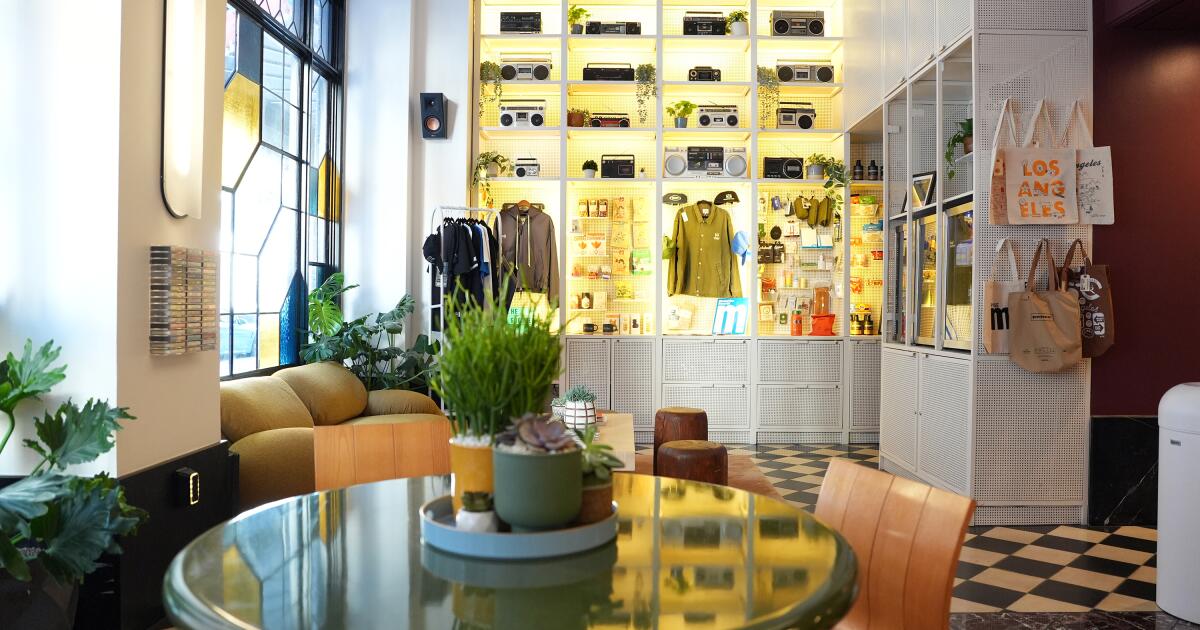
The historic 1920s tower that once housed the beloved Ace Hotel is entering a new era just in time for the summer.
Two years after opening in the iconic Spanish Gothic building on South Broadway, Stile Downtown Los Angeles has unveiled its multimillion-dollar renovation and its expansion from a limited-service hotel to a full “creative hub.” The makeover adds a 24/7 membership-based creative lab with state-of-the-art music studios, co-working lounges, an updated rooftop bar called Somewhere Special, a restored theater and a curated retail shop for the community.
“We don’t really want to call it just a hotel — it’s more of a hub,” says Jaisun Ihm, CEO of AJU Continuum, the investment company that purchased the historic space.
Throughout the space are throwback touches — for instance, hotel guests can borrow a Walkman and browse the curated cassette library with titles like Sade’s “Promise,” Paula Abdul’s “Forever Your Girl” and the Isley Brothers’ “Between the Sheets.”
Behind the massive overhaul is South Korea-based AJU Continuum, which purchased the property in 2019 but didn’t change the name until 2024. The project marks the investment company’s first U.S. expansion.
“We don’t really want to call it just a hotel — it’s more of a hub,” says Jaisun Ihm, CEO of AJU Continuum, which is best known for its culture-forward Ryse Hotel in Seoul. With Stile, Ihm says their mission was to “connect L.A. to Seoul.”
Ryse, Ihm says, encapsulates today’s eclectic lifestyle hotel: “It’s grounded in street culture. We say it’s iconoclastic. It’s youthful in nature.”
AJU Continuum teamed up with L.A. architecture and interior design studio Design, Bitches — the group behind the chic Checker Hall in Highland Park and Verve Coffee Roasters in the Arts District. Ihm didn’t care that it was Design, Bitches’ first hotel venture. After working with several firms over the years, he was tired of seeing the same aesthetic everywhere and wanted to work with a team that would bring a “bold” perspective, he says.
When the creatives at Design, Bitches got the invitation, they were all in. “I’ve always wanted to do a hotel,” says RA Rudolph, the studio’s co-founder. “I love hotels and I have opinions,” she adds laughing.
For Angelenos who frequented the Ace Hotel, a maverick venue that helped revitalize downtown L.A. for a decade beginning in 2014, walking through Stile will feel both familiar and new. While the building’s bones remain intact — a requirement of its historic-cultural monument designation — the space has an industrial-modern twist inspired by L.A.’s creative spirit.
For example, the United Theater on Broadway, which was once the 1927 flagship movie palace for the influential United Artists collective (Mary Pickford, Charlie Chaplin, Douglas Fairbanks and D.W. Griffith), now features fresh carpet, modernized sound and stage equipment and roughly 125 new light fixtures inspired by the lobby’s original Spanish Revival-style chandelier. As a nod to the building’s legacy, where Hollywood’s earliest icons broke away from major studios to control their own work, AJU Continuum has launched its own in-house booking team for the live entertainment venue. Also, the giant neon “Jesus Saves” sign that has sat atop the building since its days as a church is still there — and the owners have no plans to remove it.
1

2

3

4

5

1. A clawfoot tub inside the Loft King Suite. 2. Lounge chairs inside the Loft King Suite. 3. Hotel guests lounge in the rooftop pool. 4. Adriana Castellanos and friends hanging out in the lobby bar. 5. Photos taken in the photo booth at the Somewhere Special rooftop bar.
Some of the most significant changes can be found in the hotel lobby, which features a curated convenience store called the Goodie Shop, which is adorned with throwback boomboxes. Located next to the front desk, which was significantly condensed, the store is filled with a selection of California-sourced snacks and beverages, lifestyle goods, Stile-branded merch and travel essentials (phone chargers, toothpaste, hair care, etc.).
On the opposite side of the lobby is SparkHouse, a private members club and creative hub for up-and-coming musicians and creatives. The two-story space features professional recording studios, podcast and video suites, co-working lounges and meeting spaces, which are slated to open by early next year once permits are approved, Ihm says. SparkHouse’s cafe and bar is open to the public and sells tea, coffee (try the honey matcha latte), wine, beer cocktails and small bites. Ihm says programming at SparkHouse will include listening sessions, live showcases and even a mentorship program for rising artists.

“I’ve always wanted to do a hotel,” says RA Rudolph, the co-founder of Design, Bitches.
The rooftop bar, which offers stunning skyline views of the city and a pool, is now called Somewhere Special. The design team removed about 90% of the plants that used to pack the area to maximize space for dancing and mingling. Also, the pool area, now painted in a playful shade called Carrot Orange, has more seating and a photo booth nearby.
All 182 guest rooms were given a fresh coat of dusty rose paint, new custom carpet, furniture and upgraded bathrooms. In each room, you’ll find Korean amenities like face masks, a custom robe by a local brand called Room Service Los Angeles and books from the former Los Angeles University Cathedral that occupied the space from 1991 to 2011. With the hotel motto being “stay by your own rules,” Rudolph says it was important for them to make the rooms adaptable to each guest’s needs and to prioritize comfort. The result is uncommon room layouts like the tri-suite king room equipped with two twin-sized beds and a king bed split by a privacy divider that doubles as a playful art installation. Rudolph, who used to travel often with her now-adult children, says that’s the type of room she always wished had existed.
Stile’s arrival comes at a precarious moment for downtown L.A. In recent years, the neighborhood’s once buzzy hospitality and nightlife scene has experienced dwindling foot traffic, slow pandemic recovery and increased vacancies. Some business owners say crime and neglect are driving away customers. Nearly 1,000 businesses left downtown in 2024. Launching a high-concept lifestyle hotel is a bold gamble.

The Goodie Shop, a new curated convenience store, is filled with a selection of California-sourced snacks and beverages, lifestyle goods and travel essentials.
But Ihm says he hopes that Stile will help rejuvenate the area and create an ecosystem that will support neighboring businesses as well. Rudolph says she’s already starting to see that change.
“It’s been nice to see that in the last year that I’ve been coming here to work on the project, it’s livened back up again,” she says. “Especially this block, it feels better.”

Inside the World Cup Cultural Exchange
Getty Images/Getty Images
hide caption
toggle caption
Getty Images/Getty Images
What does America look like to visitors?
We’re finding out in real time as fans and athletes from all over the world visit the United States for World Cup matches across the country. From Ranch dressing, to the wonders of all-you-can-eat buffets, tourists are getting a taste of all the USA has to offer, but how do we square the warm welcome for the World Cup with the United States’ recent stances on immigration? Brittany is joined by immigration reporter Jasmine Garsd, and NPR reporter Juliana Kim to find out.
Want more global perspectives on culture? Check out these episodes:
How often do you think about the American Empire?
Make life harder (and better): Learn another language.
Support Public Media. Join NPR Plus.
Follow Brittany on Instagram: @bmluse
For handpicked podcast recommendations every week, subscribe to NPR’s Pod Club newsletter at npr.org/podclub.
This episode was produced by Liam McBain and Corey Antonio Rose. It was edited by Neena Pathak. Our Supervising Producer is Cher Vincent. Our Executive Producer is Barton Girdwood. Our VP of Programming is Yolanda Sangweni.
-
Indianapolis, IN2 minutes ago
2026 Indianapolis Colts Fantasy Preview: All eyes on Daniel Jones
-

 Pittsburg, PA5 minutes ago
“Mayor of Kingstown” wraps up filming final season in Pittsburgh
-

 Augusta, GA17 minutes ago
Augusta leaders hold public meetings on data center ordinance
-
 Washington, D.C20 minutes ago
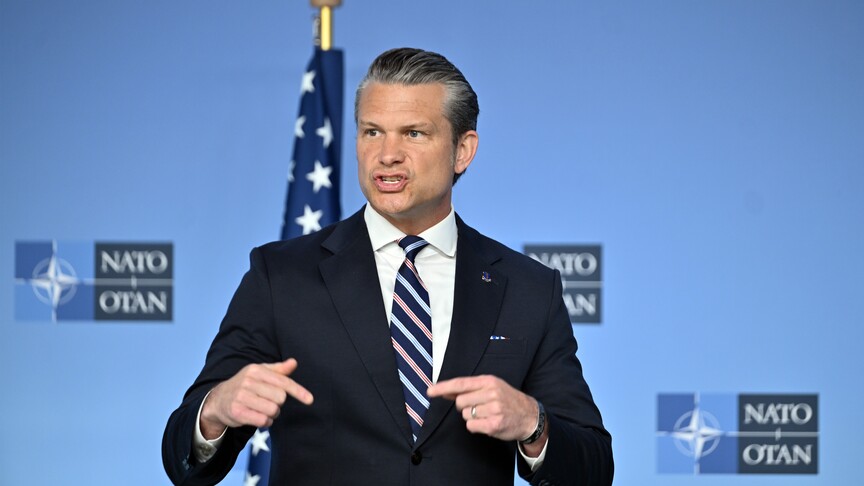
Hegseth faces protests at ‘Safe and Beautiful’ Washington, DC ceremony
-
Cleveland, OH25 minutes ago
Nichole Milanovich Obituary Jul 1, 2026 – Slone and Co. Funeral Directors
-

 Austin, TX32 minutes ago
‘Rising Waters: One Year After the Floods’ airing Friday on CBS Austin
-

 Alabama35 minutes ago
Potential for Severe Storms Through Early Evening – Alabama Emergency Management Agency (EMA)
-

 Alaska40 minutes ago
Alaska is celebrating America’s 250th in the fast lane… off a cliff

