Business
Column: Excited about AI and self-driving cars? A top roboticist is here to burst your bubble

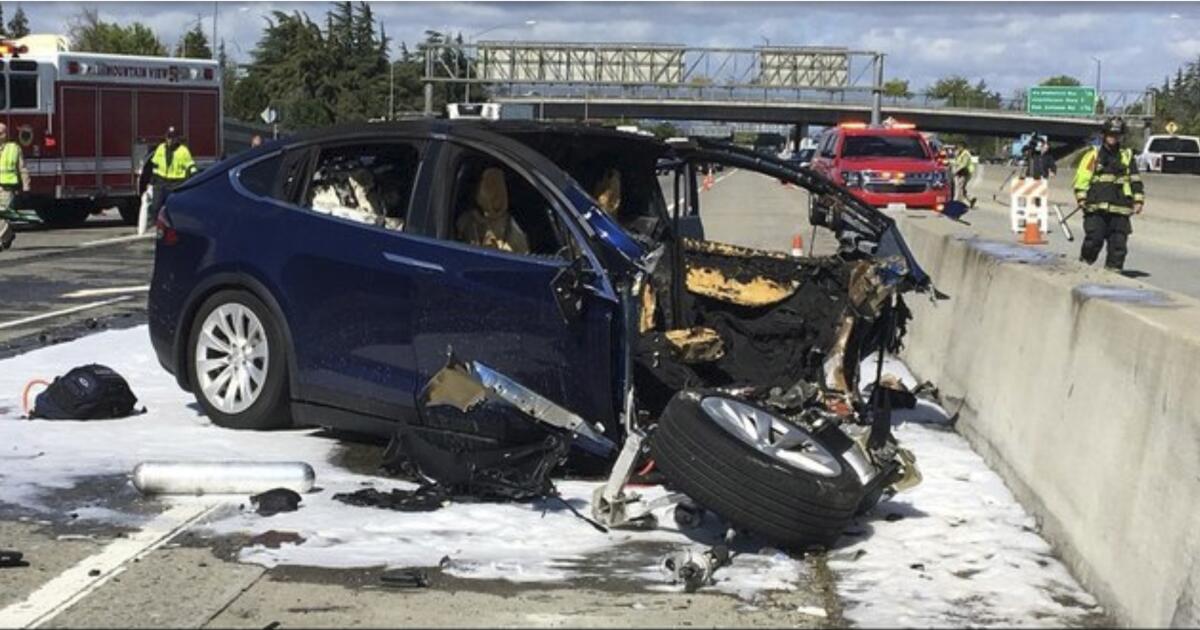
If you’re a fan of techno-hype, 2023 was the year for you.
Believers felt themselves validated by seeing excitement and fear about AI chatbots reach previously untouched heights. Skeptics may have felt initially confounded by the rollout of driverless robotaxis in San Francisco and a few other cities, but ultimately validated when they were ordered off the streets by authorities concerned at their tendency to create traffic jams, interfere with emergency responses, and injure the occasional bystander.
Everyone else was probably confused by the relentless promises by commercial tech promoters that we were standing on the doorstep of a new world.
Get your thick coats now. There may be yet another AI winter, and perhaps even a full scale tech winter, just around the corner. And it is going to be cold.
— Rodney Brooks
Rodney Brooks is here to put it all in perspective, with his sixth annual Predictions Scorecard.
As he wrote in issuing the scorecard Jan. 1, this is his “sixth annual update on how [his] dated predictions from January 1st, 2018 concerning (1) self driving cars, (2) robotics, AI , and machine learning, and (3) human space travel, have held up.”
Long story short: They’ve held up very well.
Why should we care what Brooks thinks? As I wrote a year ago in reporting on his fifth annual scorecard, Brooks is “one of the world’s most accomplished experts in robotics and artificial intelligence … a co-founder of IRobot, the maker of the Roomba robotic vacuum cleaner; co-founder and chief technology officer of RobustAI, which makes robots for factories and warehouses; and former director of computer and artificial intelligence labs at MIT.”
In other words, he’s the opposite of a Luddite. On the contrary, Brooks is deeply involved in technology research and development, but sufficiently independent-minded to call out hype where he sees it. He sees it a lot.
He is also a hands-on technology analyst. During 2023, he writes, he took almost 40 rides in Cruise robotaxis in San Francisco and wrote several blog posts about the experience.
On the whole, he found them less flexible or expedient than Lyft or Uber; the cars wouldn’t service his street and they were delayed or the rides canceled more often than the ride-hailing services.
He witnessed some decidedly dangerous behavior by the vehicles that would not have happened with human drivers, and on one occasion the Cruise in which he was riding froze in the middle of an intersection right in the path of an oncoming vehicle, to the point where Brooks was convinced he was about to be the victim of a violent collision. Luckily, the other driver slowed down, averting the accident.
“I have spent my whole professional life developing robots and my companies have built more of them than anyone else,” he writes in his scorecard, “but I can assure you that as a driver in San Francisco during the day I was getting pretty frustrated with driverless Cruise and Waymo vehicles doing stupid things that I saw and experienced every day.”
Rodney Brooks
(Christopher P. Michel)
Brooks pigeonholed his original 2018 predictions into three categories: technological advances projected to happen by a given date; those he expected to happen no earlier than a given date; and those he projects to happen “not in my lifetime” or “NIML” — meaning not before 2050, when he will have turned 95.
Since then, he has scored his and others’ predictions against those yardsticks. On the whole, Elon Musk’s 2015 prediction that the first fully autonomous Tesla would appear in 2018 and be approved by regulators by 2021, for example, gets a failing grade on both counts, since neither happened within the predicted time frame.
Let’s take a look at some of Brooks’ other scores.
Self-driving and electric cars take up the largest share of Brooks’ 2024 scorecard. In part, that’s because the technologies have occupied so much public mind space: When he first issued his dated predictions, he writes, “the hubris about the coming of self driving cars was at a similar level to the hubris in 2023 about ChatGPT being a step towards AGI (Artificial General Intelligence) being just around the corner.”
The focus then was on the advent of Level 4 autonomy, in which the car can do everything though human override is still possible and occasionally required; and Level 5, in which no human interaction is needed. Through 2017, car manufacturers, autonomous systems developers and ride-hailing firms such as Uber were predicting that self-driving cars would be available no later than 2022.
As of now, Brooks notes, “there are no self driving cars deployed (despite what companies have tried to project to make it seem it has happened).” The prospects for robotaxis, he adds, “took a beating” in 2023, with Cruise robotaxis being ordered off the streets. General Motors, the owner of Cruise, appears to be growing disenchanted with the enterprise after having poured billions of dollars into it; Cruise chief executive and co-founder Kyle Vogt resigned in November.
Meanwhile, Waymo, the leading Cruise competitor, is a money pit for its owner, Alphabet. As for Tesla, where Musk constantly issues torrents of hype about self-driving being already achieved, if you believe anything Musk says on any topic, that’s your problem.
Brooks is a believer in electric cars; he owns one and says he loves it. But he is also fully alive to the obstacles still confronting their market growth. Many people even in affluent neighborhoods have no access to private parking spaces where they can charge up day or night.
“Having an electric car is an incredible time tax on people who do not have their own parking spot with access to electricity,” Brooks observes. That’s one reason that EV sales are plateauing, except in pockets such as West Coast cities and Washington, D.C. At this moment, the future of the electric car rollout appears to be in hybrids, which will run on electricity or gasoline.
Then there’s artificial intelligence, a field with which Brooks is intimately familiar and that he watches very carefully.
He is especially wary of the public’s tendency to project contemporary claims ahead to the science fiction of robots taking over the Earth.
He doesn’t expect to see “a robot that seems as intelligent, as attentive, and as faithful as a dog” before 2048. “This is so much harder than most people imagine it to be,” he writes. “Many think we are already there; I say we are not at all there.”
And “a robot that has any real idea about its own existence, or the existence of humans in the way that a six year old understands humans”? Not in his lifetime.
Brooks predicted in 2018 that the “next big thing” in AI beyond deep learning, which was what the field had reached by then, would emerge between 2023 and 2027, though he did not know what it would be.
It happened in 2023, with the emergence of large language models, or LLMs — the ChatGPT-style chatbots that have consumed the attention of the entrepreneurial world and the popular press over the last year.
In his writings and a talk he gave at MIT in November, Brooks has been “encouraging people to do good things with LLMs but to not believe the conceit that their existence means we are on the verge of Artificial General Intelligence.”
But he takes the long view of AI — not merely looking ahead, but looking back at AI’s past. The field, he writes, is “following a well worn hype cycle that we have seen again, and again, during the 60+ year history of AI.”
The lesson that Brooks strives to leave us with is that technological progress almost always takes longer than we expect — the last mile in research and development may look like a trivial challenge, given the accomplishments that preceded it. But it’s often the most difficult part of the path to traverse.
Moreover, the progress of a new technology can often be mapped as peaks of achievement interspersed with troughs of disappointment and disaffection.
“Get your thick coats now,” he concludes. “There may be yet another AI winter, and perhaps even a full scale tech winter, just around the corner. And it is going to be cold.”

Decades of Hollywood empire-building ended with a quake in 2017 when Australian media mogul Rupert Murdoch decided to sell much of his Fox entertainment holdings amid the rise of Netflix and other tech giants.
This week, another titan who has been instrumental in shaping American media and telecommunications began to unwind his Hollywood holdings.
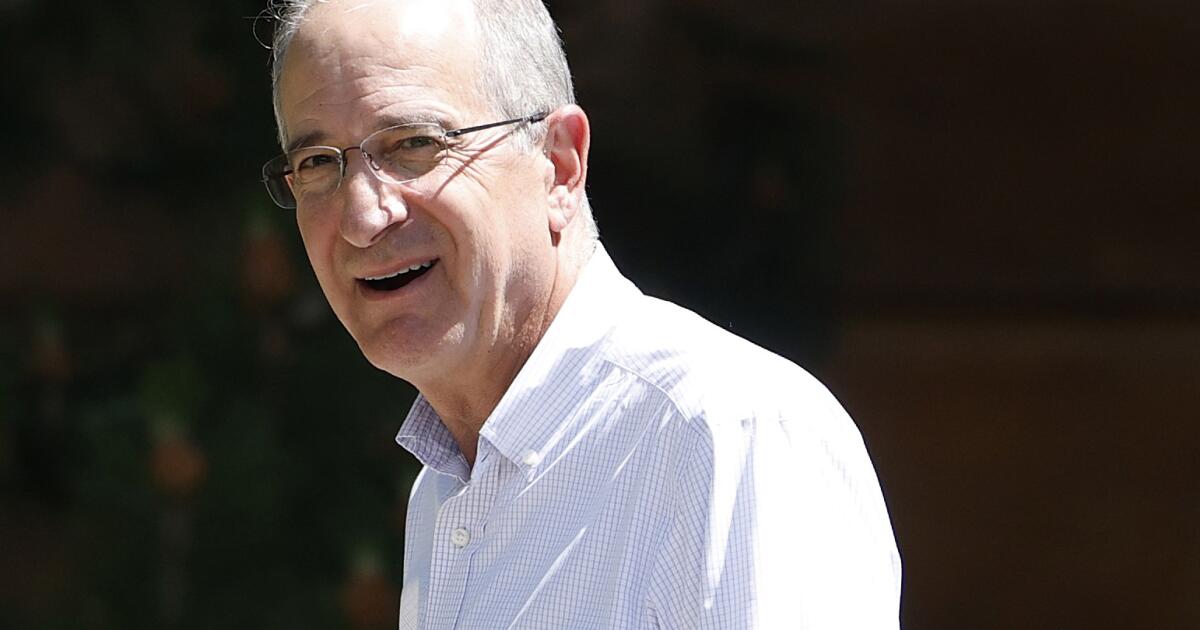
Brian L. Roberts — who with his father built Comcast into a cable TV and internet colossus — announced his company would spin off its prestigious NBCUniversal unit into a separate publicly traded company sometime next year.
The move reverses Roberts’ purchase of NBCUniversal in 2011 — a bold bet that created a behemoth with popular programming and cable pipes to pump that content into consumer homes.
Comcast’s breakup marks the close of a Hollywood era, one dominated for 40 years by a class of maverick moguls: Murdoch, CNN founder Ted Turner, Viacom’s Sumner Redstone, cable titan John Malone and the Philadelphia-based Roberts family.
Now, a new crop of leaders has emerged, reflecting Silicon Valley’s vast influence over the film and and TV business, which has been upended by streaming and, now, artificial intelligence.
“There was a time that Murdoch, Malone and Brian were really industry leaders who could affect change,” said Bank of America managing director Jessica Reif Ehrlich in an interview. “That’s not true any longer.”
Analysts widely believe Monday’s announcement is a prelude to eventual sales of both Comcast and NBCUniversal, a theory that Comcast rejects.
Roberts, 67, told analysts he will remain involved in both NBCUniversal and Comcast after the separation. Still, he plans to relinquish his chief executive role after 25 years and a half century at Comcast. Roberts has picked trusted associates to run each firm, and his family will continue to hold controlling shares of both companies.
But the shift underscores a dramatic loss of clout by Comcast and other traditional media enterprises. Netflix, Apple, Amazon and Google’s YouTube have diminished the industry’s financial pillars — box office receipts and cable programming fees — and given consumers control over when and how they watch programming.
Murdoch was the first to flee. In 2014, he was rebuffed in his $80-billion bid to beef up his 21st Century Fox by buying HBO, CNN and other Time Warner assets. Murdoch’s defeat led to the Fox asset sale to Walt Disney Co.
Last fall, Comcast made a run for the same properties with a plan to unite NBCUniversal with Warner Bros.
Instead, 43-year-old tech scion David Ellison — with help from his billionaire father, Oracle software co-founder Larry Ellison — scooped up the prize for a staggering $111 billion.
The pending blockbuster merger of Ellison’s Paramount Skydance and Warner Bros. Discovery is expected to reshape the industry and leave NBCUniversal increasingly vulnerable to a takeover.
“It looks like Comcast’s NBCUniversal was left standing on the dance floor without a partner,” MoffettNathanson media analyst Robert Fishman wrote in a Tuesday note to investors.
Paramount’s play for Warner Bros. came a month after Ellison finalized his family’s purchase of cash-strapped Paramount from Shari Redstone. The one-two acquisition punch would propel the Ellison family to top-tier moguls with influence over CNN, CBS News, HBO, Turner Classic Movies and two historic Hollywood studios.
“It’s a flagging industry. … The industry will have to consolidate to survive,” said C. Kerry Fields, a USC Marshall School of Business economics professor. “Those who have content plus [streaming] distribution are going to be the winners.”
Roberts knows distribution. His father in 1963 bought his first cable TV system in Tupelo, Miss. It was a quirky bet for Ralph Roberts, who figured his belts and suspenders business would soon be toast as beltless polyester pants became the rage.
Brian Roberts joined Comcast as a high school intern, setting up supermarket promotions. In 1975, he became a trainee cable installer, climbing poles and stringing cables. He joined Comcast full time in 1981 after graduating the Wharton School at the University of Pennsylvania.
For more than 30 years, he worked in tandem with his dad. With key associates, they built the nation’s foremost cable TV service — then the entertainment gateway — and grew stronger by offering internet, phone and then wireless service.
Analysts credit the 2011 purchase of NBCUniversal as a huge success; Comcast rescued a company that was on the ropes due to General Electric’s under-investment.
Over the years, Comcast rebuilt NBC and Spanish-language Telemundo, writing big checks for the best sports rights, including the FIFA World Cup, NFL, NBA and Major League Baseball.
Comcast also recognized value in theme parks and invested heavily, building Universal Studios as a formidable rival to Disney. NBC finished the season in first-place among traditional TV broadcasters and its L.A. film studio is an industry leader.
But the world has changed.
“One of the defining characteristics of this company has always been our willingness to look ahead, embrace change, and position ourselves for the future,” Roberts told analysts during a Monday call.
Reif Ehrlich, the Bank of America analyst, said Comcast needed to do something — or watch its stagnant stock sink farther.
Wall Street has punished the company amid steep losses in its cable TV and broadband internet units, and because NBCUniversal has historically generated its biggest profits from its cable channels.
In January, Comcast spun off those networks, including CNBC, MS NOW, USA Network and Golf Channel, to create a new entity called Versant.
But the move failed to boost Comcast’s battered stock, which dropped 3.3% on Wednesday to $23.73.
Five years ago, Comcast stock topped $50 a share.
“It was just a very challenged market on both sides, and it’s getting worse, not better,” Reif Ehrlich said.
Comcast faces competitors beyond traditional telecommunications firms, including AT&T and T-Mobile. SpaceX’s Starlink provides satellite internet service.
NBCUniversal must jockey alongside other well-capitalized players, including Amazon, Netflix and Disney. NBC’s streaming service, Peacock, has struggled to get traction. It counted 46 million paying subscribers as of the first quarter, a fraction of Netflix’s 325 million and the nearly 132 million subscribers of Disney+.
“It’s kind of a subscale player,” Reif Ehrlich said. “It’s just a real battle, and NBC has expensive sports rights.”
Roberts conceded the difficult landscape on the analyst call.
“The world is changing faster than ever,” Roberts said. “Technology, consumer behavior, competition, capital requirements are all evolving at an unprecedented pace … When we acquired NBCUniversal, more than 15 years ago, the industry looked very different.”
He will retain control for at least three years. The NBCUniversal spin-off is envisioned as a tax-free transaction for shareholders, providing a short-term buffer from deal-making to preserve that structure.
NBCUniversal could be up for grabs by 2029 — a pivotal year when the NFL is expected to open negotiations for a new round of broadcast rights. That auction is expected to draw heavy interest from Amazon and other streamers — not just veterans Fox, NBC, Disney’s ESPN and Paramount’s CBS.
“Brian Roberts has already proven his willingness to play the long game and with continued control should be the end decision maker,” Fishman said.
Much like Murdoch, who is now 95 and partially retired.
“Rupert was the smartest guy in Hollywood — he got out at the top,” Reif Ehrlich said.
He entrusted power to his 54-year-old son, Lachlan, who has been busy remaking Fox after the 2019 sale to Disney, which included Fox’s film and TV studios, streaming service Hulu and the FX and National Geographic channels. Fox also unloaded its regional cable sports networks — a savvy move before that business cratered.
The Murdochs kept Fox Sports, the Fox broadcast network, TV stations, Fox News Channel and the studio lot.
The company has been expanding. Lachlan Murdoch led Fox’s purchase of Tubi, which provides free TV channels and movies for smart televisions, keeping Fox in the streaming game. The company launched Fox News and weather products, and subscription service Fox One, which streams the company’s sports and news.
Earlier this month, Lachlan Murdoch stunned the industry by agreeing to pay $22 billion for Roku, a leading streaming platform that reaches 100 million viewers worldwide. Murdoch called the proposed purchase “a defining moment for Fox.”

Ethics experts sounded the alarm Wednesday after new financial disclosure reports revealed that President Trump’s income ballooned to $2.2 billion in 2025, with $1.4 billion coming from various new cryptocurrency-related businesses.
“It’s bribery. It’s graft. It’s exploitation of public power for private financial gain,” said Kathleen Clark, a law professor at Washington University and an expert in government ethics. “Trump has — with the acquiescence of a somnolent, GOP-controlled Congress and the active assistance of John Roberts’ Supreme Court — transformed the presidency into a massive corruption racket.”
Trump reported income of over $600 million in 2024. But after he entered the White House in 2025, he reported that his income had soared to more than $2.2 billion.
The 2025 annual disclosure report filed with the Office of Government Ethics shows that Trump ramped up his real estate business in countries across the globe, particularly in the Middle East, at a time when his government was negotiating over vital issues of military aid and economic tariffs. The president also expanded his dealings in the relatively new realm of cryptocurrency.
According to the 927-page report, Trump made $635 million in royalties from Celebration Coins and more than $500 million from his World Liberty Financial crypto firm. He drew in millions from a raft of Trump-branded merchandise including God Bless the USA Bibles and sneakers depicting him with his hand raised in a fist. He also brought in $10.4 million from a property in the United Arab Emirates and $9 million from a property in Saudi Arabia.
Noah Bookbinder, an ethics expert and former president of Citizens for Responsibility and Ethics, a nonprofit watchdog group in Washington, described Trump’s business dealings while in the White House as “entirely unprecedented, certainly in modern history, but I think by most ways of measuring, in all of American history.”
“This is corruption,” Bookbinder said. “You have a president who has been quite transparently using the presidency in ways that benefit his business interests and intertwining the presidency and business interests.”
But the president and the White House brushed aside ethics concerns about the money Trump is making.
Trump told reporters Wednesday that he made a lot of money before he came to the White House, he had “big institutions” run his money, and that he had benefited, like every other American, as the stock market went up.
“We’re all profiting,” he said. “I’m profiting because I have a lot of money and a lot of cash.”
In a statement, White House spokesperson Anna Kelly said: “Neither the President nor his family has ever engaged — or will ever engage — in conflicts of interest. … All actions by President Trump and his administration are taken in the best interest of the American people.”
Although the report does not show exactly how much Trump is earning — it provides details of revenue, rather than profit — the scale of the president’s cryptocurrency dealings elevated ethics watchdogs’ long-standing concerns.
Jordan Libowitz, a vice president at Citizens for Responsibility and Ethics, said the most concerning detail of the new report is the hundreds of millions of dollars coming in from various crypto ventures partnered with companies that the American public knows little about.
“At a time when his own administration itself is setting regulation for these types of companies,” Libowitz said, “there’s just this massive opportunity for corruption when foreign governments and foreign nationals can pour tens of millions of dollars into the president’s pocket.”
As a real estate mogul, Trump has long invested in hotels, condominiums and golf courses. But cryptocurrency, Libowitz said, offers vastly more potential for corruption.
“There’s only so many hotel rooms you can book, so many rounds of golf, but there’s no limit with crypto,” Libowitz said. “You can just buy his meme coin and he gets a cut, so you kind of take out the middleman, but also the cap or the amount of money you can funnel to the president.”
Libowitz said it was also problematic for Trump to expand his real estate empire in foreign countries, particularly in the Middle East.
“Now it seems that almost all his new developments are in foreign countries, and that opens up, if you’re building this giant resort, you’re going to need help from the local government, whether it’s tax breaks or utility issues, or building a road, or speeding up permits,” Libowitz said. “These are ways that foreign governments can do favors for the American president.”
In the half a century before Trump was elected, ethics experts say, presidents from Nixon to Obama publicly released their tax returns, sold properties or put the proceeds in a blind trust managed by someone they did not know.
“They weren’t doing it because they legally had to, but because they thought it was the right thing to do,” Libowitz said.
Ever since Trump was first elected in 2016 and opted to not sell his businesses or put them in blind trusts, ethics experts have urged Congress to impose more aggressive financial oversight over money in politics.
“Congress needs to update the law, and basically, mandate blind trusts and sale of assets and disclosure of tax returns,” Libowitz said.
Noting that the Constitution’s Emoluments Clause explicitly states that the president cannot accept things of value from foreign or domestic governments, ethics experts say Trump is flouting the law and Congress has chosen to not enforce it.
Richard Painter, a law professor at the University of Minnesota and former White House ethics lawyer under President George W. Bush, said Congress needed to close loopholes that exempt presidents from federal conflict of interest laws as well as enforce the Foreign Emoluments Clause.
“Nobody holding a position of trust with the United States government can accept emoluments, profits and benefits from foreign governments, and that is flatly prohibited under the United States Constitution,” Painter said. “Now, if the United Arab Emirates put money into Liberty Financial, as I understand they did … and then Trump makes money off Liberty Financial, that’s a Foreign Emoluments Clause problem.”
Congress, he said, should empower an independent prosecutor to investigate such conflicts.
“The problem with the Foreign Emoluments Clause is how do we enforce it?” Painter said. “The founders and head of the Congress enforced it by impeaching anybody who took a bunch of foreign government money, but I guess that system’s not working. That’s a serious problem.”
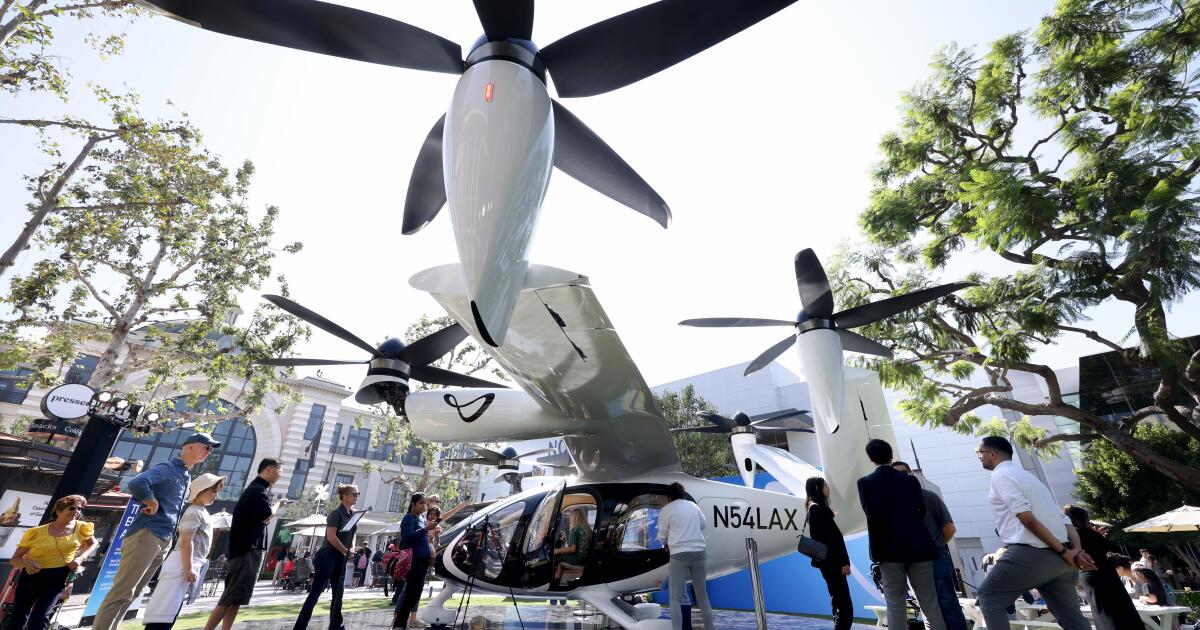
The race to bring air travel to the sky is heating up as Santa Cruz-based Joby Aviation and Toyota launch a joint venture to commercially produce air taxis.
The companies said in a news release Tuesday that they will work together on productivity, quality and costs and move toward mass production of Joby’s electric vertical takeoff aircraft. Joby and Toyota were first linked when Toyota made a nearly $400-million investment in the company in 2020. It has since increased its backing of the company to $900 million.
“It’s really meaningful for us to take on this challenge together with Joby, a partner that shares the same vision,” Toyota Chair Akio Toyoda said. “We believe this strengthened relationship is an important step forward in realizing the future mobility society.”
Joby‘s all-electric vertical takeoff vehicles are designed to hold four passengers and a pilot and can travel at up to 200 mph. The vehicle uses six tilting propellers to achieve vertical takeoff before switching to forward flight.
In February, Joby announced a partnership with Uber to start service in the United Arab Emirates this year, bringing on-demand air taxi rides to the country. It plans to expand to the U.S. after the completion of its final stage of Federal Aviation Administration testing.
Prior to its full FAA certification, Joby is hoping to launch early flight operations later this year as part of a White House program that will bring flights to several states, including New York, Texas and Arizona. Flights in California will not begin until after obtaining FAA certification.
Joby has been in a fierce battle to be the first with taxis in the sky with its Northern California competitor Archer Aviation. The two companies are involved in overlapping lawsuits, with Joby alleging corporate espionage against Archer, and Archer filing a suit alleging dubious ties to China that sparked an investigation into Joby by the U.S. International Trade Commission.
“Toyota has been by Joby’s side for nearly a decade, providing invaluable guidance and support as we built the foundation for manufacturing our aircraft,” JoeBen Bevirt, Joby’s chief executive and founder, said in the news release. “Together, we share a vision of making aerial mobility an everyday reality, and we look forward to delivering on that promise together.”
Joby Aviation’s shares, which have fallen more than 30% this year, climbed 3% on Tuesday to $8.92.
-

 Lifestyle4 minutes ago
Why Chanel Is Acquiring Charvet
-
 Politics7 minutes ago
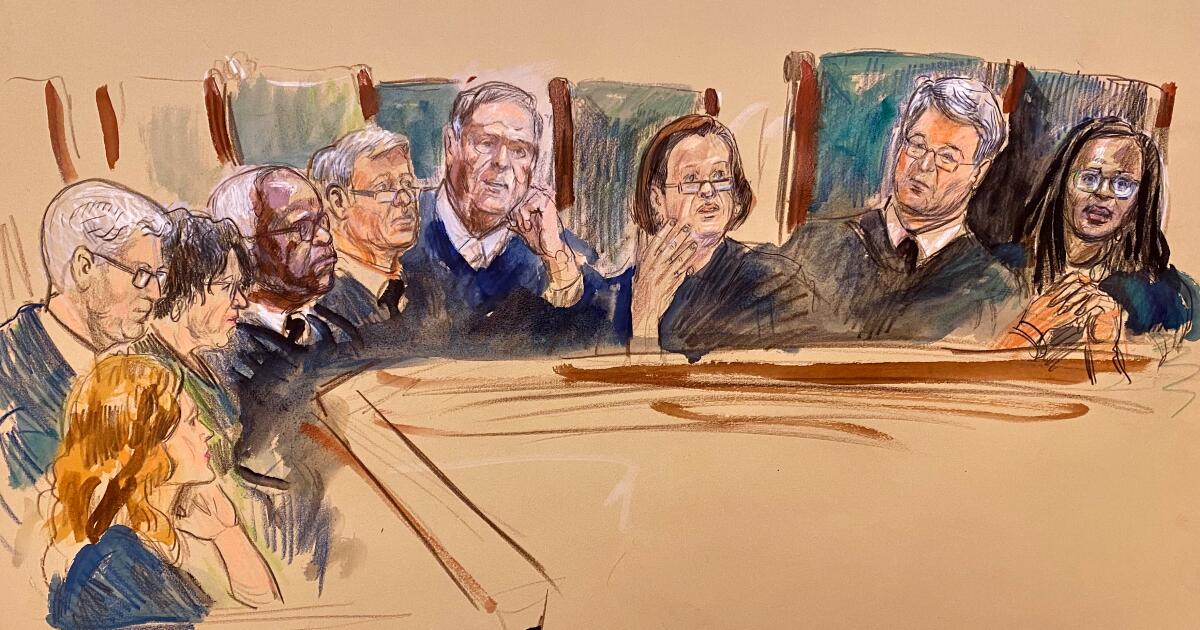
How Roberts led a fractured Supreme Court to wins for the right and defeats for Trump
-
 Science12 minutes ago
Contributor: Alcohol should be stigmatized like smoking
-
 Sports19 minutes ago
Thousand Oaks native Claire Liu finally reaches Wimbledon’s third round, will face Coco Gauff
-

 World27 minutes ago
Could water become a flashpoint between Islamabad and New Delhi?
-
 News52 minutes ago
Ukraine latest / Limits of military might / Can major powers regain dominance? : Sources & Methods
-

 Los Angeles, Ca2 hours ago
Juvenile charged with murder after 4-month-old Claremont infant thrown to her death
-

 Detroit, MI3 hours ago
Silence from Jalen Duren’s camp is what the Pistons want to hear

