Oklahoma
Oklahoma Cold Case Files: Alejandro Sandoval


TULSA, Okla. — It’s a case with few leads, no suspects and little to go on. The 2003 cold case of Alejandro Sandoval is about as stalled as it comes.
It was September 9, 2003, and Tulsa Police said Alejandro Sandoval was living at the Salida Creek Apartments in east Tulsa.
That day, officers said he was shot outside his building and then staggered inside his apartment where he collapsed.
Detectives told 2 News the Sandoval case is unusual.
Investigators don’t even have a photo of him, but what they do have is a case that’s remained cold for 21 years.
“In his final moments he had gone into his apartment and told his girlfriend that there was somebody chasing him, and then he laid down on the floor and he never really regained consciousness from there,” said Lt. Brandon Watkins.
Tulsa police said it wasn’t hard to figure out how Sandoval died.
“It turned out that he was shot,” said Watkins.
However, officers said there was little cooperation from nearby witnesses at the time of Sandoval’s death.
“There’s a little bit of discrepancy when you read the reports. It’s hard to tell if he ran in there once or came outside and then came back but at some point, he was shot,” said Watkins.
Police said another thing that makes this case so difficult is the numerous names that Sandoval used throughout his life.
“Mr. Sandoval had multiple aliases and his actual real name was Jose Mendoza Agular, but he also went by Alberto Diaz. He was apparently involved in the drug trade and had been having multiple run-ins with people around his apartment complex in the month leading up to his death,” said Watkins.
Watkins said it’s possible one of those enemies may have caught up with him outside his apartment that day.
Despite what he was possibly involved with, Watkins said no one deserves to lose their life at the hand of another.
“Often when people lead a high-risk lifestyle, this is often the outcome of it and no one ever deserves it. I mean yeah, he is committing crimes, but you can pay for that through the judicial system, not by someone’s hand,” said Watkins.
If you have any information about the death of Alejandro Sandoval, you can call Tulsa Crime Stoppers.
That number is 918-596-COPS.
Go even deeper into cold cases in Green Country with our podcast. New episodes drop in Fridays.



Height/Weight: 6-foot-3, 215 pounds
Hometown/High School: Washington, OK (Washington H.S.)
Ranking: ★★★★ (92 Rivals — No. 123 player overall)
Notable Offers: Kansas State, Michigan, Missouri, Oklahoma, Texas Tech, and Utah
Not very often Penn State goes into Oklahoma and gets a prospect, let alone one that is a four-star that the Sooners very much wanted. Fortunately for Matt Campbell and the Nittany Lions here, the familial relationship paid off, as Case’s brother, Cooper, is a rising redshirt sophomore tight end at Penn State. Doesn’t take a lot of dot connecting to imagine how much that played a part in Case deciding on the Nittany Lions. Still, given the ebbs and flows of the recruiting cycle, not sure you can take any recruitment for granted. So despite the connections Penn State had here, getting a top 10 kid from Oklahoma that the Sooners wanted is a big victory for the new staff in recruiting cycle #1.
Beyond on who his brother is, there’s a reason Case was maybe *the* top linebacker target for Penn State this cycle. This kid is an absolute beast. Tremendous linebacker frame at 6-foot-3, 215 pounds that will allow him to play up to 240 pounds easy, Alexander is what you think of when you imagine the modern day middle linebacker. He has the speed and fluidity to drop back into coverage, but has the physicality and bruteness to win in tight. The first play on his highlight film is his giving a Spinebuster to a poor opponent that rivals that of Arn Anderson’s Spinebuster on The Undertaker at WrestleMania 18.


Kamden Mantooth caps wild week by leading Mustang to 6A baseball title
It was a wild week for Kamden Mantooth, who helped Mustang beat Edmond Santa Fe 5-4 for the 6A baseball title. After being forced to sit in the semifinals due to an ejection in the quarterfinals, he pitched 5 2/3 innings Saturday.
Joe Patterson was hoping it would be different this time.
The Mustang baseball coach is no stranger to state championship games.
But as Mustang headed into its Class 6A title matchup against Edmond Santa Fe in May, a state championship victory remained a goal that hadn’t been fulfilled for Patterson as a player or head coach.
“That was all together — playing and coaching — my (sixth) state championship game, and I was 0-5,” Patterson said.
Patterson can now revise that record to 1-5 as the Broncos beat defending champion Edmond Santa Fe 5-4 at ONEOK Field in Tulsa.
An unforgettable day for Patterson.
An unforgettable season.
After leading Mustang to its third title and a 39-6 record while playing a brutally difficult schedule, Patterson is The Oklahoman’s 2026 All-State Coach of the Year.
“It was one of those years where it felt like I wasn’t working the whole year,” Patterson said. “Just a special group and everybody involved did such an amazing job and the players got along and the senior leadership was just unbelievable.”
A year after going 19-16 and falling at regionals, this season was vastly different for Patterson as Mustang dominated from beginning to end.
The Broncos won 11 of their first 12 games and ended the season the exact same way, claiming victories in 11 of their last 12 matchups.
They thrived in tight games, going 12-3 in matchups decided by two or fewer runs.
“We lost a bunch of close games last year,” Patterson said. “We didn’t have as great a season as we wanted, so we talked about trying to change the team morale and change the culture just a little bit in the fall, and we really focused on that. Just trying to make the place a more positive place for the kids and emphasize them having a little bit more fun but still working.”
Born and raised in Duncan, Patterson’s love of baseball and sports in general go back to those days.
His dad, Bill, was Duncan’s head football coach from 1997-2003 before accepting an assistant position at Owasso and serving as the Rams’ head coach from 2007-2016.
A standout in football and baseball in high school, Joe Patterson was at Duncan as a freshman and sophomore before spending his final two years at Owasso and then playing college baseball from 2007-2010. He went to Oral Roberts for one year, Seminole State for a season and Texas A&M for his final two.
Patterson was named the national junior college player of the year at Seminole State and had a successful stint at Texas A&M, hitting .362 with 21 homers and 100 RBIs with the Aggies.
He’s been at Mustang since the summer of 2019 after coaching at Westmoore.
Former OU shortstop Brandon Zaragoza played for Patterson during his senior year at Westmoore and was a Mustang assistant for the last four seasons before recently being named Westmoore’s new head coach.
Patterson has had a huge impact on Zaragoza, who will take what he’s learned from his former coach into his new gig.
“He just brought pure joy to the game for me, especially with just his ability to, one, obviously coach the game, but two, to allow his players to go out there and perform,” Zaragoza said. “The coolest thing about Pat was his ability to just pick up on player knowledge. Just kind of knowing what he has in terms of personnel and then of course his ability to just game plan, strategize, just get his guys ready to play.”
Patterson always wanted to coach at a one-high school town like Mustang.
He has his wish now, and Zaragoza says it’s a well-oiled machine.
“That’s kind of how I describe it a lot to people,” Zaragoza said. “Just a well-oiled machine in terms of just the coaches that are over there and the attention to detail and the preparation. There’s no loose ends at Mustang. And given how big the school is, you can always get kind of lost in personnel or all that stuff, but just the way that Mustang operates, it’s top tier.”
Mustang didn’t necessarily have big names this season like some teams in the state, but the Broncos had several guys who shined.
Outfielder and Northern Oklahoma College-Enid signee Nate Sutton hit .449 with 15 homers and 70 RBIs.
Fellow senior Kamden Mantooth was second on the team with a .442 batting average. A shortstop, Mantooth started at pitcher in the title game and held Edmond Santa Fe to eight hits and four runs — three earned — over 5 2/3 innings.
“It means everything for us,” Mantooth said after the championship win. “We’ve been working for this since we were in seventh grade. We’ve been working for this, and we finally achieved our goal that we wanted.”
For Patterson, it’ll forever be a special moment as he had his 6-year-old son with him in the dugout and his dad watching from the stands.
Patterson had lost two title games as a player at Owasso and three as a head coach — two at Westmoore and one at Mustang.
The outcome was different this time, and it was well worth the wait.
“It was just a feeling of relief and happiness,” Patterson said.
Nick Sardis covers high school sports for The Oklahoman. Have a story idea for Nick? He can be reached at nsardis@oklahoman.com or on Twitter at @nicksardis. Sign up for The Varsity Club newsletter to access more high school coverage. Support Nick’s work and that of other Oklahoman journalists by purchasing a digital subscription today at subscribe.oklahoman.com.

Crews responded to a fireworks stand after it caught fire in Broken Arrow Saturday night.
Authorities urged people to avoid E. Kanosha Street near S. 236th E. Avenue as the road is closed and fireworks could spread in the area due to the fire.
Broken Arrow Fire Department released a statement confirming no injuries were sustained as a result of the explosions or fire.
Fire crews quickly controlled the fire in about 20 minutes according to Broken Arrow Fire Department.
The initial cause of the fire is under investigation.
Viewer Leslie Maxey, who lives close to the fireworks stand, sent in video of the ongoing fire.
“We were putting our daughter to bed with a book when we heard an explosion that was gradually getting louder and louder,” Maxey said.
This is a developing story.
-

 Michigan22 seconds ago
Michigan bills establishing American Freedmen infrastructure introduced in House
-

 Massachusetts7 minutes ago
Joyous occasion: Boston celebrates new beginnings, local pride
-

 Minnesota10 minutes ago
Over a dozen cases dropped against Minnesota protesters accused of assaulting federal agents during ICE operation
-

 Mississippi15 minutes ago
Fort Worth youth baseball team rescued after floodwaters trap families in Mississippi
-

 Missouri22 minutes ago
MoDOT scheduled road work across Northwest Missouri for June 22–28
-
 Montana25 minutes ago
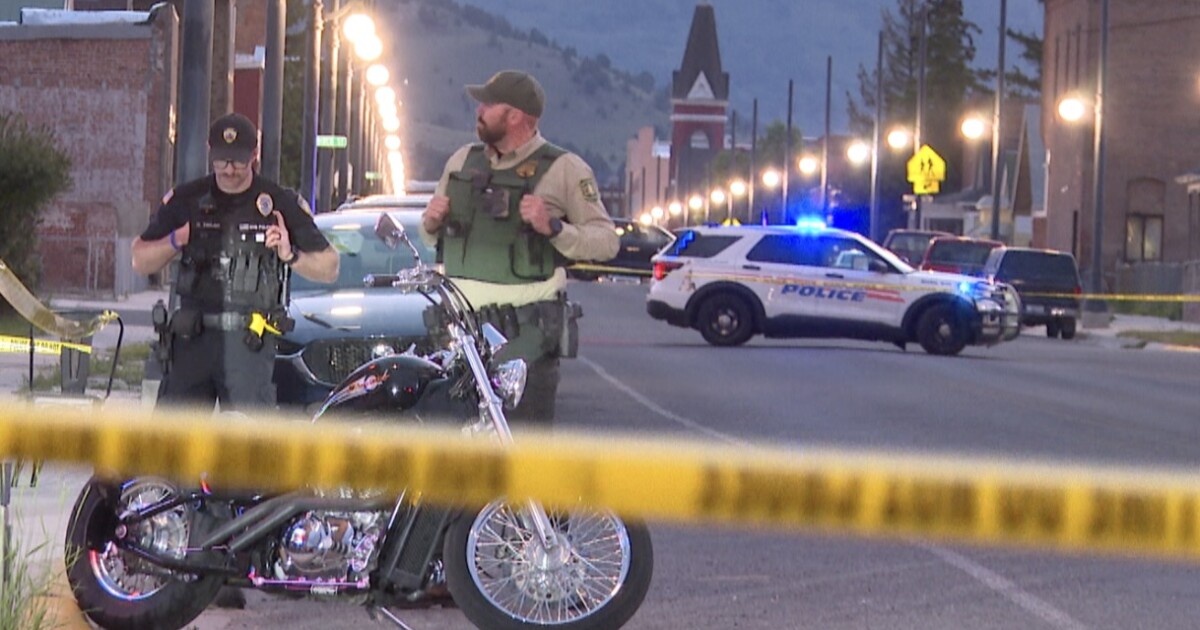
Anaconda shaken by second bar shooting within a year
-

 Nebraska28 minutes ago
Defensive Back Brennan Drummond Commits to Nebraska
-

 Nevada37 minutes ago
Desert state booms as workers flock from California amid game-changing discovery: ‘Remarkable’

