World
‘We are all the same’: Lebanese come together to feed those forced to flee


Beirut, Lebanon – At Nation Station, a communal kitchen in the Geitawi neighbourhood, volunteers move to and fro, stacking food on a table.
Behind them, others stir meat, cook rice or chop lettuce while trading small talk.
“Fifty meals!”, one of the volunteers shouts out to his comrades, noting a benchmark.
They return the enthusiasm with a communal cheer, without breaking from their tasks.
The volunteers in the petrol station-turned-communal kitchen are working to prepare meals to be delivered to shelters for people who have been forced to flee their homes.
One million displaced
Before Israel began relentlessly bombarding Lebanon’s south, Bekaa Valley in the east and Beirut’s southern suburbs on September 23, more than 110,000 people had already been displaced from their homes in southern Lebanon during the 11 months of cross-border attacks.
Last Monday’s escalation forced many more to flee and the situation became even more dire on Friday when Israel levelled an entire block in a southern suburb of Beirut while assassinating Hezbollah’s Secretary-General Hassan Nasrallah and other officials from the group.
The Israeli army then demanded that large parts of Beirut’s suburbs, already reeling from the previous week’s attacks, evacuate.

In the days that followed, Prime Minister Najib Mikati said as many as one million people, or about one-fifth of the country’s residents, were displaced.
Lebanon’s Ministry of Education designated a number of schools as temporary shelters for the displaced, while the occupancy of hotels and rented apartments spiked.
But beyond that, the Lebanese state’s capacity is limited.
The country is in its fifth year of a devastating economic and banking crisis, which experts largely blame on the ruling political class.
Picking up the slack
In the space where the government, the United Nations or international NGOs fall short, initiatives like Nation Station fill the gaps.
“Nation Station started the day after the August 4th explosion in 2020,” Josephine Abou Abdo, the cofounder of Nation Station, told Al Jazeera.
“We responded to emergency needs back then and since the Israeli aggression on Monday, we’ve cooked meals for those in need.”
The volunteers cook breakfast, lunch and dinner for the displaced people, to be delivered to the shelters.
In total, they make 700 portions of food daily. To make so many meals is taxing and Abou Abdo says the group is actively seeking volunteers to help feed the displaced.
Others who aren’t part of initiatives like Nation Station have also stepped up, taking families into their homes, donating blood, or distributing water to people stranded on the highways.
‘Influencers’ in action
In Beirut’s Ramlet al-Bayda neighbourhood, some students move busily back and forth. The constant drone of the air circulation system drowns out the sound of chatter. Students are split into groups, some build boxes, while others fill them with staples like dry food, water, or cleaning supplies. Once the boxes are finished, the groups form an assembly line to pass them into a parked white van as a young man gives instructions.
Once full, the vans depart for parts of the country where the need is most desperate.
This initiative was started by three social media influencers, Ghena Sandid, Farah Dika, and Sara Fawaz. The trio, who have no organisation or association and have not even named their initiative, mobilised their followings to secure a free space – an underground parking garage – to organise and send out the aid.
People from abroad have also been donating money for the relief efforts. But with Lebanon’s banking system collapsing in 2019, many fundraising efforts have run into trouble getting that money to Lebanon. To circumvent that, Dika told Al Jazeera that Western Union had lifted her transfer limit.
“At first, we thought the initiative would be small with only ten to 15 people helping,” Sandid said. “That number quickly turned into around 450 students. They’ve provided aid to over 50 schools across 30 regions in Lebanon.”
‘We’re all the same’
Outside the garage, teenager Zoey Zein stood with a group of her friends. “I came to help because I want people to know there are people that are helping as long as they need.”
This mobilisation has provided aid to thousands of people, but the groups are struggling to keep up with the ever-increasing number of displaced.
“One problem we face is that at first, we needed to serve 1,000 people,” Dika said. “Now that number is at 5,000.” Dika was speaking to Al Jazeera on Friday afternoon, just a few hours before the strikes that killed Nasrallah.
Since then, the number of people forced from their homes has soared. Many have taken to sleeping in parks or by the seaside.
Down in the garage, a van’s loading area is filled with goods. The volunteers close the doors and a few climb inside. Jad Jaafar, 21, sat in the passenger seat. He volunteers about six or more hours a day. “I’m trying to help,” he said. “There are people who can’t stay in their homes, so we need to go out and help them.”
“I’m from Baalbek,” he added, referring to Lebanon’s eastern region. “Next to me is a Beiruti and a northerner, and someone from the mountain. We’re all the same.”



World
Argentinian flight instructor jumps to death from plane, 22-year-old student forced to land alone

NEWYou can now listen to Fox News articles!
A flight instructor jumped to his death out of a small aircraft over Argentina, forcing the student pilot he was teaching to land the plane herself.
Leandro Andrés Bertazzo, 42, was on board a two-seat Cessna 150G on Saturday when he made the decision to jump out over the province of Córdoba, according to CNN, which cited its Argentinian affiliate TN.
“He made this tragic decision on board an aircraft with another person by his side,” Eduardo Álvarez, director of the Flying Parrot Córdoba flying school where Bertazzo worked, told TN. “It’s impossible to think about it or understand it, but the human mind is so complex.”
An undated photo of Leandro Andrés Bertazzo, a 42-year-old pilot who jumped to his death from a plane on Saturday, July 4 in Argentina. (Instagram/Leandro Bertazzo)
PILOT DECLARES MAYDAY BEFORE SEAPLANE COMES DOWN IN NEW YORK CITY’S EAST RIVER
Rosario, the 22-year-old student, later told authorities that Bertazzo told her, “You know what you have to do, carry on,” before taking off his gear, opening the door and leaping out, according to Álvarez.
Opening the door of a plane midair is incredibly difficult. Álvarez said it would be akin to trying to open the door of a car traveling 124 miles per hour.
Cessna 150m FRA150M climbing out after take-off with flaps deployed and hills behind. (aviation-images.com/Universal Images Group via Getty Images)
FRANTIC SEARCH UNDERWAY FOR CREW AFTER BOEING 737 WRECKAGE FOUND BY OFFICIALS
Álvarez said that Rosario managed to land the plane safely, despite being in “complete shock.” There was no damage to the plane, according to TN.
Álvarez noted that Bertazzo had gone on a flight with another student earlier in the day.
A view from the main road of the flight school Bertazzo worked at, Flying Parrot Córdoba. (Google Maps)
CLICK HERE TO DOWNLOAD THE FOX NEWS APP
Álvarez also told TN that Bertazzo had visited a psychiatric institute, something that was only known by his family prior to his death.
Prosecutors in Córdoba will lead the investigation into Bertazzo’s death. The plane he jumped from is now in police custody.

Former Olympic canoeist David Hearn denies damaging US President Donald Trump’s Washington, DC reflecting pool renovation.
Published On 9 Jul 2026
A former US Olympian has pleaded not guilty to vandalising the newly renovated Lincoln Memorial Reflecting Pool, in a case that has drawn national attention amid accusations that the administration of US President Donald Trump is trying to shift blame for a troubled renovation.
David “Davey” Hearn, a 67-year-old three-time Olympic canoe racer, entered his plea in federal court on Thursday after prosecutors accused him of “maliciously” damaging the “American flag blue” lining installed at the bottom of the reflecting pool at Trump’s request ahead of celebrations taking place at Washington’s National Mall for the 250th anniversary of the United States’ independence on July 4.
list of 4 itemsend of listRecommended Stories
Federal prosecutors allege Hearn pulled at the liner on June 19, causing more than $1,000 in damage. He has been charged with destruction of government property, an offence that carries a maximum prison sentence of 10 years.
Hearn denied the allegations. He admitted he stopped at the pool during a bike ride, reached inside and touched a section of lining that was already peeling away, but that he did not remove or damage it. He told The Associated Press he let go when a park employee told him to stop.
Hearn’s lawyers argue the prosecution is an attempt by the Trump administration to deflect attention from what they describe as a botched renovation project.
“This indictment reflects the administration’s effort to shift blame for their own failures,” they said in a statement. “The justice system exists to determine facts, not to provide political cover.”
The 620-metre (2,030-foot) reflecting pool reopened in June after Trump ordered the new liner to be installed across the bottom. He said he was compelled to go ahead with the $14.7m renovation after a friend visiting from Germany called the pool dark and disgusting.
But within days, algae began to spread across the surface, the water turned chartreuse green, and sections of the liner began peeling away.
Experts have explained that the dark new coat of paint at the bottom of the pool would elevate the temperature and allow algae to grow, and that algae blooms in water are common at this time of year, especially in shallow, stagnant water like that of the pool.
Trump blamed the issues on vandals, claiming without evidence that “corrosive and destructive chemicals” were poured into the pool and that vandals “took some form of knife or blade” and put a long “gash into the beautiful facade”, although no one has been charged over those alleged acts.
The US president warned that anyone who allegedly damaged the pool could face long prison terms. “Please remember that there is a 10 year prison sentence for the destruction, or even the attempted destruction, of such things — Which will be fully enforced!” he wrote on Truth Social.
Last week, US Attorney for the District of Columbia Jeanine Pirro announced the indictment against Hearn, accusing him of intentionally damaging the liner.
The US Department of the Interior has said that at least six people were arrested on suspicion of vandalising the pool in the weeks after it reopened. National Guard troops and US Park Police were deployed to protect the site, which was fenced off during July 4 celebrations.
Thursday’s hearing drew a packed courtroom, with dozens of supporters waiting outside after Hearn entered his plea.
The reflecting pool’s problems have continued, with Trump acknowledging it will need to be drained again so the damaged liner can be repaired.

-
Culture37 minutes ago
Which Version of the ‘Odyssey’ Should You Read?
-
 Lifestyle40 minutes ago
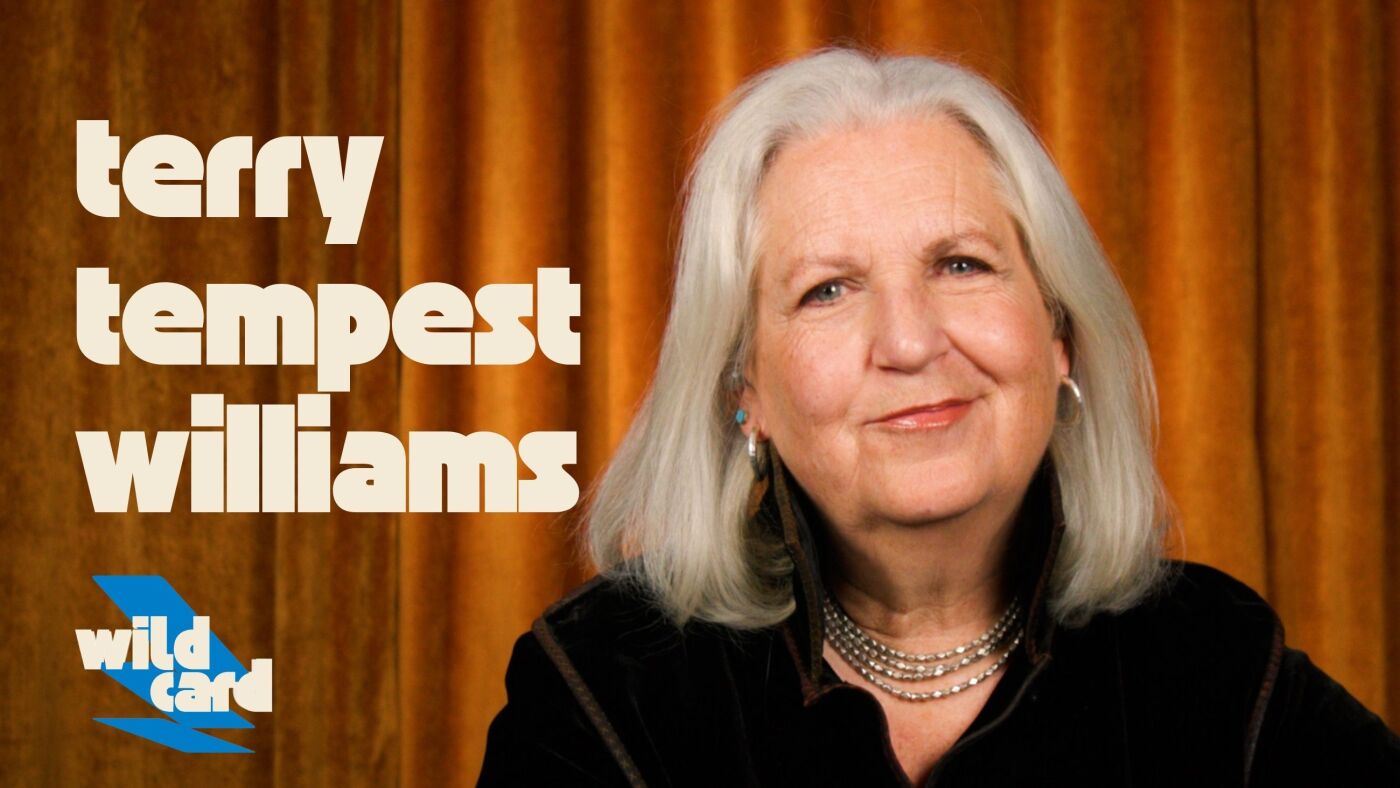
Terry Tempest Williams on why women with big ideas get labeled ‘crazy’ : Wild Card with Rachel Martin
-

 Technology52 minutes ago
Google’s Nest Thermostat has hit its best price of the year
-

 World55 minutes ago
Argentinian flight instructor jumps to death from plane, 22-year-old student forced to land alone
-

 Politics60 minutes ago
Omar’s disclosures erased millions, leaving her with potential negative net worth. She won’t explain why.
-

 Health1 hour ago
Dr Oz links obesity to chronic disease surge, says GLP-1s can ‘jumpstart’ better health
-

 Sports1 hour ago
Pirates star pitcher makes unfortunate history after being taken out in middle of perfect game bid
-

 Technology1 hour ago
Medical identity theft follows you into the doctor’s office

