World
Ukraine accepts demilitarised zone to end Russia war, but do DMZs work?


Ukrainian President Volodymyr Zelenskyy says Kyiv is willing to turn the parts of the Donbas region that his troops currently control into a demilitarised zone (DMZ) if Russia also commits to keeping its soldiers out of this eastern region of Ukraine.
Zelenskyy’s comments represent Ukraine’s biggest territorial concession so far as he faces mounting pressure from both Russian military advances and United States President Donald Trump to agree to a ceasefire with Moscow.
list of 4 itemsend of listRecommended Stories
The Ukrainian president also spoke of a second DMZ near the Zaporizhzhia Nuclear Power Plant, Europe’s largest, which is currently controlled by Russia. The DMZ proposals, he said, were part of a 20-point peace plan seeking the end of the Ukraine war that Zelenskyy on Tuesday said was backed by the US.
Here is what we know about the plan and whether demilitarised zones could work in Ukraine:
What is the 20-point peace plan?
Zelenskyy unveiled the plan in a two-hour briefing with journalists, reading aloud from a highlighted and annotated copy. The plan was formulated by negotiators from Washington and Kyiv in Florida over the weekend.
Here’s where negotiations stand on key issues:
- Ukraine’s NATO membership: Russia has insisted from the start of the war that it will not accept Ukraine as a part of NATO. The Trump administration, too, has made clear that Ukraine must give up its hopes of joining the military alliance. But Ukraine continues to resist pressure to introduce constitutional amendments explicitly stating that it will stay neutral and not seek NATO membership. “It is the choice of NATO members whether to have Ukraine or not,” Zelenskyy said on Tuesday. “Our choice has been made. We moved away from the proposed changes to the Constitution of Ukraine that would have prohibited Ukraine from joining NATO.”
- Territorial concessions: Zelenskyy said any proposal requiring Ukraine to withdraw its troops would have to be approved through a national referendum. Ukraine has repeatedly pointed to its constitution, which prevents the government from changing the country’s borders on its own. But many analysts believe that Ukraine might need to settle for a middle path – not recognising Russian-occupied regions officially while acknowledging that it does not actually control them.
- Elections: Zelenskyy said Ukraine would hold a presidential election only after a peace agreement is signed. US President Donald Trump has been pushing for elections in Ukraine while Russia has used the absence of elections during the war to question Zelenskyy’s legitimacy.
- Demilitarised zones: Zelenskyy said any areas that Ukraine pulls out from will become DMZs, which he also called free trade zones. “They are looking for a demilitarised zone or a free economic zone, meaning a format that could satisfy both sides,” he said on Tuesday, referring to US negotiators.
What are the proposed DMZs in Ukraine?
Russia has demanded full control of the Donetsk and Luhansk regions, which constitute the Donbas, historically Ukraine’s industrial belt.
Its troops currently control almost all of Luhansk and 70 percent of Donetsk.
The latest proposal would involve Ukrainian soldiers pulling out of the territory in the Donbas that they control – as long as Russia does not seek to occupy the region. Instead, that region is to become a DMZ.
Meanwhile, in Zaporizhzhia, Russian troops are in control of a nuclear plant that Ukraine has tried – so far in vain – to get back.
The latest proposal suggests turning the region around the nuclear plant into a DMZ, too.
But it is unclear how the proposed DMZs – if both sides were to agree to them – would be governed, who might ensure that both sides play by the rules and how resources there, such as the nuclear plant, could be shared.
“It’s a point in the plan that is supposed to satisfy both sides,” Marina Miron, an analyst at King’s College London, told Al Jazeera.
“However, I don’t see how this is going to function because in Ukraine Zelenskyy said that Russia would have to withdraw its forces, and we’re talking about the Donbas, and I don’t see that happening, especially if Russia is winning on the battlefield.”
Miron explained that Ukraine designating demilitarised zones in this peace plan was a tactic by Kyiv to signal that it was ready for peace, thereby pushing “the diplomatic burden on Russia”.
Has Russia responded?
Moscow has not accepted or rejected the latest peace plan so far.
Kremlin spokesman Dmitry Peskov told reporters on Wednesday that Russia was “formulating its position” on the plan. He did not comment on the specifics of the plan.
What are other demilitarised zones in the world?
Several DMZs exist. They include:
Korean Demilitarized Zone
The Korean DMZ is a 4km-wide (2.5-mile-wide) buffer zone separating North Korea and South Korea.
It was established in 1953 after the signing of an armistice ended the fighting of the Korean War.
The war had broken out in June 1950 when North Korean forces crossed the 38th parallel and invaded South Korea in an attempt to reunify the peninsula.
Korea was temporarily divided at the 38th parallel by the US and the Soviet Union after World War II. This division placed Kim Il Sung’s Soviet-backed Workers’ Party of Korea in control of the North and the US-supported Syngman Rhee government in control in the South.
The conflict lasted three years with Soviet- and Chinese-backed North Korean troops fighting against US-led United Nations forces. It killed an estimated two million people and devastated cities and villages on both sides.
The war concluded with an armistice signed by the US, China and North Korea, but South Korea refused to agree, and no formal peace treaty was ever concluded. More than 70 years later, the two Koreas remain technically at war.
UN Disengagement Observer Force Zone in the Golan Heights
The UN established a narrow strip of land as a DMZ in the Golan Heights in 1974 after the war that year between Israel and Syria and an armistice signed by the two countries.
The broader Golan Heights is a rocky patch of land that under international law belongs to Syria. Israel captured it during the 1967 Six-Day War and annexed it in 1982 in a move recognised only by the US.
The Observer Force Zone separates Israeli-occupied territory from the remaining part of the Golan Heights that is still under Syria’s control. The zone is still monitored by UN peacekeepers.
Sinai Peninsula demilitarised zones
DMZs were established in the Sinai Peninsula as part of the 1979 Egypt-Israel peace treaty. The treaty divided the Sinai Peninsula into four security zones with different military restrictions.
These zones are monitored by an international peacekeeping force called the Multinational Force and Observers.
Aland Islands
The Aland Islands are a small archipelago in the Baltic Sea between Sweden and Finland. They are an autonomous, Swedish-speaking region of Finland.
They have been demilitarised since 1921 as per a decision by the now nonexistent League of Nations. Finland and Sweden took the issue to the league because in the early 20th century, the islands were part of Finland, which gained independence from the Russian Empire in 1917.
After this, many Alanders wanted to reunite with Sweden, which spurred tensions.
Antarctica
Antarctica has been established as a demilitarised zone under the 1959 Antarctic Treaty.
This forbids military activity and nuclear testing, ensuring the continent is used exclusively for peaceful purposes and scientific research.
This is because several nations had made overlapping territorial claims in Antarctica, raising fears of future conflicts.
Preah Vihear Temple
The Thailand-Cambodia border, shaped by French colonial-era delineation, contains ambiguous boundaries and overlapping claims.
These disputes have grown more contentious as both countries strengthened their institutions and the strategic value of certain areas increased.
One of the contested zones is the culturally significant Preah Vihear Temple from the Khmer Empire, which is symbolically important to both nations. In 1962, the International Court of Justice (ICJ) ruled that the temple belonged to Cambodia.
Disputes erupted from 2008 to 2011, marked by exchanges of artillery fire, mass displacements and duelling legal interpretations of the ICJ ruling.
In 2011, the ICJ ordered a provisional demilitarised zone around the temple.
Have DMZs worked before?
DMZs have been considerably successful in some cases, such as in the case of the Koreas.
The zone between North and South Korea has prevented the two from large-scale military conflict.
On the other hand, violence has broken out between Thailand and Cambodia this year over their border dispute, killing nearly 100 people in July and December and displacing about a million, according to official counts. The two countries reported new clashes on Wednesday.
In other cases, such as in the Golan Heights or Sinai Peninsula, demilitarised zones have prevented direct, large-scale clashes.
However, Israel has repeatedly violated the Golan Heights buffer zone, especially over the past year, using the chaos after the ouster of former President Bashar al-Assad in December 2024 to grab territory and expel Syrian families. The UN has criticised Israel’s DMZ violations.



World
‘Hamnet’ Spoofed in ‘SNL U.K.’ Sketch in Which Shakespeare Returns From London With Ketamine, ‘Team Anne Boleyn’ Tote and ‘C—y Little Earring’

A very different version of William Shakespeare showed up in the first episode of “SNL U.K,” appearing in a sketch that took comic aim at the biggest British film from this year’s awards season.
In “SNL U.K.’s” version of “Hamnet,” an increasingly Gen-Z hipster Bard returns home from staging plays in London to his doting wife (played by Tina Fey) and family.
“Dost thou not think I appear changed?” he asks on his first time back home. “I got a cunty little earring!”
Later returns to the family home see him on an electric scooter, brandishing a tote bag saying ‘Team Anne Boleyn,’ and proudly showing off “me slutty little chain.”
“London hath changed thee,” Fey’s Agnes Hathaway asserts.
“Thou art in Stratford upon Avon, and I’ve been in London upon ketamine,” says Shakespeare. “I’m like Charlie Xcx, sorry, Charlie 10 100 10. I’m in my glow up era, honey.”
In keeping with the plot of the film, Hamnet is seen falling ill, having “taken the powder” from a new purse. But as Shakespeare notes: “He’ll be fine. Tis but a K-hole.”
Following the “Hamnet” sketch, “SNL U.K.” poked fun at another beloved British institution in a skit in which a Paddington Bear immersive experience sees an actual bear let loose upon guests.
“That was amazing. I’ve lost half my face,” says one. “I always thought that three kids was a bit too many, and now I’ve got the optimum amount … none!,” adds another.
“In retrospect, maybe hot glue-gunning the hat to the bear’s head may have made it more angry,” explains Fay’s experience organiser. “I’m taking it to Broadway regardless”
Studiocanal, which has the rights to Paddington Bear and has its very own Paddington experience in London, has already sued the makers of comedy show “Spitting Image” over their depiction of the bear as a drug-taking, foul-mouthed podcast host. It’ll be interesting to see what they make of this one.
World
Trump proven right on Iran’s long-range missile capability as regime targets US-UK base, experts say

Iran fires missiles toward US-UK military base
Fox News senior correspondent Mike Tobin reports on Iran launching missiles toward a joint U.S.-U.K. military base, while Netanyahu advisor Caroline Glick provides analysis on ‘Fox News Live.’
NEWYou can now listen to Fox News articles!
The Islamic Republic of Iran significantly escalated its war effort against the U.S. with its launch of two intermediate-range ballistic missiles on Friday toward Diego Garcia, a key U.S.-U.K. military base in the Indian Ocean.
The targeting of Diego Garcia, roughly 2,500 miles from Iran, means Tehran’s missile capabilities appear to have exceeded previously acknowledged limits.
In the period leading up to Operation Epic Fury Feb. 28, Iran Foreign Minister Abbas Araghchi claimed, “We intentionally kept the range of our missiles below 2,000 kilometers so we don’t have that capability. And we don’t want to do that because we do not have hostility against the United States people and all Europeans.”
TRUMP VOWS TO HIT IRAN ‘VERY HARD’ AFTER OBLITERATING NEARLY ’90 PERCENT’ OF REGIME MISSILES
Map from the Foundation for Defense of Democracies showing Iran’s missile ranges. (The Foundation for Defense of Democracies)
On Saturday, Israel Defense Forces Chief of Staff Lt. Gen. Eyal Zamir said, “Just yesterday, Iran launched a two-stage intercontinental ballistic missile with a range of 4,000 kilometers [2,500 miles] toward an American target on the island of Diego Garcia. These missiles were not intended to hit Israel. Their range reaches the capitals of Europe — Berlin, Paris and Rome are all within direct threat range.”
IDF spokesman Nadav Shoshani blasted the alleged Iranian deception on X, writing, “Just 3 days before the war, the Iranian regime said they don’t obtain long-range missiles. Today, their lies were exposed once again, when missiles were fired 4000km away from Iran. They hoped to lie their way into becoming a force that can terrorize the world. We didn’t buy it.”
Jason Brodsky, the policy director of United Against Nuclear Iran (UANI), told Fox News Digital, “The Trump administration, in citing Iran’s missile threat as a rationale for Operation Epic Fury, was therefore justified in its decision to undertake military action as Iran has consistently refused to negotiate over its missile program.
“It also shows how dangerous it is to solely rely on Iranian nuclear weapons fatwas and the supreme leader’s public rhetoric in formulating U.S. policy. As long as Iran retains the technical capability beyond public pronouncements, it is a threat.”
BEFORE-AND-AFTER SATELLITE IMAGERY OFFERS A RARE LOOK AT DAMAGE INSIDE IRAN
A banner depicting Iran’s former Supreme Leader Ayatollah Ali Khamenei is placed next to a ballistic missile in Baharestan Square in Tehran, Iran, Sept. 26, 2024, on the sideline of an exhibition marking the 44th anniversary of the start of Iran-Iraq war. (Hossein Beris /Middle East Images/AFP via Getty Images)
“I think it’s a message that the IRGC is in charge in Iran after Supreme Leader Ali Khamenei’s death,” Brodsky said. “When Khamenei was alive, he limited the range of Iran’s missile program to 2,000 kilometers. Khamenei recounted in 2018 how he had rejected overtures from IRGC commanders seeking to increase the range to as much as 5,000 kilometers.
“But now that he has died, those voices in the IRGC seeking to increase the range are likely driving the agenda. The launch of the missiles was likely meant as a signal of the IRGC’s capabilities to threaten U.S. allies beyond the Middle East. For example, this threatens Europe.”
The two long-range Iranian missiles did not hit the base, but the attempted attack marked a significant expansion of Iran’s reach beyond the Middle East and toward a major U.S. strategic hub. One missile reportedly failed in flight, while a U.S. warship launched an SM-3 interceptor at the other, officials said. It was not immediately clear whether the interception was successful. The remote base is a critical launch point for U.S. bombers, nuclear submarines and other strategic assets.
Ilan Berman, vice president of the American Foreign Policy Council in Washington, D.C., told Fox News Digital, “The launch hammers home the president’s point about Iran being an imminent threat. It’s easy for casual observers to ignore, but the increasing maturity of Iran’s strategic programs, plural, has been exponentially expanding the threat that the Islamic Republic poses beyond the Middle East.
“That is what Epic Fury is seeking to address. The administration believes, absolutely correctly in my view, that these types of capabilities cannot be left in the hands of a radical, predatory regime.
HEZBOLLAH, IRAN UNLEASH COORDINATED CLUSTER BOMB STRIKES ON ISRAEL IN MAJOR ESCALATION
Israeli air defense systems are activated to intercept Iranian missiles over the Israeli city of Tel Aviv amid a fresh barrage of Iranian rockets June 16, 2025. (Menahem Kahanna/AFP via Getty Images)
“Despite its public denials, it’s been clear that the Iranian regime has been working on expanding the range of its ballistic missile capabilities for years. The launch toward Diego Garcia confirms that it has made real progress toward that goal and is already able to put targets in the same range as Central and Eastern Europe at risk. Moreover, it’s clear that the regime is seeking still greater capabilities and that, if left intact, Iran’s ballistic missiles would attain intercontinental range soon.”
Berman, the author of “Iran’s Deadly Ambition: The Islamic Republic’s Quest for Global Power,” added, “The parallel development Iran has been carrying out on its space program is significant. The booster used to put payloads into orbit can be married onto a medium-range missile to create intercontinental range capabilities. Before the war, we were seeing a clear convergence of the regime’s strategic programs: its ballistic missile work, its space capabilities and its nuclear program.”
A U.S. B-2 Spirit bomber, part of the 509th Bomb Wing at Whiteman Air Force Base in Missouri, stops for refueling at the U.S. military base on Diego Garcia in October 2001 after an airstrike mission over Afghanistan in support of Operation Enduring Freedom. (U.S. Department of Defense/Senior Airman Rebeca M. Luquin)
He warned about the serious Iranian threat to continental Europe.
“Europe is absolutely at risk as the recent launch makes clear,” Berman said. “I wouldn’t say that a failure to recognize this to date has been due to a grand deception by Tehran, though. It is more attributable to willful blindness on the part of European elites about the extent of the threat that the Iranian regime poses as well as undue faith in diplomacy and arms control in containing it.”
On Saturday, the United Kingdom condemned the attack.
“Iran’s reckless attacks, lashing out across the region and holding hostage the Strait of Hormuz, are a threat to British interests and British allies,” the U.K. Ministry of Defense said in a statement. “RAF jets and other U.K. military assets are continuing to defend our people and personnel in the region.
CLICK HERE TO DOWNLOAD THE FOX NEWS APP
“This government has given permission to the U.S. to use British bases for specific and limited defensive operations.”
Fox News Digital’s Greg Norman and Jasmine Baehr contributed to this report.

Published on
French President Emmanuel Macron urged Commission President Ursula von der Leyen to step up enforcement of EU digital regulations to combat foreign election interference ahead of key elections in 2026 and 2027, according to a letter dated March 16 and seen by Euronews.
ADVERTISEMENT

ADVERTISEMENT
The call comes as concerns grow in France about potential election meddling before next year’s presidential race. French security services have identified several interference cases —including from Russia— during the ongoing municipal campaign, with the second round set for Sunday.
“In a geopolitical context marked by a multiplication of hostile stances against the European model and its democratic values, it is crucial that the Union, and with it each Member State, prepare to ensure the integrity of civic discourse and electoral processes, the fairness of elections, and optimal protection against interference operations and information manipulation,” Macron wrote.
Eleven EU countries head to the polls in 2026, with further key elections in 2027 in France, Italy and Poland, where Eurosceptic parties are polling strongly.
Call for rapid EU action
Macron urged von der Leyen to update guidelines originally introduced ahead of the 2024 European elections, pressing platforms such as Meta’s Facebook and Instagram’s X and Tik Tok to strengthen their efforts under the EU’s landmark content moderation framework, the Digital Services Act (DSA).
“It’s not about overhauling the DSA, it’s about ensuring it is fully enforced regarding the obligations placed on platforms—namely, assessing and mitigating systemic risks that could disrupt electoral processes,” a French official said.
The letter specifically calls for curbing the virality driven by algorithms, labelling content generated or modified by artificial intelligence, removing fake accounts and respecting transparency obligations for political advertising included in the DSA.
“The Commission must be able, on the basis of reports it receives, to take all the measures allowed under the Digital Services Act (DSA), from injunctions and safeguard measures to sanctions,” the same official said.
Under the DSA, online platforms face fines of up to 6% of global annual revenue.
Probes have already been opened these last years into suspected interference, including against Meta ahead of the 2024 European Parliament vote and against TikTok over its handling of election-related risks during Romania’s November 2024 presidential election.
In Romania, concerns over TikTok’s role in the first-round win of ultranationalist and pro-Russian Călin Georgescu led in 2024 to the annulment of the vote after declassified intelligence documents indicated he may have benefited from coordinated accounts and algorithmic amplification on the platform.
According to Emmanuel Macron, Brussels and EU capitals must be “able to build a genuine complementary strike force, capable of rapid action,” to prevent such foreign interferences.

Seal windows, flush water heater, change furnace filter for spring savings

SF crews investigate possible gas leak after person dies in St. Mary’s Park

We asked North Texans who should be honored instead of Cesar Chavez. Here’s what they said

The Sunday Read: Reichel Finding Role In Bruins Lineup | Boston Bruins

Colorado is proposing major changes to autism therapy — and families are worried

Florida High School Football Rankings: Top 25 teams – Oct. 21

How old is Bo Nix? What to know about Oregon quarterback ahead of 2024 NFL Draft

Cleary's 21 help Le Moyne down Central Connecticut State 69-64 in OT

99th annual Pony Swim held in Virginia

Indiana Members Credit Union announced as new anchor tenant at Bottleworks District

Video: Former F.B.I. Director Robert Mueller Dies at 81

Trump gives Iran 48-hour ultimatum to reopen Strait of Hormuz or face strikes on power plants

Macron pushes tougher EU digital action ahead of key votes
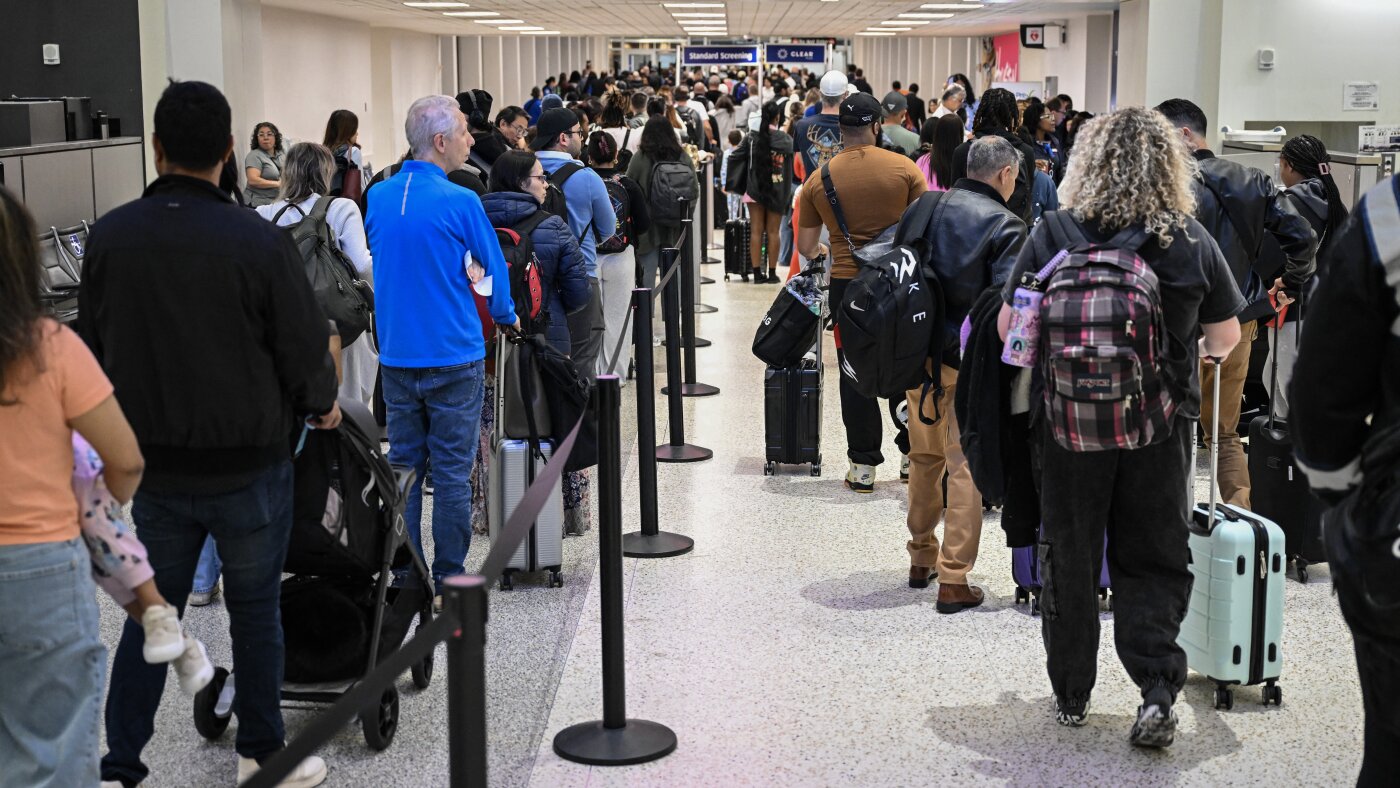
Airport security lines are long. Here’s what to know if you’re flying

Schumer gambit fails as DHS shutdown hits 36 days and airport lines grow
-

 Detroit, MI4 days ago
Drummer Brian Pastoria, longtime Detroit music advocate, dies at 68
-

 Oklahoma1 week ago
Family rallies around Oklahoma father after head-on crash
-

 Nebraska1 week ago
Wildfire forces immediate evacuation order for Farnam residents
-

 Georgia6 days ago
How ICE plans for a detention warehouse pushed a Georgia town to fight back | CNN Politics
-

 Alaska1 week ago
Police looking for man considered ‘armed and dangerous’
-
 Science1 week ago
Federal EPA moves to roll back recent limits on ethylene oxide, a carcinogen
-
 Science1 week ago
H5N1 bird flu spreads to sea otters and sea lions along San Mateo coast, wildlife experts say
-

 Movie Reviews3 days ago
‘Youth’ Twitter review: Ken Karunaas impresses audiences; Suraj Venjaramoodu adds charm; music wins praise | – The Times of India