World
Romania sets May date for new presidential election


The first round will take place on May 4, with a second on May 18 if no first-round candidate wins more than 50 percent.
Romania’s coalition government has announced that it will hold a new presidential election in May, after the shock annulment of the December vote amid claims of Russian interference.
A cabinet meeting on Thursday approved the ruling party’s proposal to have a fresh presidential vote.
The first round will take place on May 4, with a second on May 18 if no first-round candidate wins more than 50 percent of the vote.
The European Union and NATO state, which borders Ukraine, was plunged into institutional chaos last year when Calin Georgescu, a little-known far-right pro-Russian politician, won the first presidential round on November 24.
Officials in Romania said Georgescu benefitted from a massive social media campaign spearheaded by TikTok, which gave him preferential treatment, accusations the platform has denied.
Amid suspicions of Russian interference – denied by Moscow – Romania’s top court annulled the ballot and ordered the government to rerun it in its entirety.
The European Commission last month also opened formal proceedings against TikTok over its suspected failure to limit election interference, notably in the Romanian vote.
Georgescu has denounced the vote annulment as a “formalised coup d’etat”.
Tens of thousands of Romanians took to the streets on Sunday in Bucharest in the second protest last week against the cancellation of the original vote. The far-right Alliance for the Union of Romanians (AUR) party had called the protest.
They demanded the resignation of President Klaus Iohannis, a liberal who has remained in office until his successor is elected.
On Thursday, the government, headed by incumbent Prime Minister Marcel Ciolacu, issued a decree saying campaign materials ahead of the next presidential vote will need to be clearly marked as election content and their sponsors identified.
Social media platforms will also be required to take down content that does not follow the rules within five hours of a request from Romanian election officials or risk fines of between 1 percent and 5 percent of their turnover.
Romanian rights groups have, however, criticised the government for failing to consult the public before issuing the decree, warning the new rules did not address real campaign financing issues.



World
Latest war news. Tehran suspends commitments to the US set out in the memorandum. Khamenei: Trump is unreliable

US forces are reported to have struck an area in Dashti County, Bushehr

NEWYou can now listen to Fox News articles!
Britain’s incoming Prime Minister Andy Burnham used his first speech as Labour leader Friday to condemn the economic model established in the 1980s by Margaret Thatcher and promise greater public control of essential services, signaling a shift to the left from outgoing Prime Minister Keir Starmer.
Burnham, who will formally become prime minister Monday, said that Britain had taken “a series of wrong turns in the 1980s,” when political power was centralized and economic power was transferred to private companies. He was unopposed to run as party leader, having been nominated by 379 Members of Parliament to lead it.
“The country surrendered control of the essentials — housing, water, energy, transport — and left people exposed to higher costs,” Burnham said during the July 17 speech in London, according to a transcript of his remarks.
WHO IS ANDY BURNHAM? THE TRUMP CRITIC SET TO BECOME THE U.K.’S NEXT PRIME MINISTER
He declared that four decades of neoliberal economic policy had “not been kind” to the working-class and industrial communities that traditionally supported Labour and described his ascent as the country’s most significant political turning point in 40 years.
“The government I lead will confidently lay that path out starting next week,” Burnham said. “That is why this change today is the most significant change moment in our politics for 40 years.
Alan Mendoza, executive director of the Henry Jackson Society, said Burnham’s speech offered a clear ideological signal but little detail about how his government would carry it out. “With Burnham, there is a lot of light and heat, but not much actual substance,” he added. “We are all still waiting to see what that substance might be.”
Britons suffer through the ‘Winter of Discontent’ as a man walks past a pile of rubbish in London. Sanitation workers joined other unions across the U. K. on strike in February 1979. (Graham Morris/Evening Standard/Hulton Archive/Getty Images)
Mendoza said, “If he thinks Britain has been on the wrong track for the last 40 years, what is the right track? Is it socialism of a past kind? Is it some form of statism? What does he actually intend to do?”
Burnham’s speech offered the clearest indication yet that the former Greater Manchester mayor intends to move the party away from Starmer’s more cautious economic positioning and toward greater state ownership, expanded council and social housing, giving more power to regional government and increased state involvement in essential services.
FARAGE SAYS MASS MIGRATION HAS CHANGED THE UK ‘LITERALLY BEYOND RECOGNITION,’ BELIEVES PARTY CAN WIN ELECTION
Burnham said Labour would no longer attempt to imitate the right and far-left parties. “We won’t try to out-Green the Greens or out-Reform Reform.”
Although he did not explicitly advocate returning Britain to the 1970s or refer to the late Lady Thatcher by name, free-market critics portrayed his attack on her reforms as an effort to revive the state-dominated economic policies that preceded her government.
Britain experienced the Winter of Discontent in 1978-79, when millions of workers participated in widespread strikes over pay that disrupted daily life. The strikes left trash uncollected, reduced hospital services and affected public transportation. The unrest is widely seen as a major factor in the election of Margaret Thatcher’s Conservatives in 1979 as voters turned against the unions and the Labour government of that time.
KEIR STARMER RESIGNS AS BRITISH PRIME MINISTER AFTER DEVASTATING LABOUR REVOLT AND LOCAL ELECTION LOSSES
Andy Burnham, who is expected to become the U.K.’s next prime minister on Monday, speaks to supporters after winning a by-election in Ashton in Makerfield, England, on Friday, June 19, 2026. (Jon Super/AP)
The Adam Smith Institute responded to his speech by publishing a lengthy defense of the Thatcher era, highlighting reductions in income and corporate tax rates, privatizations, rising homeownership and fewer days lost to labor strikes.
“Since you mentioned the 1980s, Andy Burnham, here’s a reminder of what was achieved,” the free-market think tank wrote before listing economic indicators it said improved during the period.
According to the free-market think tank, the top rate of income tax fell from 83% to 40%, the basic rate dropped from 33% to 25%, and corporation tax was reduced from 52% to 35%. It said inflation declined from a peak of 21.9% in 1980 to 2.4% in 1986, while the number of working days lost to strikes fell from 29.5 million in 1979 to 1.9 million in 1990. The institute also said homeownership rose from 55% to 67%, the number of individual shareholders increased from 3 million to 11 million, and national debt fell from 47% of gross domestic product to 28%.
Emma Schubart, a research fellow at the Henry Jackson Society who previously worked at the Adam Smith Institute, told Fox News Digital that Burnham’s speech demonstrated what she described as a fundamental misunderstanding of taxation and economic incentives.
“The biggest takeaway is that he comes across as pretty economically illiterate,” Schubart said in an interview Friday. She called Burnham’s “demonization” of Thatcher polices “strange and needless.”
Margaret Thatcher, British Prime Minister, addresses a Press Conference at Conservative Party Headquarters in Smith Square, London on June 8, 1987 during the General Election campaign. (David Levenson/Getty Images)
Schubart argued that Burnham’s message was internally contradictory because he presented his leadership as a national renewal while proposing to dismantle reforms associated with the 1980s.
“He keeps saying he’s bringing a renewal to the U.K. and a new chapter,” she said. “But then he also says, ‘We’re going to go back to the ’70s.’ You have to pick one.”
Burnham nevertheless insisted he would be a “pro-business leader,” while calling for greater public control of essential services, new powers for regional governments and closer cooperation with private businesses.
U.S. President Donald Trump and British Prime Minister Keir Starmer wave as they board Air Force One at Prestwick Airport ahead of a flight to north-east Scotland on July 28, 2025 in Prestwick, Scotland. (Andrew Harnik/Getty Images)
CLICK HERE TO DOWNLOAD THE FOX NEWS APP
The ideological shift presents an immediate political gamble. Burnham must unite Labour’s competing factions, reassure financial markets and respond to Reform UK’s growing challenge — all while taking office without winning a national election.
Mendoza warned that Burnham’s effort to appeal to the left could complicate relations with the Trump administration. “The government could most definitely clash with the United States under Burnham’s vision, because the voters he is trying to bring back into his tent include many of those who are deeply hostile to America.
“If he adopts U.S.-friendly policies, he risks alienating the voting coalition he is trying to create,” he continued. “But if he decides to pick fights with the United States, he risks damaging British national security and the alliance with America, which matters far more to the country than any electoral coalition.”
Burnham is expected to be sworn in as prime minister on Monday by King Charles III.

Published on
The death toll from two powerful earthquakes that struck Venezuela last month has risen to 5,069.
ADVERTISEMENT

ADVERTISEMENT
The figure has continued to increase as rescue workers clear debris and search through rubble following the earthquakes on 24 June.
International rescue teams joined thousands of Venezuelan emergency workers in efforts to find people trapped beneath the rubble. Interim President Delcy Rodríguez described the disaster as the “most brutal natural catastrophe” in Venezuela’s history.
The Venezuelan government reported that 856 buildings had been damaged, 190 of which had collapsed completely. Hundreds of other types of structures, such as bridges and roads, were also affected. The northern coastal state of La Guaira was the worst hit.
The 7.2 and 7.5 magnitude earthquakes hit within 39 seconds of each other. More than 1,300 aftershocks have been felt since.
Rodríguez said Venezuela had secured $346 million (€302 million) in previously frozen resources from the International Monetary Fund for reconstruction following the earthquakes.
More than 20,000 people have been displaced, with many now living in overcrowded temporary camps. Aid organisations have warned that some shelters lack reliable supplies of safe drinking water and adequate sanitation, increasing the risk of disease.
The IMF and World Bank announced in April that they were resuming relations with Venezuela following the US military intervention that removed Nicolás Maduro from power in January. Relations with the both the IMF and World Bank had been frozen since 2019.
The United States has also provided more than $300 million (€262 million) in humanitarian assistance.
-

 Michigan3 minutes ago
Taylor Farms recall: Check your fridge for iceberg lettuce products sold in Michigan amid cyclosporiasis outbreak
-

 Massachusetts9 minutes ago
Woman killed in Taunton car crash
-

 Minnesota15 minutes ago
New air quality alert issued through Monday for Minnesota
-

 Mississippi21 minutes ago
David Turner, a three-time Mississippi State football assistant, announces retirement
-
 Missouri27 minutes ago
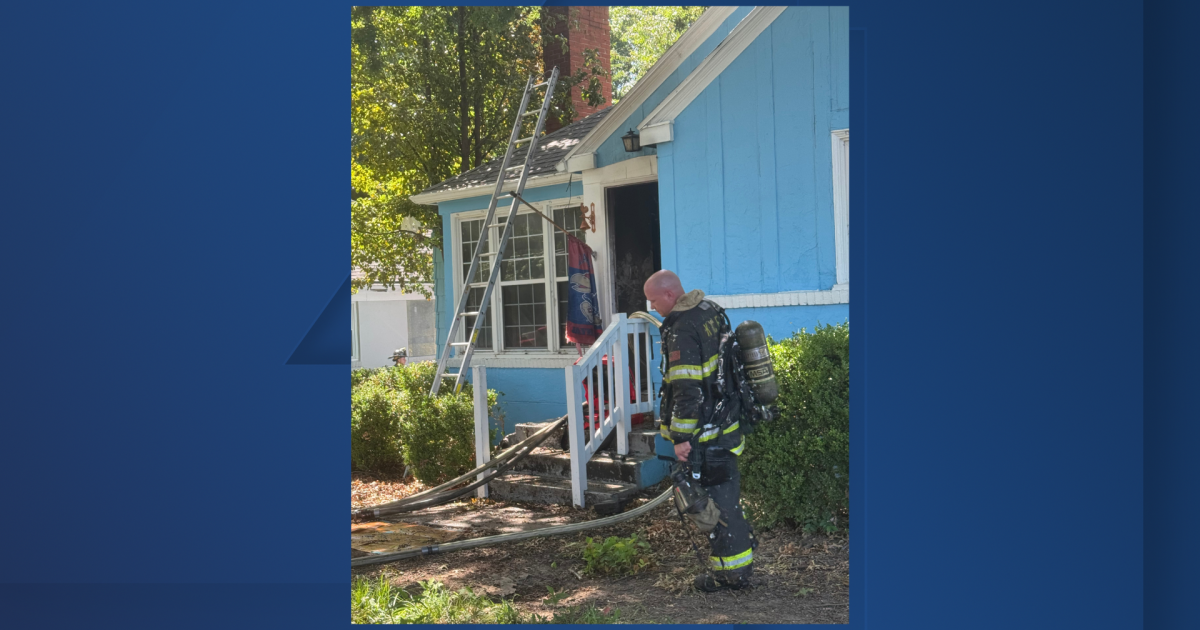
1 woman, 1 firefighter injured in Saturday morning fire in Kansas City, Missouri
-

 Montana33 minutes ago
Central Montana Fair main events kick off Wednesday
-

 Nebraska39 minutes ago
Gallery: 39th Annual Kearney Cruise Nite Show and Shine
-

 Nevada45 minutes ago
Nevada City Housing Element Community Workshop on July 30

