World
Panama deports 29 Colombian migrants from Darien Gap under US deal


First group of migrants has been deported under agreement on migrant repatriations signed with the US in July.
Panama has deported 29 Colombians with alleged criminal records who had entered the country through the inhospitable Darien Gap, applying for the first time a deal on migrant repatriations signed with the United States in July.
“We have the first flight of the agreement financed by the United States,” Panamanian Vice Minister of Security Luis Felipe Icaza, accompanied by US officials, told reporters on Tuesday after the charter flight took off at dawn en route to Bogota.
Before boarding the Fokker 50 aircraft, the group was lined up on the side of the runway and each was screened with metal detectors.
The 29 deportees, who had no luggage, were handcuffed and climbed the plane’s stairs slowly.
Panama President Jose Raul Mulino, who took office on July 1, had originally said the flights would be “voluntary” repatriations, but those deported on Tuesday had criminal records, officials said.
Icaza said the next flight could depart on Friday or Saturday under the deal.
Transit countries such as Panama and Mexico have come under increased pressure from Washington to tackle the highly contentious migration issue in a US election year.
Washington pledged $6m in funding for migrant repatriations from the Central American nation in the hope of reducing irregular crossings at its own southern border.
In a first phase, migrants with a criminal record will be deported, but the agreement could see the deportation of any person entering Panama through the notoriously dangerous and rugged Darien Gap region on their way to the US.
This was the first group deported under the agreement, although Panama sent several charter flights earlier this year to Colombia with Colombian nationals with criminal records.
The Darien Gap between Colombia and Panama has become a key corridor for migrants travelling overland from South America through Central America and Mexico to the US.
Despite the dangers, including attacks by criminal gangs, more than half a million undocumented migrants – mostly Venezuelans – crossed the Darien last year.
But at least for now, Panama is not able to deport Venezuelans because the relationship between the two countries has turned tense since Panama refused to recognise the results of Venezuela’s election giving President Nicolas Maduro another term.
The two countries have suspended their diplomatic relations.
Roger Mojico, director of Panama’s National Immigration Service, told reporters on Tuesday that Panama is speaking with other countries, such as Ecuador and India, about coordinating repatriation flights.



President Trump said Iran had agreed to the “highest level” inspections, hours after an Iranian official said there were “no detailed discussions on the nuclear issue,” as the two sides continued to present different narratives of their latest talks.
World
Turkey detains over 200 suspects, including alleged ISIS militants, in sweeping raid ahead of NATO summit
NEWYou can now listen to Fox News articles!
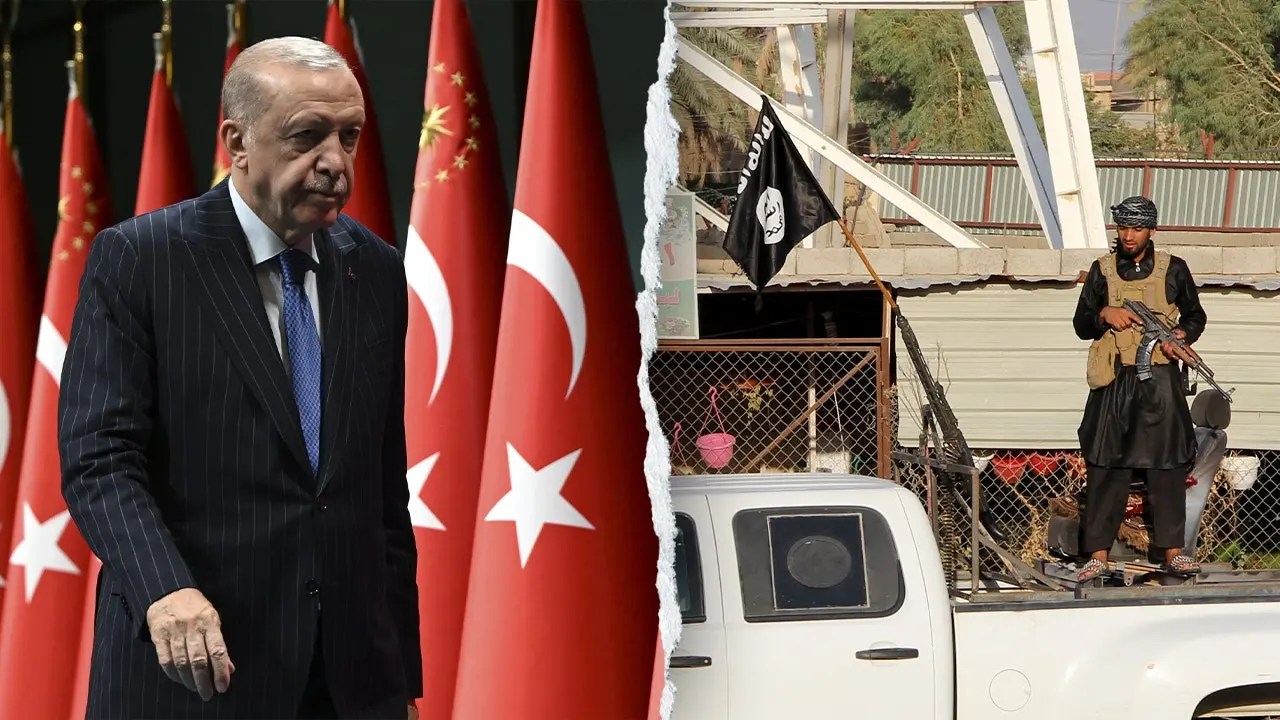
Turkish authorities reportedly detained more than 200 people, including suspected ISIS-linked militants, in a sweeping Tuesday raid in capital Ankara ahead of a July 7-8 NATO summit.
The raid came after Turkish authorities issued detention orders for 241 suspects, 209 of whom were taken into custody, The Associated Press reported, citing a statement from the office of Turkey’s chief prosecutor.
Among the 209 detained, 56 were allegedly ISIS militants, according to the AP. This comes after Turkish authorities said they detained 125 ISIS members in December.
The detention operations occurred just two weeks before a planned NATO summit in Ankara on July 7 that President Donald Trump is expected to attend.
TURKEY’S NATO ROLE UNDER SCRUTINY AMID NEW REPORT ON HAMAS, MUSLIM BROTHERHOOD TIES
President Donald Trump greets Turkey’s President Recep Tayyip Erdogan during a summit in Sharm El Sheikh, Egypt, on Oct. 13, 2025, to support ending the Israel-Hamas war in Gaza after a breakthrough ceasefire deal. (Evan Vucci/AP Photo/Pool)
Other militants scooped up were 35 alleged members of the Revolutionary People’s Liberation Party/Front, which a Turkish statement described as “a far‑left group known for armed attacks and assassinations in Turkey,” according to the AP.
The ISIS-combating operations demonstrate the terrorist group’s ongoing activity in the region, showing the group is still functioning despite the U.S. campaign during Trump’s first term to eliminate the group’s caliphate and its control of large swaths of territory in the Middle East.
Iraqi government forces celebrate while holding an Islamis Sate (IS) group flag after they claimed they have gained complete control of the Diyala province, northeast of Baghdad, on January 26, 2015 near the town of Muqdadiyah. (YOUNIS AL-BAYATI/AFP via Getty Images)
In recent years, ISIS has spread into the African continent, prompting a strong response from the U.S. In May, Trump authorized a series of strikes in Nigeria to combat the group.
PENTAGON SLASHES NATO COMBAT COMMITMENTS AS TRUMP PUSHES EUROPE TO DEFEND ITSELF
A May 16 strike killed ISIS leader Abu-Bilal al-Minuki, who was the group’s second-in-command globally.
U.S. and Nigerian forces conducted kinetic strikes against ISIS fighters in northeastern Nigeria on May 17, 2026, AFRICOM said. (X/U.S. Africa Command)
CLICK HERE TO DOWNLOAD THE FOX NEWS APP
“Abu-Bilal al-Minuki, second in command of ISIS globally, thought he could hide in Africa, but little did he know we had sources who kept us informed on what he was doing,” Trump wrote in a post on Truth Social after the strike. “He will no longer terrorize the people of Africa, or help plan operations to target Americans.”
The group’s renewed activity also includes a call to supporters to make attacks on U.S. soil during the World Cup.
The Associated Press contributed to this report.

By Euronews with AFP
Published on
Two whales were killed off the coast of Iceland overnight Sunday, two days after commercial hunting resumed, local media and animal rights activists reported Monday.
ADVERTISEMENT

ADVERTISEMENT
The kill ends a two-year pause and marks the first catches since 2023.
Icelandic public broadcaster RUV reported that two fin whales were killed. The fin whale is the second largest animal on Earth after the blue whale.
Before the vessels set off on Friday, a protester had attached himself to one of the masts in the port of Reykjavik, but climbed down and was escorted away by police.
Iceland, Norway and Japan are the only three countries that still openly permit whaling, despite international condemnation from the public and animal welfare organisations.
Iceland cancelled its whale hunt over the past two years, partly because economic problems had cut demand and the industry was not deemed profitable enough.
“The first fin whale deaths in Iceland’s hunt this year are devastating,” said Joanna Swabe, European senior public affairs director for animal rights group Humane World for Animals.
“Iceland has killed more than 1,000 fin whales in the past two decades — not only the second largest animal on the planet but also a species classified as globally vulnerable to extinction,” Swabe said in a statement.
Iceland’s government has said it is planning to introduce a bill aimed at banning whaling this autumn.
The International Whaling Commission banned the commercial killing of whales in 1986 amid alarm at the declining stock of the marine mammals.
Iceland’s Marine and Freshwater Research Institute has recommended that no more than 150 fin whales are caught in the 2026 season.
That represents a 28-percent drop on the annual quota it recommended for the period 2018–2025, it said.
The institute has set an annual catch of 168 animals for the minke whale hunt this year, a 23-percent drop on 2018-2025.
-
Alaska2 seconds ago
Smokejumpers, aircraft responding to new fire near Ambler
-

 Arizona3 minutes ago
Arizona creates task force to crack down on cargo thefts
-

 Arkansas15 minutes ago
Razorbacks’ Guard Darius Acuff Selected No. Overall in 2026 NBA Draft
-

 California18 minutes ago
DOJ charges 10 Southern California defendants in largest federal healthcare fraud crackdown in US history
-

 Colorado23 minutes ago
Erie Town Council approves sale of Colorado mineral rights for major oil and gas development
-

 Connecticut30 minutes ago
Man charged with murder in death of Duxbury, Massachusetts woman in Connecticut home
-

 Delaware33 minutes ago
Vigil held for 2 teens killed in hit-and-run in New Castle County; driver in custody
-

 Florida38 minutes ago
Meet the Florida Democrats running for governor against David Jolly

