World
Oktoberfest is open. The world’s largest folk festival all things beer begins after ceremonial keg-tapping


Oktoberfest is open.
Mayor Dieter Reiter officially started Oktoberfest at noon Saturday when he inserted the tap into the first beer keg, signaling the 189th start of the festival. Thousands of beer lovers celebrated in the Munich fairground as the first to clink their mugs during the world’s largest folk festival.
ORIGINAL FESTIVAL BEER FOR OKTOBERFEST FOUND ONLY IN USA EVEN AS MUNICH TAPS FIRST KEG OF 2024
Servers immediately began ferrying trays — each carrying up to 8 glass mugs — to tables. Revelers started clinking their mugs and taking deep gulps of beer in the stuffy heat of the tent.
The celebration runs through Oct. 6 in 18 large tents covering the Theresienwiese fairground.
This year’s festival includes stepped-up security in the wake of a deadly knife attack in Solingen, a city roughly 470 kilometers (292 miles) northwest of Munich. The violence on Aug. 23 left three people dead and eight more wounded, and the Islamic State group claimed responsibility for the attack, without citing evidence. As a result, organizers added metal detectors to the security lineup for the first time in Oktoberfest’s history, but said there were no concrete threats.
Festival goers reach out for the first glasses of beer on day one of the 189th Oktoberfest beer festival in Munich, Germany, Saturday, Sept. 21, 2024. (AP Photo/Matthias Schrader)
Tens of thousands of people lined the streets early Saturday to watch the opening parade as others raced to claim tables inside the tents. They gossiped, played cards and walked around the fairgrounds to check out the food options and amusement park rides to kill time before they could start drinking.
Revelers sprinted through the fairgrounds at 9 a.m. as soon as the entrances opened, despite security officers’ attempts to keep the procession orderly. They laughed despite the morning chill — someone could be heard shrieking “why are we running!” — and raced to get in line again, but this time to be first inside the tents.
Some 6 million visitors are expected over the festival’s 16 days — up to 600,000 each day — and can expect to shell out between 13.60 and 15.30 euros ($15.12 to $17.01) for a 1-liter mug of beer (33 fl oz). This year’s prices are roughly 3.87% more than in 2023.
Mikael Caselitz, 24, was born and raised in Munich and has attended Oktoberfest for years. He said everyone should travel to Munich for the festival at least once in their lives.
“It can get really crowded and disgusting when people puke on the side of the road,” he joked, “but overall it’s a really fun experience.”
Ollie Standen woke up at 6 a.m. to get in line early for Oktoberfest, where the beer starts flowing at noon. The 21-year-old from England is in Munich this year for a university exchange program and a local friend told him he had to join the festivities. He said he’s looking forward to trying different German beers that aren’t usually found in the United Kingdom.
“It’s a great German tradition, and I’m excited to be here,” he said.
The event was skipped in 2020 and 2021 as authorities grappled with COVID-19, but returned in 2022.
The first Oktoberfest was held Oct. 17, 1810, to celebrate the marriage of Crown Prince Ludwig of Bavaria to Theresa of Saxony. The venue, a meadow on the edge of Munich at the time, was called “Theresienwiese” to honor the bride. While that name remains, the start date has moved up to September, when the temperatures in Bavaria are usually warmer.






NEWYou can now listen to Fox News articles!
Senior Iranian clerics would have been left “exposed” after an Israeli airstrike hit a meeting place where they were supposed to be convening Tuesday — days after a strike leveled the Tehran compound of Supreme Leader Ayatollah Ali Khamenei, a defense analyst has claimed.
The clerics, members of the Assembly of Experts, had reportedly planned to meet at the location in Qom to deliberate succession plans for Khamenei, who was killed in the strikes, according to The Times of Israel.
“This second strike would be another embarrassment to what has been left of the regime,” Kobi Michael, a senior researcher at the Institute for National Security Studies and the Misgav Institute, told Fox News Digital.
“It indicates intelligence dominance and superiority because any movement is detected, meaning they would feel exposed,” Michael added.
Iranian Supreme Leader Ayatollah Ali Khamenei was killed in an Israeli airstrike Saturday. (Getty Images)
“As of now, the leadership would feel insecure and hunted, with all of their plans collapsing one after another.”
“They would feel totally isolated and understand that the biggest risk might come from home — from a potential uprising next,” he added.
Israel Defense Forces spokesman Brig. Gen. Effie Defrin confirmed that the Israeli Air Force struck the building where senior clerics had planned to assemble, The Times of Israel reported.
KHAMENEI’S DEATH OPENS UNCERTAIN CHAPTER FOR IRAN’S ENTRENCHED THEOCRACY
A general view of Tehran with smoke visible in the distance after explosions were reported in the city, Monday, in Iran. (Contributor/Getty Images)
It remains unclear how many of the 88 members were present at the time of the strike, according to an Israeli defense source cited by the outlet. The second strike on Iran’s leadership comes amid a broader military campaign.
As previously reported by Fox News Digital, U.S. forces have struck more than 1,700 targets across Iran in the first 72 hours of Operation Epic Fury, according to a U.S. Central Command fact sheet.
The campaign is aimed at dismantling Iran’s security apparatus and neutralizing what officials describe as imminent threats.
According to U.S. Central Command, targets have included command-and-control centers, the Islamic Revolutionary Guard Corps Joint Headquarters, the IRGC Aerospace Forces headquarters, integrated air defense systems and ballistic missile sites.
FIREBRAND ANTI-AMERICAN CLERIC ALIREZA ARAFI SEEN AS CONTENDER TO REPLACE IRAN’S KHAMENEI
The USS Thomas Hudner fires a Tomahawk land attack missile in support of Operation Epic Fury, Sunday, while at sea. (U.S. Navy/via Getty Images)
“We need strategic patience and determination, and in several weeks most of the job will be accomplished,” Michael added. “Even if the regime does not collapse, Iran will not be like we used to know.
CLICK HERE TO DOWNLOAD THE FOX NEWS APP
“I assume that the U.S. and Israel will establish a very robust monitoring mechanism that will enable them to react whenever the regime tries to reconstitute its military capacities again.”
Related Article


Hungary’s last-minute veto on the €90 billion loan to Ukraine highlights the need for the European Union to move away from unanimity, Rob Jetten, the new prime minister of the Netherlands, said on his first trip to Brussels since taking office.
ADVERTISEMENT
ADVERTISEMENT
“The new Dutch goverment is in favour of less and less decision-making by unanimity on the European level,” Jetten told a group of media, including Euronews, on Tuesday.
“This is a clear example of why that is important because we cannot explain to our constituents that Europe is sometimes way too level in reacting to great issues that affect us all,” he added.
Jetten called on his Hungarian counterpart, Viktor Orbán, to abide by the delicate deal that the 27 EU leaders reached in December after fraught negotiations. The compromise saw Hungary, Slovakia and the Czech Republic promising the necessary unanimity to amend the EU budget rules in exchange for being exempted from the joint borrowing.
Officials and diplomats in Brussels believe that by vetoing a critical piece of the loan at the last stage of the legislative process, Orbán has breached the principle of sincere cooperation that binds the bloc’s decision-making.
“If you reach political agreement on the Council level, we expect every member state to uphold that agreement. And if not, it’s a big task for the European Commission take action,” Jetten said.
In the new coalition programme, the Netherlands calls for the “simplification” of the Article 7 procedure that can deprive member states of voting rights when they commit grave violations of the rule of law. Hungary has been under Article 7 for years, but there has never been sufficient political momentum to move to the harder enforcement phase.
“It is absolutely necessary that we support Ukraine in the months to come to make sure they can continue their fight against Russian aggression,” Jetten went on.
“With less and less American support for the Ukrainians in terms of money and weapons, it is up to the Europeans to deliver.”
Orbán’s veto centres on the interruption of Russian oil supplies through the Druzhba pipeline, which Kyiv says was attacked by Russian drones on 27 January and has remained non-operational since then.
But Orbán says Ukrainian President Volodymyr Zelenskyy has deliberately shut down the pipeline for “political reasons” to influence the results of the upcoming Hungarian elections. Orbán trails in opinion polls by double digits.
Caught between the two rival camps, the European Commission has asked Zelenskyy to repair Druzhba and Orbán to lift his veto. Meanwhile, Hungary and Slovakia have proposed a fact-finding mission to inspect the damaged section of the pipeline.
“We expect the European Commission to solve this issue,” Jetten said. “If it’s helpful to have any fact-finding missions on the pipeline to fix this issue, I’m open to it. But everything begins with: a political agreement at the Council level is a political agreement.”
‘Too early’ for a date on Ukraine’s accession
Among the first debates facing Jetten as premier is the future of enlargement, a topic on which the Netherlands has expressed well-known reservations in the past.
Zelenskyy is advocating for a specific date for Ukraine’s accession to be enshrined in a prospective peace deal, something that could offset the pain of territorial concessions. Last week, he openly suggested 2027 as an aspirational benchmark.
The Commission says it cannot commit to a clear-cut date but is working on legal avenues to revamp the notoriously complex process and ensure the Ukrainian people have greater certainty in their path to membership.
Asked about the potential reform, Jetten said enlargement should be reconsidered from a “geopolitical perspective” but urged the bloc to be “careful” with next steps, warning that the essence of the European project risks being undermined.
“We are very open-minded to look into broader support for these (candidate) countries, but moving too fast is not the way to move forward,” the premier said.
“I think, at the moment, it’s not possible to set a date for enlargement with Ukraine, but it is possible to talk with them, and I will do that with President Zelenskyy, (about) how Europeans can support Ukraine in the important reforms that they have undertaken. But at this moment, it is too early to set the date.”
Jetten also touched upon the US-Iranian strikes on Iran, which have pushed the Middle East into uncharted territory. Wholesale gas prices have soared in reaction to the war, prompting fears that Europe might soon face a prohibitive bill to refill its underground reserves, which are running low after the heating season.
“Obviously, the Iran war can have a big impact on strategic reserves, not only in Europe but also in Asia. So we have to prepare ourselves for any case that this war will continue for many more weeks and impact the strategic reserves in the Netherlands and abroad,” he said, noting extra measures would be taken “if necessary”.
“I think the broader concern is what this war and everything that’s going on in the Strait of Hormuz is going to affect in terms of pricing.”
‘The Netherlands is back’
Jetten’s D66 party has formed a minority goverment with the liberal VVD and the conservative CDA, all of which support European integration. His tenure puts an end to the fractious four-party coalition headed by the right-wing, Eurosceptic Party for Freedom (VVD) of Geert Wilders, which was marked by constant disagreements.
Among the priorities, his executive has pledged to ramp up defence spending, simplify regulation, promote new technologies and expand renewable energy.
“As a founding (member) and the fifth (largest) economy within the EU, the Netherlands is back at the table to work closely together with everyone here in Brussels and our allies within the EU,” Jetten said.
“We see a lot of opportunities to strengthen the European economy and competitiveness, and also to make sure that we do our job with a lot of tax-based money to invest in the European defence and the European defence industry.”
Jetten and the other 26 leaders are heading for a no-holds-barred fight on the next Multiannual Financial Framework (MFF), the bloc’s seven-year budget. Brussels has proposed a €2-trillion template that some capitals consider politically unpalatable.
Where to cut spending will be a major fracture line. Germany, the Nordics and the Baltics want a greater focus on strategic priorities, while Spain, Italy and Eastern Europe want to preserve the prominence of agriculture and cohesion funds.
The Dutch premier made it clear that the next budget should focus on the big transitions shaping the continent’s future: defence, technology and climate.
“A modern MFF doesn’t mean an exploded MFF in terms of numbers,” he said.
“The Netherlands will look into the numbers very closely, and we will have a lot of debate on this topic in the months to come.”

Mojtaba Khamenei, son of former supreme leader, tipped to become Iran’s next head of state

Las Vegas first responders conduct seven-hour rescue of injured climber stranded 600 feet up rock face

Breaking: Arkansas Announces Significant Partnership With Tyson Foods, Including New Uniform Patch Logos

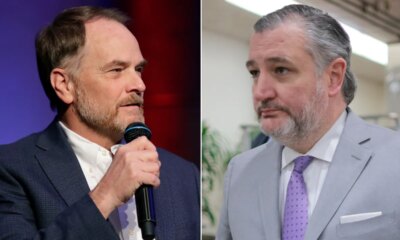
Ted Cruz endorses Texas state Rep Steve Toth in GOP primary challenge to Dan Crenshaw

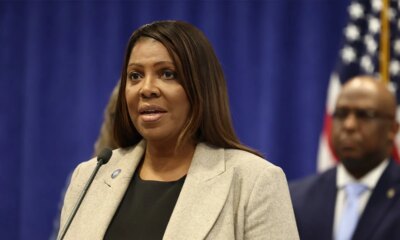
New York AG orders Manhattan hospital to resume gender-transition treatment for transgender youth

Florida High School Football Rankings: Top 25 teams – Oct. 21

Cleary's 21 help Le Moyne down Central Connecticut State 69-64 in OT

How old is Bo Nix? What to know about Oregon quarterback ahead of 2024 NFL Draft

99th annual Pony Swim held in Virginia

Indiana Members Credit Union announced as new anchor tenant at Bottleworks District
Mojtaba Khamenei, son of former supreme leader, tipped to become Iran’s next head of state

Video: Senators Question Kristi Noem on ICE Immigration Tactics

Combustible Republican Senate primary in Texas heading into overtime

Hungarian veto proves EU needs less unanimity, says new Dutch PM

Pregnant migrant girls are being sent to a Texas shelter flagged as medically risky
-

 World6 days ago
Exclusive: DeepSeek withholds latest AI model from US chipmakers including Nvidia, sources say
-

 Massachusetts7 days ago
Mother and daughter injured in Taunton house explosion
-

 Denver, CO7 days ago
10 acres charred, 5 injured in Thornton grass fire, evacuation orders lifted
-

 Louisiana1 week ago
Wildfire near Gum Swamp Road in Livingston Parish now under control; more than 200 acres burned
-

 Oregon5 days ago
2026 OSAA Oregon Wrestling State Championship Results And Brackets – FloWrestling
-

 Florida3 days ago
Florida man rescued after being stuck in shoulder-deep mud for days
-

 Maryland3 days ago
AM showers Sunday in Maryland
-

 Culture1 week ago
Try This Quiz on Thrilling Books That Became Popular Movies