World
Iceland volcano eruption begins receding after torching town outside capital


A volcano that erupted in southwest Iceland for the second time in less than a month appeared to be significantly less active on Monday despite indications of magma still flowing underground.
“A black day” read the front page headline of Icelandic daily Morgunbladid across an image of bright-orange lava fountains and houses burning in the town of Grindavik, some 25 miles southwest of the capital Reykjavík.
Although volcanic activity has eased since Sunday, the eruption centres is a high-risk area and new fissures could open without warning, the Icelandic Metrological Office said.
ICELAND VOLCANO ERUPTION DESTROYS HOMES AS PRESIDENT SAYS REGION ENTERING ‘A DAUNTING PERIOD OF UPHEAVAL’
“It is difficult to estimate how long this eruption will last,” it said in a statement.
Molten lava flows reached the outskirts of Grindavik around noon on Sunday, setting three houses alight, although the town had been evacuated earlier and there was no immediate danger to people.
The crack in the earth’s surface that opened close to Grindavik on Sunday was no longer active on Monday, and lava production from the larger fissure north of the town was decreasing, vulcanologist Rikke Pedersen told Reuters.
“Activity has dropped significantly overnight,” she said.
GPS measurements showed that magma continued to move in a southern area of the corridor beneath the town, the Metrological Office said, adding that new cracks might appear within Grindavik in the next few days.
This social media screengrab show homes burning as lava creeps across Grindavik, Iceland, January 14, 2024. (Bjorn Steinbekk/@bsteinbekk via Instagram/via REUTERS)
It was the second eruption on the peninsula of Reykjanes in four weeks and the fifth since 2021.
Live video footage on Monday showed glimpses of orange lava still flowing to the surface but in smaller volumes, and further away from the town.
“Unfortunately (the lava) went a little bit more south than we had hoped for,” Vidir Reynisson, head of Iceland’s Civil Protection and Emergency Management, told a press conference late on Sunday.
Nevertheless, defensive barriers built to the north of Grindavik had helped divert the flows of lava to the west, away from the town, Reynisson said.
Residents of Grindavik, a town of some 4,000 people before it was evacuated in November, said it was difficult to watch televised images of the fires.
“This is serious, it’s basically as bad as it can possibly get. Although it might get even worse, who knows?” evacuated resident Jon Gauti Dagbjartsson said late on Sunday.
“I actually live in the house that I was born in and it’s a tough thought to think that this town might be over, and I would have to start all over somewhere else. But if that’s the case, then that’s exactly what we’ll do.”
The Icelandic government was to meet on Monday to decide on support for the people of Grindavik. “We need to put a lot of extra efforts into finding more housing, suitable housing,” Prime Minister Katrin Jakobsdottir said.

World
Rubio announces framework deal between Israel and Lebanon as experts warn Iran will fight to sabotage it

NEWYou can now listen to Fox News articles!
Secretary of State Marco Rubio and Israeli Prime Minister Benjamin Netanyahu welcomed the U.S.-brokered framework agreement between Jerusalem and Lebanon on Friday as a robust first step toward peace and a rejection of Iranian interference in the region.
The breakthrough could lead to a path of diplomatic normalization between the two countries, Lebanon and Israel, that are in a formal state of war. The framework agreement may impede the Iran-backed terrorist movement Hezbollah that has gained control over parts of the Lebanese state, according to experts.
Hezbollah and Israel have fought two wars since the terrorist organization joined Hamas’ invasion of Israel in Oct. 7, 2023 and following U.S.-Israeli attacks on Iran in February.
US ENVOY NEARS LEBANON-ISRAEL CEASEFIRE THAT WOULD DISARM HEZBOLLAH TERROR GROUP
Hezbollah launches long-range missiles from Lebanon into northern Israel within 48 hours of strikes on Iran, escalating the widening conflict amid Operation Epic Fury. (Hadi Mizban/AP)
Rubio said, “Today is a good day in that we are happy to announce a framework agreement between the sovereign government of Lebanon and, of course, the government of Israel, with a mediation and support of the United States of America, that begins to put in place a framework for lasting peace and security.”
He added, “And that’s what these two nations deserve.”
According to the Press Service of Israel (TPS-IL), Netanyahu termed the deal “a severe blow to Iran.” He added that the Islamic Republic seeks to force an Israeli withdrawal from southern Lebanon, and “essentially Israel, Lebanon and the United States are telling them: This is none of your business. You have no role in southern Lebanon — neither you, nor Hezbollah nor any other terrorist organization.”
U.S. Ambassador to Israel, Mike Huckabee, wrote on X:” Was there all week but had to fly back to Israel Thursday night. Historic opportunity but key is disarming Hezbollah, evil terrorists who have killed Americans. Israel, Lebanon sign framework peace agreement following US-backed negotiations.”
Secretary of State Marco Rubio and Israel’s Ambassador to the U.S. Yechiel Leiter applaud after signing a framework agreement between Israel and Lebanon with State Department Counselor Daniel Holler, and Lebanon’s Ambassador to the U.S. Nada Hamadeh, at the State Department in Washington, D.C., U.S., June 26, 2026. (Ken Cedeno/Reuters)
Lebanon’s President Joseph Aoun, in an Arabic-language X Post, thanked the U.S. administration, led by President Donald Trump, “for its efforts in hosting and facilitating the negotiations and for supporting Lebanon’s position.”
Rubio’s optimistic announcement encouraged some veteran Lebanon experts about a historic opportunity for peace, while others warned about the necessity to proceed with caution.
Guila Fakhoury, whose father, Amer, was kidnapped by Hezbollah in 2019, told Fox News Digital that “Today marks a historic achievement. For the first time since 1983, Lebanon and Israel have reached an agreement through direct negotiations. It also represents a fundamental shift in regional dynamics, demonstrating that Lebanon’s future need not be contingent upon broader regional negotiations or arrangements negotiated through proxy influence. In that sense, this agreement supersedes previous efforts to tie Lebanon’s stability and sovereignty to external agendas.”
Fakhoury, added, “If these commitments are fulfilled, this agreement could become the foundation for long-term cooperation, security, economic opportunity and shared stability that benefits both the Lebanese and Israeli people.”
HEZBOLLAH DISARMAMENT DEADLOCK RISKS CIVIL WAR, ANALYSTS SAY, AS US PREPARES FOR ISRAEL–LEBANON TALKS
Hezbollah al-Mahdi scouts parade with large portraits of Iran’s late leader Ayatollah Khomeini and Supreme Leader Ayatollah Ali Khamenei during an event for Jerusalem Day in Nabatiyeh, Lebanon, on Aug. 1, 2013. (Hussein Malla/AP Photo)
She continued, “However, whether this agreement brings lasting peace and stability will depend entirely on its implementation. The Lebanese state and its legitimate institutions must be the ones to create stability, not external actors or armed organizations operating outside government authority.”
Walid Phares, a leading U.S. expert on Lebanon and the Mideast, told Fox News Digital, “This agreement is just a ceasefire not a conduit to a larger peace deal. Hezbollah take orders from Iran. It’s clear Tehran will complain about such a deal and pressure the negotiators to get some statement from Washington asserting the Islamic Republic’s say over Lebanon. Hezbollah will attack the deal but will pray Israel won’t strike. The Trump administration will have to calibrate between the Rubio-sponsored agreement on Lebanon and the fragility of the situation in the Gulf.”
Prime Minister Benjamin Netanyahu during his conversation with U.S. President Donald Trump. (Avi Ohayon / GPO)
He added, “The regime is telling Hezbollah ‘keep the narrative up and radical but let us get the money first.’ Israel is giving its public something and mindful of Trump’s concerns about the deal with Iran. The Lebanese government is hoping their army does not have to engage. The only unknown is the ability of the Lebanese opposition to rise and resist Hezbollah. We are still inside the Lebanese status quo.”
CLICK HERE TO DOWNLOAD THE FOX NEWS APP
Sen. Tom Cotton, R-Ark., posted on X following the news that, “Hezbollah savages have American blood on their hands. I applaud President Trump and @SecRubio for forging this important agreement that will restrain Iran’s terrorist proxy. Let me be clear: Tehran has no future in Lebanon.”
Hanin Ghaddar, a senior fellow at The Washington Institute for Near East Policy, wrote on X: “Absolutely a breakthrough,” This is the first agreement between Israel and Lebanon since 1983. A clear and loud ‘NO’ to Iran as it challenges its efforts to control Lebanon ‘s file.”
She added, “But as the 1983 agreement was toppled by the bad guys then (Assad regime), Iran will try everything to make sure this one fails as well. Lebanon and Israel have a responsibility in making sure this agreement is protected, and its implementation is successful. We will probably not have another chance.”

President Donald Trump on Friday threatened a 100% tariff on imports from any country that imposes a tax on digital services provided by United States companies.
ADVERTISEMENT

ADVERTISEMENT
In a social media post, Trump took aim at European countries, he said, that are discussing the “imminent” implementation of taxes on American companies.
The US president has repeatedly sought to use tariffs to deter such taxes, but many countries are seeking revenue as their economies increasingly operate in digital realms dominated by American companies.
“Please let this statement serve to represent that any Country that imposes such a Tax will immediately be met with a 100% tariff on any and all Goods sent to the United States of America,” Trump wrote.
He added that the new tax would supersede any previously negotiated trade deals. Trump said the penalty would apply to any country that moves forward with such a tax, but he singled out European nations in his post.
Trump has consistently opposed international attempts to tax or regulate American tech giants. Last year, he threatened fresh tariffs on any nation attempting to do so, writing in a post last August that digital taxes and regulations “are all designed to harm, or discriminate against, American Technology.”
The warning arrives just ahead of Trump’s 4 July deadline for the European Union and the US to begin implementing a trade agreement that caps most tariffs on EU exports at 15%.
The EU finalised that trade deal with the United States in May. It followed months of internal EU debate after European Commission chief Ursula von der Leyen initially reached a tentative agreement last year during a visit to Trump’s golf course in Scotland.
The issue of digital tax remained unresolved
Digital taxes were excluded from that pact and remain a primary source of friction between the US and the European bloc.
While the US government has previously launched Section 301 investigations into digital services taxes, it remains unclear how Trump intends to enforce his latest threat, or whether the tariffs would be applied globally or targeted at specific countries first.
Britain, having left the EU, has levied its own 2% digital services tax since 2020 on revenue generated by search engines, social media platforms and online marketplaces that “derive value” from UK users.
In a policy document released at the time, the British government argued that existing corporate tax rules for digital firms had “led to a misalignment between the place where profits are taxed and the place where value is created.”
The UK tax features specific thresholds, ensuring it is primarily paid by major multinational corporations. The policy was implemented to “ensure the large multinational businesses in-scope make a fair contribution to supporting vital public services,” the document noted.

-

 Technology7 minutes ago
It’s the last day of Prime Day — here are over 140 great deals to choose from
-

 World12 minutes ago
Rubio announces framework deal between Israel and Lebanon as experts warn Iran will fight to sabotage it
-

 Politics19 minutes ago
Lawyer who beat Hawaii gun law calls state’s reliance on Black Code ‘disgraceful’
-

 Sports27 minutes ago
2026 World Cup Group Scenarios: What Remaining Teams Need To Advance To Round of 32
-

 Technology34 minutes ago
Ohio robot cop retires after zero arrests
-
 Business37 minutes ago
Commentary: Puncturing the myth of Alan Greenspan, whose policies gave us the Great Recession
-
 Entertainment42 minutes ago
On 10th anniversary, Boleros de Noche’s legacy is celebrated by L.A. City Hall
-
 Lifestyle49 minutes ago
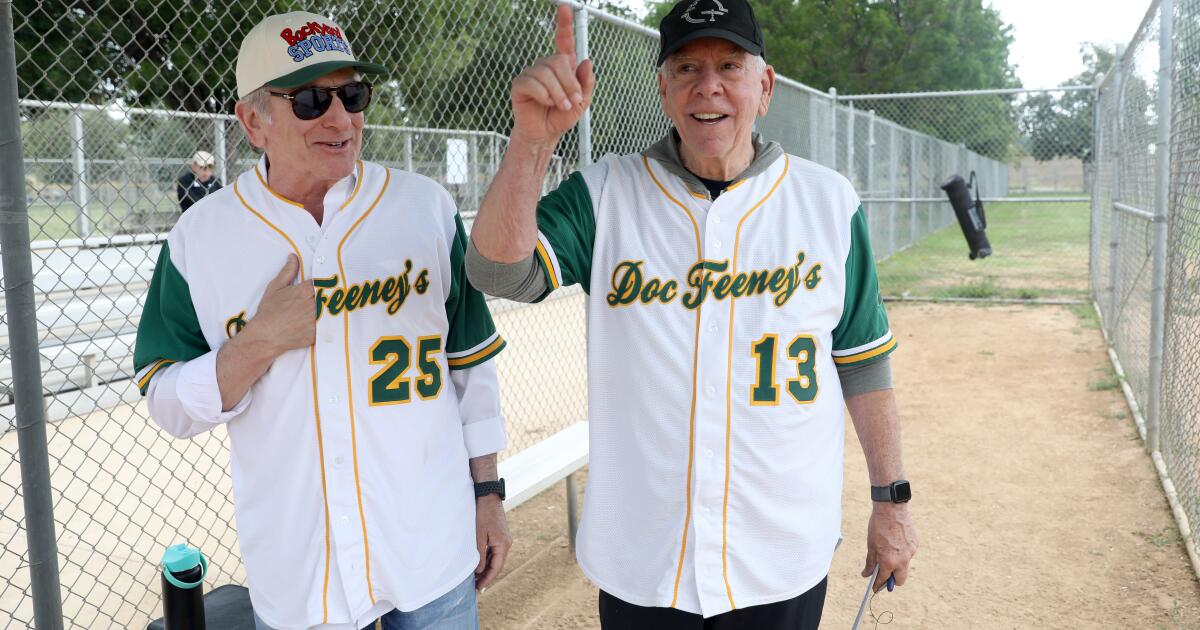
They started playing L.A. Municipal softball 50 years ago. They’re still at it

