World
Gaza’s Kamal Adwan Hospital director pleads for help before it’s ‘too late’


Israel orders emptying of medical facility with nearly 400 civilians inside, including babies who need oxygen and incubators.
The director of one of Gaza’s last partially functioning hospitals is appealing for help, saying Israeli forces have surrounded the medical facility.
Dr Hussam Abu Safia, director of Kamal Adwan Hospital in northern Gaza, on Monday urged the international community to act “before it is too late”, calling the situation “horrifying”.
He said obeying an Israeli order to empty the facility would be “next to impossible” because nearly 400 civilians remain inside, including babies who need oxygen and incubators.
“The bombing continues from all directions, affecting the building, the departments and the staff. This is a serious and extremely horrifying situation,” Abu Safia said.
Outside the hospital in Beit Lahiya, Israeli forces have placed what is thought to be explosives at the gates. Witnesses said an automated guided vehicle delivered boxes with the word “danger” written on them.
Al Jazeera’s Gaza correspondent Tareq Abu Azzoum said the Israeli military has deployed automated remote vehicles called “explosive robots” around the hospital.
“[The robots] are loaded with tonnes of explosives that can lead to the destruction of the neighbourhood,” Abu Azzoum said.
“We’ve seen videos released by some of the medical workers inside Kamal Adwan Hospital showing how the Israeli military has been using these in the vicinity of the hospital,” he added, saying it could be a sign that further escalation might take place in the coming days.
“The Israeli military is systematically trying to exert ultimate pressure on the medical teams by causing severe destruction to the surroundings [of the hospital],” Abu Azzoum said.
Abu Safia said: “The world must understand that our hospital is being targeted with the intent to kill and forcibly displace us,” adding that the Israeli bombing did not stop throughout Sunday night, destroying homes and surrounding buildings.
“We urge the international community to intervene quickly and stop this fierce assault on us to protect the healthcare system, the workers and the patients within it,” the hospital director said.
Since Monday morning, the hospital has been targeted with bombs in its courtyards and on its rooftop dropped by quadcopters, once again threatening the hospital’s fuel and oxygen supplies, he said.
“The situation remains extremely dangerous and requires urgent international intervention before it is too late,” the doctor said.
Abu Safia made a similar appeal on Sunday, accusing Israel of directly bombing the hospital’s intensive care unit.
More than 14 months of Israeli attacks have devastated Gaza and displaced almost all of its 2.3 million people. More than 45,000 people, mostly children and women, have been killed in the offensive.
Israel’s genocide against Palestinians started shortly after a Hamas-led incursion inside Israeli territory on October 7, 2023 killed nearly 1,100 people, according to Israeli officials, and about 250 others were taken captive.



President Trump said Iran had agreed to the “highest level” inspections, hours after an Iranian official said there were “no detailed discussions on the nuclear issue,” as the two sides continued to present different narratives of their latest talks.
World
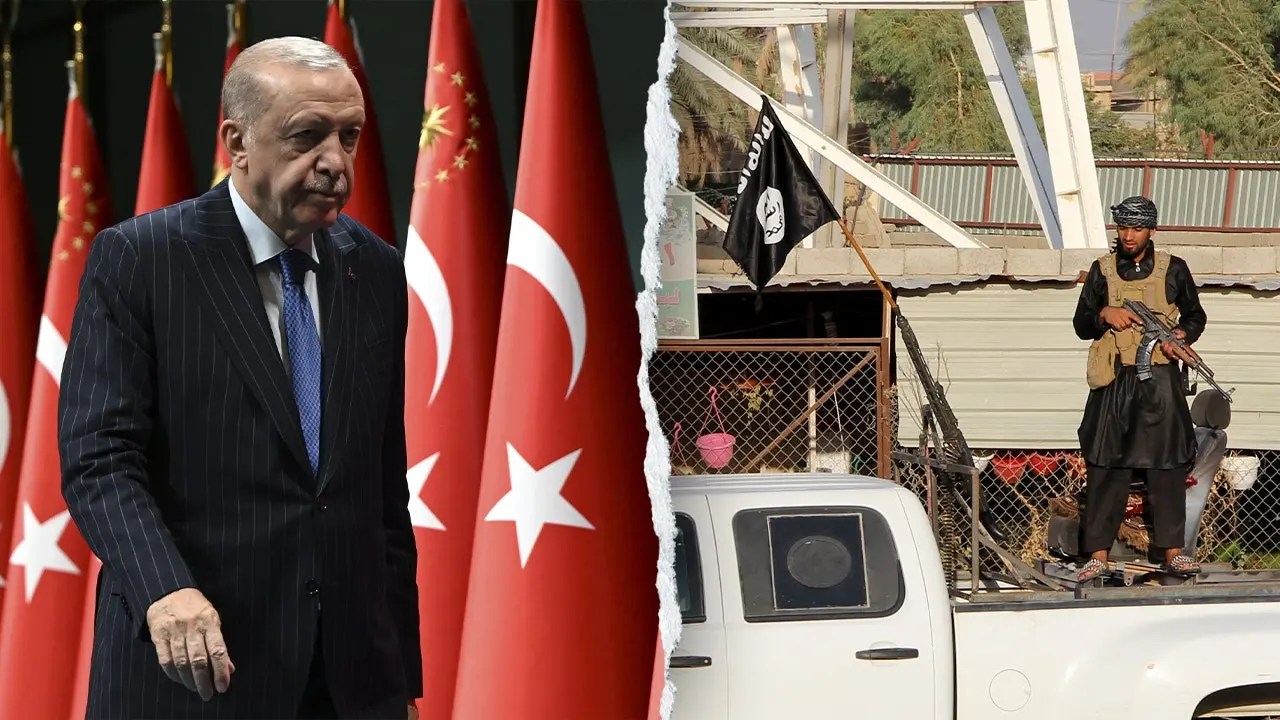
Turkey detains over 200 suspects, including alleged ISIS militants, in sweeping raid ahead of NATO summit
NEWYou can now listen to Fox News articles!
Turkish authorities reportedly detained more than 200 people, including suspected ISIS-linked militants, in a sweeping Tuesday raid in capital Ankara ahead of a July 7-8 NATO summit.
The raid came after Turkish authorities issued detention orders for 241 suspects, 209 of whom were taken into custody, The Associated Press reported, citing a statement from the office of Turkey’s chief prosecutor.
Among the 209 detained, 56 were allegedly ISIS militants, according to the AP. This comes after Turkish authorities said they detained 125 ISIS members in December.
The detention operations occurred just two weeks before a planned NATO summit in Ankara on July 7 that President Donald Trump is expected to attend.
TURKEY’S NATO ROLE UNDER SCRUTINY AMID NEW REPORT ON HAMAS, MUSLIM BROTHERHOOD TIES
President Donald Trump greets Turkey’s President Recep Tayyip Erdogan during a summit in Sharm El Sheikh, Egypt, on Oct. 13, 2025, to support ending the Israel-Hamas war in Gaza after a breakthrough ceasefire deal. (Evan Vucci/AP Photo/Pool)
Other militants scooped up were 35 alleged members of the Revolutionary People’s Liberation Party/Front, which a Turkish statement described as “a far‑left group known for armed attacks and assassinations in Turkey,” according to the AP.
The ISIS-combating operations demonstrate the terrorist group’s ongoing activity in the region, showing the group is still functioning despite the U.S. campaign during Trump’s first term to eliminate the group’s caliphate and its control of large swaths of territory in the Middle East.
Iraqi government forces celebrate while holding an Islamis Sate (IS) group flag after they claimed they have gained complete control of the Diyala province, northeast of Baghdad, on January 26, 2015 near the town of Muqdadiyah. (YOUNIS AL-BAYATI/AFP via Getty Images)
In recent years, ISIS has spread into the African continent, prompting a strong response from the U.S. In May, Trump authorized a series of strikes in Nigeria to combat the group.
PENTAGON SLASHES NATO COMBAT COMMITMENTS AS TRUMP PUSHES EUROPE TO DEFEND ITSELF
A May 16 strike killed ISIS leader Abu-Bilal al-Minuki, who was the group’s second-in-command globally.
U.S. and Nigerian forces conducted kinetic strikes against ISIS fighters in northeastern Nigeria on May 17, 2026, AFRICOM said. (X/U.S. Africa Command)
CLICK HERE TO DOWNLOAD THE FOX NEWS APP
“Abu-Bilal al-Minuki, second in command of ISIS globally, thought he could hide in Africa, but little did he know we had sources who kept us informed on what he was doing,” Trump wrote in a post on Truth Social after the strike. “He will no longer terrorize the people of Africa, or help plan operations to target Americans.”
The group’s renewed activity also includes a call to supporters to make attacks on U.S. soil during the World Cup.
The Associated Press contributed to this report.

By Euronews with AFP
Published on
Two whales were killed off the coast of Iceland overnight Sunday, two days after commercial hunting resumed, local media and animal rights activists reported Monday.
ADVERTISEMENT

ADVERTISEMENT
The kill ends a two-year pause and marks the first catches since 2023.
Icelandic public broadcaster RUV reported that two fin whales were killed. The fin whale is the second largest animal on Earth after the blue whale.
Before the vessels set off on Friday, a protester had attached himself to one of the masts in the port of Reykjavik, but climbed down and was escorted away by police.
Iceland, Norway and Japan are the only three countries that still openly permit whaling, despite international condemnation from the public and animal welfare organisations.
Iceland cancelled its whale hunt over the past two years, partly because economic problems had cut demand and the industry was not deemed profitable enough.
“The first fin whale deaths in Iceland’s hunt this year are devastating,” said Joanna Swabe, European senior public affairs director for animal rights group Humane World for Animals.
“Iceland has killed more than 1,000 fin whales in the past two decades — not only the second largest animal on the planet but also a species classified as globally vulnerable to extinction,” Swabe said in a statement.
Iceland’s government has said it is planning to introduce a bill aimed at banning whaling this autumn.
The International Whaling Commission banned the commercial killing of whales in 1986 amid alarm at the declining stock of the marine mammals.
Iceland’s Marine and Freshwater Research Institute has recommended that no more than 150 fin whales are caught in the 2026 season.
That represents a 28-percent drop on the annual quota it recommended for the period 2018–2025, it said.
The institute has set an annual catch of 168 animals for the minke whale hunt this year, a 23-percent drop on 2018-2025.
-

 Crypto6 minutes ago
Crypto’s Liquidity Outlook Darkens as Fed Hawkish Pivot Pushes Hike Odds to 77%
-

 Finance9 minutes ago
Building a scalable finance function at Coca-Cola Europacific Partners
-
Fitness14 minutes ago
Built Strong: Fitness forges unbreakable father-son bond
-

 Movie Reviews24 minutes ago
Film Review: Soy Frankelda – SLUG Magazine
-
World36 minutes ago
U.S. and Iran Offer Conflicting Accounts of Nuclear Discussions
-

 Health59 minutes ago
Video: Why Milder Symptoms Could Make This Ebola Outbreak More Dangerous
-
 Lifestyle1 hour ago
Working hard as ever, Wendell Pierce aims for an annual trifecta: TV, film and theater
-

 Education1 hour ago
The Patriot Housewife Whose Plays Helped Push America Toward Revolution

